Tofino
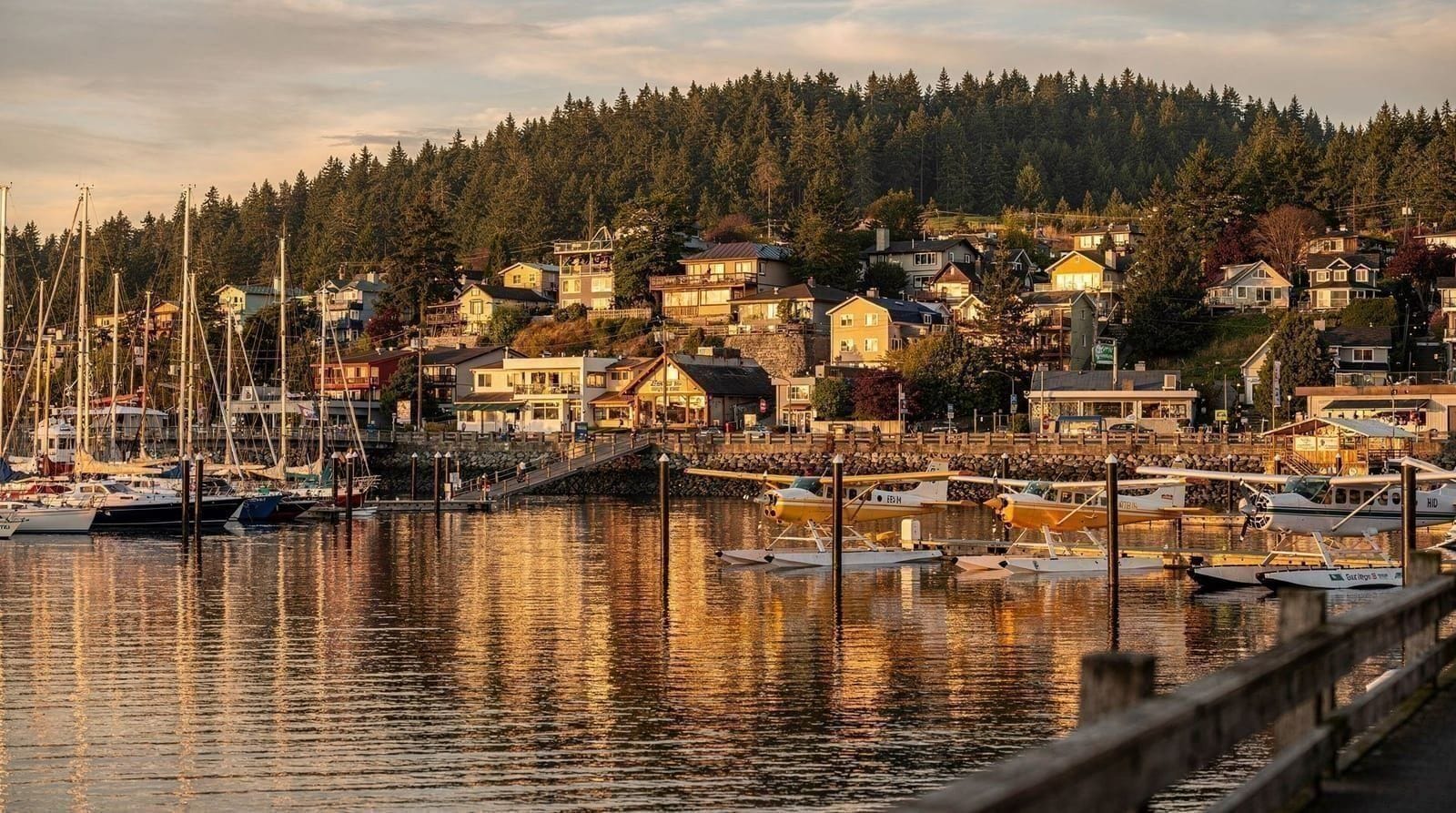
Tofino is a surf and whale-watching town on Vancouver Island's rugged Pacific coast, roughly 4.5 hours from Victoria, best treated as a 2-day trip.
Tofino: Whale Watching Tour with Nature Guide
Duration: 2.5 hours
Quick facts
- Distance from Victoria
- About 4.5 hr by car
- Getting there
- Car via Highway 4, or direct flight from Vancouver
- Best time to visit
- June–September for beaches, winter for storm watching
- Whale watching season
- March–October, peak June–September
- Time needed
- 2 days minimum, 3–4 recommended
Tofino sits at the end of the road, literally — Highway 4 terminates at this small town on Vancouver Island’s wild west coast, roughly 4.5 hours by car from Victoria and considerably further from Vancouver once the ferry crossing is factored in. It’s worth the distance for a specific kind of traveler: Tofino is built around genuine Pacific wilderness, old-growth rainforest, surf breaks, and open-ocean whale watching, a different experience entirely from the more urban, ferry-accessible day trips closer to Vancouver, and it draws a correspondingly different crowd — surfers, outdoor photographers, and travelers specifically seeking wilderness over city sightseeing.
| Where | Vancouver Island’s west coast, end of Highway 4 |
| Distance from Victoria | About 4.5 hr by car |
| Cost | Whale watching around CAD 120-150/adult; surf lessons vary |
| Time needed | 2 days minimum, 3-4 recommended |
| Best time | June-September for beaches; winter for storm watching |
Long Beach and the surf scene
Long Beach, part of Pacific Rim National Park Reserve, is a sweeping stretch of sand backed by rainforest, exposed to Pacific swells that have made Tofino Canada’s most established surf town — genuinely unusual for a country better known for winter sports than ocean surfing. Several surf schools in town rent gear and run lessons for beginners; the water is cold year-round (wetsuits are non-negotiable, even in summer), but the swells are consistent enough that surfing here works in every season, with winter storms actually producing some of the most reliable waves for experienced surfers.
Beyond Long Beach itself, Pacific Rim National Park Reserve protects a much longer stretch of coastline, including quieter beaches like Chesterman and Cox Bay that see fewer visitors and are popular with local surfers avoiding the busier main break. The park also maintains several short interpretive boardwalk trails through coastal bog and rainforest, an easier alternative to the longer hikes further inland for visitors who want a taste of the ecosystem without committing to a full afternoon.
Ucluelet and the Wild Pacific Trail
A short drive south of Tofino, the smaller town of Ucluelet offers a quieter, less touristy base with its own strong draw: the Wild Pacific Trail, a rugged coastal walking path along dramatic, wave-battered headlands, considerably more exposed and photogenic than Long Beach’s flatter sand. Many visitors base themselves in one town and day-trip to the other, since they’re only about 40 minutes apart and each offers a genuinely different flavor of the same wild coastline. Accommodation in Ucluelet also tends to run somewhat cheaper than Tofino during peak summer, worth factoring in for budget-conscious travelers who still want easy access to the same stretch of coastline and its attractions, without paying Tofino’s premium resort pricing.
Whale watching
Tofino’s position on the open Pacific, rather than the more sheltered waters around Victoria, makes it a strong whale-watching base with a longer season — roughly March through October, driven by the gray whale migration passing close to shore in spring, followed by resident and transient orcas and increasingly common humpback sightings through summer.
A whale watching tour with a nature guide covers the core experience, typically 2.5 to 3 hours on the water with a naturalist narrating sightings of whales, sea lions, and seabirds along the way. The spring gray whale migration specifically draws its own dedicated visitor interest, celebrated locally each March with a whale festival timed to the peak of the northbound migration passing directly offshore.
Hot Springs Cove
North of Tofino, accessible only by boat or floatplane (there’s no road), Hot Springs Cove has natural hot springs that cascade down rocks directly into the ocean, forming a series of pools that mix hot mineral water with cold seawater depending on the tide. A Hot Springs Cove tour with a wildlife cruise combines the boat journey (itself a wildlife-watching opportunity, passing through Clayoquot Sound) with time at the springs — a full-day outing given the distance, but one of the more distinctive experiences on this coast.
Clayoquot Sound
The waters and inlets around Tofino fall within Clayoquot Sound, a UNESCO Biosphere Reserve protecting some of the last intact old-growth temperate rainforest on Vancouver Island, alongside a genuinely rich marine ecosystem. A Clayoquot Sound wildlife safari boat tour covers black bear sightings along the shoreline (bears here forage on tidal flats, visible from a boat without disturbing them), plus general wildlife and scenery, distinct from a dedicated whale-watching trip.
Getting there
Tofino is genuinely remote by Vancouver standards. By car, it requires either a BC Ferries crossing to Nanaimo followed by roughly 3 hours of driving on Highway 4 across the island, or a longer drive down through Victoria first. Direct flights connect Vancouver to Tofino’s small airport in under an hour, a meaningfully faster option worth the extra cost if time is limited.
For visitors without a car and without flight plans, a 2-day private tour from Vancouver to Tofino handles the whole logistics chain — ferry, driving, and accommodation coordination — in a single guided package. See the Tofino trip guide for a detailed route-by-route comparison of the ferry-and-drive option against flying.
Why Tofino needs at least two days
Given the drive time alone — several hours each way regardless of route — a single-day trip to Tofino from Vancouver isn’t realistic in the way a Victoria or Whistler day trip is. Most visitors treat it as a minimum two-day trip, ideally three or four, to justify the travel time with enough time on the ground for a whale-watching tour, a beach day, and at least a short rainforest hike without feeling rushed.
Accommodation books up well in advance during peak summer (July–August), so planning ahead matters more here than for closer day-trip destinations. The Vancouver Island 7 days itinerary is the most common way to fit Tofino into a broader trip, pairing it with Victoria and a stop in Nanaimo on the crossing.
Even for visitors flying directly into Tofino’s small airport, skipping the drive entirely, the same logic applies: the point of coming this far is the wilderness and coastline itself, and a rushed one-night visit doesn’t leave much room to actually experience it beyond a single activity, no matter how the trip begins, since the whale watching, surfing, and rainforest hiking that define Tofino all take genuine time to properly experience, and squeezing them into a single rushed day undermines the reason for making the trip at all, no matter which route eventually gets you there.
Three nights is a genuinely comfortable minimum for anyone wanting a whale-watching tour, a full beach day, and at least one rainforest or Hot Springs Cove outing without feeling like the whole trip was spent traveling.
Rainforest hikes and old growth
Beyond the beaches, Tofino sits at the edge of genuine coastal temperate rainforest, with several short, boardwalk-protected trails through stands of old-growth cedar and hemlock accessible right off Highway 4 within Pacific Rim National Park Reserve. These are considerably easier than backcountry hiking further inland — mostly flat, well-maintained loops under an hour — and they’re a worthwhile contrast to a beach or boat-based day, particularly on a rainy afternoon when the forest canopy offers some shelter. The rainforest walks North Shore guide covers similar terrain closer to Vancouver for travelers who won’t make it out to the island.
When to visit
Summer (June–September) brings the most reliable weather, the fullest range of whale sightings, and the busiest beaches and surf lineups. Winter (November–February) is Tofino’s other signature season: storm watching, where visitors book oceanfront rooms specifically to watch Pacific storms roll in, wind and waves crashing dramatically against the coast — a genuinely popular niche market for this town, distinct from anything else in the region. Shoulder seasons (spring, fall) bring the gray whale migration in spring and thinner crowds generally.
Practical tips
Pack for genuine rain regardless of season — Tofino sits in one of the wettest parts of British Columbia, and even summer visits should include a real rain jacket. Book whale-watching and Hot Springs Cove tours in advance during peak summer, since capacity is limited and popular time slots sell out. For a fuller Vancouver Island itinerary, pair Tofino with a stop in Victoria or Nanaimo on the way across the island, turning a Tofino trip into a broader multi-day island exploration rather than an isolated destination.
Cell coverage in Tofino itself is reasonable, but it drops out almost entirely along stretches of Highway 4 crossing the island’s mountainous interior — downloading offline maps before setting out from Nanaimo or Victoria is worth the extra step, particularly for anyone driving after dark.
Tofino versus Victoria whale watching
| Tofino | Victoria | |
|---|---|---|
| Season | March-October | April-October |
| Waters | Open Pacific | Sheltered Salish Sea, Gulf Islands |
| Species mix | Gray whale migration, orcas, humpbacks | Southern Resident and transient orcas, humpbacks |
| Distance from Vancouver | Considerably further, 2+ days recommended | 1h35 ferry crossing, feasible as a day trip |
Flying versus the ferry-and-drive route
Direct flights from Vancouver to Tofino’s small airport take under an hour and are the fastest option by a wide margin, worth the extra cost for anyone short on time or wanting to skip the ferry-and-drive combination entirely. The ferry-and-drive route via Nanaimo costs less but adds several hours of travel each way — a real consideration when Tofino already demands a minimum two-day commitment.
Travelers building Tofino into a wider Vancouver Island loop, pairing it with Victoria and Nanaimo, generally get more value from driving since the ferry crossing is already part of the itinerary regardless; travelers making a dedicated, standalone Tofino trip often find flying the more time-efficient choice.
Frequently asked questions about Tofino
How many days do I need in Tofino?
A minimum of two days, given the travel time involved; three to four days is more comfortable for a whale-watching tour, a beach day, and at least one rainforest or Hot Springs Cove outing without feeling rushed.
Is Tofino worth visiting if I’ve already done Victoria?
Yes — they offer genuinely different experiences. Victoria is a compact city with gardens and colonial architecture; Tofino is wilderness, surfing, and open-ocean whale watching on the island’s rugged west coast.
Can I fly directly from Vancouver to Tofino?
Yes, direct flights take under an hour and are a meaningfully faster alternative to the ferry-and-drive route, which involves a BC Ferries crossing to Nanaimo followed by roughly 3 hours of driving.
When is storm watching season in Tofino?
Roughly November through February, when Pacific storms roll in with dramatic wind and waves — a distinct seasonal draw from the summer beach and whale-watching crowd.
Top experiences
Bookable activities with verified prices and instant confirmation on GetYourGuide.