Ziplining in Whistler
Whistler: The Longest Zipline in North America
Duration: 1.5 hours
What is the best ziplining tour in Whistler?
Ziptrek Ecotours runs two forest-canopy circuits above Whistler Village — the Bear tour (five lines, more immersive, better for families) and the faster Eagle tour — plus a separate single-line "Longest Zipline in North America" product that trades forest scenery for raw speed. Most travelers who want the classic Whistler zipline experience should pick Ziptrek; thrill-seekers who want one fast run should pick the longest zipline.
Ziplining is one of the few Whistler activities that works in every season the mountain is snow-free, and it doesn’t require any skiing background or technical climbing skill to enjoy. The confusing part for first-time visitors is that “Whistler ziplining” actually covers two genuinely different products — a slow, scenic forest-canopy tour and a single fast line built purely for speed — and picking the wrong one for your group can mean either boredom or unexpected nerves.
| Where | Whistler Village, roughly 1h45-2hrs from Vancouver via Highway 99 |
| Cost | Around CAD 100 for the single fast line; around CAD 170-200 for Ziptrek circuits |
| Time needed | 1.5-3.5 hours depending on tour |
| Season | Roughly May through October, weather-dependent |
| Booking | A few days ahead in shoulder season; well ahead for July-August weekends |
Two different products, two different experiences
Ziptrek Ecotours operates the forest canopy circuits that most people picture when they hear “Whistler zipline” — a series of platforms built into old-growth trees between Whistler and Blackcomb mountains, connected by five to ten zip lines of increasing length, with suspension bridges and guided nature commentary along the way.
The Ziptrek Bear tour is the longer, more immersive circuit with five lines through the forest canopy; the Ziptrek Eagle tour is shorter with fewer, longer lines and a bit more speed on the signature run. Both are guided in small groups, with staff clipping in harnesses at every platform, and both include walking sections and viewpoints between the actual ziplines — this is as much a forest walk as a thrill ride.
The Longest Zipline in North America is a separate, unrelated product: a single high-speed line strung across a valley, built for raw distance and speed rather than canopy immersion. It’s shorter as an overall experience (roughly 1.5 hours door to door including transport and briefing) and delivers one intense run rather than a sequence of forest crossings. Riders who’ve done both tours consistently describe it as the adrenaline option, while Ziptrek is the nature-and-forest option — worth knowing before booking, since the marketing for both can sound similar at a glance.
Which tour to book
Families with younger kids or anyone wanting a gentler introduction to heights generally do better on the Ziptrek Bear tour — more platforms, more guide interaction, and a pace that lets nervous first-timers work up to the longer lines gradually. Groups who’ve done a standard zipline before and want something faster tend to prefer the Eagle tour or the single-line speed product.
If time is tight — say, a half-day stop within a longer Whistler day trip — the Longest Zipline in North America fits into a shorter window than either Ziptrek circuit. There’s also an evening zipline tour running through Whistler’s forest after regular daytime departures wind down, worth considering in peak summer when daytime slots sell out or when the lower evening light is preferable to midday sun.
None of these tours require booking a rental car specifically for ziplining if you’re already staying in Whistler Village — Ziptrek’s base sits close enough to the village core to walk or take a short shuttle, and most tours include pickup from central meeting points. If you’re coming up from Vancouver for the day, though, factor in the drive: Whistler is roughly 1 hour 45 minutes to 2 hours from Vancouver via the Sea-to-Sky Highway (Highway 99), a scenic but winding route that runs alongside Howe Sound before climbing into the mountains.
Restrictions and what to expect
All Whistler zipline operators enforce weight and age minimums for safety reasons — figures run roughly 22 kg (about 50 lb) minimum and around 125 kg (about 275 lb) maximum, though the exact numbers vary by specific tour, so check the listing for your chosen product before booking rather than assuming. Closed-toe shoes are non-negotiable; guides will turn away anyone showing up in sandals, and rental shoes typically aren’t offered on-site, so plan your footwear in advance. Pregnant travelers and anyone with certain heart or back conditions are generally advised against ziplining — the operators’ waiver forms cover this in detail, worth reading ahead of time rather than discovering a disqualifying condition at check-in.
Expect the forest canopy to run several degrees cooler than the village below, especially in the shoulder months of May and September — bring a light layer even if it’s warm at the base. Rain doesn’t typically cancel these tours (Whistler’s summer showers pass quickly and the forest canopy offers some cover), but genuinely severe weather, high wind, or lightning will pause operations for guest safety; if you’re visiting on a forecast-risky day, book a morning slot so there’s time in the schedule to rebook later if needed.
Seasonal operation
Ziplining in Whistler is a snow-free-season activity, running roughly May through October depending on the specific operator and that year’s spring thaw. Outside this window, the platforms, cables, and access trails are either snowed in or closed for maintenance ahead of the ski season — there’s no winter zipline option in Whistler comparable to, say, Grouse Mountain’s winter offerings closer to Vancouver. Early and late season dates (May, late September, October) carry the best odds of thinner crowds and lower prices, though also slightly higher odds of a weather-related reschedule. Peak summer (July-August) is the most reliable weather window but also the busiest, with popular time slots selling out days in advance during long weekends.
Combining ziplining with the rest of a Whistler day
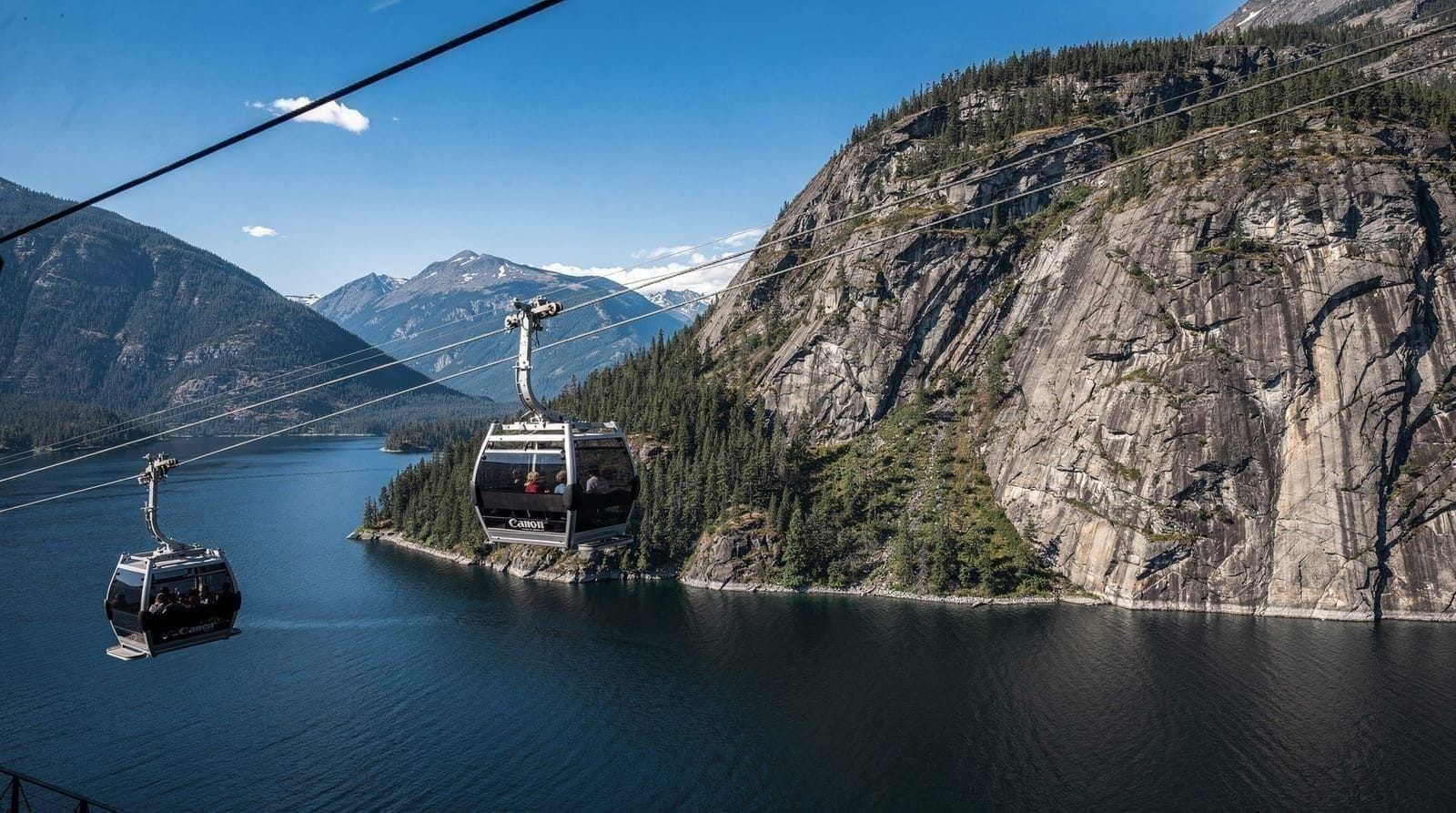
Ziplining tours generally take a half-day or less, which leaves room to pair it with other Whistler activities on the same trip. The Whistler day trip from Vancouver covers the drive and gives a full day in the resort, enough time for a morning zipline tour followed by lunch in Whistler Village and an afternoon on the Peak 2 Peak Gondola or a wander through the pedestrian village.
Travelers building a broader Sea-to-Sky adventure itinerary — stacking ziplining with via ferrata, rafting, or rock climbing across a multi-day corridor trip — should see the Sea-to-Sky adventure activities guide for how to sequence a full weekend across Squamish and Whistler without overloading any single day.
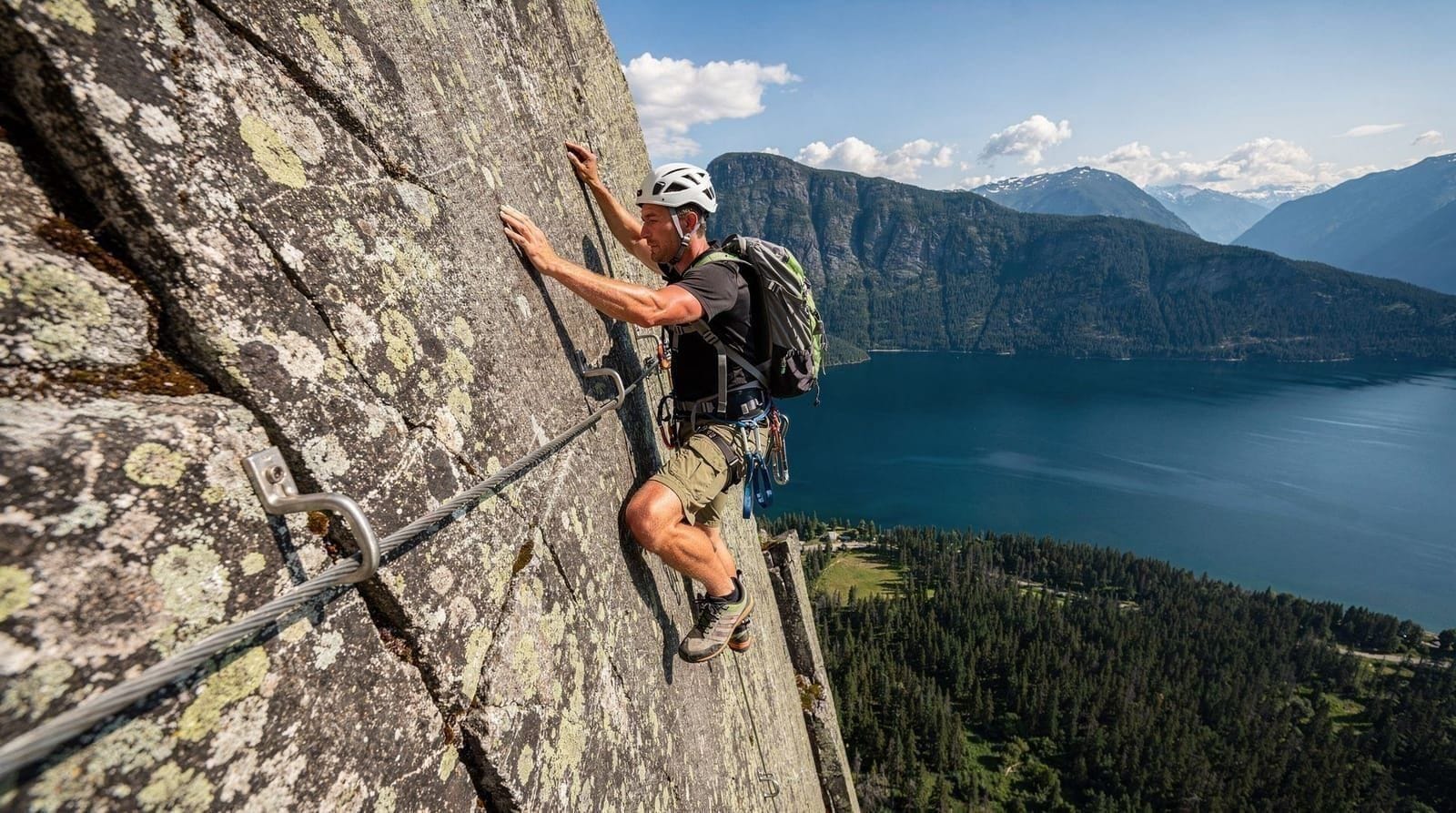
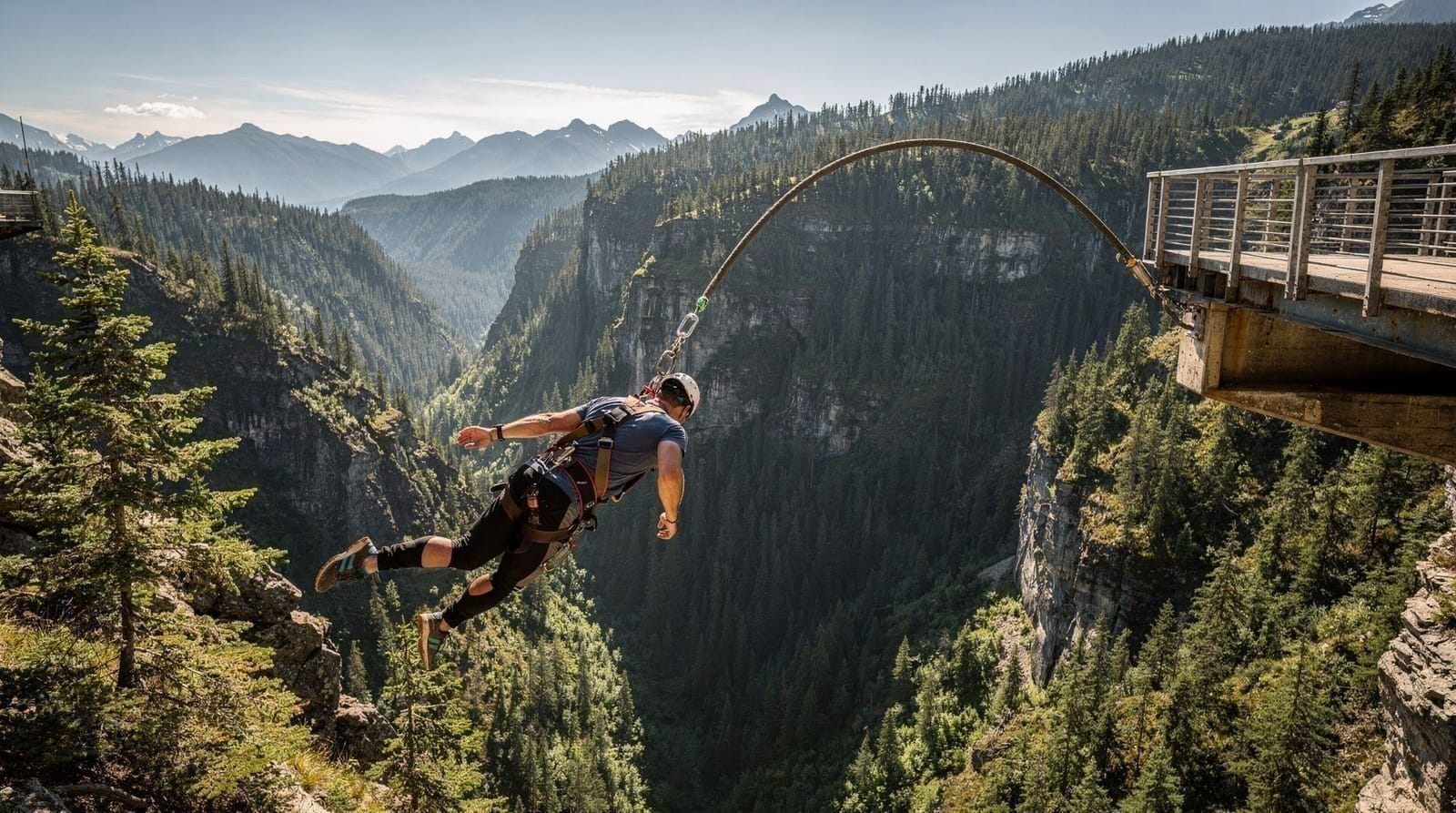
For travelers who’ve already tried ziplining and want the next adrenaline step, the via ferrata near Squamish and Whistler guide covers a guided climbing route on Whistler Mountain that adds vertical exposure without needing technical climbing skill. Those chasing a bigger single-hit thrill rather than a scenic circuit should also read the bungee jumping near Whistler guide, which covers the corridor’s bungee options and where they currently sit relative to bookable tours.
What actually happens on the day
Both Ziptrek tours start with check-in at a base facility, where staff fit harnesses and helmets and run through the safety system before anyone reaches the first platform. Expect a short shuttle or walk from check-in to the first zip line, then a guided progression through the circuit — each platform briefing covers how to brake, how to sit in the harness for the ride, and what to do if you come in too fast or too slow on landing (both are normal and guides are positioned to help).
Between lines, guides typically point out old-growth trees, talk about the local ecosystem, and give people a breather before the next crossing, which is part of why the Bear tour in particular feels more like a guided forest walk punctuated by zip lines than a pure thrill ride.
The single-line Longest Zipline in North America runs a simpler structure: transport to the launch platform, a safety briefing, then the one high-speed crossing itself, typically reaching speeds well above what the Ziptrek circuits deliver on any individual line. Because there’s only one line to ride, the overall tour is shorter, but the per-line intensity is higher — riders often describe the sensation as closer to freefall speed than a scenic glide, which is exactly the appeal for people specifically chasing that product over the forest circuits.
Photos, video, and what you’ll actually remember
Most operators offer a photo or video package as an add-on, since it’s difficult to safely hold a phone or camera while riding a line yourself — hands are occupied with the brake and harness position, and dropping a phone mid-line is a real risk operators actively discourage. If capturing the experience matters to you, budget for the add-on rather than assuming you’ll get usable shots on your own device; some tours include a GoPro-style mount for participants who want to document it themselves, worth asking about at check-in. Platforms between lines are generally fine for phone photos of the forest and views, so you’re not entirely without your own images even without paying for the official package.
Group considerations and mixed-ability parties
Whistler ziplining works well for groups with a range of comfort levels around heights, since guides can adjust pacing and offer extra reassurance to nervous participants without holding up the whole group significantly — platforms are built for groups to gather and regroup between lines.
That said, if your party includes someone with a genuine fear of heights, the Bear tour’s more gradual introduction (shorter first lines building to longer ones) tends to work better than throwing a nervous first-timer straight onto the single fast line. Couples or friend groups where only one person has zipline experience should also lean toward Ziptrek for this reason — it’s easier to talk a hesitant participant through a five-line progression than a single all-or-nothing run.
Solo travelers and small groups
Ziplining is one of the easier Whistler adventure activities to book solo, since tours run in small mixed groups by default rather than requiring a private minimum group size, and guides actively facilitate a social, shared-experience atmosphere between platforms.
A solo traveler booking the Ziptrek Bear or Eagle tour will typically be paired with other travelers on the same departure, making it a reasonable way to meet people on a trip built otherwise around solo sightseeing, and a genuinely low-pressure one given the shared nervousness most first-timers feel at the first platform regardless of whether they arrived alone or with a group. The single-line Longest Zipline in North America works just as well solo, given its shorter format and simpler structure — there’s less downtime between platforms where a solo traveler might otherwise feel out of place in a larger group dynamic.
Getting there and logistics
If driving from Vancouver, allow the full 1 hour 45 minutes to 2 hours each way via Squamish and the Sea-to-Sky Highway, and budget for the fact that this is a genuine mountain road — narrow in sections, occasionally closed for avalanche control in winter (not relevant to ziplining season, but worth knowing if you’re combining trips), and best driven in daylight if you’re not used to it.
Whistler Village itself has paid parking lots (day rates typically in the CAD 15-25 range depending on lot and season) if you’re self-driving rather than joining an organized day trip. Travelers without a car should look at organized Whistler day trips that bundle transport with activities, since Whistler has no direct rail or budget bus alternative that beats a rental car or organized tour for a single-day visit.
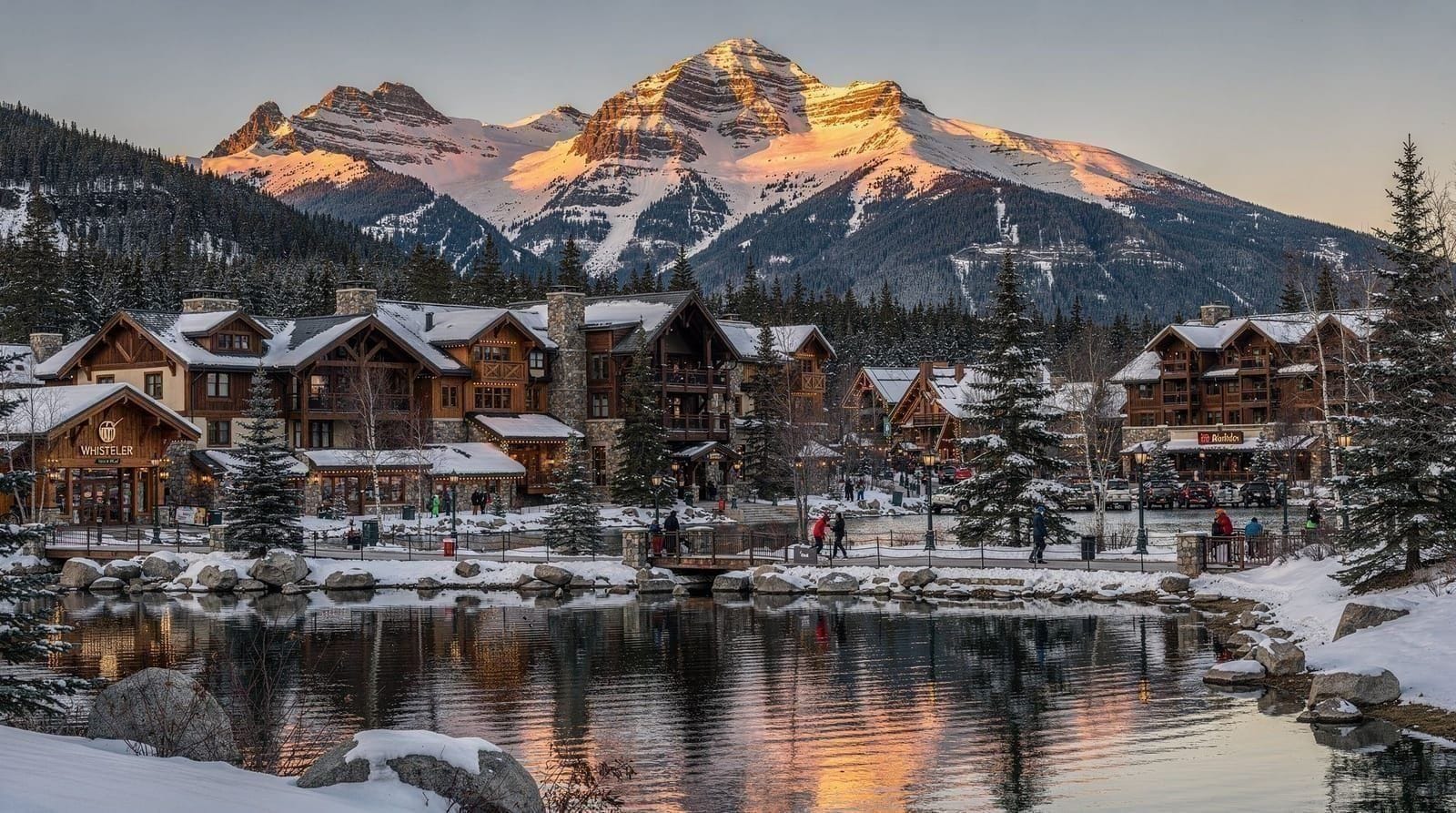
Whistler Village itself is worth building extra time around regardless of which zipline product you choose — the pedestrian-only village core has restaurants, gear shops, and enough atmosphere to fill an afternoon after a morning tour. For a longer stay, pairing a Whistler day with a night in the village, rather than a rushed round trip from Vancouver, takes the time pressure off and lets you fit in more than one activity without racing back down Highway 99 in the dark.
Common mistakes to avoid
Booking windows and pricing patterns
Prices for Whistler ziplining tend to fluctuate modestly by season and day of week rather than staying perfectly fixed year-round — weekday departures and shoulder-season dates (May, late September, October) sometimes carry lower prices or better availability than peak July-August weekends, when demand from both tourists and locals on vacation runs highest. Booking through a platform ahead of arrival generally locks in a specific time slot and price, useful for travelers building a tightly scheduled Whistler day around other activities. Walk-up availability exists at the Ziptrek base in slower periods, but relying on it during peak summer is risky, since popular afternoon slots can fill by mid-morning on a busy day.
Cancellation policies vary by product and how far ahead you cancel — most operators offer free or partial-refund cancellation if changed more than 24-48 hours ahead, which is worth checking at booking time given how weather-dependent this activity ultimately is. If your trip dates carry real uncertainty around weather (say, a shoulder-season visit in May or October), favor a product with flexible cancellation terms over a marginally cheaper non-refundable rate, and always read the fine print on promotional pricing before choosing it purely on cost.
Comparing the main options at a glance
| Ziptrek Bear tour | Ziptrek Eagle tour | Longest Zipline in North America | |
|---|---|---|---|
| Lines | Five, shorter and more frequent | Fewer, longer lines | One single high-speed line |
| Duration | Around 3-3.5 hours | Around 2.5-3 hours | Around 1.5 hours |
| Best for | Families, nervous first-timers | Groups wanting more speed with less time | Thrill-seekers, tight schedules |
| Price range | Higher end, around CAD 170-200 | Slightly lower than Bear | Around CAD 100 |
| Nature commentary | Extensive | Moderate | Minimal |
What to wear and pack beyond the shoe rule
Beyond the strict closed-toe shoe requirement, dress in layers you can move freely in — harnesses fit over clothing but restrict very bulky outerwear, so a mid-layer works better than a heavy winter coat even on a cool shoulder-season morning. Long hair should be tied back, since it can catch in harness clips at the platforms, and loose jewelry is best left at the hotel rather than fumbled with at check-in.
A small crossbody bag or nothing at all works better than a backpack, which most operators either ask you to store at the base or wear in a specific way that clears the harness system properly without shifting mid-line. Sunscreen and a hat matter more than first-timers expect, since the platforms and open crossings get real sun exposure even under partial forest canopy.
Discounts, combo tickets, and off-peak pricing
A handful of ways to reduce the cost are worth knowing before booking at full price. Shoulder-season dates (May, late September, October) sometimes carry lower list prices than the July-August peak, reflecting lower demand rather than a shorter or lesser experience.
Some operators offer a modest discount for booking multiple activities together — for instance, pairing a zipline tour with a Peak 2 Peak Gondola ticket or another Whistler adventure activity in the same transaction — worth asking about directly if you’re already planning more than one activity on the same trip. Group bookings of six or more sometimes unlock a small per-person discount as well, though this varies by operator and season, so confirm current terms directly with the operator rather than assuming a discount applies automatically to every booking size or date.
Environmental and conservation notes
Ziptrek Ecotours brands itself around the “eco” angle for a reason — the platforms and lines are built to minimize impact on the old-growth forest they pass through, and guides generally weave conservation and forest-ecology information into the tour rather than treating it purely as a thrill ride. For travelers interested in BC’s temperate rainforest ecosystem specifically, this adds genuine educational value beyond the adrenaline, distinguishing it from more purely thrill-focused zipline operations found elsewhere.
The Longest Zipline in North America product, by contrast, is built more purely around the single high-speed experience and carries less of this nature-interpretation element, another point of differentiation worth weighing if environmental interest is part of what’s drawing you to the activity — travelers who value the ecological framing as much as the ride itself should lean toward Ziptrek specifically for that reason.
Is ziplining in Whistler worth it
Frequently asked questions about Whistler ziplining
How much does ziplining in Whistler cost?
Prices vary by tour length and operator, generally running from roughly CAD 100 for shorter single-line products up to CAD 170-200 for the longer multi-line Ziptrek circuits (approximately USD 70-140 at typical exchange rates). Check current pricing on the specific tour before booking, since rates shift seasonally.
Is Ziptrek or the Longest Zipline in North America better?
Neither is objectively better — they’re different experiences. Ziptrek’s Bear and Eagle tours are multi-line forest canopy circuits with guide commentary and suspension bridges, better for a scenic, family-friendly outing. The Longest Zipline in North America is a single fast, high line built for speed and adrenaline in a shorter overall time commitment.
Do I need to book in advance?
Yes, especially for July and August weekends, when popular morning slots can sell out several days ahead. Shoulder-season dates in May, June, September, and October generally have more same-week availability.
Can I zipline in Whistler in winter?
No. Whistler’s zipline operators run roughly May through October; the platforms and lines are not operated commercially through the winter ski season.
What if it rains on my scheduled tour?
Light rain typically doesn’t cancel a Whistler zipline tour, since the forest canopy provides some shelter and the lines still operate safely. Severe weather, high wind, or lightning can pause or reschedule tours for safety — booking a morning slot leaves more flexibility to rebook later the same day if needed.
Is there a weight or age limit for Whistler ziplining?
Yes. Most operators require a minimum of roughly 22 kg (about 50 lb) and a maximum of around 125 kg (about 275 lb), though exact figures vary by tour, so check the specific listing before booking. There’s generally no strict minimum age beyond the weight requirement, but very young children may not meet it.
Can I ride if I’m afraid of heights?
Many nervous first-timers do ziplining successfully, especially on the Ziptrek Bear tour, where guides pace the progression from shorter to longer lines and offer extra reassurance at each platform. The single fast line is a harder starting point for a genuinely nervous rider, since there’s no gradual build-up before the one high-speed crossing, and a hesitant participant is better served working up to that intensity on a Ziptrek circuit first.
Top experiences
Bookable activities with verified prices and instant confirmation on GetYourGuide.