Vancouver's best beaches, compared
Vancouver’s beaches don’t get the same international attention as its mountains or its rainforest hikes, which is arguably a mistake — the city has a genuine string of sandy, swimmable beaches along English Bay and False Creek, each with a distinct character, and all of them free. The tradeoff is water temperature: the Pacific here rarely climbs much past 18°C (64°F) even at the height of summer, cold enough that swimming is more of a bracing dip than a leisurely soak for most visitors.
| Where | English Bay, Kitsilano, Spanish Banks, Second & Third Beach |
| Cost | Free (Kitsilano Pool and Second Beach Pool admission extra, around CAD $7-9) |
| Best time | July-August for warmth, June/September for fewer crowds |
| Water temp | Around 16-18°C (61-64°F) at August peak |
| Getting there | Bus or bike from downtown; car recommended for Spanish Banks |
Kitsilano Beach: the one with the scene
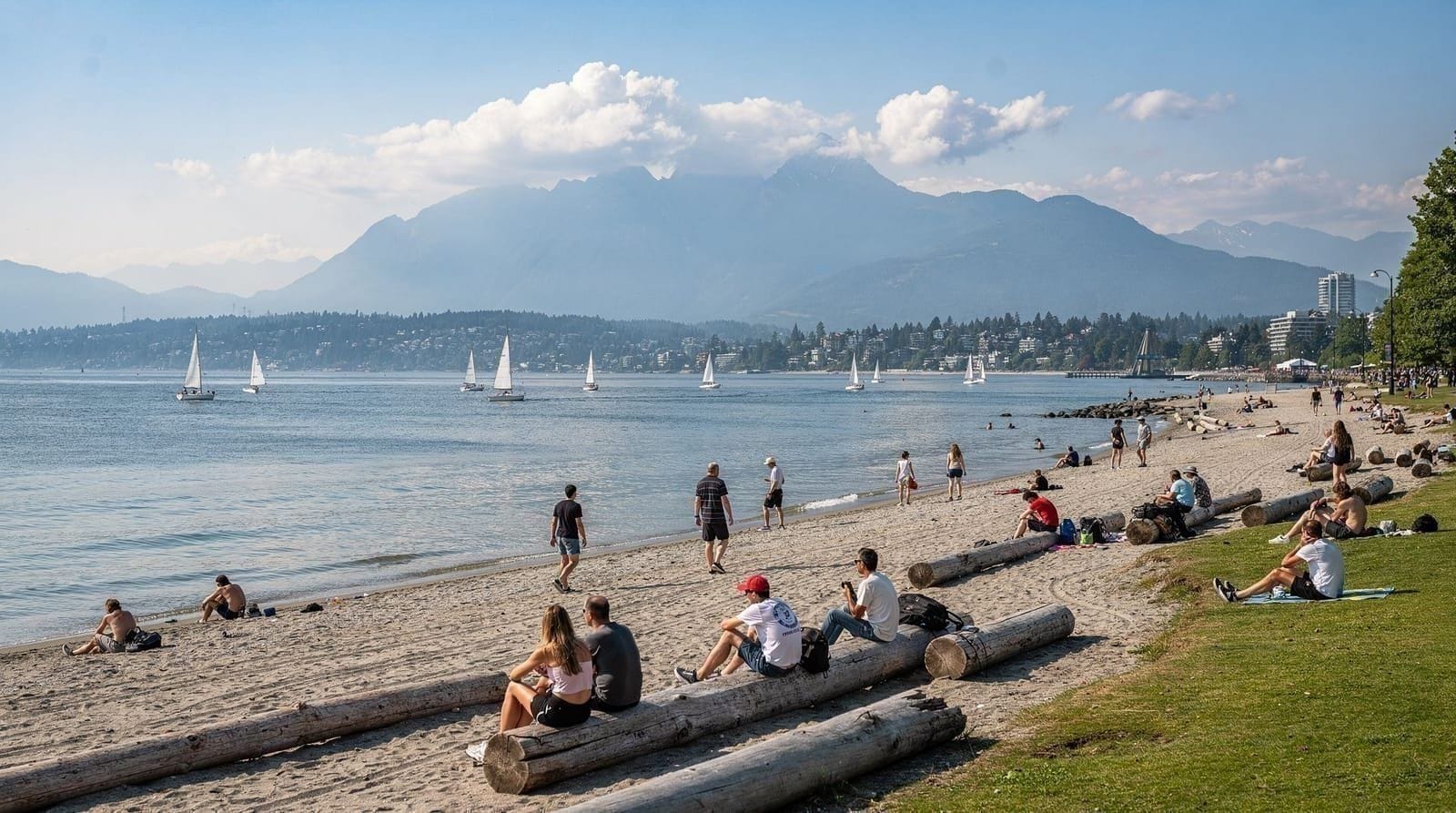
Kitsilano Beach, just across English Bay from downtown, is Vancouver’s most popular beach and the one with the strongest café-and-volleyball-court culture attached. It has genuine sand (not all of Vancouver’s beaches do), unobstructed mountain views across the water, and the heated saltwater Kitsilano Pool right next to the beach for anyone who wants to swim without the cold ocean temperature — a reasonable admission fee gets you a 137-metre outdoor pool that’s genuinely one of the best pool settings in North America. The 4th Avenue café and shopping strip a few blocks inland rounds out a beach visit with an easy lunch or coffee stop.
It gets crowded on hot summer weekends, unsurprisingly, but the beach is long enough that finding space is rarely the ordeal it can be at smaller beaches elsewhere in the city.
English Bay Beach: closest to downtown, best for sunset
English Bay Beach, right at the edge of the West End and a short walk from downtown hotels, is the most convenient beach for anyone staying centrally without a car. It’s smaller than Kitsilano and busier relative to its size, but its real strength is sunset — the beach faces almost directly west across the bay, and the combination of the water, the freighters often anchored offshore, and the mountains beyond makes for one of the more reliable sunset spots in the city without needing to travel anywhere.
The beach connects directly to the Stanley Park Seawall, making it easy to combine an evening beach visit with a walk into the park if there’s daylight left.
Spanish Banks: the space Kitsilano doesn’t have
Spanish Banks, further west past Kitsilano toward UBC, trades some convenience for genuine space — it’s a much larger, less crowded stretch of shoreline, with tidal flats that extend a long way out at low tide, making it a favourite for families with young kids who want shallow water to wade in rather than a proper swim. It’s less walkable from downtown (a car or a longer bus ride is more practical than transit alone), which is exactly why it stays quieter than the beaches closer to the city core.
Second and Third Beach: Stanley Park’s own shoreline
Stanley Park holds two beaches of its own, both accessible directly off the Seawall. Second Beach has a heated outdoor pool similar to Kitsilano’s, plus a playground that makes it a solid family stop; Third Beach is quieter and less developed, with a genuinely good sunset view and noticeably fewer people than the park’s more central attractions. Both work well as a stop on a longer Seawall walk rather than a dedicated beach destination on their own, since neither has the café infrastructure that Kitsilano or English Bay offer nearby.
Water temperature and swimming reality
Ocean water around Vancouver peaks at roughly 16 to 18°C (61 to 64°F) in August, the warmest point of the year, and drops considerably outside summer — swimming from October through May is a cold-water-only proposition, not something most visitors should attempt without proper gear. Even in peak summer, the water is bracing rather than comfortable by the standards of Mediterranean or Caribbean beach destinations, which is worth setting expectations around before a first swim. The heated pools at Kitsilano and Second Beach exist specifically because the ocean itself is cold enough that a lot of locals prefer the pool option even on hot days.
Strong currents are possible at several of these beaches, particularly around points and near the mouths of creeks; lifeguards are on duty at the main beaches during summer months, and swimming outside their hours or designated areas is genuinely riskier than it looks on a calm day.
Jericho Beach and Locarno: the quieter west-side pair
Just west of Kitsilano, Jericho Beach and Locarno Beach see a fraction of the crowds despite offering similarly wide sand and the same unobstructed North Shore mountain views. Jericho has a large grassy park behind it that hosts the Vancouver Folk Music Festival each July, plus a sailing centre renting small boats and paddleboards for anyone who wants to get on the water rather than just beside it.
Locarno, sandwiched between Jericho and Spanish Banks, is essentially an overflow beach for the same stretch of shoreline — genuinely good sand, similarly cold water, and noticeably fewer people even on a busy Saturday. Neither has Kitsilano’s café strip nearby, so anyone planning a full afternoon should bring food and water rather than counting on a nearby coffee stop.
How the beaches compare at a glance
| Beach | Crowd level | Best for | Amenities |
|---|---|---|---|
| Kitsilano | High | Atmosphere, café strip, heated pool | Pool, cafés, volleyball courts |
| English Bay | High (small footprint) | Sunset, downtown convenience | Fire pits, nearby West End dining |
| Spanish Banks | Low | Space, families with young kids | Minimal — bring your own supplies |
| Jericho / Locarno | Low-medium | Quiet sand, sailing rentals | Sailing centre, grassy park |
| Second Beach | Medium | Families, heated pool, playground | Pool, playground, snack bar |
| Third Beach | Low | Quiet sunset, fewer crowds | Minimal — closest café is a walk away |
Kitsilano, English Bay, and the Stanley Park beaches are all reachable by public transit or a manageable walk from downtown — English Bay is the most convenient, essentially an extension of the West End; Kitsilano requires a bus or a longer walk across the Burrard Street Bridge. Spanish Banks is the outlier, best reached by bus or car given the distance, though cyclists comfortable with a longer ride can reach it via the connected seawall and bike path network from downtown.
Combining a beach day with the rest of the city
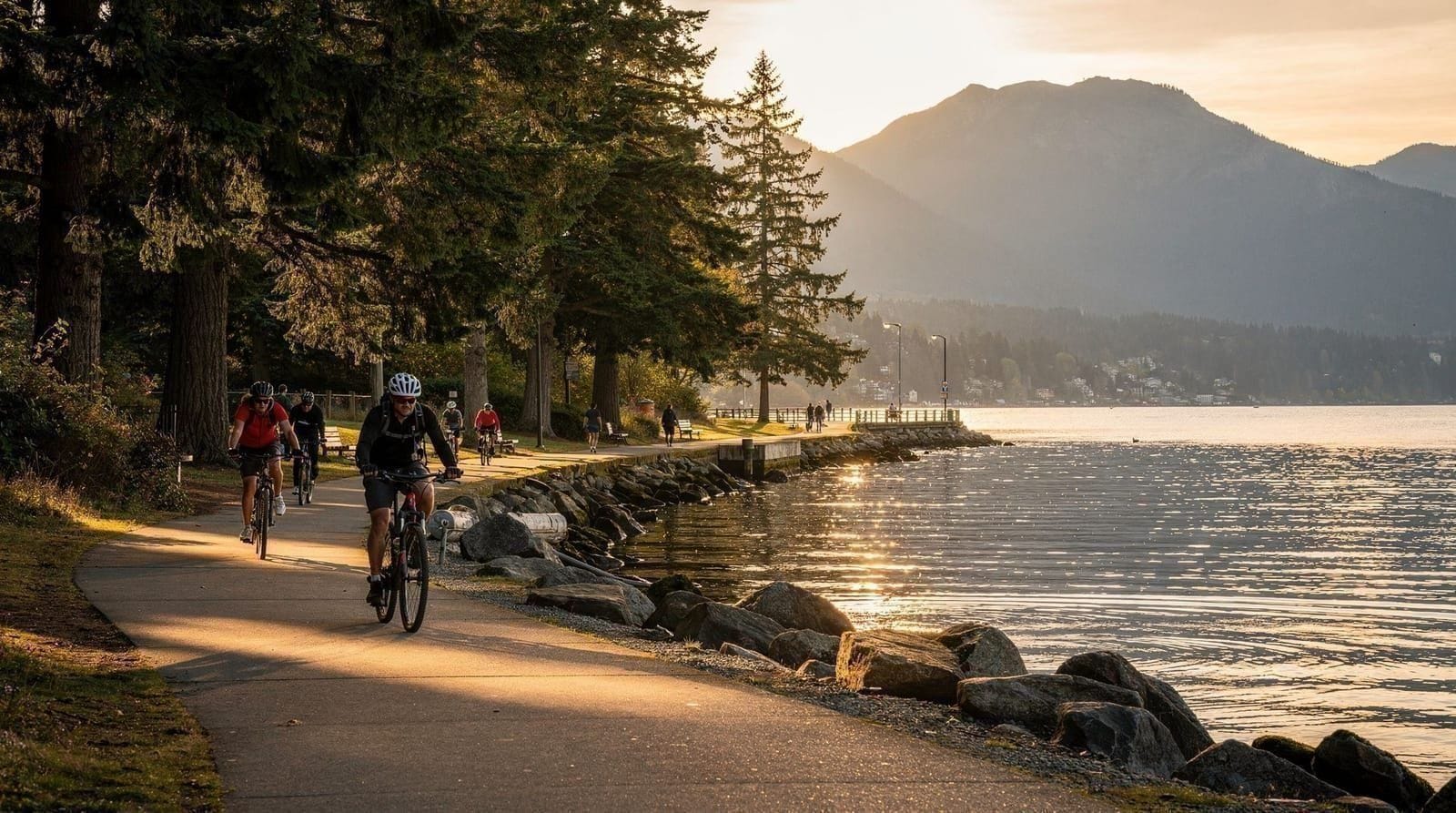
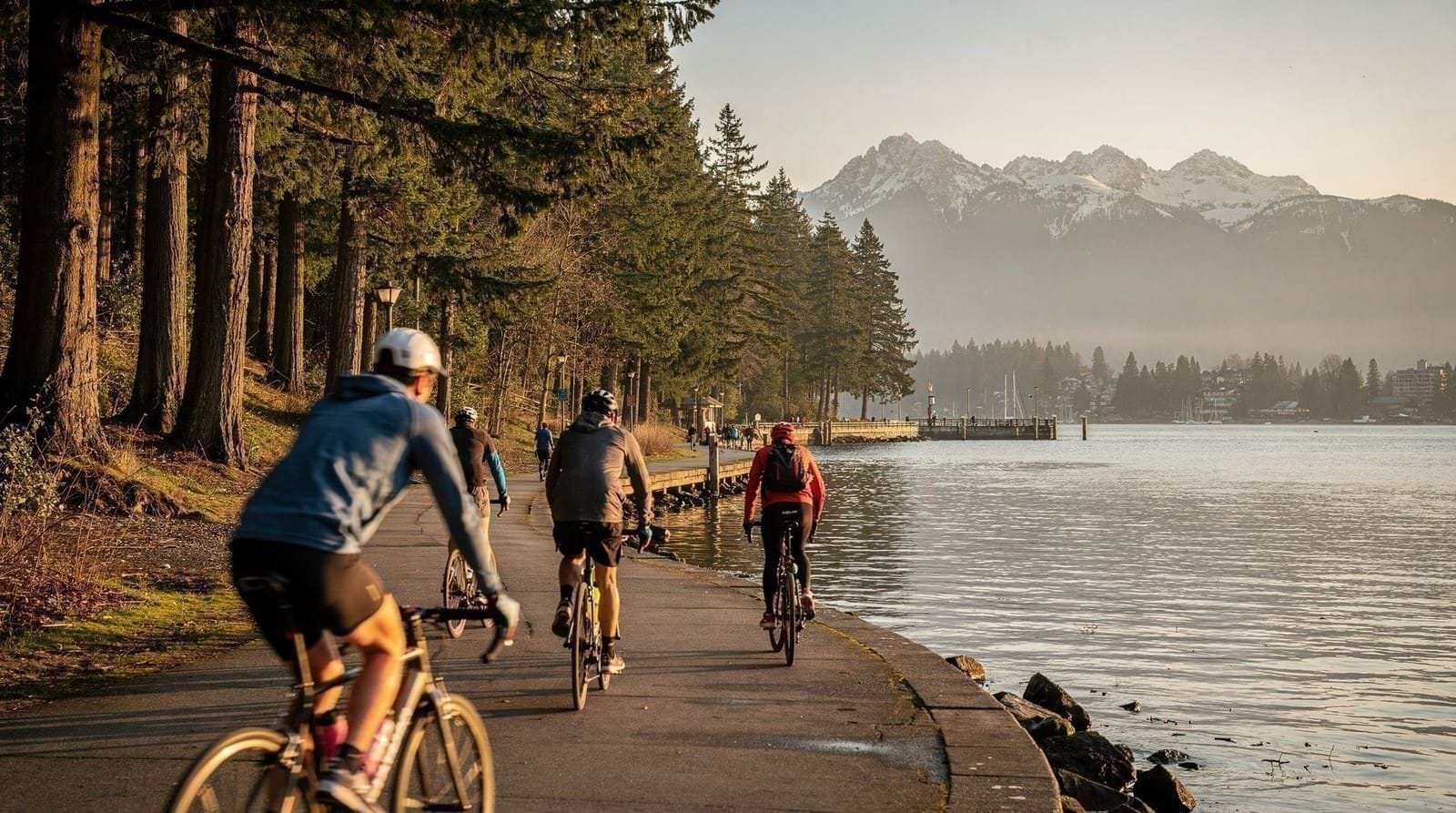
A beach day pairs naturally with a Seawall walk or cycle — starting at English Bay, continuing around Stanley Park’s beaches, and finishing (or starting) at Kitsilano makes for a full day covering nearly the entire western waterfront of the city on foot or by bike.
For visitors who’d rather get onto the water than just sit beside it, a classic kayak tour launches from near these same beaches and covers the calmer stretches of English Bay and False Creek, a reasonable add-on for anyone who finds the cold water more appealing from a boat than a swim. A guided sunset tour is also worth considering for visitors who want the golden-hour beach experience without figuring out timing and location themselves.
Beach volleyball, fire pits, and the local beach culture
Kitsilano and English Bay both host active beach volleyball scenes through summer, with public courts that fill up fast on weekend afternoons — genuinely one of the better ways to see a slice of local Vancouver life rather than a purely tourist-facing activity. English Bay is also one of the only Vancouver beaches with permitted fire pits, available on a first-come basis in the evening; they’re popular enough in summer that arriving before sunset is the only realistic way to claim one. Bringing your own firewood is expected, since the small amount sold nearby sells out on busy nights.
Beaches for families versus beaches for a quiet afternoon
Second Beach’s playground and heated pool make it the strongest choice for families with young kids, followed closely by Kitsilano’s pool for slightly older children who can handle open water better. Spanish Banks’ shallow tidal flats are also genuinely good for small kids, provided the walk to reach it isn’t a dealbreaker. For visitors wanting a quiet read-a-book kind of afternoon rather than an active beach scene, Third Beach in Stanley Park and the far end of Spanish Banks both deliver noticeably fewer people than Kitsilano or English Bay, even at the height of summer.
Pairing a beach visit with Granville Island or the Seawall
A beach day connects naturally to a broader waterfront route — the Stanley Park guide covers the park’s beaches alongside its other attractions for anyone planning a full day rather than a beach-only visit, and Granville Island, reachable by ferry from near the Kitsilano and Yaletown shorelines, makes a natural lunch stop between beach time and an afternoon market wander. Families building a longer stay around beach days and the waterfront more broadly should look at the four-day family itinerary, which paces beach time alongside the city’s other family-friendly stops rather than trying to fit everything into a single rushed day.
The honest comparison
Kitsilano wins on atmosphere and amenities; English Bay wins on convenience and sunset quality for anyone staying downtown; Spanish Banks wins on space and quiet, at the cost of a longer trip to reach it; Stanley Park’s beaches win as an add-on to a Seawall walk rather than a destination in their own right. None of them deliver warm-water swimming by international beach-destination standards, and setting that expectation correctly matters more than picking the “best” beach among them — the real decision is which atmosphere and location fit the rest of the day’s plans.
A last practical note: sun protection matters even on Vancouver’s famously overcast days. UV levels at this latitude climb higher through summer than the grey-city reputation suggests, and a cloudy June afternoon on the sand can still produce a real sunburn over a few hours. Bringing sunscreen regardless of how the sky looks on arrival is a small habit that saves an uncomfortable rest of the trip — and the same applies to layers, since a breeze off the water can drop the perceived temperature noticeably even on an otherwise warm afternoon, catching visitors who packed for a heatwave rather than a coastal city.
Whichever beach ends up on the itinerary, checking a same-day forecast rather than relying on a general “Vancouver summers are dry” assumption is worth the two minutes it takes — even peak July occasionally brings a grey, cooler day that changes what a beach visit should actually look like.
What most visitors get wrong about Vancouver beaches
The single most common mistake is assuming the beaches are swim-first destinations the way a tropical or Mediterranean coastline would be. They’re better understood as social and scenic spaces where swimming is optional rather than the point — locals treat them as somewhere to walk the Seawall, read, play volleyball, or watch the sunset, with a swim as a bonus on the hottest days rather than the reason for the trip. Visitors who arrive expecting a warm-water beach holiday tend to leave disappointed; visitors who arrive expecting a scenic waterfront with a genuinely good but bracing swimming option tend to find exactly what they were promised.
Frequently asked questions about Vancouver’s beaches
Which Vancouver beach is warmest for swimming?
None of them are dramatically warmer than the others — water temperature across English Bay, Kitsilano, and Spanish Banks tracks the same seasonal pattern, peaking around 16-18°C (61-64°F) in August. Shallower spots like Spanish Banks’ tidal flats can feel marginally warmer at low tide since less water covers more sun-warmed sand.
Are Vancouver’s beaches good for swimming with young kids?
Spanish Banks and Second Beach are the strongest picks — Spanish Banks for its shallow tidal flats that let kids wade without a real swim, and Second Beach for its heated pool and adjacent playground, which sidesteps the cold ocean water entirely.
Do Vancouver beaches have lifeguards?
Yes, at the main beaches (Kitsilano, English Bay, Second and Third Beach, Spanish Banks) during summer months, typically running into early September. Swimming outside posted lifeguard hours or designated swimming areas carries genuinely higher risk from currents, particularly near creek mouths and points.