Granville Island
How to actually enjoy Granville Island without overpaying: market eating strategy, Aquabus vs walking, the brewery tour, and honest parking advice.
Vancouver: Granville Island Market Tour with Tastings
Duration: 2 hours
Quick facts
- Best for
- The Public Market, artisan studios, a brewery tour
- Time needed
- Half a day, longer if you linger over lunch
- Getting there
- Aquabus mini-ferry from Yaletown, or a 20-minute walk
- Good to know
- Skip driving — parking is scarce and time-limited
The market is the point, but not the only reason to go
Granville Island sits on a small peninsula under the Granville Street Bridge, a former industrial site turned public market, artisan studio complex, and brewery. Most people come for the Public Market, and it earns the reputation, but treating the island as a one-hour market stop undersells it — the surrounding studios, the marina, and the brewery tasting room are worth the extra time if you’re not rushing back downtown.
| Best window | Weekday mornings before 11am, calmest and freshest stalls |
| Getting there | Aquabus/False Creek Ferries (around CAD 4-5), or a 20-min walk |
| Market strategy | Walk the whole floor once before buying anything |
| Skip driving | Parking is scarce, time-limited and fills fast on weekends |
| Pairs well with | Kitsilano or Yaletown |
How to eat at the market without overpaying
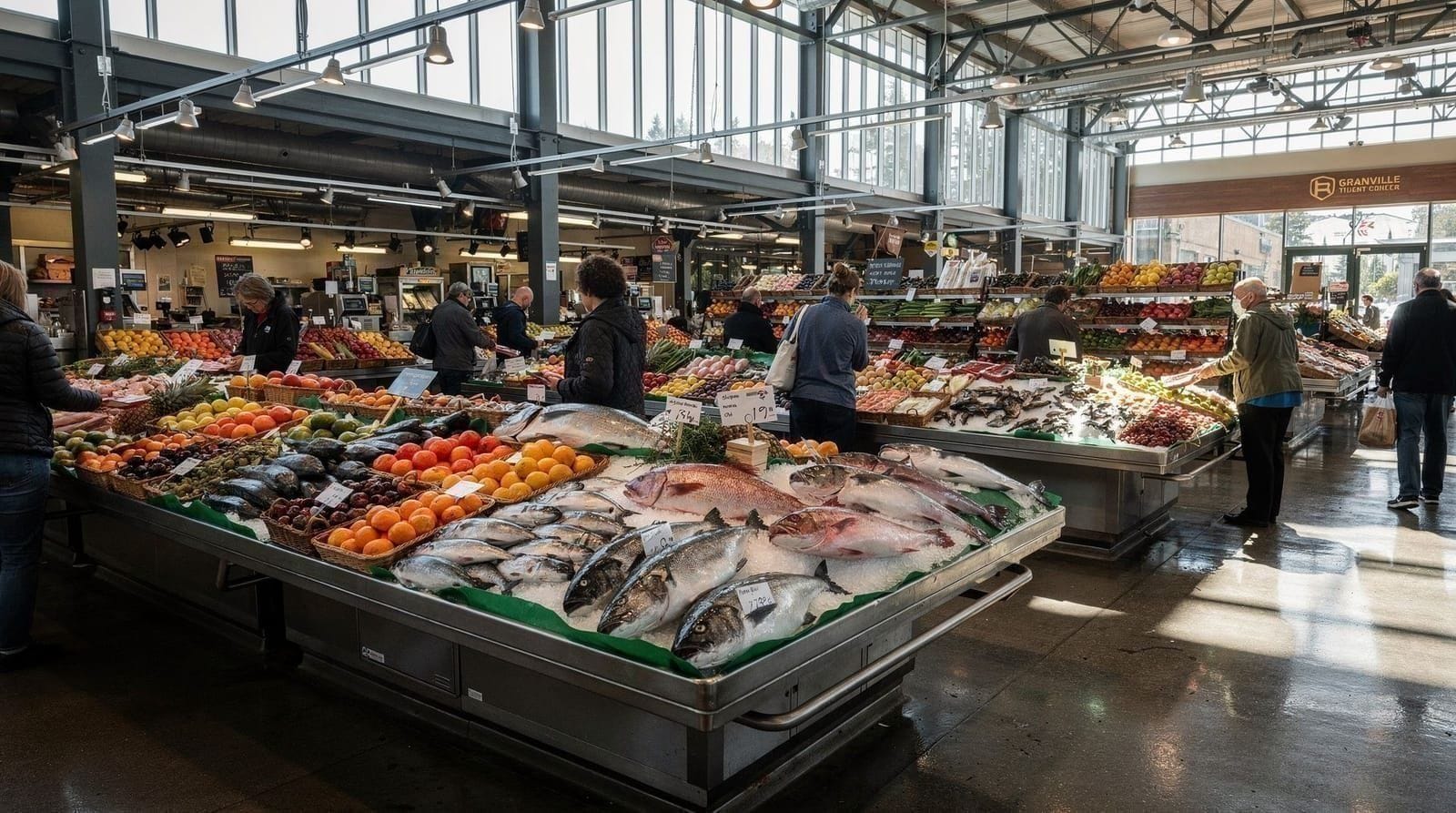
The Public Market has more than 50 vendors, and the honest strategy is to walk the whole floor once before buying anything. Prices vary a lot stall to stall for similar products, and the busiest stalls near the main entrance aren’t necessarily the best value — they’re just the most visible. Lee’s Donuts, near one of the market entrances, is a genuine local institution worth the short line. For a sit-down meal rather than market-stall grazing, Sandbar and Dockside both sit on the water with reliable seafood-forward menus, though you’ll pay restaurant prices rather than market prices for the view.
If you’d rather have a local walk you through the vendors that are actually worth stopping at, a Granville Island market tour with tastings solves the guesswork in about two hours, with a handful of tastings included in the price. The small-group food walking tour covers similar ground with a smaller group size, which matters if you don’t want to navigate the market floor as a crowd.
Granville Island Brewing and the artisan side
Granville Island Brewing, founded in 1984, was Canada’s first modern microbrewery and still runs a taproom and tour on the island. A short brewery tour typically runs under CAD $15, and a tasting flight adds roughly CAD $8-10 — reasonable value if you’re already on the island and want a sit-down break from the market crowds. Beyond the brewery, the island’s studio buildings house working glassblowers, potters, and printmakers who sell directly out of their studios, which is a better source of an actual souvenir than the market’s gift-shop aisle.
Getting there: Aquabus beats the car
This is the most useful practical advice for Granville Island: don’t drive. Parking on the island is limited, time-restricted, and fills up fast on weekends, and the roads in are narrow and often congested with pedestrians. The better options are the tiny Aquabus and False Creek Ferries boats that shuttle across False Creek from docks in Yaletown and downtown — a few minutes on the water for around CAD $4-5, and honestly one of the more enjoyable small experiences in the city.
Alternatively, it’s a flat, scenic 20-minute walk from downtown or Yaletown across the Granville Street Bridge, or a short bus ride if the weather’s against you. See our Granville Island Market guide for a stall-by-stall breakdown, and our Granville Island kayak guide if you want to get out on False Creek itself rather than just look at it.
From industrial sandbar to public market
Granville Island wasn’t always the postcard version you see today. It started as a man-made sandbar dredged up in the 1910s to host sawmills, machine shops, and other heavy industry serving False Creek’s working waterfront, and by the mid-20th century it had become a fairly grim industrial zone.
The federal government redeveloped it into a public market and arts district starting in 1979, deliberately preserving the corrugated-metal industrial aesthetic rather than replacing it — which is why the market buildings still look like converted warehouses rather than a purpose-built tourist attraction, because in large part they are converted warehouses. That history is also why parking remains awkward: the road layout was never designed with the current volume of visitors in mind.
The Kids Market and other corners people skip
Beyond the Public Market and the brewery, a couple of smaller stops are easy to miss on a first visit. The Kids Market, a low-key complex of children’s shops and a small water park, sits a short walk from the main market building and is a genuinely useful stop if you’re travelling with younger kids who’ve had enough of adult grazing. The Net Loft, a smaller building near the market entrance, houses several of the island’s better independent design and craft shops away from the main crowds. Neither is essential, but both reward the extra 20 minutes if you’re not rushing back across the water.
On the water and further afield
Granville Island is also a departure point for a couple of whale-watching operators, which is a slightly unexpected but real option if you’re not planning a dedicated trip to Tofino or Victoria for the same thing. A Zodiac whale-watching tour departing from Granville Island runs seasonally (April through October, with orcas most reliable June to September) and saves you a separate trip out to the harbour.
If you want Granville Island folded into a broader city loop rather than as a standalone stop, the city and Granville Island sightseeing trolley tour combines both in one booking.
For a full day that pairs this with Stanley Park or Kitsilano, see our 2-day Vancouver itinerary, and check where to stay in Vancouver if you’re weighing a Yaletown base specifically for the easy Aquabus access.
Timing your visit around the crowds
Granville Island’s crowd pattern is fairly predictable: weekday mornings before 11am are the calmest window, with vendors freshly stocked and stalls easy to browse without queuing. Weekend afternoons, especially in summer, are the busiest by a wide margin, with lines forming at the most popular food stalls and the Aquabus docks seeing real wait times on the return crossing. If your schedule is flexible, shifting a visit to a weekday morning noticeably improves the experience without costing you anything.
The marina and False Creek waterfront
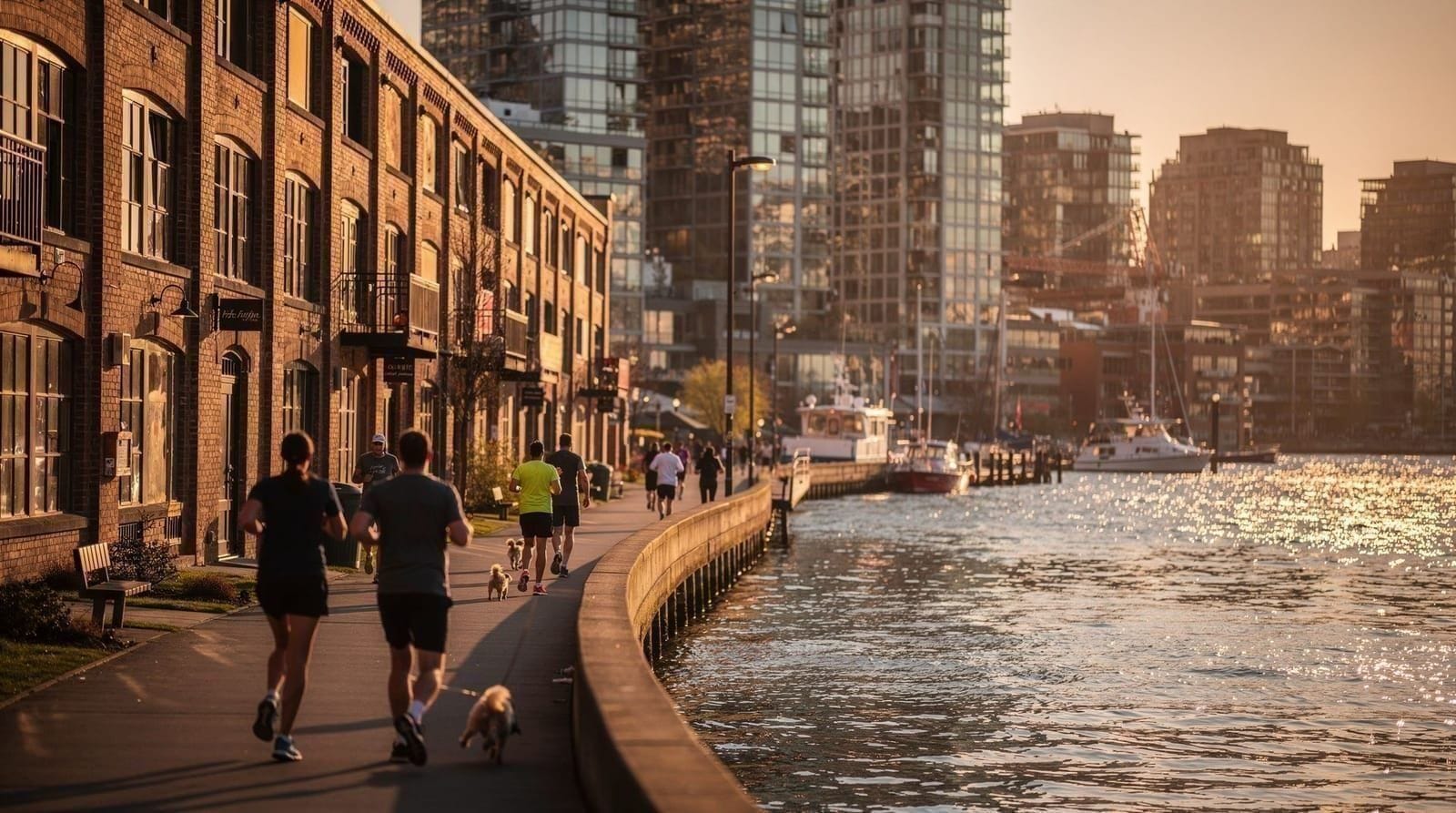
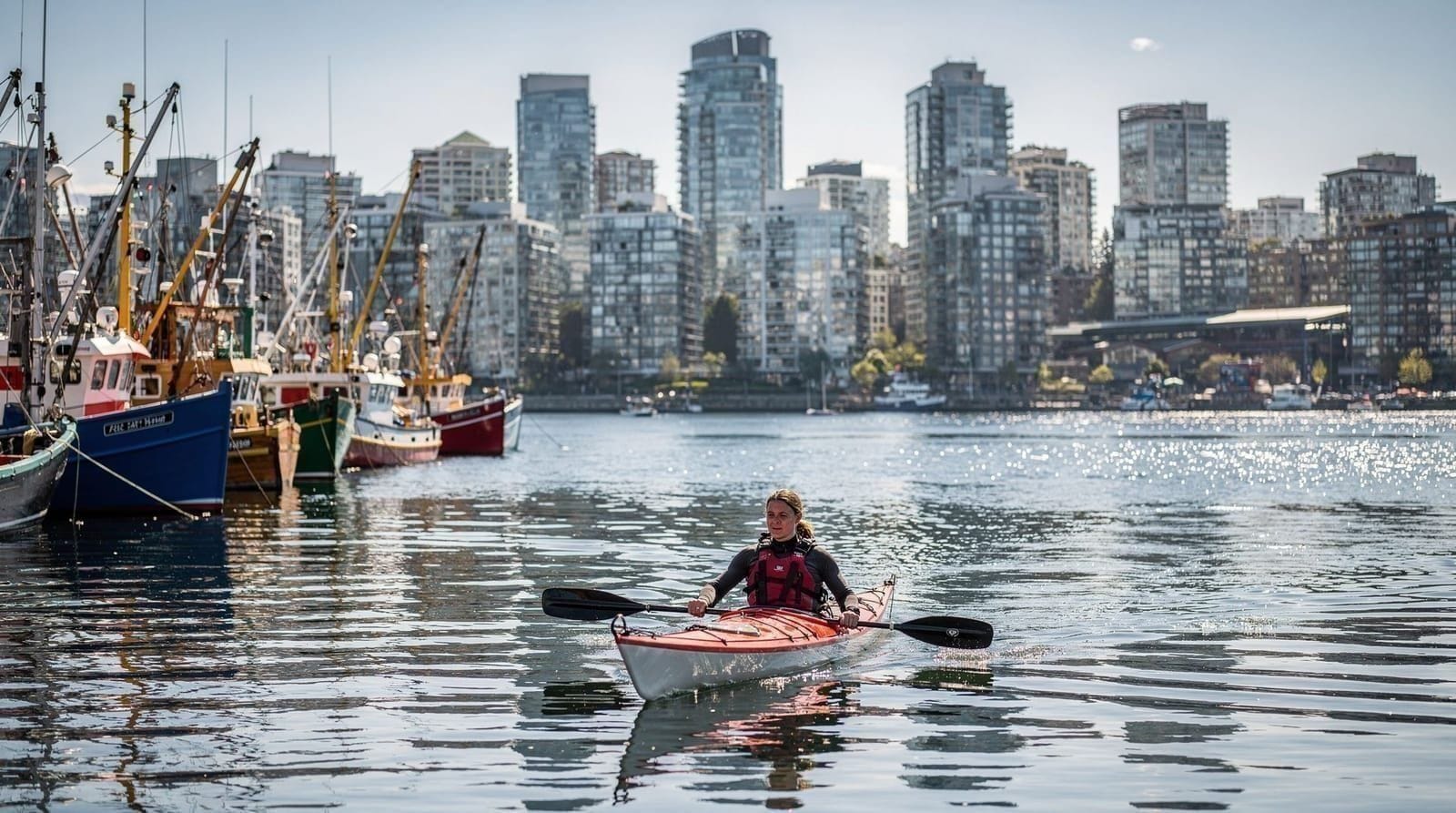
Beyond the market and studios, Granville Island’s southern edge is a working marina, with pleasure boats, a couple of small boat-repair yards, and a maritime market atmosphere that most first-time visitors never wander over to see. It’s a quieter, less commercial corner of the island — worth a short detour if the main market floor feels crowded, and a good vantage point for photos looking back across False Creek toward downtown’s skyline. The marina also hosts a small floating cottage community and a few marine-supply shops that give a sense of the island’s working-harbour identity underneath the tourist-facing market.
Granville Island vs. Lonsdale Quay Market
Visitors who’ve already done North Vancouver’s Lonsdale Quay Market sometimes wonder if Granville Island is worth a second, similar stop. The short answer: yes, but they’re not quite the same experience. Granville Island is considerably larger, with the added draw of the brewery, the artisan studios, and the marina, while Lonsdale Quay is a smaller, quicker stop best combined with a North Vancouver day trip toward Capilano or Grouse Mountain. If you only have time for one proper public market in Vancouver, Granville Island is the more complete version.
Frequently asked questions about Granville Island
How do I get to Granville Island without a car?
The Aquabus and False Creek Ferries run small passenger boats from docks in Yaletown and downtown, taking just a few minutes for around CAD $4-5. It’s also a flat 20-minute walk from downtown across the Granville Street Bridge.
Is parking available on Granville Island?
Limited and time-restricted parking exists, but it fills quickly, especially on weekends. Most visitors are better off taking the Aquabus, walking, or taking a bus rather than driving in.
How long should I spend at the Public Market?
Budget at least 90 minutes to walk the full market before buying, plus extra time if you want to sit down for a meal at Sandbar or Dockside, or browse the artisan studios beyond the market building.
Is Granville Island Brewing worth visiting?
Yes, if you’re already on the island. It’s Canada’s first modern microbrewery, the tour is inexpensive, and a tasting flight is a reasonable way to sample several beers without committing to a full brewery-crawl itinerary elsewhere in the city.
Can I see whales from Granville Island?
You can’t see whales from the island itself, but a couple of whale-watching operators depart from docks there, running seasonally from spring through fall. It’s a genuinely convenient departure point if you’re staying nearby.
Is Granville Island touristy?
It draws heavy tourist traffic, especially midday and on weekends, but it’s also a working market that locals use regularly. Early mornings and weekday visits feel noticeably calmer and more like the real thing.
Is Granville Island worth it if I’ve already seen Lonsdale Quay Market?
Yes — Granville Island is considerably larger and adds the brewery, artisan studios, and marina on top of a market hall, whereas Lonsdale Quay is a smaller, quicker stop. They’re not redundant if you have time for both.
What’s the best way to see the marina?
Just walk the boardwalk along the southern edge of the island past the market building — it’s free, uncrowded compared to the market floor, and gives a good photo angle back across False Creek to downtown.
Top experiences
Bookable activities with verified prices and instant confirmation on GetYourGuide.