Stanley Park
Vancouver: Stanley Park Bicycle Tour
Duration: 3 hours
What is there to do in Stanley Park?
Stanley Park is a 400-hectare urban park at the edge of downtown Vancouver, built around a 9-kilometre seawall loop, old-growth forest trails, beaches, totem poles at Brockton Point, the Vancouver Aquarium, and viewpoints including Prospect Point and Siwash Rock. Most visitors spend 2-4 hours; a full seawall circuit by bike takes about 1-1.5 hours.
Stanley Park gets described as Vancouver’s Central Park so often that the comparison undersells it — this is a 400-hectare peninsula of old-growth rainforest wrapped almost entirely by water, sitting a 15-minute walk from downtown high-rises, and it functions as forest, beach, wildlife habitat and cycling route all at once. The practical question isn’t whether to visit — nearly everyone does — it’s how to structure a visit so you actually see the park’s best parts instead of wandering the same half-kilometre of seawall near the entrance.
| Where | Peninsula at the edge of downtown Vancouver |
| Time needed | 2–4 hours; half a day for the full seawall loop |
| Cost | Free entry; bike rental around CAD 10–15/hr |
| Getting there | 15–20 min walk from downtown, or bus |
| Best time | Weekday mornings, May–September |
A brief history of the park
Stanley Park was formally established in 1888, making it one of North America’s oldest large urban parks, named after Lord Stanley, then Canada’s Governor General (the same Stanley behind the Stanley Cup, awarded a few years later in 1892). Long before European settlement, the peninsula was home to Squamish, Musqueam and Tsleil-Waututh villages, and several sites within the park — including areas near Brockton Point and Lumberman’s Arch — hold continued cultural and historical significance for these Nations, reflected today in the totem pole displays and ongoing interpretive programming developed in partnership with local First Nations.
Much of what looks like untouched old-growth forest was in fact selectively logged in the late 1800s before the park’s founding, though pockets of genuine old-growth, including trees over 500 years old, survive in less-visited interior sections away from the seawall.
Walking versus biking the seawall
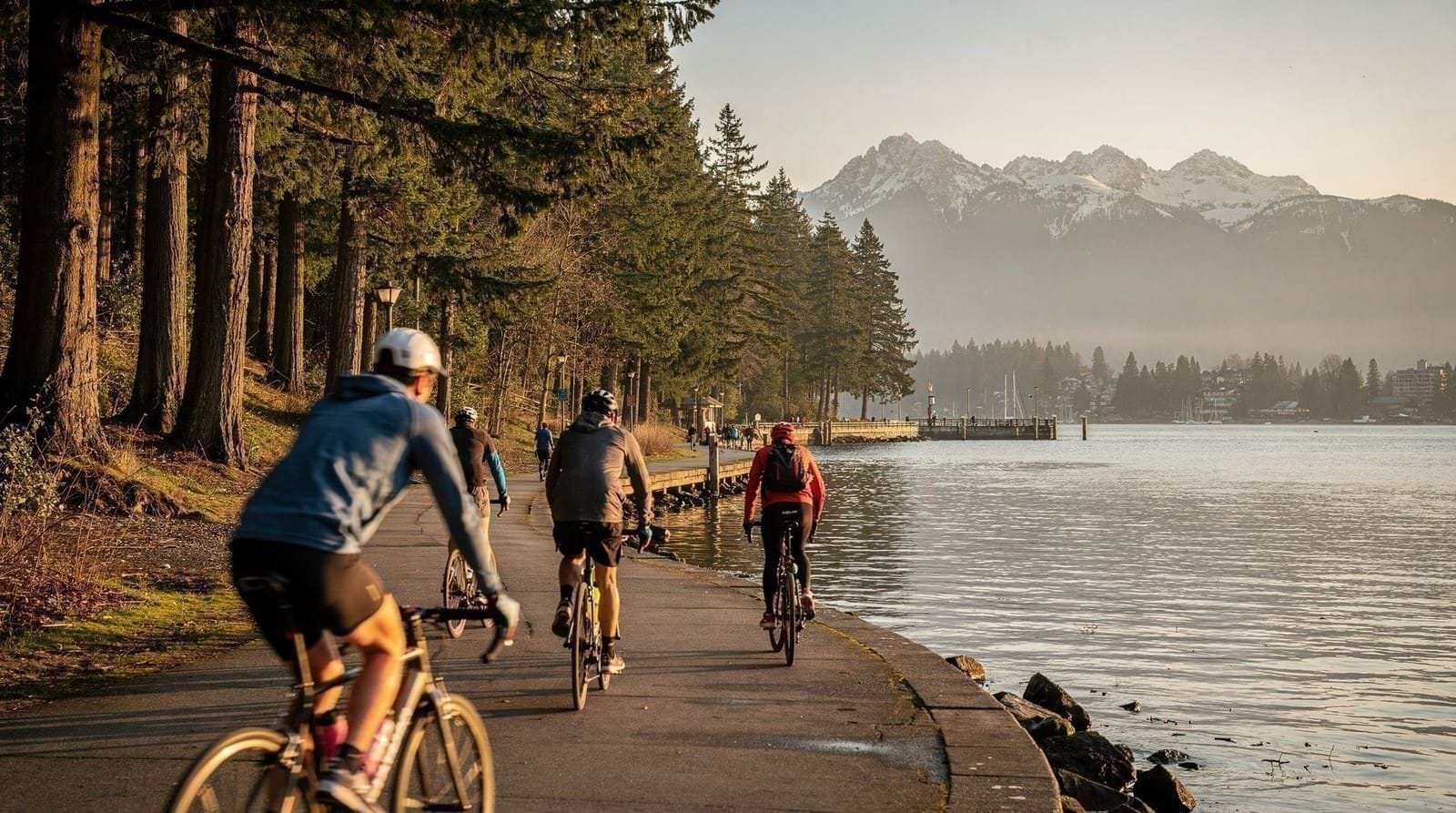
The seawall is a paved, mostly flat 9-kilometre loop tracing the park’s entire waterfront edge, and it’s the backbone of almost every Stanley Park visit. Walking the full loop takes 2.5-3.5 hours at a steady pace — doable, but a genuine time commitment that eats most of a half-day. Biking covers the same distance in 1-1.5 hours, which is why most visitors who want to see the whole park rather than one corner of it choose to cycle.
Rental shops cluster along Denman Street near the park’s West End entrance, and a guided Stanley Park bicycle tour handles bike logistics and route knowledge in one booking, useful for visitors who’d rather not navigate rental paperwork and route-finding on their first Vancouver day. An e-bike version of the tour flattens the pace requirement further, worth considering for groups with mixed fitness levels or anyone short on time who still wants the full loop rather than a partial one.
The seawall is one-way for cyclists (counter-clockwise), a rule enforced more strictly than it might first appear — signage is posted at every entrance, and going against the flow on a busy summer day is both against the rules and genuinely dangerous given cyclist speed and pedestrian crossings.
The must-see stops along the way
A handful of points along the loop are worth planning stops for rather than cycling past:
- Prospect Point, the park’s highest point, with sweeping views over the Lions Gate Bridge and Burrard Inlet — best around dusk for photography, when the bridge lights come on against a fading sky.
- Siwash Rock, a solitary sea stack topped with a single fir tree, tied to Squamish Nation oral history.
- Brockton Point totem poles, one of BC’s most-visited collections of Northwest Coast First Nations carvings, several created by contemporary artists.
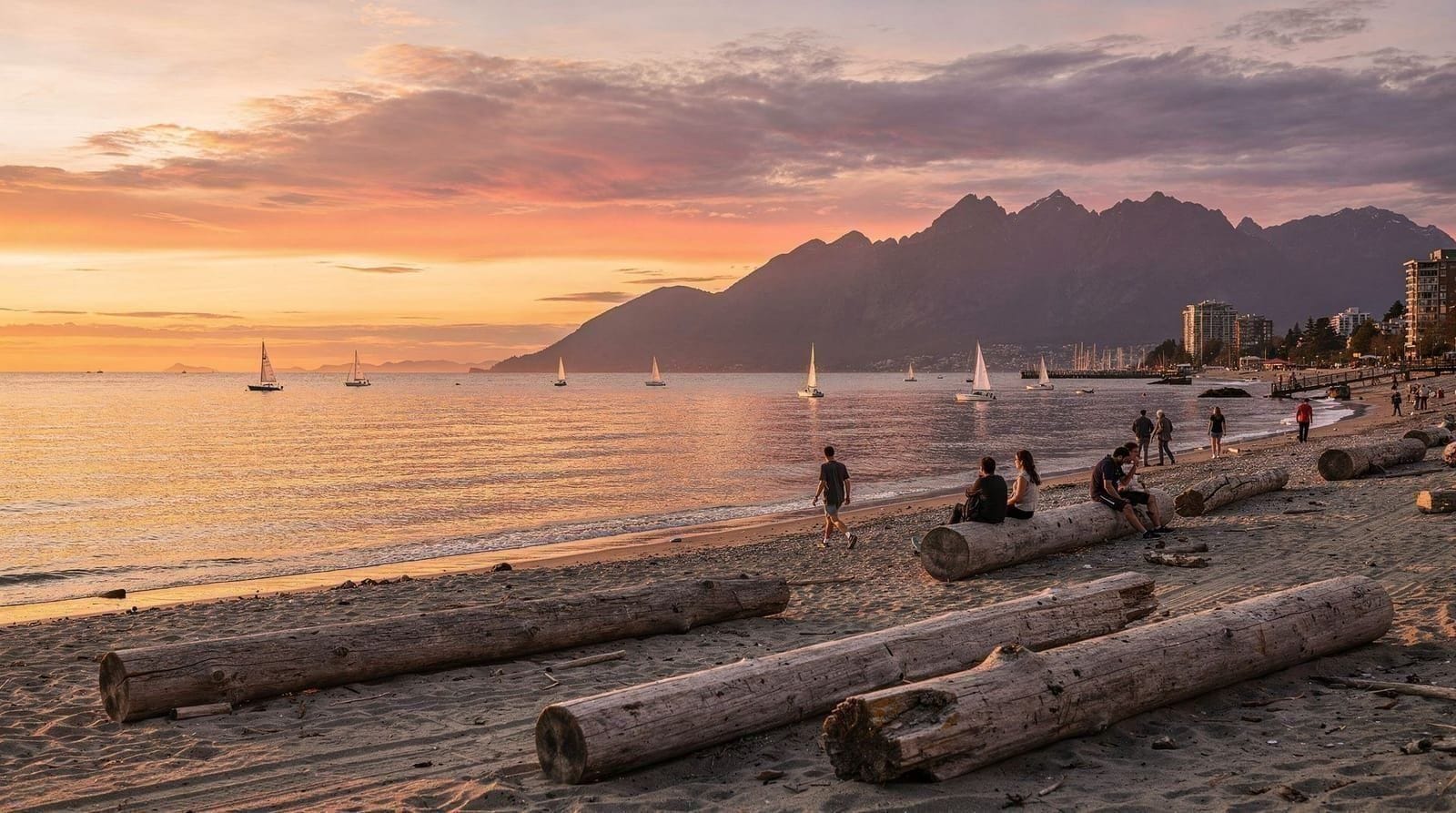
- Second Beach and Third Beach, both sandy swimming beaches on the park’s west side, quieter than English Bay just outside the park boundary.
- Beaver Lake, a small forest-interior lake reachable by a short detour off the seawall, genuinely quiet even on the busiest summer days since most visitors never leave the waterfront loop.
Beyond the seawall: the forest interior
The seawall gets nearly all the attention, but roughly 200 kilometres of additional trails cut through the park’s forested interior, ranging from short 20-minute loops to longer hikes past old-growth trees that predate the park’s 1888 founding. These trails see a fraction of the seawall’s foot traffic, and they’re the better choice for anyone who wants a genuine forest walk rather than a waterfront circuit — Lost Lagoon, near the park’s southern entrance, is a reliable spot for birdwatching and a good introduction to the interior trail network without committing to a long hike.
Beaver Lake and the quiet middle of the park
Beaver Lake deserves more attention than it usually gets — a genuinely peaceful, lily-pad-covered lake reachable by a 10-15 minute detour off the main seawall route, and one of the few spots in the park where it’s possible to stand somewhere without another visitor in view even on a busy July afternoon. The surrounding trail loops through denser forest than the waterfront sections, and it’s a reliable spot for birdwatchers given the lake’s role as a stopover for migratory waterfowl. It’s a worthwhile add-on for anyone who has already done a seawall loop on a previous trip and wants to see a different side of the park this time around.
Wildlife in the park
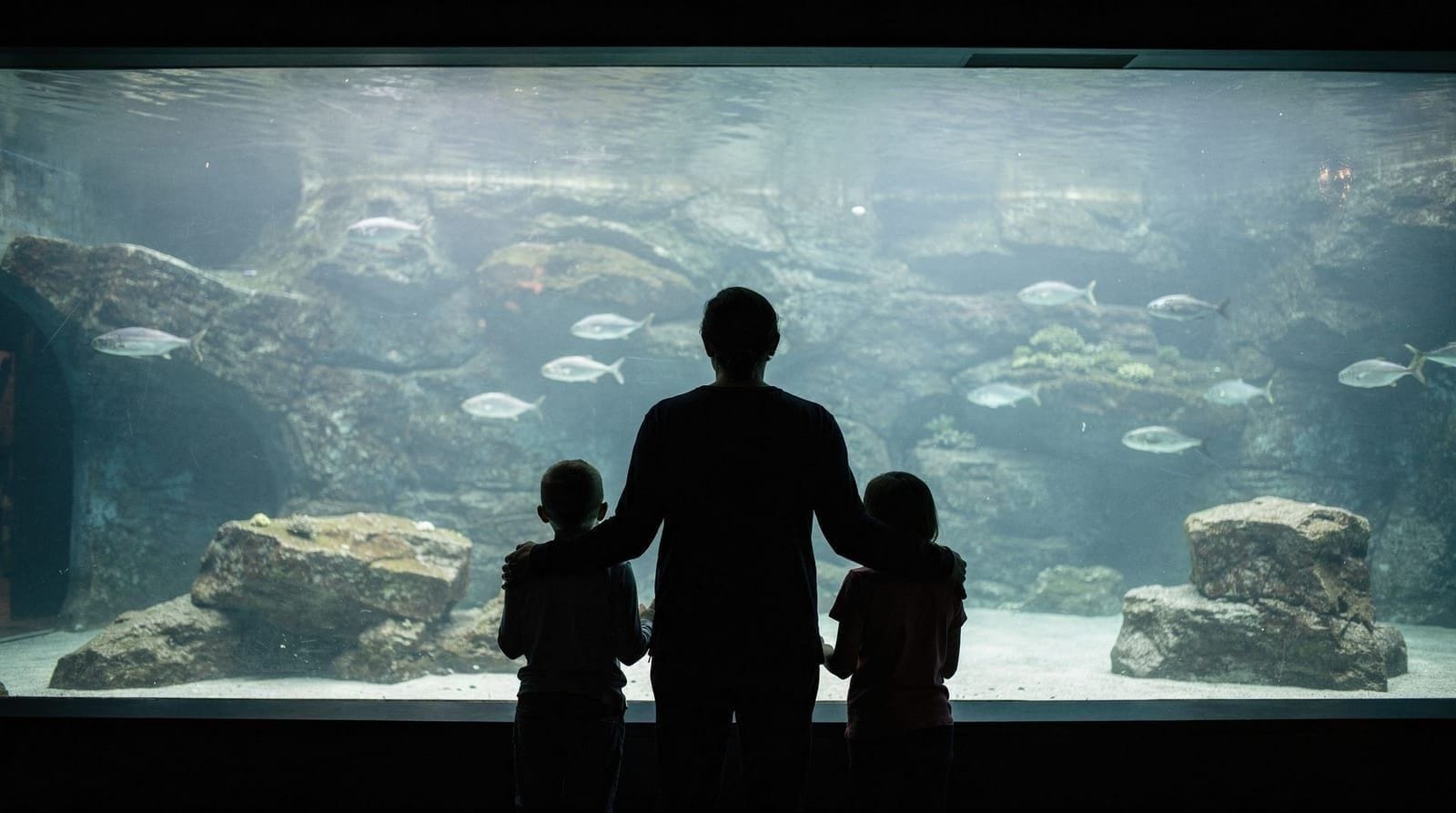
Raccoons, herons and the occasional coyote are visible year-round, and the park’s location on a migratory flyway makes it a genuine birdwatching spot outside peak tourist season. The self-guided smartphone audio tour covers wildlife and history points at your own pace, useful if you’d rather explore independently than join a fixed-schedule guided group. For dedicated marine wildlife, the Vancouver Aquarium sits inside the park near the Georgia Street entrance — see the family guide to Vancouver Aquarium for current pricing and what’s inside.
Getting there and getting around
The West End entrance near Denman Street is a straightforward 15-20 minute walk from most downtown hotels, and frequent city buses also serve the area. A free shuttle bus circulates through the park itself during peak season, connecting the main attractions (aquarium, Brockton Point, beaches) for visitors who’d rather not walk or bike the full distance between stops. Driving into the park is possible, with paid parking at several lots, though weekend parking near the aquarium and Brockton Point fills quickly through summer.
Common mistakes first-time visitors make
The most frequent misstep is walking the full seawall on a first visit and running out of time or energy for anything else — it’s a beautiful walk, but 2.5-3.5 hours on foot leaves little room for the totem poles, a beach stop, or lunch elsewhere in the park. Cycling the loop instead solves this for most visitors.
A second common mistake is cycling clockwise instead of the mandated counter-clockwise direction; it’s enforced for genuine safety reasons given cyclist speeds, and going the wrong way creates real conflict with oncoming traffic on a narrow path. Third, some visitors skip the forest interior entirely, assuming the seawall is “the park” — the interior trails, quieter and shadier, are worth at least a short detour, particularly on a hot summer day when the waterfront offers little shade.
Finally, driving into the park on a summer weekend without a parking plan can eat 20-30 minutes circling for a spot near the busier attractions; arriving early or using transit avoids the issue.
Food options in and around the park
Stanley Park has a handful of dining options inside its boundaries, including a casual café-style restaurant near the aquarium and a more formal restaurant with water views near Ceperley Meadow, both priced at the premium end typical of attractions with limited on-site competition. Most visitors instead treat the park as a mid-trip stop, eating beforehand in the West End along Denman Street, or afterward at Granville Island or in Coal Harbour, both a short distance from the park’s entrances. Bringing a picnic is a popular and genuinely pleasant option given the number of beach and lawn spots suited to it, particularly near Second Beach and Third Beach.
How much time to budget
For a first visit focused on the highlights — a seawall bike loop, Prospect Point, the totem poles and one beach stop — budget 3-4 hours including bike rental logistics. Walking instead of biking pushes that closer to a half-day. Visitors on a tight single-day Vancouver itinerary sometimes compress Stanley Park into a 90-minute loop covering just the totem poles and Prospect Point by car or rideshare, which works but skips most of what makes the park worth the detour in the first place. See Vancouver in one day for how Stanley Park fits alongside Gastown and Granville Island in a single tightly packed day.
Accessibility notes
The seawall itself is fully paved and wheelchair accessible along its entire length, making it one of the more accessible major attractions in Vancouver, and the park’s free shuttle bus during peak season is equipped for wheelchair access as well. Several of the forest interior trails are unpaved and more difficult for wheelchairs or strollers, though the main paved paths near Lost Lagoon and the aquarium area remain accessible. Accessible parking is available near the main attractions for visitors driving in.
Combining Stanley Park with a downtown day
A Stanley Park and downtown guided bike tour extends the seawall loop into a broader city ride, connecting the park with downtown neighborhoods like Coal Harbour and Yaletown for visitors who want more ground covered in a single guided outing rather than treating Stanley Park as an isolated stop.
Weather and rainy-day options
Vancouver’s wetter months, roughly October through April, don’t close the park, and a rain-jacket walk through the forest interior has its own appeal — the canopy provides real shelter, and the seawall’s paved surface, while less pleasant for cycling in the wet, remains fully walkable. Heavy rain does reduce visibility from viewpoints like Prospect Point and can make the beaches unappealing beyond a quick look. For a rainy day, the Vancouver Aquarium inside the park offers a fully indoor alternative that keeps the visit within the park boundary rather than requiring a trip elsewhere.
Photography spots worth planning around
Beyond Prospect Point and Siwash Rock, a few less obvious spots reward photographers willing to detour slightly: the Hollow Tree, a massive burned-out western red cedar stump near the park’s western edge, has been a photo landmark since the early 1900s; the Girl in a Wetsuit statue, a smaller bronze piece near the seawall close to the aquarium, riffs on Copenhagen’s Little Mermaid; and Lost Lagoon at dawn, when mist often sits over the water and the park’s resident swans and waterfowl are most active, offers a quieter alternative to the busier waterfront shots most visitors capture.
When to visit
Late spring through early fall (May-September) brings the most reliable weather for biking and beach time, with July and August drawing the heaviest crowds on the seawall and at the rental shops. Weekday mornings, even in peak summer, are noticeably quieter than weekend afternoons. Fall brings fewer crowds and turning leaves in the forest interior, while winter — wetter and greyer — still works for a shorter seawall walk on a dry-ish day, with the added benefit of near-empty paths.
What locals do differently
Vancouverites tend to use Stanley Park very differently than a first-time visitor would — as a regular running or dog-walking loop rather than a once-per-trip event. Many locals favor early morning visits, both to beat the heat in summer and to have the seawall largely to themselves before the day’s tour groups and rental-bike crowds arrive.
A fair number skip the seawall’s busiest stretch near the aquarium and Georgia Street entrance entirely in favor of the quieter forest interior trails, treating the park’s less-photographed sections as the real draw rather than a detour. For a first visit as a tourist though, the seawall and its main viewpoints remain worth prioritizing, since they cover the park’s signature sights that the interior trails don’t replicate.
Renting a bike: what to expect
Rental shops on Denman Street typically offer standard bikes, e-bikes and occasionally tandem or family bikes with child seats, priced roughly CAD 10-15 per hour or CAD 30-40 for a half-day rental, varying by shop and bike type. Most require a credit card hold and photo ID, and helmets are provided (and legally required while cycling in BC). Booking ahead isn’t usually necessary outside peak summer weekends, though arriving by mid-morning avoids the small risk of a shop running low on preferred bike sizes during the busiest stretch of a sunny Saturday.
Where it fits in a wider Vancouver trip
Stanley Park anchors most multi-day Vancouver itineraries as a half-day to full-day stop, commonly paired with a walk through the West End toward English Bay for sunset. It appears in nearly every 3-day Vancouver itinerary and family-focused 4-day plan, and pairs naturally with a North Shore day covering Capilano or Grouse Mountain given the park’s proximity to the Lions Gate Bridge crossing.
Frequently asked questions about visiting Stanley Park
Is it better to walk or bike Stanley Park?
Biking is the more practical choice for seeing the whole seawall loop in one visit, taking 1-1.5 hours versus 2.5-3.5 hours on foot. Walking suits visitors who only want to cover one section, such as the totem poles and Prospect Point.
Do I need to pay to enter Stanley Park?
No, entry to the park is free, including the seawall and forest trails. Paid attractions within the park include the Vancouver Aquarium and guided tours; parking lots also charge a fee.
What’s the best time of day for photos at Prospect Point?
Late afternoon into dusk, when the Lions Gate Bridge’s lights come on against the fading sky, generally produces the most striking shots.
Can you swim at the beaches in Stanley Park?
Yes — Second Beach and Third Beach are both sandy swimming beaches with lifeguards on duty during summer months, though water temperatures stay cool year-round even in July and August.
How far is Stanley Park from downtown hotels?
Most downtown hotels are a 10-20 minute walk from the park’s West End entrance, and it’s an easy addition to a downtown day rather than requiring separate transport.
Can you drive through Stanley Park?
Yes, a scenic drive loop follows part of the park’s perimeter road, though the seawall itself is reserved for pedestrians and cyclists. Driving is a reasonable option for visitors with mobility limitations who still want to see the main viewpoints without walking or biking the full distance.
What wildlife might I see in Stanley Park?
Raccoons and great blue herons are visible year-round, coyotes occasionally at dawn or dusk, and a range of waterfowl at Lost Lagoon. Marine wildlife, including harbor seals, is sometimes visible from the seawall itself, particularly near Brockton Point.
Is Stanley Park worth visiting if it’s raining?
The seawall and forest trails remain open and walkable in the rain, though biking becomes less pleasant on wet pavement. A rain jacket and the forest’s natural canopy cover make a light-rain visit workable if it’s the only day available.
Top experiences
Bookable activities with verified prices and instant confirmation on GetYourGuide.