Okanagan wine country
The Okanagan Valley is BC's main wine region, stretching from Kelowna south through Penticton, with 200-plus wineries in a warm, dry interior climate.
West Kelowna Full Day Tour: Okanagan Valley Wine Tasting
Quick facts
- Distance from Vancouver
- 4–5 hr by car, or fly into Kelowna (YLW) in about 1 hr
- Getting there
- Self-drive, or a guided wine tour based in Kelowna
- Best time to visit
- June–September, harvest in September
- Wineries
- 200+ across the valley, concentrated around Kelowna and Naramata
- Time needed
- 2–5 days for a proper wine trip
The Okanagan Valley runs roughly 250 kilometres north to south through the interior of British Columbia, following a chain of long, narrow lakes carved by glaciers, and it’s home to well over 200 wineries — by far Canada’s most significant wine-producing region, and one of relatively few places in the country warm and dry enough to ripen the wine grapes it’s built its reputation on. It’s roughly a 4 to 5-hour drive or a one-hour flight from Vancouver via Kelowna, a meaningfully longer trip than the North Shore or Sea-to-Sky day trips closer to the city, which is why most visitors treat it as a multi-day destination in its own right rather than an add-on to a Vancouver stay.
Its scale genuinely rivals well-known international wine regions, even if global recognition of BC wine still lags behind that scale — a gap that’s closing as more Okanagan producers pick up international awards and export beyond the province, gradually building the kind of name recognition abroad that its wines already command within Canada, where Okanagan bottles routinely sell out quickly at domestic wine shops and on restaurant lists nationwide, a demand that hasn’t yet fully translated into the same international export volumes that larger, older, and more established wine regions elsewhere have long enjoyed abroad.
| Where | Okanagan Valley, BC interior (Kelowna, Naramata, Penticton, Osoyoos) |
| Distance from Vancouver | 4-5 hr by car, or about 1 hr flying into Kelowna (YLW) |
| Cost | Tastings often CAD 5-25/person; full-day guided tours around CAD 150-220 |
| Time needed | 2-5 days for a proper wine trip |
| Best time | June-September, harvest in September |
Why the Okanagan works for wine
The valley’s semi-arid climate, with hot, dry summers and cold winters, is unusual for BC and directly responsible for the wine industry that’s grown up here since the 1990s. Sub-regions across the valley have developed distinct identities: the Kelowna and West Kelowna area around the valley’s midpoint concentrates the largest number of wineries and the most tourist infrastructure; the Naramata Bench, further south near Penticton, has built a reputation among wine enthusiasts for smaller, boutique producers along a single winding bench road above Okanagan Lake; and areas further south toward Osoyoos push into genuine desert terrain, producing some of Canada’s boldest red wines from the hottest microclimate in the valley.
The industry itself is young by international standards — most of today’s wineries were established from the 1990s onward, meaning the region is still actively building its international reputation rather than resting on centuries of tradition the way European wine regions can. That relative youth shows up in a genuinely experimental streak among many producers, willing to try grape varieties and techniques that more established regions might consider too risky, which makes tasting-room conversations here genuinely different from a more tradition-bound wine region, with winemakers often eager to talk through the choices behind an unconventional blend rather than following a fixed house style handed down over generations.
Touring the valley
Given the distances involved between sub-regions — Kelowna to Naramata is roughly an hour’s drive, and Osoyoos further still — most visitors pick a home base and tour wineries within a manageable radius rather than attempting the whole valley in one trip. A full-day Okanagan Valley wine tasting tour based out of Kelowna is the most common way to sample multiple wineries without worrying about driving between tastings, an important consideration given how quickly tasting portions add up across several stops.
A shorter half-day West Kelowna wine tour suits visitors with limited time or those pairing wine touring with a lake day on the same trip. For a different sub-region, a full-day Vernon wine tour covers wineries north of Kelowna around Vernon and Lake Country, a less-visited but still well-regarded stretch of the valley. Groups wanting more control over pacing and stops can book private or public West Kelowna wine tours depending on party size.
Choosing a base: Kelowna vs. Penticton
Kelowna, covered in full on its own destination page, is the valley’s largest city and its most convenient base — the closest major airport, the widest range of accommodation, and the largest concentration of wineries within a short drive. Penticton, about an hour south, sits closer to the Naramata Bench’s boutique wineries and has a smaller, more low-key town center, appealing to visitors who want a quieter base with easy access to a specific, well-regarded sub-region rather than the widest possible winery selection.
Neither choice is objectively better — it comes down to priorities. First-time visitors wanting the widest range of wineries, restaurants, and activities in one place generally do better in Kelowna. Visitors specifically drawn to the Naramata Bench’s smaller, family-run producers, or who prioritize a quieter, less commercial pace over sheer selection, often prefer Penticton, accepting the extra hour of driving to reach Kelowna’s larger winery cluster if they want it.
Beyond wine
The valley’s warm, dry climate also supports a substantial fruit-growing industry — orchards throughout the region produce cherries, peaches, and apples, with u-pick operations common in summer, and several distilleries and cideries have grown up alongside the wine industry in recent years, giving non-wine-drinkers in a group something to do as well.
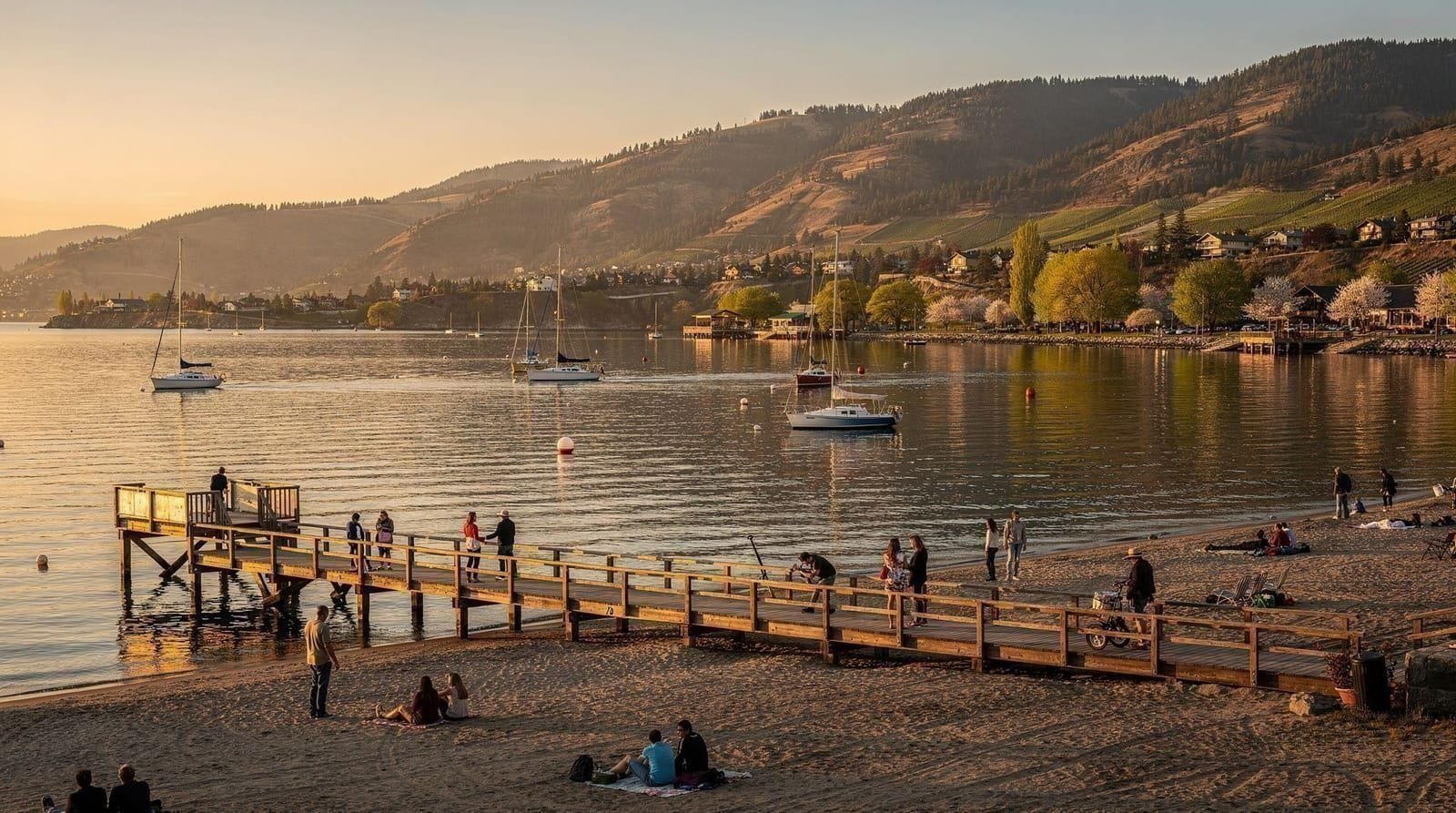
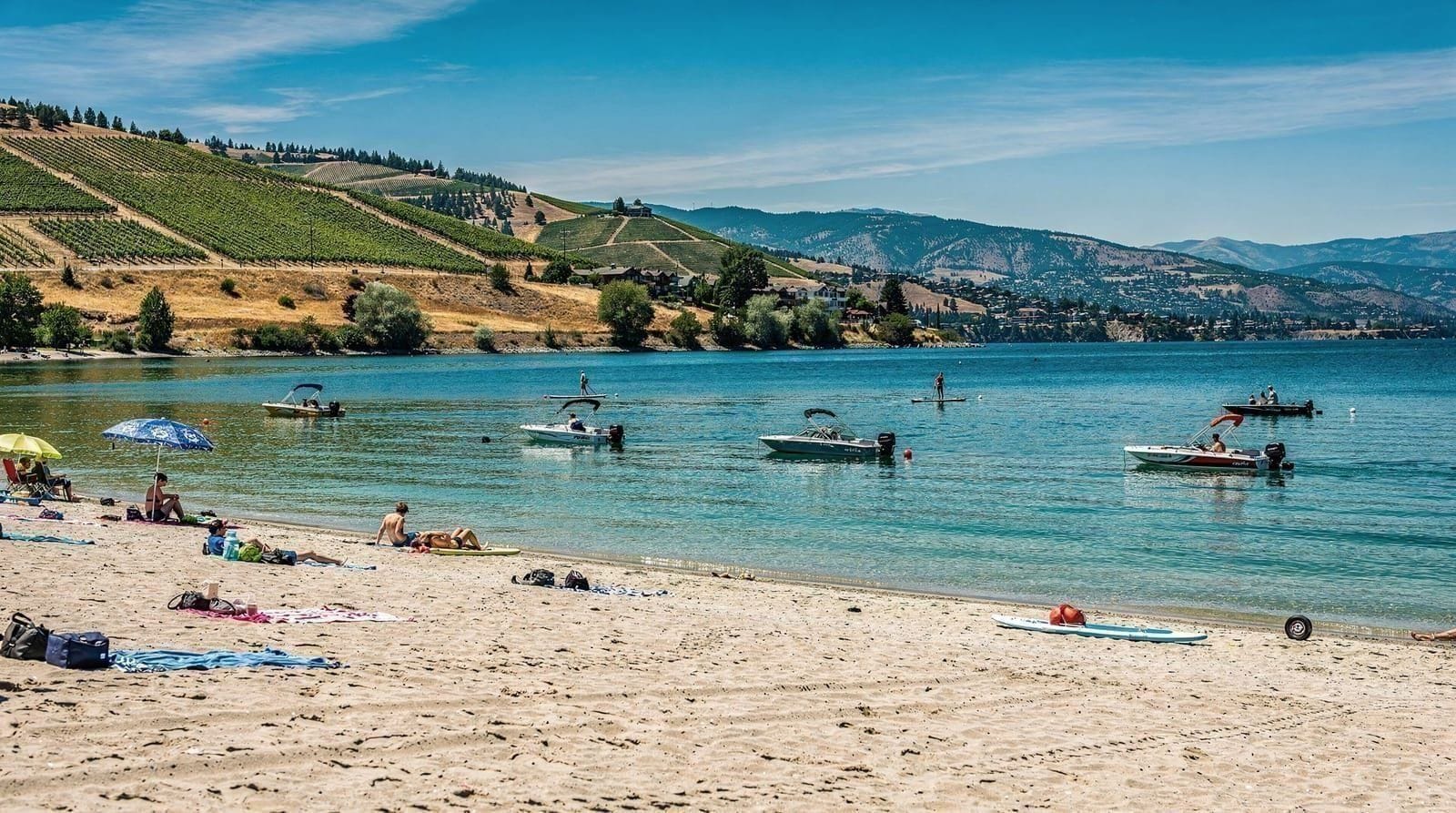
Okanagan Lake itself, running the length of the valley, adds a genuine beach and boating dimension that pure wine regions elsewhere often lack — a meaningful point of difference from, say, a wine trip built entirely around tasting rooms, and part of why the Vancouver Okanagan wine 6 days itinerary builds in both lake time and vineyard time rather than treating it as a pure wine tour.
Comparing the Okanagan to Vancouver’s coastal wine scene
Vancouver itself has no meaningful wine-producing terroir of its own — the coastal climate is far too wet — so the Okanagan represents BC’s only serious wine region within a reasonable trip from the city, distinct from the craft beer and cidery scene that has grown up around Vancouver proper (covered in the craft beer and breweries guide). For travelers with limited time who can’t make the trip inland, some Vancouver restaurants and wine bars carry a strong selection of Okanagan labels, offering a taste of the region without the drive — worth asking about specifically if an Okanagan visit isn’t in the cards on a given trip.
Getting there
Flying into Kelowna International Airport is the fastest route from Vancouver, roughly one hour in the air with multiple daily direct flights, followed by a rental car to reach wineries and, if desired, sub-regions further south. Driving from Vancouver covers 4 to 5-plus hours depending on the specific sub-region targeted, via the Coquihalla Highway, which requires winter tires and caution outside summer months given its mountain-pass elevation.
A rental car is genuinely necessary once you’ve arrived, regardless of how you got there — wineries are spread across rural roads with no meaningful public transit connecting them, and even a Kelowna-based, driver-included wine tour typically only covers wineries within that specific sub-region rather than the full valley.
A note on drinking and driving
Given how central wine tasting is to an Okanagan visit, it’s worth being direct about the obvious tension: tasting rooms pour real portions, and driving yourself between multiple wineries in a single day means genuinely limiting how much you actually drink at each stop, or spitting rather than swallowing tastings, which is standard practice at most serious tasting rooms and not considered rude. A guided tour with a driver removes this calculation entirely, which is the main practical argument for booking one over self-driving, beyond the convenience of not navigating unfamiliar rural roads between stops.
When to visit
June through September is peak wine-touring season, warm and dry with most wineries running full tasting-room hours and, often, on-site restaurants open for the season. September specifically brings harvest, when grape-picking activity is visible at working estates and the valley’s vineyards take on a golden late-summer character. Winter sees most wineries scale back to reduced tasting hours or weekends-only, and some close entirely for the off-season, so checking current hours before a winter visit matters more than it does in summer.
Practical tips
Book winery tours or reservations ahead during July and August weekends, when the valley’s most popular estates fill up well in advance. Pace yourself across tastings — a full day covering four or five wineries adds up faster than it seems, and a driver-included tour removes the need to manage that math yourself. For trip planning across the wider region, including how many days to allocate, the best-time-to-visit tool and trip planner both account for the Okanagan’s distinct interior climate compared to coastal Vancouver.
A gentler alternative: bee, orchard and wine combinations
Not every Okanagan day has to be a straight wine crawl. A Okanagan bee tour with wine tasting and lunch pairs a look at the valley’s orchard and pollinator side — working apiaries are a genuine, if lesser-known, part of the local agricultural story — with two or three winery stops and a sit-down lunch, a good option for a group with mixed interests or for a second day once the main wine-region highlights are covered. It’s a useful example of how the Okanagan’s agricultural identity extends beyond grapes, something visitors expecting a pure wine-country day sometimes miss.
Seasonality at a glance
| Month | Conditions | Notes |
|---|---|---|
| April-May | Mild, vines budding | Thinner crowds, some wineries still on reduced hours |
| June-August | Hot, dry, peak season | Full tasting-room hours, book weekends ahead |
| September | Warm days, harvest underway | Grape-picking visible at working estates, a genuine highlight |
| October-November | Cooling, harvest wrapping up | Good value, some cellar-door-only visits |
| December-March | Cold, many wineries reduced hours | Some close entirely; check ahead before a winter visit |
Is a wine trip to the Okanagan worth the drive?
For anyone who genuinely enjoys wine touring, yes — the 4 to 5-hour drive or short flight buys access to a wine region with a real diversity of sub-regions, from Kelowna’s larger commercial estates to Naramata’s boutique producers to Osoyoos’ desert reds, none of which Vancouver itself can offer given its wet coastal climate.
It’s a weaker fit for visitors with only a short Vancouver stay who’d rather spend limited days on city sights or the closer Sea-to-Sky corridor day trips; the Okanagan rewards travelers willing to commit at least two full days, ideally more, to justify the travel time. If you’re deciding between a coastal detour and an interior one, pairing it with Victoria on the same trip generally doesn’t work logistically — they sit on opposite sides of a Vancouver stay and are best treated as separate excursions rather than combined into one loop.
Frequently asked questions about Okanagan wine country
How many days should I spend in the Okanagan?
Most visitors need at least 2 days to make the drive worthwhile, with 3-5 days giving enough time to properly explore more than one sub-region, such as Kelowna and the Naramata Bench near Penticton, without rushing.
Do I need a car in the Okanagan?
Yes, in almost all cases. Wineries are spread across rural roads with no meaningful public transit connecting them, so either a rental car or a driver-included guided tour is necessary to get between tasting rooms.
Is the Okanagan better than Vancouver Island for wine?
The Okanagan is BC’s dominant wine region by scale and reputation; Vancouver Island has a small, growing wine scene of its own, but it doesn’t rival the Okanagan’s 200-plus wineries or its established sub-regional identities.
What’s the difference between Kelowna and Naramata Bench wineries?
Kelowna concentrates the largest, most tourist-oriented estates with the widest visitor infrastructure. The Naramata Bench, near Penticton, is known for smaller, family-run producers with limited outside distribution and a quieter, more intimate tasting experience.
Top experiences
Bookable activities with verified prices and instant confirmation on GetYourGuide.