Lynn Canyon guide
Vancouver: Capilano Suspension Bridge Park Ticket
- Free cancellation
Is Lynn Canyon Park free?
Yes, entry to Lynn Canyon Park, including the suspension bridge, is completely free. There's no admission fee or gate, unlike Capilano Suspension Bridge nearby, though parking can be limited on busy days.
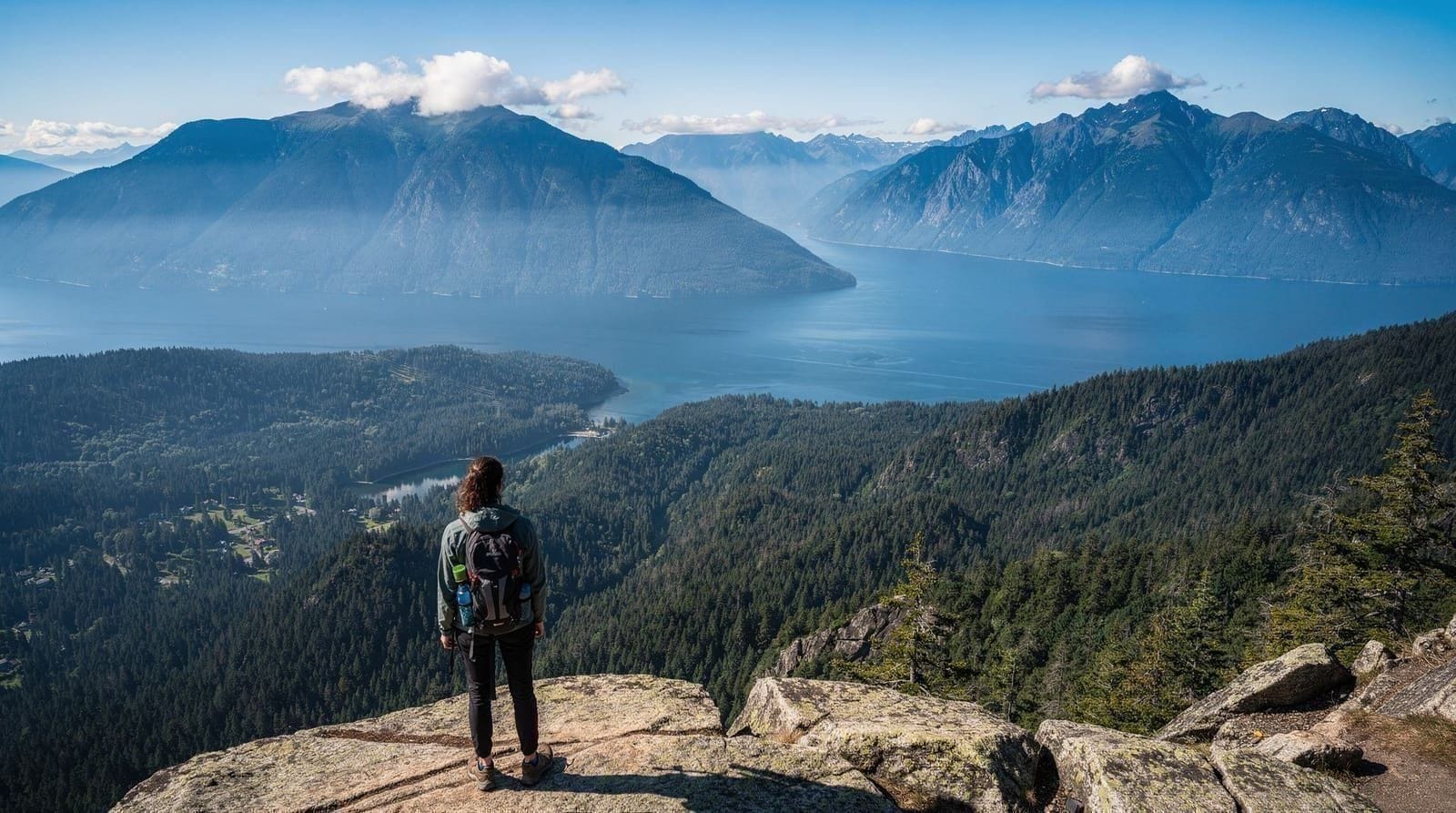
Lynn Canyon Park sits about 25 to 30 minutes from downtown Vancouver in North Vancouver, and it exists in an odd shadow: most visitors hear about it only after they’ve already looked up Capilano Suspension Bridge and stumbled on someone pointing out that a free version exists nearby. That framing undersells the park. Lynn Canyon isn’t a discount Capilano — it’s a genuine North Shore rainforest park that happens to also have a suspension bridge, and locals use it the way they’d use any neighbourhood park, not as a tourist attraction.
The park covers a substantial stretch of second-growth coastal rainforest along Lynn Creek, and while the suspension bridge draws the most attention online, most of a visit here is spent walking under a genuine forest canopy rather than queueing for photos at a single feature.
| Where | North Vancouver, ~25–30min from downtown |
| Cost | Free, no admission gate |
| Time needed | 1.5–2hrs for the bridge and Twin Falls Loop |
| Getting there | Car via Lions Gate or Second Narrows; SeaBus + bus |
| Best time | Weekday mornings; summer for swimming |
The suspension bridge
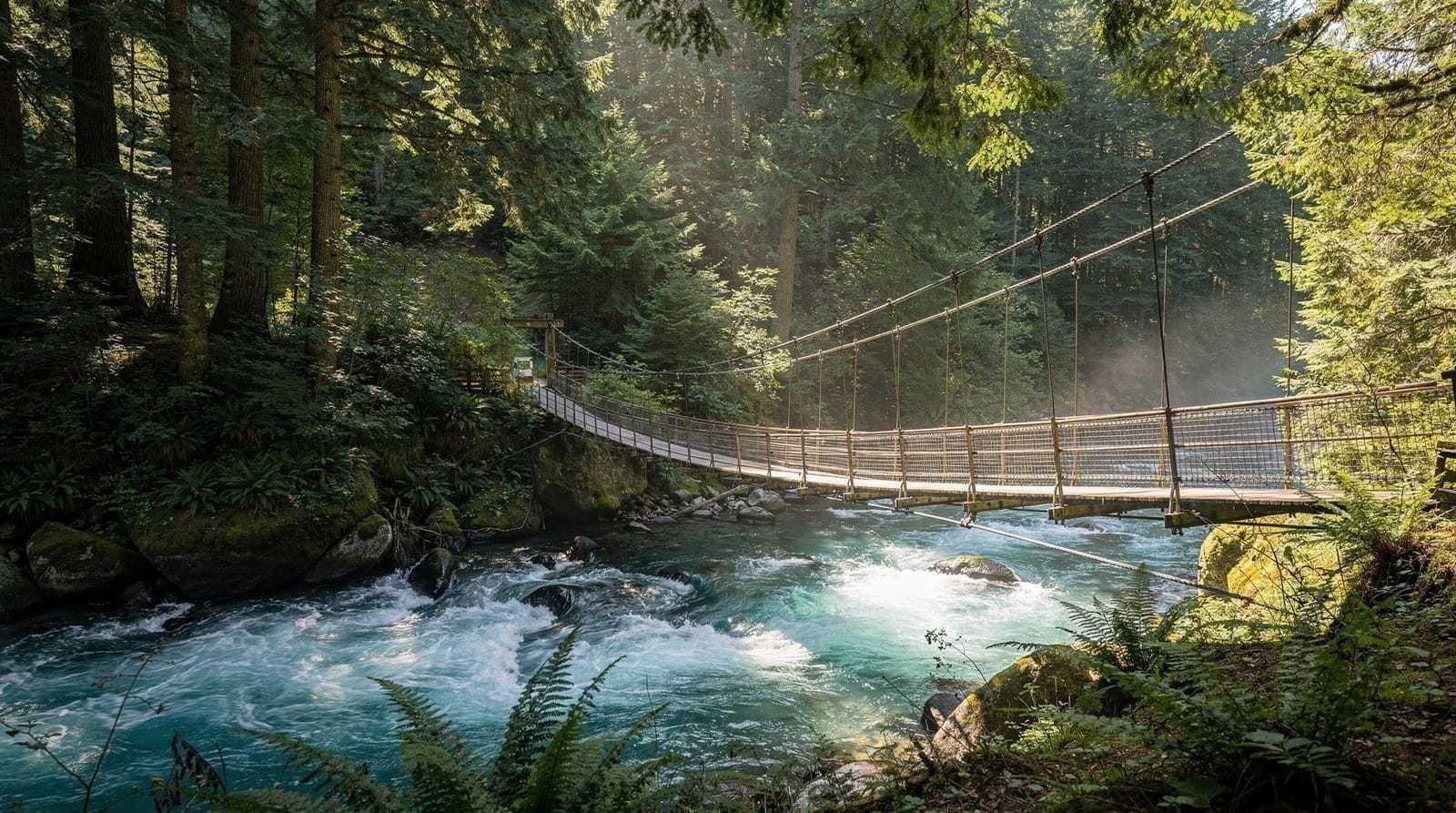
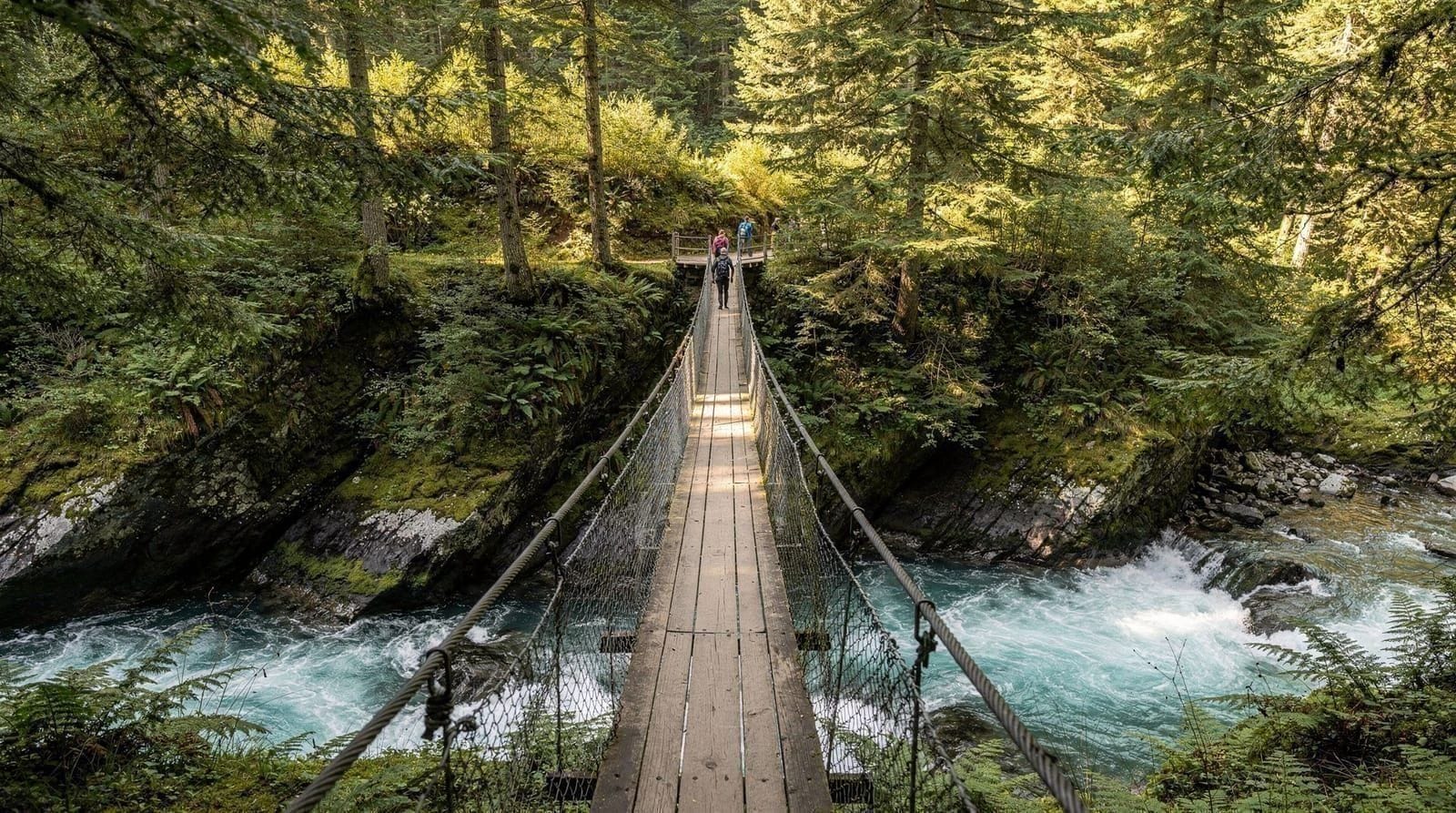
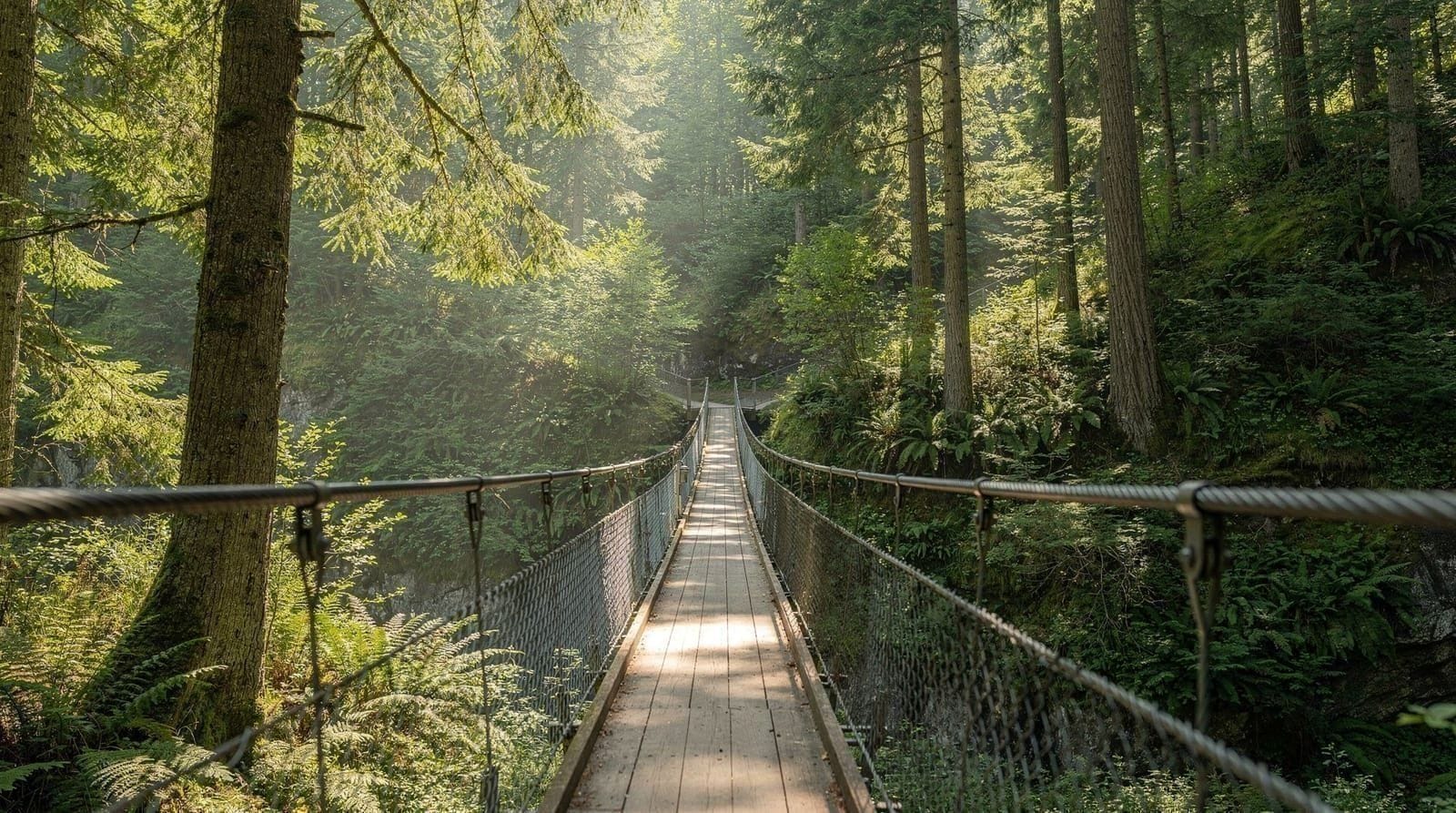
The Lynn Canyon suspension bridge spans the canyon at a height of about 50 metres, considerably shorter and less engineered for spectacle than Capilano’s crossing. There’s no admission booth, no gift shop funnel, and no queue management system — visitors walk in off the parking lot, cross the bridge, and continue into the park’s trail network.
It’s a smaller experience by design, and comparing the two bridges directly misses that Lynn Canyon was never built as a commercial attraction in the first place; it’s a municipal park with a notable feature, not a business built around one. For readers deciding between the two, the Capilano vs Lynn Canyon comparison lays out the trade-offs directly, including a full price and crowd comparison.
The bridge itself does sway noticeably underfoot, more than some visitors expect from photos, though it’s structurally routine maintenance-inspected infrastructure rather than a rickety attraction — the sensation is part of what people remember from the crossing, not a safety concern.
Twin Falls Loop
The most popular route through the park is the Twin Falls Loop, a roughly 3-kilometre circuit that descends into the canyon, crosses a second, quieter bridge near the falls themselves, and climbs back out on the opposite side. It’s rated easy to moderate — the descent and climb involve real stairs and some uneven terrain, but nothing technical, and most reasonably fit visitors complete it in 45 minutes to an hour without pushing pace.
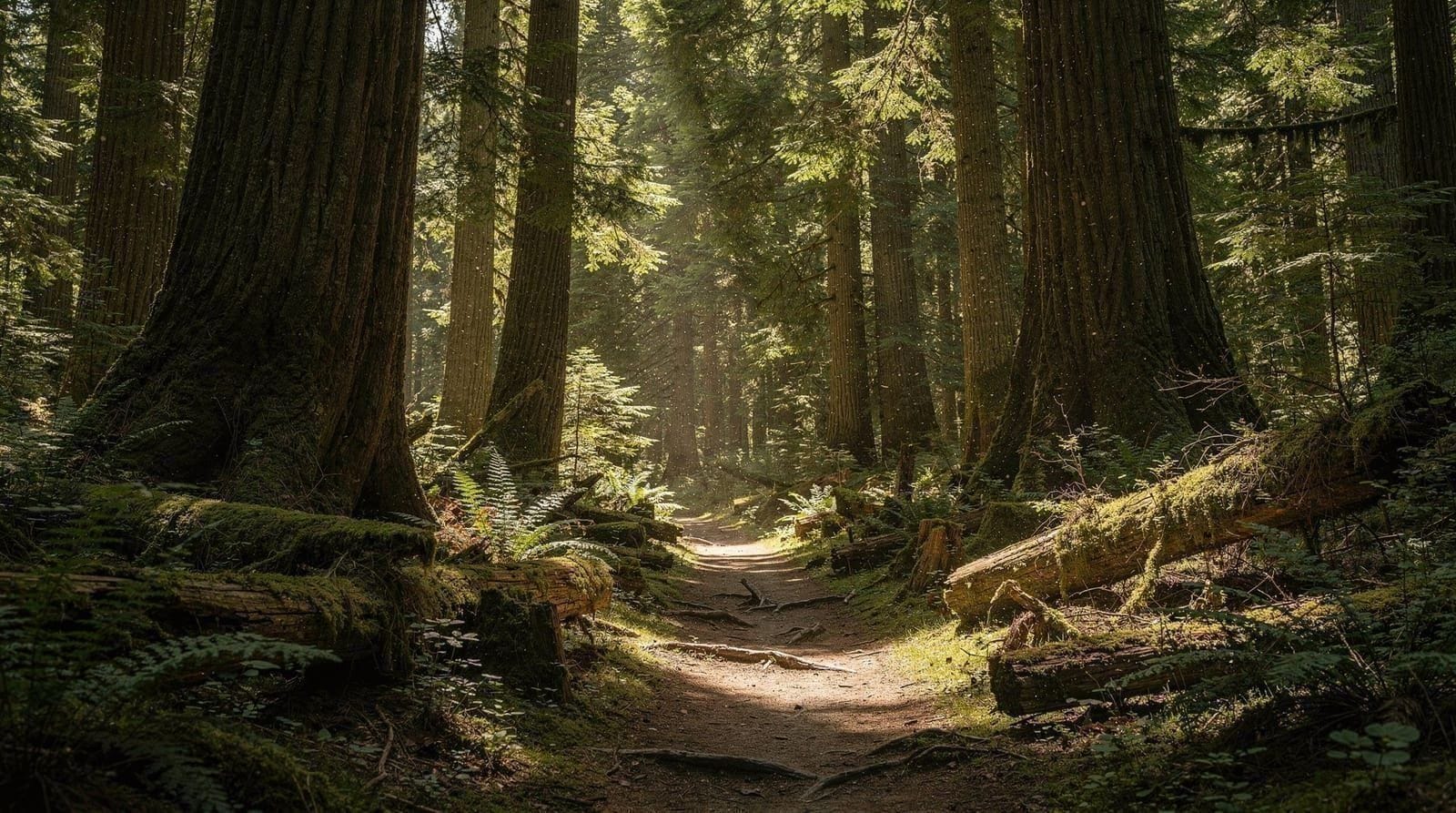
The forest along the route is genuine coastal rainforest, with large second-growth conifers and a canyon floor that stays noticeably cooler than the parking lot on hot days. The second bridge near Twin Falls is smaller still than the main suspension bridge and considerably quieter, since a share of visitors turn back after the main crossing without continuing the full loop.
The 30 Foot Pool
Partway along the canyon, a series of pools collectively known as the 30 Foot Pool draw local swimmers through the summer months, particularly on weekends. It’s not a managed swimming area — no lifeguards, no marked boundaries — and the canyon’s currents and submerged rocks have caused serious injuries and drownings over the years, mostly from people jumping from rock ledges without knowing what’s beneath the surface.
Anyone swimming here should stick to calm, shallow sections and avoid cliff-jumping regardless of what other visitors are doing; park signage warns about this for good reason, not as generic liability language. Water levels and current strength change significantly with rainfall and snowmelt upstream, so a pool that looks calm on one visit can run considerably faster a few days later after heavy rain — checking recent conditions is worth doing before getting in.
Baden Powell Trail access
Lynn Canyon connects directly to the Baden Powell Trail, the long-distance trail that runs across the entire North Shore from Deep Cove to Horseshoe Bay. Hikers wanting more distance than the Twin Falls Loop offers can extend eastward toward Quarry Rock and Deep Cove or westward toward other North Shore sections, though those extensions are genuinely longer outings requiring proper trail planning rather than a spontaneous add-on.
Most casual visitors stick to the marked loops inside the park itself. For a broader look at similar forest walks across the North Shore beyond Lynn Canyon and Quarry Rock specifically, the rainforest walks guide covers several quieter alternatives.
Ecology Centre
Near the park’s main entrance, the Lynn Canyon Ecology Centre offers small exhibits on the local rainforest ecosystem, aimed mostly at families and school groups. It’s a modest facility — not a destination on its own — but a reasonable stop before or after the trail loop, particularly with kids who want context for what they’re walking through. Admission is by donation, in keeping with the park’s overall no-fee approach. Staff there can also give current trail condition updates, useful after a period of heavy rain when parts of the canyon floor may be muddier or the creek higher than usual.
Wildlife and what to expect in the forest
The park’s rainforest supports a fairly typical North Shore mix of wildlife — banana slugs on the trail after rain, Douglas squirrels and Steller’s jays year-round, and occasional black bear sightings, particularly in late summer and fall when bears range more widely searching for food before winter. Sightings are infrequent enough that most visitors won’t encounter one, but it’s worth keeping food secured and making some noise on quieter trail sections, standard practice for any North Shore forest rather than something specific to Lynn Canyon.
A brief history
Lynn Canyon Park was established in 1912, donated to the district by a local logging company after the surrounding valley had already been heavily logged in the late 1800s and early 1900s — the forest visitors walk through today is second growth, not untouched old growth, though it’s had over a century to mature and doesn’t read as obviously “second growth” to a casual visitor.
The suspension bridge itself dates to the same early era, rebuilt more than once over the decades as the original structure aged; the current bridge is a modern, code-compliant rebuild rather than a century-old original, despite the historic framing sometimes applied to it. The park has remained free and municipally run for its entire history, unlike Capilano a few kilometres away, which was developed privately and commercially almost from the start.
Photography notes
The suspension bridge photographs well from the trail below rather than from on top of it — a shot looking up at the bridge from creek level, with the canyon walls and forest canopy framing it, tends to capture the scale better than photos taken while standing on the bridge itself, which mostly show planking and cable.
The Twin Falls viewpoint is the other strong photo opportunity in the park, particularly in spring when snowmelt increases water flow and the falls run fuller than the trickle they can become by late summer. Overcast days, common through much of the year in this climate, actually suit rainforest photography better than harsh sun, since the even light avoids the blown-out highlights and deep shadows that direct sunlight creates under a forest canopy.
Accessibility and who it suits
The main suspension bridge and the paved area immediately around the park entrance are reasonably accessible, but the Twin Falls Loop itself involves real stairs and uneven terrain that rules it out for wheelchair users or anyone with significant mobility limitations. Families with young children generally manage the main loop fine with some supervision on the stairs, though the swimming hole access points are steeper and less suited to toddlers than the main trail.
Visitors wanting a flatter, more accessible North Shore forest experience may find Pacific Spirit Park or the trail options in the rainforest walks guide better suited, though neither offers Lynn Canyon’s suspension bridge or swimming holes.
Combining with a longer North Shore hiking day
Visitors who find Lynn Canyon’s short loop too easy for a full day of hiking sometimes extend the outing by adding a section of the Baden Powell Trail toward Quarry Rock and Deep Cove, though that connection is a genuinely long trail day rather than a casual add-on and requires proper planning around timing and a return route. A more common pairing is treating Lynn Canyon as a warm-up before tackling the Grouse Grind later the same day, or as the gentler counterpart to a harder hike elsewhere on the North Shore covered in the best hikes near Vancouver roundup.
Getting there from downtown Vancouver
Lynn Canyon is roughly 25 to 30 minutes from downtown by car, crossing either the Lions Gate Bridge or the Second Narrows (Ironworks Memorial) Bridge depending on starting point and traffic. By transit, it’s reachable via SeaBus to North Vancouver followed by a bus connection, though the last stretch involves a short walk uphill to the park entrance. Parking is free but limited, and the lot fills reliably on sunny summer weekends — arriving before 10am or visiting on a weekday avoids most of the hassle. Overflow street parking exists nearby but adds a walk.
Comparing to nearby North Shore options
Visitors staying on the North Shore for a full day often combine Lynn Canyon with Capilano Suspension Bridge Park a short drive away, or with Grouse Mountain for a longer North Shore day covering both a rainforest walk and an alpine summit. A Capilano Suspension Bridge ticket is worth booking ahead if that’s part of the plan, since walk-up lines build through the day; a Grouse Mountain admission ticket similarly benefits from advance booking on weekends.
For visitors who only have time for one North Shore stop and are weighing the free option against the paid attractions, Lynn Canyon holds up well against both — it lacks Capilano’s Treetops canopy walk and Cliffwalk, and it lacks Grouse’s alpine views and wildlife, but it delivers a genuine forest experience at zero cost, which for a lot of travelers is exactly the point.
When to visit
Lynn Canyon is open year-round, and each season changes the experience meaningfully. Summer brings the swimming crowds and the fullest parking lot, but also the driest, most reliable trail conditions. Fall brings fewer people and good colour in the deciduous understory, though trails get slick after rain. Winter is genuinely quiet — cold, often wet, and occasionally icy on the bridge approach — but the canyon still runs and the forest takes on a different, mistier character. Spring runoff can make the creek and falls more dramatic, though trail mud increases correspondingly. Weekday mornings, in any season, are the most reliable way to avoid crowds at both the bridge and the swimming holes.
Practical notes
There are washrooms near the main entrance but limited facilities beyond that once inside the park itself, so plan accordingly before setting out on the loop. Cell coverage is inconsistent in the canyon itself, which matters mainly for anyone planning to navigate purely by phone map rather than the park’s physical trail signage. Dogs are permitted on leash on most trails. The park closes at dusk, and rangers do enforce this, so timing a late-afternoon visit with actual daylight hours matters more here than at some of the more lit, developed North Shore attractions.
Sturdy footwear is worth the effort even for the shorter loop — the stairs down into the canyon and back out get slick when wet, and flip-flops or worn sneakers are a common reason visitors turn back partway through the Twin Falls Loop. There’s no food service inside the park itself, so anyone planning to spend a few hours should bring snacks or plan to eat in North Vancouver before or after.
Visiting as part of a longer Vancouver stay
For travelers spending a week or more in the city rather than a single quick visit, Lynn Canyon rewards repeat trips in a way none of the paid North Shore attractions really can — there’s no reason not to return on a second sunny afternoon just to sit by the 30 Foot Pool, and locals do exactly that throughout the summer. Combined with a rotating set of other free or low-cost outdoor options around the city, including the Stanley Park Seawall downtown, it’s possible to fill several outdoor half-days on a longer trip without repeating a paid admission.
A quieter alternative to the busiest North Shore trails
Compared to Quarry Rock or the Grouse Grind, both of which have developed a reputation for weekend congestion that borders on a queue, Lynn Canyon’s larger trail network and lack of a single must-photograph feature keep it noticeably less bottlenecked even on a busy day. Visitors arrive, spread out across the Twin Falls Loop, the swimming holes, and the shorter side paths, rather than converging on one bridge or one viewpoint the way crowds do elsewhere on the North Shore. It’s not empty on a sunny Saturday, but it rarely produces the single-file trail traffic that defines a bad day at Quarry Rock.
Getting to the North Shore beyond Lynn Canyon
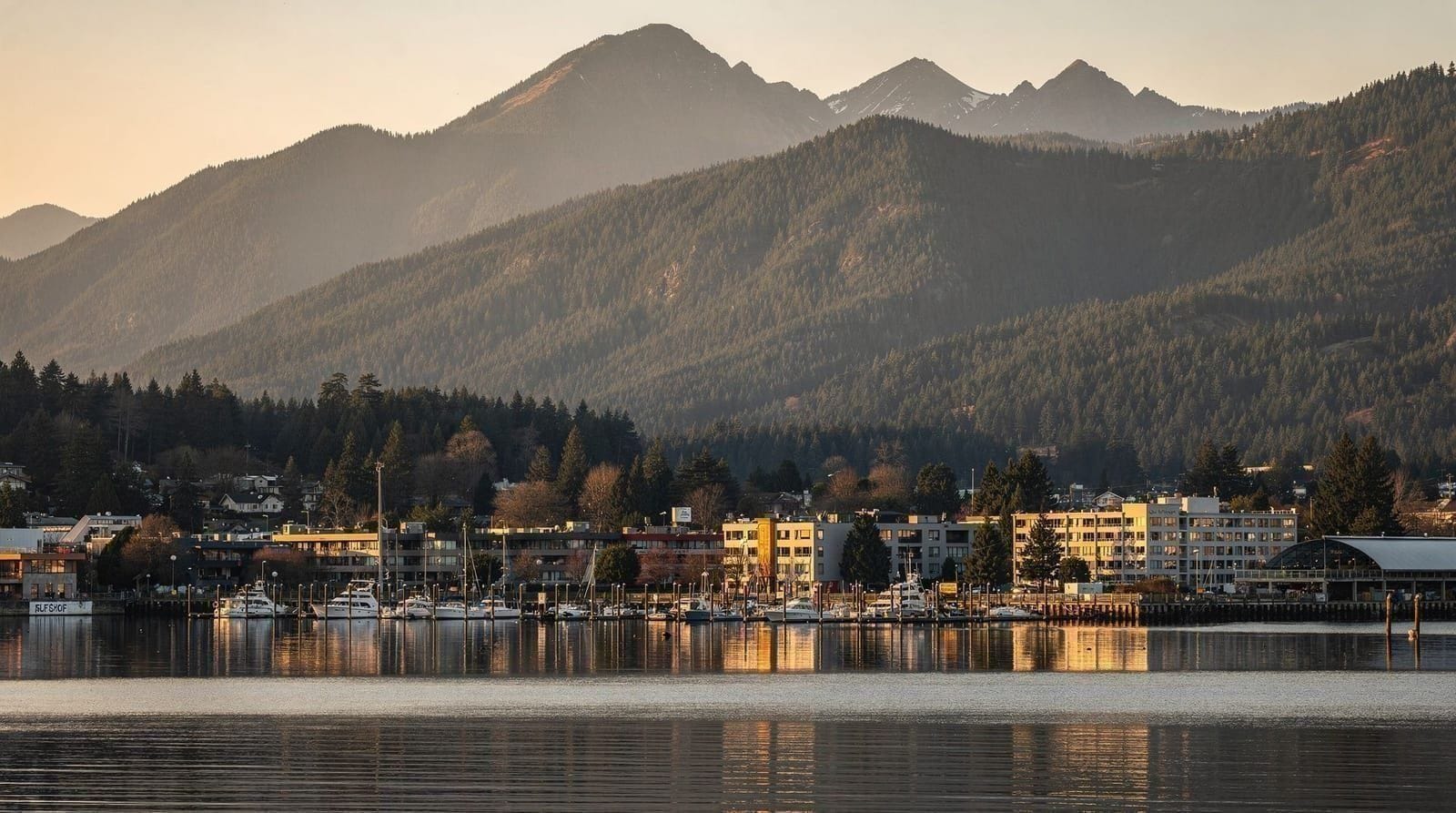
For visitors basing a longer stay on the North Shore rather than downtown, Lynn Canyon sits within easy reach of the district’s other main draws. Grouse Mountain and Capilano are both a short drive away, and the North Vancouver waterfront area around Lonsdale Quay offers a wider range of restaurants and shops than anything near the park entrance itself, worth knowing for anyone planning to eat before or after a visit rather than packing food in.
Lynn Canyon versus Deep Cove’s Quarry Rock
Visitors trying to fit only one North Shore forest walk into a tight schedule sometimes weigh Lynn Canyon against Quarry Rock rather than against Capilano. The two aren’t quite interchangeable: Quarry Rock is built around a single viewpoint reached by a moderate climb, while Lynn Canyon is a flatter, more varied loop with a bridge, waterfalls, and a swimming hole along the way. For visitors who want a clear payoff view, Quarry Rock wins; for visitors who want more variety in a shorter, easier walk, Lynn Canyon is the better fit. Both are free to visit and sit within a similar drive time from downtown, so the choice comes down to preference rather than logistics.
Is Lynn Canyon worth visiting if you’ve already done Capilano?
Yes, and this is arguably the strongest case for Lynn Canyon specifically — visitors who’ve already paid for and experienced Capilano’s Treetops and Cliffwalk sometimes assume they’ve “done” the North Shore suspension bridge experience and skip Lynn Canyon as redundant. That’s a mistake. Lynn Canyon isn’t a lesser version of the same experience; it’s a genuinely different kind of visit, closer to a local’s Sunday walk than a curated attraction, and the swimming hole alone gives it a reason to visit that Capilano simply doesn’t offer. For anyone spending more than two or three days in Vancouver, adding Lynn Canyon to a North Shore day that already includes Capilano or Grouse costs nothing and rarely disappoints.
Realistic time budget
For a straightforward visit covering the suspension bridge and Twin Falls Loop, budget 1.5 to 2 hours including time at the swimming holes if the weather cooperates. Adding the Ecology Centre or extending onto the Baden Powell Trail pushes that toward a half day. Combined with a nearby stop at Capilano or Grouse Mountain, a full North Shore day built around Lynn Canyon as the first stop works well, since it’s free and quick, leaving the bulk of the day’s budget and energy for the paid attraction that follows.
Swimming hole safety in more detail
Because the 30 Foot Pool draws the most safety-related questions of anything in the park, it’s worth being specific rather than just repeating a general warning. Cliff-jumping is the leading cause of serious injury here, largely because submerged rocks aren’t visible from above and their position shifts with each season’s water flow, so what was clear last summer isn’t guaranteed to be clear this one.
Currents strengthen quickly after rain or during spring snowmelt, turning a lazy-looking pool into something with real pull within a day or two. Anyone swimming should stick to the calmer, shallower stretches, avoid swimming alone, and treat posted signage as a genuine safety notice rather than boilerplate liability language — park rangers and North Shore Rescue have responded to real incidents here, not hypothetical ones.
What locals actually do here
Ask a North Vancouver resident about Lynn Canyon and the answer rarely involves the suspension bridge at all — it’s more likely to be “I go swim at the pools after work in July” or “it’s where I take out-of-town family for a free afternoon.” That local-park framing is the most useful lens for visitors deciding how much time to give it: treating Lynn Canyon as a quick tick-box stop on the way to somewhere else undersells it, while treating it the way a nearby resident would — a place worth returning to more than once on a longer trip — gets closer to what actually makes it worth the drive out.
Practical FAQ
Do you need to book anything in advance? No. Lynn Canyon has no admission gate, no timed entry, and no booking system — you simply arrive and walk in, which is part of its appeal compared with Capilano’s ticketed model.
Is Lynn Canyon busier or quieter than Capilano? Quieter overall, and it stays that way even in peak summer, since visitors spread out across a larger trail network rather than converging on one bridge. Capilano’s ticketed, single-loop design tends to concentrate crowds more than Lynn Canyon’s does.
Top experiences
Bookable activities with verified prices and instant confirmation on GetYourGuide.