Quarry Rock hike guide
Vancouver: Indian Arm and Granite Falls Zodiac Boat Tour
Duration: 3 hours
How long is the Quarry Rock hike?
The round trip from Deep Cove village to Quarry Rock and back is about 3.8 kilometres, typically taking 1.5 to 2 hours including a break at the viewpoint. It's rated moderate, with a steady but manageable climb on the Baden-Powell Trail.
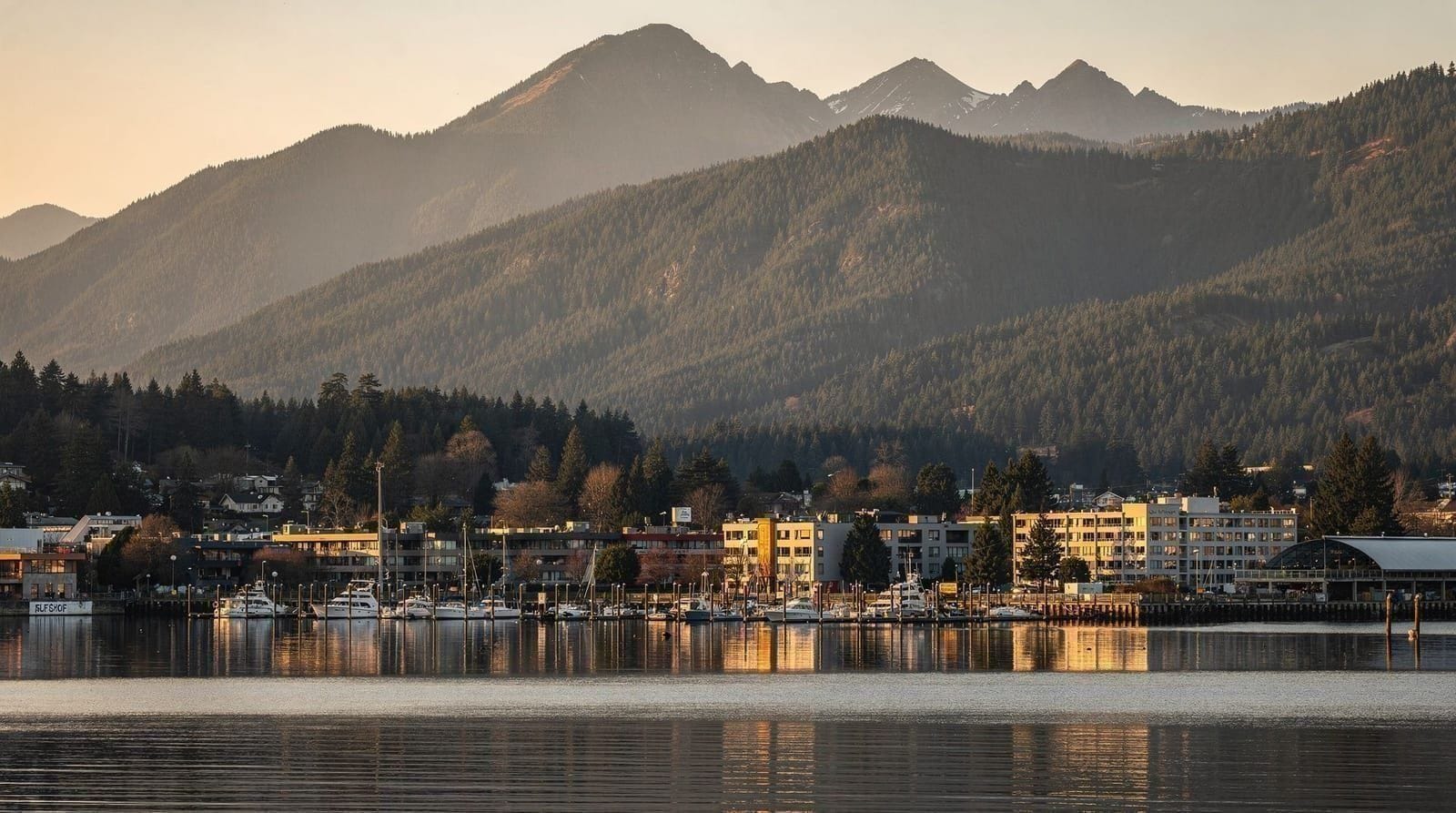
Quarry Rock is the hike most North Shore locals mention first when a visitor asks for something short, scenic, and not too demanding — and that reputation has turned it into one of the busiest trails in the Vancouver area. It starts right from the village of Deep Cove, climbs through forest on a section of the Baden-Powell Trail, and ends at a granite outcrop with a clear view down Indian Arm, the long fjord that separates the North Shore mountains from Belcarra and Anmore.
| Distance | 3.8 km round trip |
| Time needed | 1.5–2 hours |
| Difficulty | Moderate, ~100m elevation gain |
| Getting there | 30 min drive from downtown, or bus to SeaBus + Deep Cove connection |
| Best time | Weekday mornings, or before 9am on weekends |
Distance and difficulty
The round trip from the Deep Cove trailhead to Quarry Rock and back covers roughly 3.8 kilometres, with a total elevation gain of about 100 metres spread over a steady, well-graded climb. It’s rated moderate rather than easy — there are enough roots, steps, and uneven sections to rule out flip-flops or a stroller, but nothing that requires technical hiking experience. Most visitors complete the return trip, including a stop at the viewpoint, in 1.5 to 2 hours. Fast hikers can do it in under an hour each way; families with young kids or anyone stopping frequently for photos should budget closer to 2.5 hours.
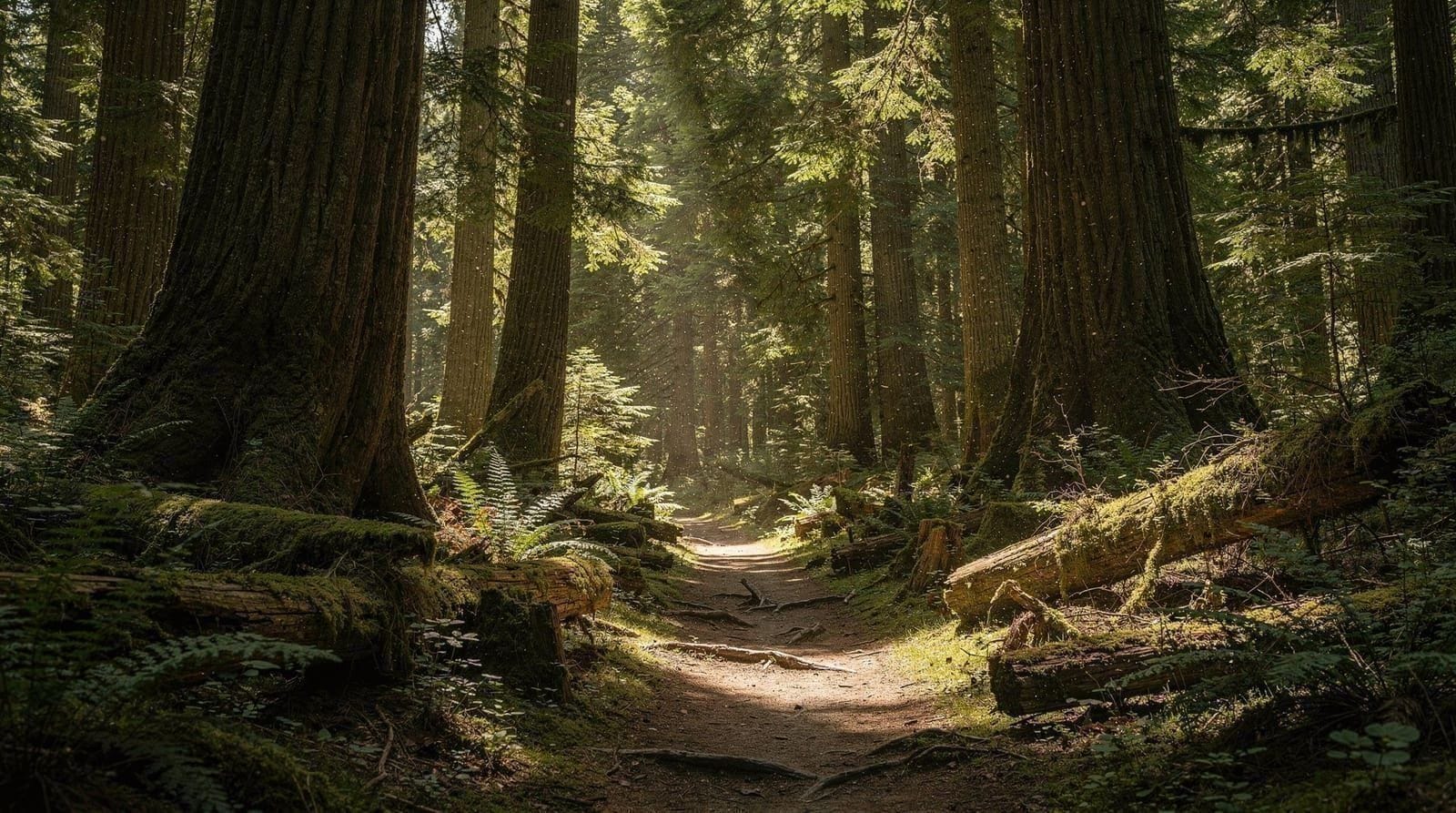
The trail surface is mostly packed dirt and exposed roots typical of North Shore forest trails, with a handful of wooden staircases and boardwalk sections over the muddier stretches. It’s well marked and heavily used, which cuts both ways — getting lost is unlikely, but solitude on the trail itself is rare outside early mornings.
The trailhead and starting point
The Baden-Powell Trail entrance for Quarry Rock sits a short walk from the heart of Deep Cove village, up a residential street that can be easy to miss without a map pulled up in advance. There’s no formal signage-heavy trailhead in the way some more commercial hikes have — it starts almost unceremoniously between houses before opening into forest within a few minutes. Following a mapping app or the park’s posted trail markers from the village center is the simplest way to find it without wrong turns.
The viewpoint
Quarry Rock itself is a broad, sloped granite face that opens up without warning after a forested climb, with Indian Arm spread out below and the mountains of Belcarra Regional Park visible across the water. It’s a genuinely good view for the effort required, which is exactly the trail’s appeal and its problem — on a clear weekend afternoon, the rock face can hold dozens of people at once, more crowded picnic spot than quiet lookout.
Visiting early morning or on a weekday is the only reliable way to get the rock mostly to yourself. The rock face slopes toward the drop-off, and while it’s not a sheer cliff, footing gets genuinely slippery when wet — a real consideration for anyone visiting after rain or in winter, when the same view that photographs well in summer sun becomes a more careful undertaking.
Why it gets so busy
Quarry Rock’s combination of short distance, real payoff, and easy access from a walkable village makes it an obvious recommendation for any Vancouver visitor with limited time, which is precisely why it’s become oversubscribed. Weekend afternoons, especially from late spring through early fall, routinely see the trail itself feel congested in narrower sections, with hikers passing each other in both directions on a single-track path.
It’s not a wilderness experience during peak hours, and travelers expecting solitude should either adjust their timing or consider a quieter North Shore trail such as Lighthouse Park or the rainforest walks further from the village center. Social media exposure over the past several years has only accelerated the crowding, to the point where some locals now actively avoid the trail on weekends and treat it as a weekday-only outing.
Parking in Deep Cove
Parking is the trail’s real bottleneck, not the trail itself. Deep Cove’s village core has limited free street parking and a couple of small paid lots, all of which fill by mid-morning on weekends through summer. Arriving after 10am on a Saturday or Sunday in July or August often means circling for 15 to 20 minutes or parking a genuine walk away from the trailhead. Weekday visits, or arriving before 9am on weekends, avoid most of this.
Some visitors take transit instead — a bus connects Deep Cove to the SeaBus terminal in North Vancouver, removing the parking problem entirely at the cost of a longer, multi-leg journey. For visitors staying in North Vancouver already, checking bus schedules in advance is worth it since service frequency drops meaningfully outside peak commuting hours.
Combining with Deep Cove village and Indian Arm
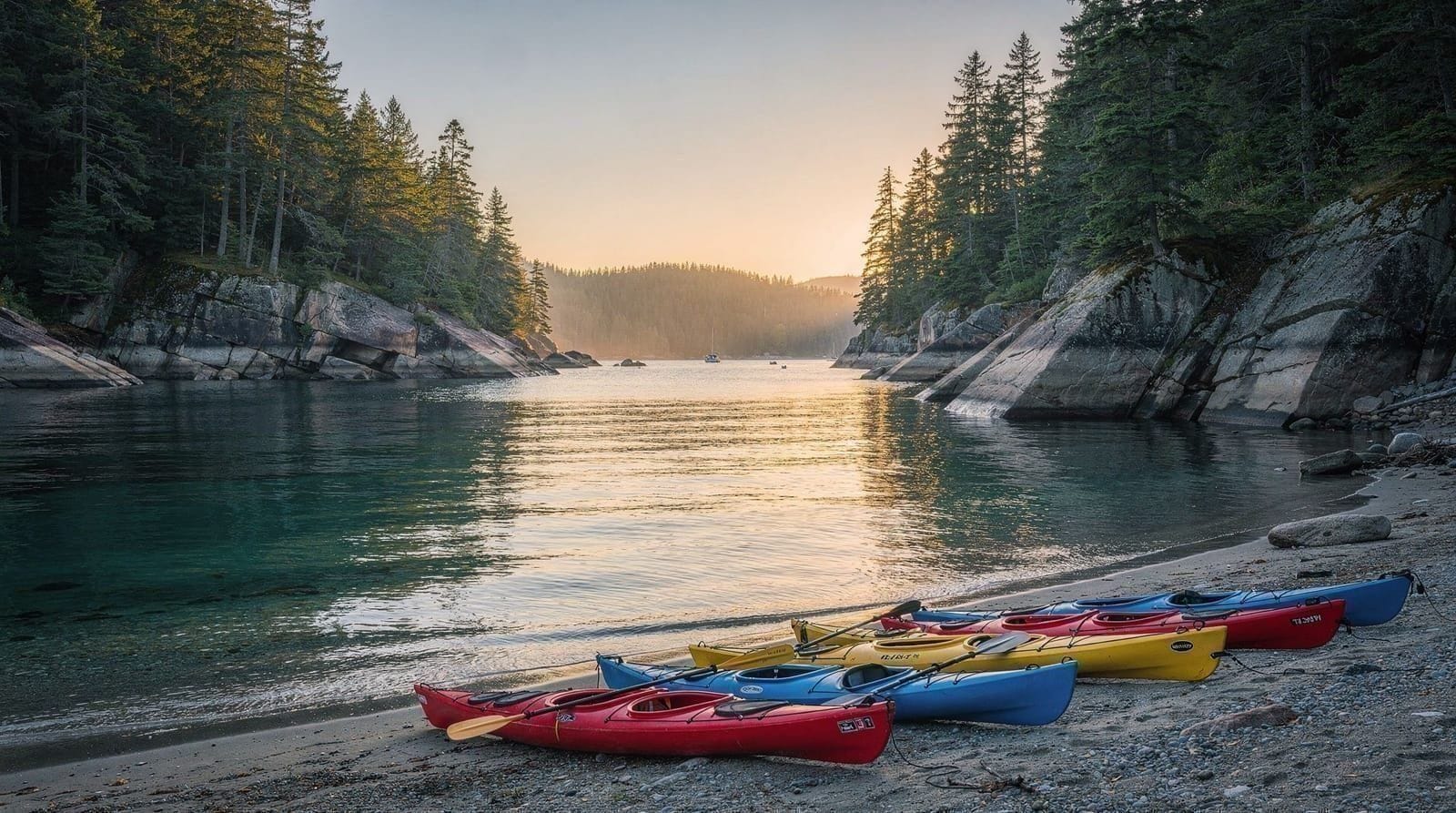
Deep Cove itself is worth time beyond the trailhead — a small waterfront village with cafes, a well-known doughnut shop with a permanent line, and kayak rental outfits renting onto the calm waters of Indian Arm.
Visitors wanting to see more of the fjord than the Quarry Rock viewpoint offers can extend the day with a boat trip: a Zodiac boat tour to Granite Falls covers more of Indian Arm’s length by water in a couple of hours, reaching a waterfall inaccessible by trail, while a Indian Arm luncheon cruise offers a slower, seated alternative for anyone who’s already done enough climbing for the day. Both give a genuinely different vantage point on the same fjord the Quarry Rock viewpoint only shows from above.
Indian Arm and the fjord below
Indian Arm is a genuine fjord, carved by glacial activity and reaching depths of over 200 metres in places, stretching roughly 20 kilometres north from Burrard Inlet into increasingly remote, mountainous terrain accessible mainly by boat. From Quarry Rock, visitors see only its southern end near Deep Cove, but the fjord continues much further north into terrain with no road access at all, explaining why boat tours rather than hiking trails are the standard way to see more of it.
The land on both sides of the Arm carries deep significance for the Tsleil-Waututh Nation, whose traditional territory includes this waterway, and whose name translates roughly to “people of the inlet” — worth keeping in mind as context for a landscape that can otherwise read as simply scenic rather than as a place with a long human history predating the village of Deep Cove itself.
Family suitability
Quarry Rock works reasonably well for families with older, sure-footed kids — the trail’s moderate rating and real elevation gain make it a genuine hike rather than a stroller-friendly path, but it’s short enough that most children over about eight or nine manage it without much complaint, especially with the payoff view as motivation.
It’s less suited to very young children or anyone needing a flat, paved route; the trail’s roots, steps, and the sloped, unrailed rock face at the viewpoint itself require actual supervision rather than a passive walk. Families wanting an easier North Shore option with a similarly worthwhile payoff might consider Lynn Canyon instead, which has less elevation gain and a swimming hole as an additional draw for kids.
What to bring
Water is worth carrying even for a hike this short, particularly in summer when the forested sections trap heat and humidity more than the breezy village below suggests. Grippy, closed-toe footwear matters more here than the moderate rating implies, especially for the final approach to the rock face itself, which can be uneven and slick. There’s minimal shade at the viewpoint itself, so sun protection is worth considering for anyone planning to linger there rather than just snap a photo and head back.
Etiquette on a crowded trail
Because Quarry Rock sees such heavy weekend traffic on a relatively narrow, single-track path, basic trail etiquette matters more here than on quieter routes. Uphill hikers conventionally get the right of way, though in practice on the busiest stretches everyone ends up yielding to everyone else simply to keep foot traffic moving. At the viewpoint itself, the unspoken convention is to take a photo and move slightly aside rather than occupying the best vantage point indefinitely, since there’s rarely enough space for every visitor present to have an unobstructed view at the same time. None of this is formally posted anywhere, but visitors who’ve done the hike on a busy day generally pick up on it quickly.
What surprises first-time visitors
Two things tend to catch first-time visitors off guard at Quarry Rock. The first is how quickly the trail transitions from a residential street into genuine forest — there’s no long approach or warm-up, just a few minutes of walking before the village disappears behind tree cover. The second is how exposed and sloped the viewpoint itself actually is compared to photos, which tend to flatten the rock face and make it look like a simple platform rather than a genuinely sloped granite surface with a real drop on one side. Neither is a reason to avoid the hike, but both are worth knowing in advance so the actual experience doesn’t feel like a mismatch with expectations set by a handful of curated photos online.
Photography tips
The Quarry Rock viewpoint faces roughly east across Indian Arm, which means morning light tends to work better for photography than late afternoon, when the sun sits behind the photographer and can wash out the water’s colour and depth in a frame. Midday sun creates the flattest, least interesting light for the fjord itself, though it’s also when the trail and rock face are busiest, so there’s a genuine trade-off between good light and having space to actually set up a shot.
Overcast days, while less dramatic than a clear one, spread even light across the water and mountains and can produce more consistently usable photos than a harsh midday sun, similar to the pattern seen at other North Shore viewpoints such as Cypress lookout or the summit of Grouse Mountain.
Weekday versus weekend: what actually changes
The gap between a weekday and weekend visit to Quarry Rock is larger than at most trails on this list. On a weekday morning, the trail can feel almost like a normal quiet North Shore hike — regular but modest foot traffic, easy parking, and enough space at the viewpoint to sit and linger without competing for a spot.
On a summer weekend afternoon, the same trail can involve genuine queuing at narrow sections and a rock face crowded enough that finding an unobstructed photo angle takes real patience. For visitors with any flexibility in their schedule, shifting a Quarry Rock visit to a weekday, even by a single day, is close to the single most effective change available — more impactful than an early alarm on a Saturday, since weekend crowds build steadily through the morning regardless of start time.
Kayaking as an alternative to hiking
For visitors who’d rather skip the climb entirely, Deep Cove’s kayak rental outfits offer a genuinely different way to spend time on Indian Arm — paddling out from the village onto calm, sheltered water that’s well suited to beginners, with the same mountain scenery visible from water level instead of from the Quarry Rock viewpoint above. It’s a reasonable substitute for anyone with knee or mobility concerns that make the hike impractical, or simply for a change of pace on a return visit to Deep Cove after already having done the trail once.
Combining with a wider North Shore day
Deep Cove sits at the eastern edge of the North Shore, further from Capilano and Grouse Mountain than Lynn Canyon is, which makes a single day covering Quarry Rock plus one of those attractions a longer drive than it might first appear — figure 20 to 30 minutes each way between Deep Cove and the Capilano/Grouse area, on top of whatever time gets spent at each stop.
Visitors with a full day and a car can reasonably combine Quarry Rock in the morning, when the trail and parking are quietest, with an afternoon at Grouse Mountain or Capilano once the sun is higher and photography conditions there improve. Visitors without a car, relying on transit or a guided tour, are usually better off treating Deep Cove as a dedicated half day on its own rather than trying to string it together with North Shore attractions further west, since the transit connections between the two areas add real time.
Alternatives if Quarry Rock is too crowded
Visitors who arrive to find the Deep Cove parking lots full or the trail visibly congested have a few reasonable fallbacks rather than giving up on a North Shore outing entirely. Lynn Canyon, a short drive back toward the city, offers a comparable rainforest walk with its own swimming hole and considerably more parking capacity.
For visitors specifically chasing a view with less effort and less competition, the Grouse Grind is a harder trade — much tougher climbing, but a summit with an operating gondola and no parking bottleneck in the same way, since Grouse’s paid lot is larger and turns over faster than Deep Cove’s free street parking. Anyone willing to skip hiking entirely and see Indian Arm from the water instead can go straight to the boat tour options below without ever setting foot on the trail.
Realistic time budget
For a half-day plan built around Quarry Rock: budget 2 hours for the hike itself including the viewpoint stop, 30 to 45 minutes in the village for food or coffee, and an additional 1.5 to 2 hours if adding a boat trip on Indian Arm. Door to door from downtown Vancouver, including the roughly 30-minute drive each way, the whole outing fits comfortably into a morning or afternoon rather than requiring a full day.
When to go
The trail is accessible year-round, though conditions shift noticeably by season. Summer brings the reliable dry footing and the worst crowding and parking pressure. Fall offers cooler hiking temperatures and thinner crowds, with occasional wet, slippery sections after rain. Winter is quiet and often the best time for solitude at the viewpoint, though the granite rock face itself can be genuinely slick when wet or icy, and footwear with real grip matters more than it does in summer. Spring sits between the two, with mud in shaded sections as snowmelt and rain move through.
Comparing to other North Shore trails
Quarry Rock is often mentioned alongside Lynn Canyon as a short, accessible North Shore option, though the two deliver different things — Lynn Canyon centers on a rainforest loop and swimming holes, while Quarry Rock is built entirely around a single payoff view. Visitors trying to decide between North Shore hiking options more broadly may find the best hikes near Vancouver roundup useful for weighing Quarry Rock against the Grouse Grind, Lighthouse Park, and other alternatives before committing a morning to any one of them.
Is it worth the crowds?
For a first Vancouver visit, yes — the view-to-effort ratio is genuinely hard to beat elsewhere on the North Shore, and even a busy version of Quarry Rock delivers more payoff for less climbing than most alternatives. For a second or third visit to the region, or for anyone who’s already seen it once, the crowding starts to outweigh the novelty, and time is often better spent on a quieter trail nearby or a boat trip that shows Indian Arm from a different angle entirely.
What to expect if you’ve never done a North Shore hike before
Quarry Rock is a reasonable first North Shore hike for visitors without prior forest-trail experience, since the trail is well marked, heavily used, and short enough that getting genuinely lost is unlikely even without hiking experience. That said, the terrain is still real forest trail — roots, uneven footing, and a handful of staircases — rather than a paved path, so treating it as a proper hike rather than a casual stroll in flip-flops matters for comfort and safety alike. First-timers who find Quarry Rock manageable and enjoyable often use it as a gateway to trying a longer or steeper North Shore trail on a return visit, since it gives a genuine, if compressed, sense of what the region’s forest hiking involves.
Timing a visit around tide and daylight
Unlike some coastal Vancouver activities, Quarry Rock itself doesn’t depend on tide, since the trail and viewpoint sit well above the waterline. Daylight matters more for planning: visitors hoping to combine the hike with an early-morning or evening light for photography should check sunrise and sunset times for the specific season of their visit, since summer’s long evenings allow for a much later start than a winter visit, when daylight runs out considerably earlier and the trail can feel genuinely dark under forest canopy well before official sunset.
A note on cell coverage and safety
Cell coverage along the Quarry Rock trail is generally reliable given its proximity to Deep Cove village, unlike some of the more remote North Shore trails further from a populated area. That said, downloading an offline map or telling someone your planned route before setting out remains sound practice on any forest trail, even a short and well-trafficked one like this. The trail’s popularity also means help is rarely far away in the event of a minor injury or twisted ankle, since other hikers are passing through constantly during daylight hours, particularly on weekends.
Combining Quarry Rock with lunch in Deep Cove
Deep Cove’s small village core has a genuine concentration of good casual dining within a short walk of the trailhead, making a post-hike meal an easy add-on rather than a separate errand. A well-known local doughnut shop draws a standing line for much of the day, worth budgeting extra time for if it’s a priority rather than an afterthought. Cafes and casual restaurants along the waterfront give a range of options for refueling after the climb, and many hikers treat the post-hike meal as as much a part of the outing as the trail itself, given how compact and walkable the village is relative to the trailhead.
Top experiences
Bookable activities with verified prices and instant confirmation on GetYourGuide.