Stanley Park with kids — free and low-cost family activities
Vancouver: Stanley Park Bicycle Tour
Duration: 3 hours
What can kids do in Stanley Park for free?
Most of Stanley Park costs nothing — the Seawall, beaches, Lost Lagoon, Nature House, and totem pole displays at Brockton Point are all free. Paid extras include the seasonal mini train, the outdoor pool at Second Beach, guided bike rentals, and the Vancouver Aquarium inside the park.
Stanley Park is the single best value in Vancouver for a family with kids, mostly because so much of it costs nothing at all. A 1,000-acre urban park wrapped in a 9-kilometre waterfront Seawall, it has enough free space, beaches and low-key attractions to fill an entire family day without a single admission ticket — though the handful of paid extras inside the park are worth knowing about too.
| Free | Seawall, beaches, Lost Lagoon, Nature House, totem poles |
| Paid extras | Mini train (~CAD 8), Second Beach pool, bike rental, Aquarium |
| Full family day cost | Around CAD 250–350 for 4, with all paid extras |
| Getting there | Walk from West End/Coal Harbour, or free peak-season shuttle |
| Best time | Weekday mornings; summer for the pool and mini train |
For families budgeting a Vancouver trip carefully, Stanley Park is worth front-loading into the itinerary specifically because it can absorb as much or as little time and money as a given day allows — a rushed, unplanned stop still delivers real value on a beach or Seawall walk, while a fully planned day with the Aquarium, the mini train and a bike rental can fill a genuinely complete, satisfying day on its own.
Why Stanley Park anchors so many Vancouver family itineraries
Nearly every Vancouver family trip-planning resource lists Stanley Park among the first recommended stops, and the reason goes beyond simple convenience — few urban parks anywhere combine this much genuine variety (beaches, wildlife, a world-class aquarium, cultural sites, forest trails) within walking or short-shuttle distance of a single entrance. For families balancing a tight budget against a desire for real activity variety, that combination of free and low-cost options within one location is hard to match anywhere else in the city.
The Seawall — flat, safe and genuinely scenic
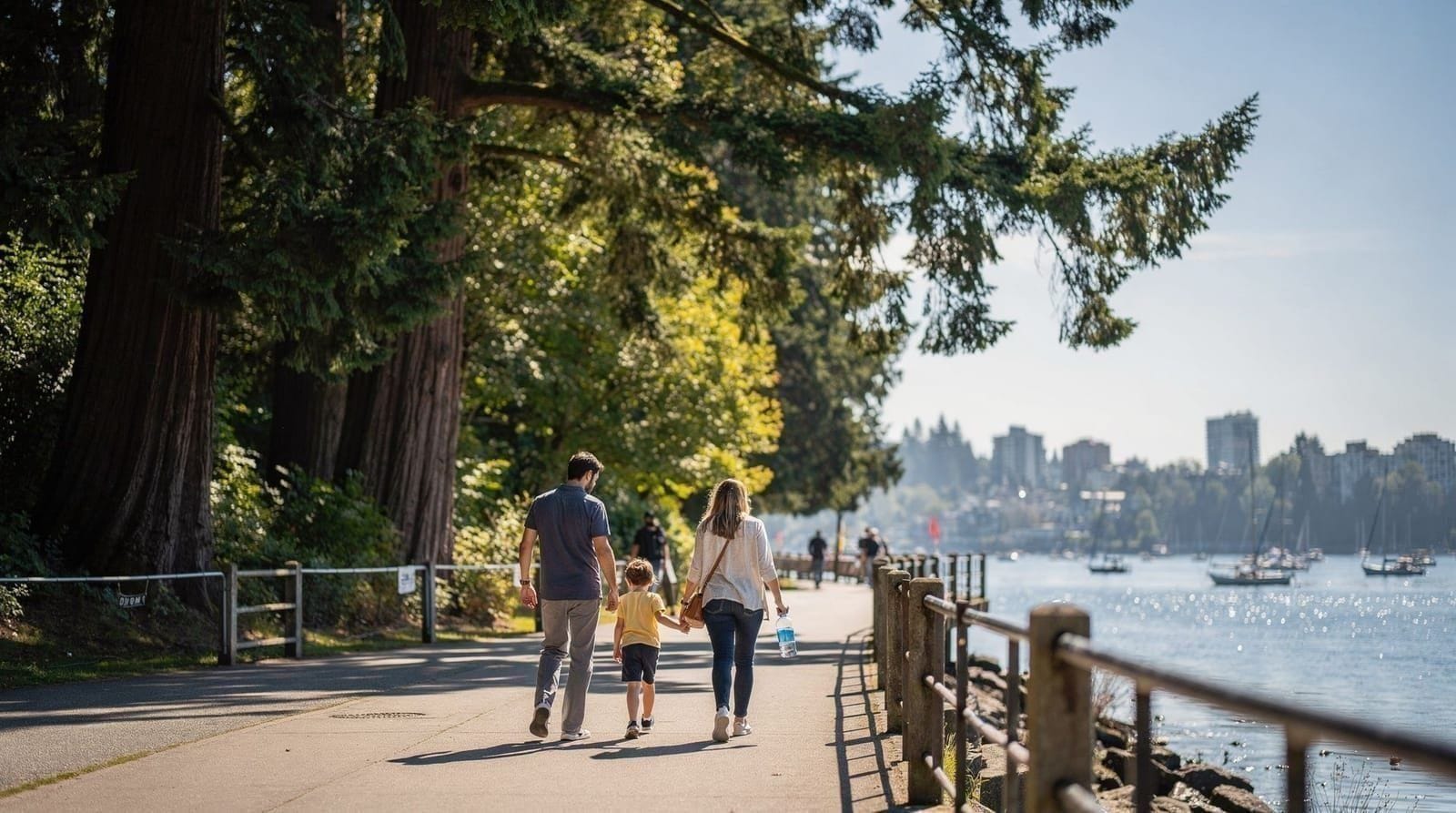
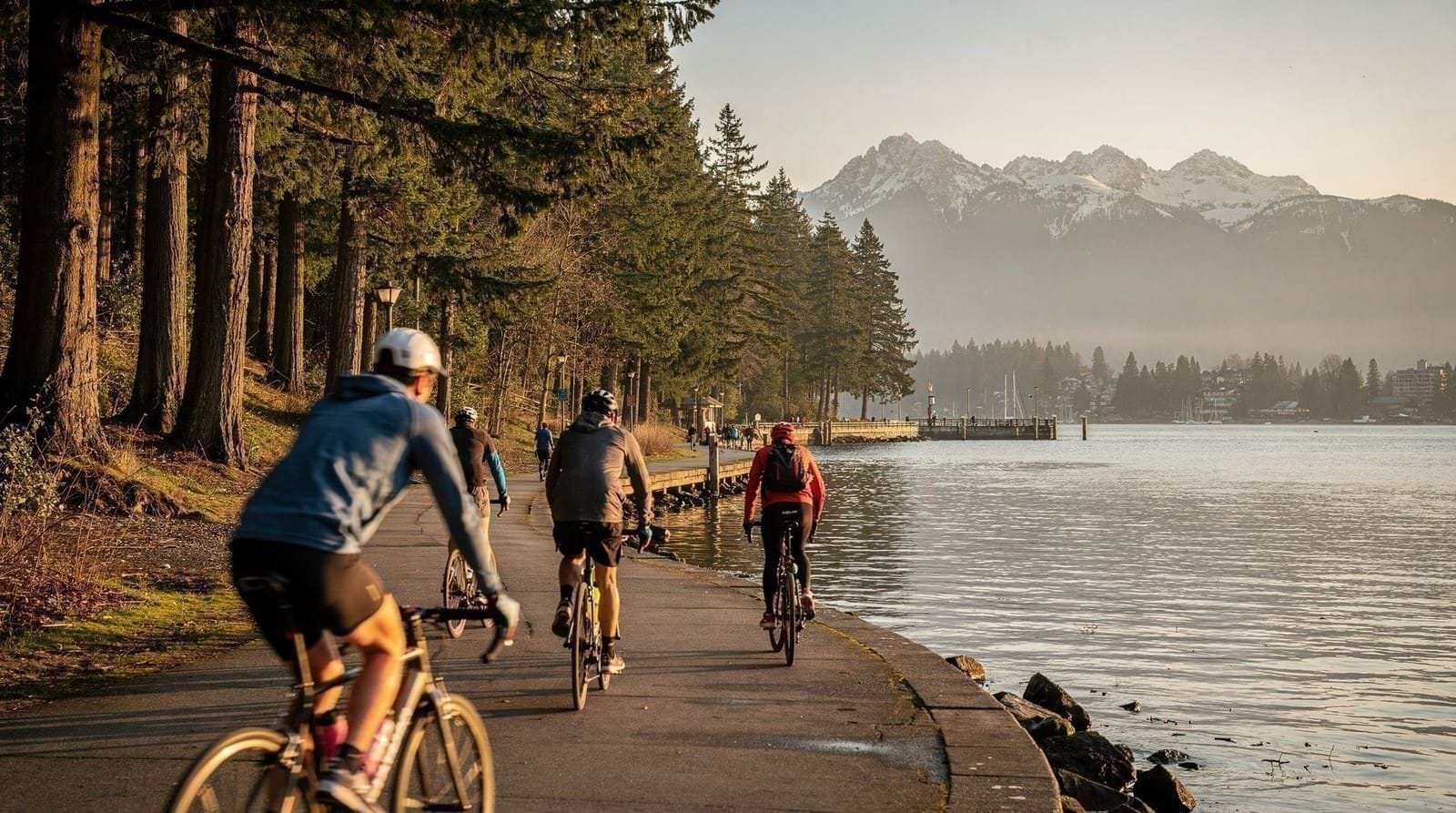
The Seawall loop is Stanley Park’s defining feature and its most kid-friendly one: fully paved, flat, and separated between pedestrian and wheeled-traffic lanes for most of its length, making it manageable for strollers, scooters, and kids riding their own bikes without much supervision beyond normal caution. Families don’t need to walk or ride the full 9-kilometre loop — shorter out-and-back sections from either the West End or Coal Harbour entrance work just as well for younger kids with limited stamina, and there are enough beach and viewpoint stops along the way to break up the walk naturally.
A note on managing expectations for very active kids
Families with kids who need constant, structured stimulation should know that Stanley Park’s appeal is largely self-directed rather than programmed — there’s no scheduled show or guided activity carrying the day the way Grouse’s lumberjack show or a museum’s timed presentations do. Kids who do best with open-ended exploring, beach time and simple physical activity tend to thrive here; kids who need more structured entertainment may get more consistent engagement from a ticketed attraction with built-in programming, worth balancing against a Stanley Park day within a broader multi-day itinerary.
Beaches — Second Beach and English Bay
Second Beach, on the park’s western side, is a genuine family favorite thanks to its outdoor heated saltwater pool, which runs through summer and draws as many local families as visitors — a real swimming option that doesn’t depend on ocean water temperature or tide conditions. English Bay Beach, just outside the park’s southern edge near Denman Street, offers a more classic sandy beach experience with lifeguards on duty in summer, good for kids who’d rather build sandcastles than swim laps.
A realistic budget for a family visit
Because so much of Stanley Park is free, a family’s total spend depends almost entirely on which paid extras they choose. A family sticking to the Seawall, beaches and free attractions can spend close to nothing beyond transport and any food brought or bought nearby. Adding the mini train, a bike rental, and Aquarium admission for a family of four brings total costs to somewhere in the CAD 250-350 range for a full day — still meaningfully less than a day built around Grouse or Capilano alone, which is part of why Stanley Park works so well for budget-conscious families trying to balance a trip’s overall cost.
The mini train — a genuine kid highlight
Stanley Park’s seasonal miniature train, a scaled-down locomotive that loops through a wooded section of the park, is one of the most consistently kid-approved paid attractions in the city, priced modestly at roughly CAD 8 per rider. It runs seasonally (generally spring through fall, with a special holiday-lights version in December) rather than year-round, so it’s worth checking current operating dates before building a visit around it specifically.
Seasonal differences in what’s available
Summer unlocks the full range of the park’s offerings — the Second Beach pool, the mini train’s peak schedule, and the warmest, driest conditions for a full day outdoors. Winter strips away the pool and reduces the train’s operating days, but the Seawall, Nature House and totem poles remain accessible year-round, and Stanley Park runs its own holiday lights display through part of the winter season, adding a genuinely different, festive character to an off-season visit for families traveling over the winter holidays.
Totem poles and Brockton Point
The totem pole display at Brockton Point, created by First Nations carvers, is a free, visually striking stop that works well for shorter attention spans — kids don’t need much explanation to find the carved figures interesting, and it’s a natural break point along a Seawall walk or bike ride. It’s also one of the most photographed spots in the park, worth a few extra minutes even for families not otherwise drawn to cultural or historical stops.
What families consistently say about a Stanley Park visit
Feedback from visiting families tends to converge on a small set of consistent points: the Seawall’s flatness and safety make it easier with kids than families expect going in, Second Beach’s pool is frequently described as an underrated highlight compared to more heavily marketed attractions elsewhere in the city, and the most common regret is trying to cover too much of the park in a single visit rather than accepting that a full loop with kids realistically takes most of a day. That last point is worth internalizing before arrival — treating Stanley Park as a single flexible destination rather than a checklist of specific stops tends to produce a more enjoyable, less rushed family day.
Combining a Seawall walk with a scooter or balance bike
Families traveling with kids old enough for a scooter or balance bike, rather than a stroller, often find this the ideal way to cover more Seawall distance without the fatigue of a full walk, while still being slower and more controllable than a full-size bike for younger riders. The Seawall’s flat, paved surface and generally wide dedicated path make it one of the more scooter-friendly stretches of pavement in the city, and several entrances allow for a shorter loop if a longer stretch turns out to be more than a given child wants to manage.
Biking the Seawall
Renting bikes for a family Seawall loop is one of the most popular ways to see the park, and a guided Stanley Park bicycle tour handles route planning and bike logistics for families who’d rather not sort out rental locations and sizing independently. For families wanting more flexibility with an e-bike option for tired legs partway through the loop, a Stanley Park bike tour with e-bike upgrade is worth considering, particularly for a longer full-loop ride with younger kids who might need towing assistance on a tag-along or trailer bike.
The Vancouver Aquarium
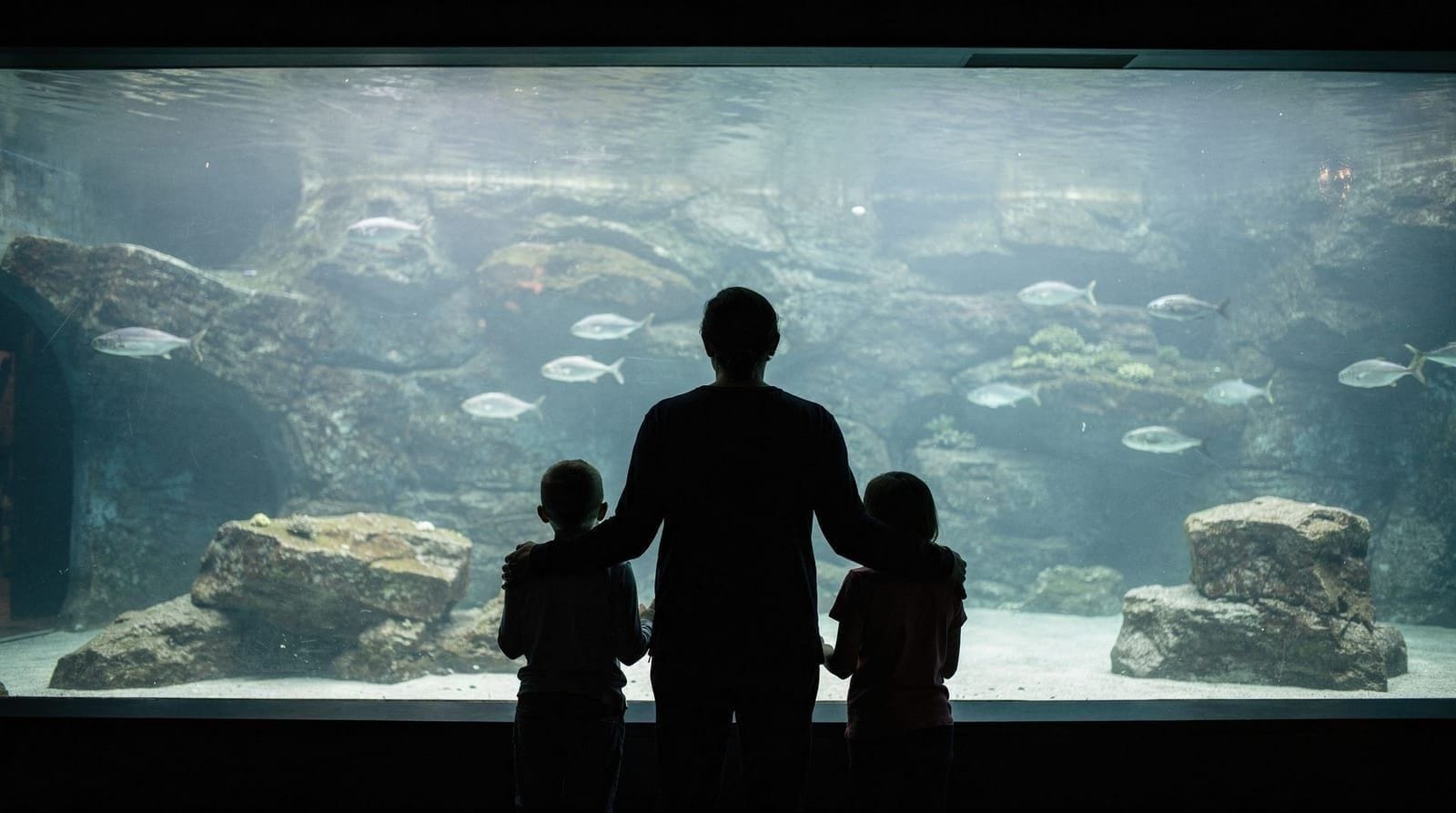
Inside the park, the Vancouver Aquarium is the one major paid attraction most families build a Stanley Park day around, particularly on a day with uncertain weather since it’s fully indoor. A Vancouver Aquarium, Stanley Park and city highlights small-group tour bundles Aquarium admission with several of the park’s other stops, useful for families wanting the day’s logistics handled rather than navigating the park’s various entrances and paths independently.
Nature House and Lost Lagoon
The park’s Nature House, near Lost Lagoon at the park’s entrance, offers low-key, free exhibits about the park’s ecosystem and local wildlife — a good, brief stop for younger kids needing a break between longer outdoor stretches. Lost Lagoon itself, a freshwater lake near the park’s entrance, is a reliable spot for birdwatching, with herons, ducks and other waterfowl commonly visible from the paved path around its edge.
Self-guided exploring at your own pace
For families who’d rather explore independently without a scheduled group tour, a self-guided smartphone tour of Stanley Park provides route guidance and points of interest at whatever pace suits the group, stopping as long as needed at any given spot without holding up a larger tour group — often the more practical option for families with younger kids prone to unpredictable pacing.
Horse-drawn tours
Stanley Park runs a seasonal horse-drawn carriage tour along a set route through the park’s forested interior, narrated with history and local trivia along the way — a genuinely different pace and perspective than walking or biking, and a real novelty for kids who don’t often get to ride behind actual horses. It runs on a fixed schedule and route rather than on demand, so checking current timing and departure points before planning a visit around it is worth doing, particularly since it operates seasonally rather than year-round.
Playgrounds and picnic spots
Beyond the headline attractions, Stanley Park has several dedicated playgrounds scattered through the park, useful for building in unstructured free-play time between more structured stops like the Aquarium or a Seawall walk. Picnic areas near Second Beach and along the Seawall route give families a free, flexible option for a mid-day meal break with a view, worth considering as an alternative to sit-down dining, particularly on a nice-weather day when eating outside is part of the appeal rather than a compromise.
A brief history of the park
Stanley Park opened in 1888, making it one of the older major urban parks in North America, and much of its interior retains genuine old-growth and second-growth coastal rainforest rather than being purely landscaped — part of why it feels less manicured and more genuinely wild than a typical city park despite sitting minutes from downtown towers. That history is worth a brief mention to older kids, particularly around the totem poles at Brockton Point, which represent a much more recent addition (installed progressively through the 20th century) reflecting First Nations art and history rather than the park’s own colonial-era origins.
Getting around within the park
A free shuttle bus loops through the park during peak season, useful for families who want to see multiple stops — the Aquarium, Brockton Point, Second Beach — without walking the full distance between them, particularly with young kids or a stroller. Parking is available at several points around the park’s perimeter, though it fills on sunny summer weekends; families staying in the West End or nearby Coal Harbour are often better off walking or taking the shuttle than driving in.
Timing a visit around crowds
Stanley Park’s busiest periods track closely with summer weekends and the middle of the day, when both visiting families and locals converge on the Seawall, beaches and Aquarium simultaneously. Weekday mornings offer the clearest, quietest experience, particularly for families wanting uncrowded photos at the totem poles or a peaceful stretch of the Seawall without dodging heavy bike and pedestrian traffic. The park’s sheer size means even peak-crowd days rarely feel as congested as a smaller, more contained attraction would under similar visitor volume — there’s simply more space to spread out.
Realistic pacing for a family day
A full Stanley Park family day realistically covers a shortened Seawall walk or bike ride, a stop at the Aquarium or a beach, and one or two of the smaller free attractions like the totem poles or Nature House — trying to do everything the park offers in a single visit usually means rushing kids past things they’d otherwise enjoy lingering at. Families with more time are often better served splitting Stanley Park across two shorter visits — a beach-and-Seawall morning one day, an Aquarium-focused visit another — rather than attempting the whole park in one long day.
Restrooms and practical facilities
Public restrooms are positioned at several points around the park, including near the Aquarium, Second Beach, and along the Seawall route, generally more consistently available than downtown street-level options — a genuine practical advantage for a park this size. Families planning a longer Seawall walk or bike ride should note the facility locations along the route in advance, since some stretches, particularly on the park’s less-visited north and west sides, have longer gaps between facilities than the busier sections near the entrances.
What to bring for a full park day
Beyond standard layers and sun protection, a Stanley Park family day benefits from packing snacks, water, and a light picnic blanket, given how much of the park’s appeal is free, flexible outdoor time rather than scheduled attraction stops. A change of clothes is worth packing for any summer visit involving Second Beach’s pool or a warm-weather walk that might end in sweaty or damp kids, and closed-toe shoes are the more practical choice over sandals for the Seawall and forested trail sections, where roots and uneven surfaces are common away from the main paved path.
Weather and what to bring
Vancouver’s wetter months (roughly October through April) don’t rule out a Stanley Park visit, but they do change what works best — the Seawall stays walkable in light rain, but beach time and outdoor pool visits obviously depend on drier, warmer weather. Packing light rain layers regardless of forecast, and building in the indoor Aquarium as a weather backup, keeps a Stanley Park day workable across most conditions.
Wildlife safety basics
Stanley Park’s forested interior is home to coyotes, and while sightings during a normal daytime family visit on the main paths are uncommon, it’s worth knowing the standard guidance: keep a good distance (roughly 100 metres, about 10 bus lengths), never feed wildlife, and keep young kids close on the less-traveled interior trails rather than the main Seawall or beach areas. Raccoons are also a common park resident, generally harmless but best left unapproached and unfed, particularly around picnic areas where they’ve learned to associate visitors with food.
Where it fits in a wider family trip
Stanley Park works as either a dedicated full day or a flexible half-day add-on depending on how much of the park a family wants to cover — see the Vancouver with kids guide for how it fits alongside Grouse Mountain, Capilano and Science World across a longer trip, and the family-focused 4-day itinerary for a realistic day-by-day structure that balances park time against the city’s other family attractions.
Frequently asked questions about Stanley Park with kids — free and low-cost family activities
Can a family do Stanley Park entirely for free?
Yes — the Seawall, beaches, Lost Lagoon, Nature House and the Brockton Point totem poles cost nothing. Only the mini train, the Second Beach pool, bike rentals and the Aquarium carry a fee.
How much time should a family budget for Stanley Park?
A realistic family day covers a shortened Seawall walk or ride, a stop at the Aquarium or a beach, and one or two free attractions like the totem poles — trying to do everything in one visit usually means rushing kids past things worth lingering at.
Top experiences
Bookable activities with verified prices and instant confirmation on GetYourGuide.