Best food tours in Vancouver
Vancouver: Gastown Historical Walking Food Tour
Duration: 3 hours
Which Vancouver food tour is worth booking?
The Gastown walking food tour is the most central and easiest to combine with sightseeing, typically 6-8 tasting stops over 2.5-3 hours for roughly CAD 100-140 per person. Granville Island's version covers a single dense market instead of walking between restaurants, which suits travelers who dislike a lot of street-to-street walking. Budget-focused travelers can usually replicate 70% of the experience by picking three stalls or restaurants themselves for a fraction of the price.
Vancouver has enough distinct food-tour products now that picking one is its own small research project — four different operators cover four different pockets of the city, and none of them overlap much in what you’ll actually eat. Before booking anything, it’s worth being honest about what a guided tasting walk buys you versus what a determined independent eater can get for less.
| Where | Gastown, Granville Island, North Van Shipyards, Commercial Drive |
| Cost | Around CAD 95-160 per person, 6-10 tasting stops |
| Time needed | 2.5-3.5 hours |
| Getting there | Fixed meeting points; no hotel pickup |
| Best time | Late-morning departures are quieter than afternoon |
What a guided food tour actually is
Every Vancouver food-tour product follows roughly the same format: a guide leads a small group, usually 8 to 14 people, on foot between a fixed sequence of restaurants, cafes or market stalls, with a tasting-sized portion at each stop rather than a full meal. Tours run 2 to 3.5 hours and cover 6 to 10 stops, priced from around CAD 100 up to CAD 220 for smaller “elite” or private versions. What you’re paying for isn’t really the food itself — tasting portions at eight stops rarely cost the operator more than CAD 30-40 per person in ingredients — you’re paying for curation, skip-the-line access at popular counters, and a guide who can explain why a neighborhood looks the way it does between bites.
That’s a fair trade for some travelers and a bad one for others. If you’re short on time, unfamiliar with the city, or simply enjoy having decisions made for you on vacation, a food tour compresses a lot of good eating and context into one afternoon. If you’re comfortable reading reviews, don’t mind occasionally picking a mediocre spot, and would rather eat full-sized portions at your own pace, self-guided almost always wins on cost per calorie.
Group size, pacing and what the walking actually feels like
Most Vancouver food tours cap groups at 12-16 people, split into smaller clusters of 4-6 at each tasting stop so restaurants can serve everyone without a bottleneck. Total walking distance across a 2.5-3 hour tour is usually 1.5-3 km at a slow, stop-and-start pace — closer to a museum shuffle than a hike, since guides deliberately build in standing time for the commentary between stops. That makes these tours genuinely accessible for most fitness levels, including older travelers, though anyone using a mobility aid should check with the operator beforehand, since a few stops (particularly in Gastown, with its cobblestones and occasional stairs down to lower-level restaurants) aren’t fully step-free.
Portion sizes are the other thing first-timers misjudge. A “tasting” at each stop typically means two to four bites — enough that eight stops adds up to a full meal’s worth of food by the end, but not enough that any single stop feels like lunch. Guides usually recommend skipping breakfast or eating light beforehand, and pacing yourself, since it’s common for newcomers to fill up by stop four and then struggle to appreciate stops five through eight.
Kids, dietary needs and group bookings
Food tours in Vancouver generally allow children, though most operators pitch them at adults and teenagers rather than young kids, partly because tasting menus move at a pace that doesn’t suit toddlers and partly because a few stops (breweries especially) are 19-plus venues in British Columbia. Families traveling with younger children are usually better served doing a self-guided version of the same neighborhood at their own pace — nobody minds a five-year-old dawdling at a donut counter the way a paying group tour does.
Vegetarian requests are handled reasonably well across all four tours with 48 hours’ notice; vegan and specific allergy requests (shellfish, nuts, gluten) are hit-or-miss and depend heavily on which restaurants are on the route that season, since operators periodically swap stops in and out. Message the operator directly before booking if a serious allergy is involved — don’t assume the on-platform booking form alone will flag it to the guide.
Private and small-group bookings are available on most of these tours for an upcharge, useful for a family reunion, a work outing, or anyone who simply doesn’t want to share the experience with strangers. Expect to pay roughly 1.5-2x the standard per-person rate for a private departure with a minimum headcount, though exact terms vary by operator and season.
Tipping, cancellation and what “included” usually means
Tipping guides isn’t mandatory in Canada the way it functionally is in the US, but 10-15% of the tour price is the norm for a guide who did a good job, paid in cash at the end if you’re able. Most listings include all the food tastings in the base price; alcohol (a beer flight, a glass of wine) is sometimes bundled and sometimes a separate add-on, so read the inclusions section on the specific listing rather than assuming. Cancellation policies on GetYourGuide-booked tours typically allow a full refund up to 24 hours before the start time, which is worth checking against your itinerary if weather or jet lag might force a late change of plans.
How weather affects the choice between the four
Since all four tours involve genuine outdoor walking between stops, weather is worth factoring into which one to pick, not just when to go. Granville Island’s market-based format is the most weather-resilient of the four, since almost the entire route sits under one covered roof, making it the strongest pick for a trip where a rainy forecast is likely regardless of season.
The Gastown, North Van Shipyards and Little Italy tours all involve meaningful outdoor walking between indoor stops, and while they run rain or shine, a heavy Vancouver downpour (most common October through March) makes the walking segments considerably less pleasant even with a proper rain shell. Travelers booking a food tour specifically during the wetter months should weigh Granville Island’s format more heavily for exactly this reason.
Gastown: the most central option
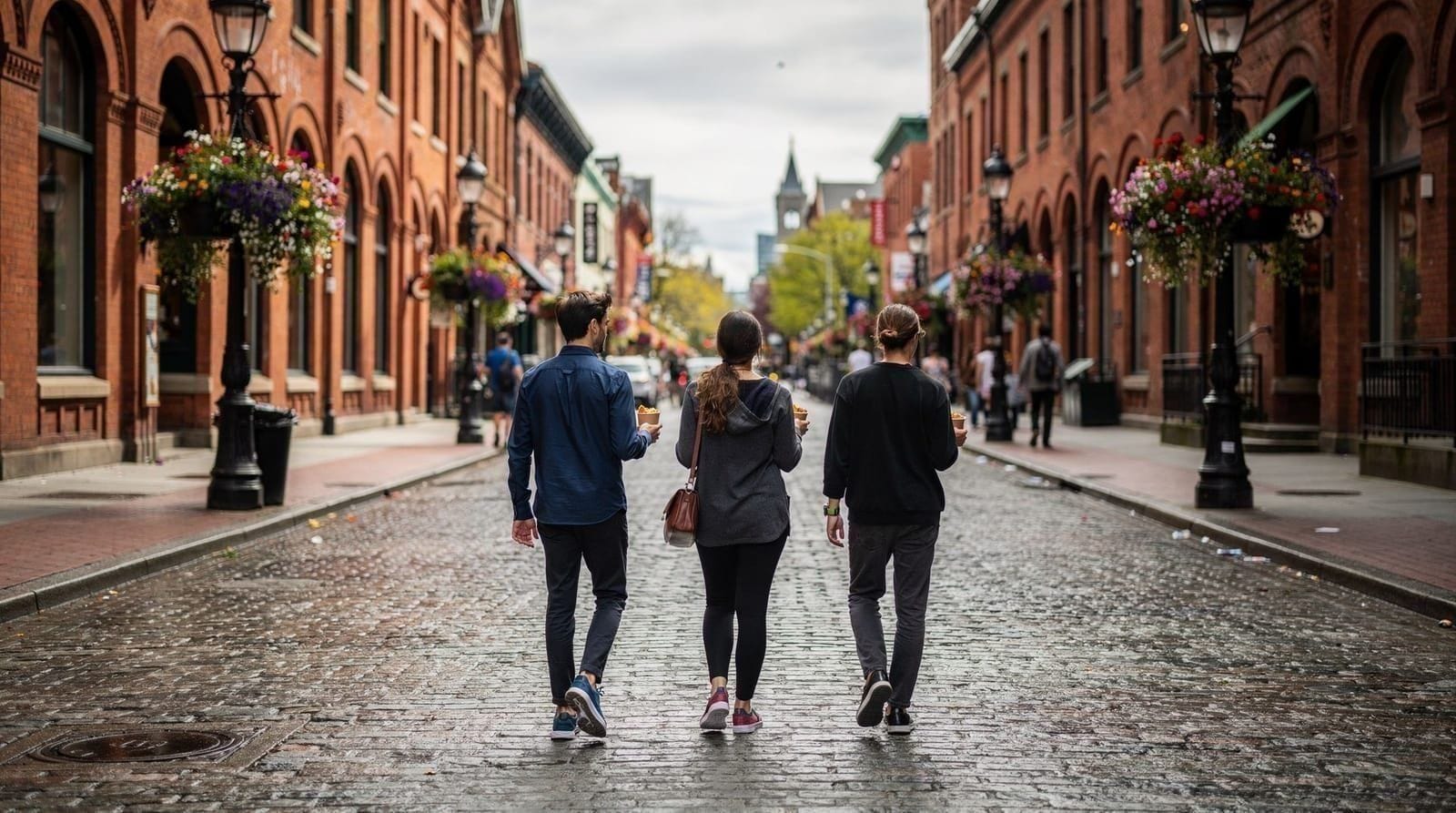
A Gastown walking food tour is the easiest of the four to fit into a normal Vancouver itinerary, since it starts and ends within walking distance of most downtown hotels and covers ground you’d likely wander through anyway — cobblestone streets, the steam clock, laneway murals.
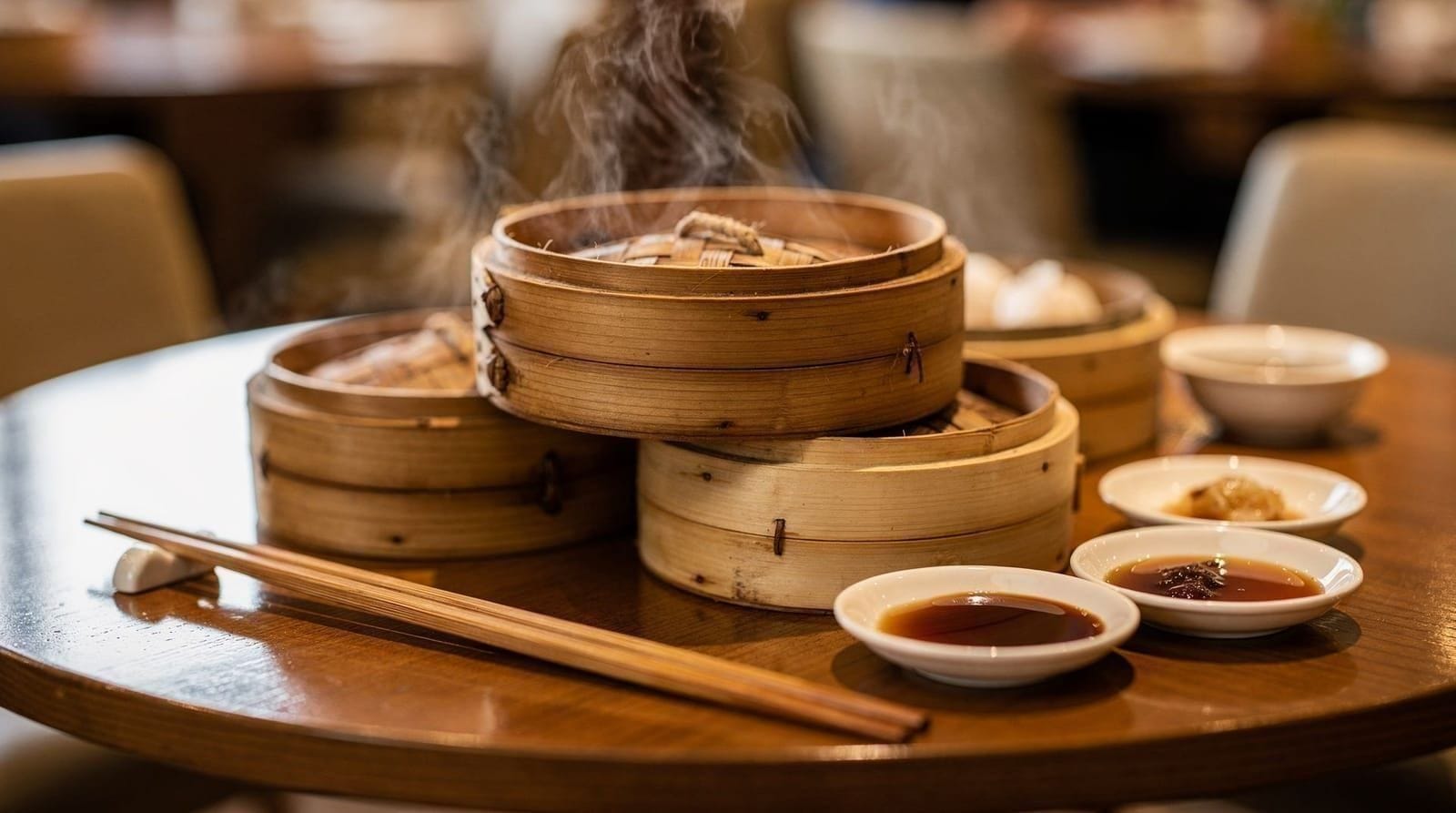
Expect 6-8 stops mixing bakeries, a dim sum or dumpling counter, a specialty coffee shop and at least one sit-down restaurant course, over roughly 2.5-3 hours. It’s the tour to book if you’re only doing one and want your afternoon to also function as neighborhood sightseeing. Full details, including how it compares to the “elite” version and what to do if you’d rather explore Gastown on your own, are in the dedicated Gastown food tour guide.
Granville Island: one dense market instead of a walking route
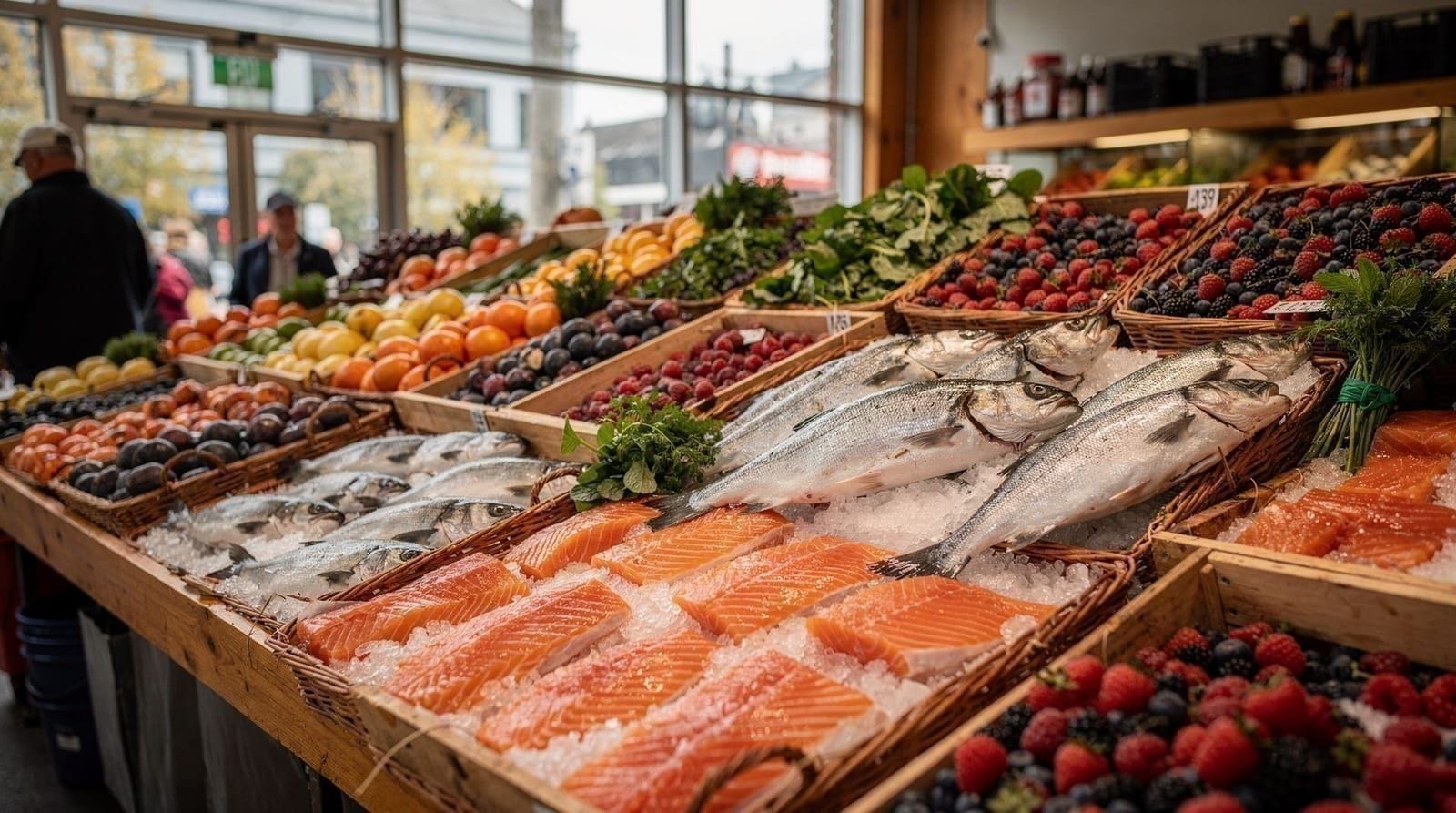
The Granville Island food walking tour works differently — rather than moving between separate restaurants scattered across blocks, it operates almost entirely inside and around the Public Market, a single covered building packed with 50-plus vendors.
That makes it the better choice for anyone who dislikes a lot of street-to-street walking, or who’s traveling with people who tire easily. It also tends to include a stop at Granville Island Brewing, since the market and Canada’s first microbrewery sit a few steps apart. The full breakdown of vendors, brewery tour pricing, and how to get to the island by mini-ferry is in the Granville Island food guide.
North Vancouver Shipyards: the least touristy pick
The North Van Shipyard food tour covers Lower Lonsdale’s redeveloped waterfront district, a former shipbuilding yard turned into a food hall and restaurant strip that sees far fewer tourists than downtown. It requires a short SeaBus crossing from Waterfront Station, which adds about 12 minutes each way but rewards the trip with a noticeably more local crowd and, often, better value per tasting than the busier downtown options. This is the pick for repeat visitors or anyone who’s already done the standard downtown circuit and wants something that doesn’t feel aimed at cruise-ship crowds.
Little Italy (Commercial Drive): the neighborhood with real heritage
The Little Italy walking food tour runs along Commercial Drive, the strip that anchored Vancouver’s postwar Italian immigrant community and still has the delis, espresso bars and family-run trattorias to prove it. It’s less about trendy new openings and more about long-running institutions — a useful contrast if the other three tours start to blur together as “trendy small-plates crawl.” This is also the tour most directly tied to Vancouver’s coffee culture, since Commercial Drive’s espresso-bar tradition predates the third-wave roasters that get more attention downtown.
Comparing the four side by side
| Tour | Best for | Walking | Roughly |
|---|---|---|---|
| Gastown | Most central, easiest with sightseeing | Street-to-street, cobblestones | CAD 100-140 |
| Granville Island | Less walking, brewery context included | Mostly indoors, one market | CAD 110-150 |
| North Van Shipyards | Least touristy, often better value | SeaBus crossing plus short walk | CAD 95-130 |
| Little Italy | Heritage focus, food and coffee history | Longer strip, moderate | CAD 100-140 |
None of these prices include alcohol beyond what’s explicitly listed as included, so check the specific product page before assuming a beer or wine pairing is bundled in.
What each tour won’t tell you upfront
A few honest caveats worth knowing before booking any of the four. First, restaurant lineups change — operators rotate stops when a partner restaurant closes, changes ownership, or simply stops offering the tasting-portion deal that made the economics work. The specific restaurants named in marketing photos aren’t guaranteed to be the ones on your date.
Second, weather matters more than it sounds like it should: these are outdoor walking tours between indoor stops, and a heavy Vancouver rain shower (common October through March) makes the walking segments considerably less pleasant, even though tours generally run rain or shine. Bring a proper rain jacket rather than an umbrella if visiting in the wetter months — Vancouver wind makes umbrellas more hassle than they’re worth.
Third, tour guides are knowledgeable but not chefs — the commentary leans toward neighborhood history and restaurant background rather than deep culinary technique, which is worth knowing if you’re hoping for a hands-on cooking angle (none of these four are cooking classes).
Getting to the meeting point
All four tours meet at a fixed location and don’t offer hotel pickup, so factor a short trip into your morning or afternoon. The Gastown tour typically meets near the steam clock on Water Street, a 10-15 minute walk from most downtown hotels or a couple of stops on the SkyTrain to Waterfront Station. Granville Island’s meeting point is usually just inside the Public Market entrance, reached by the Aquabus or False Creek Ferries mini-ferry from the Yaletown or Hornby Street docks (about CAD 4-5, a few minutes each way) or the 50 bus from downtown.
The North Van Shipyard tour meets on the Lower Lonsdale waterfront, a straightforward walk from the SeaBus terminal at Lonsdale Quay. The Little Italy tour meets somewhere along Commercial Drive, best reached by the SkyTrain Expo or Millennium Line to Commercial-Broadway station followed by a short walk or the 20 bus north.
Build in 15-20 minutes of buffer beyond the transit time itself — tours generally start on time and don’t wait for stragglers, and missing the first stop means missing a chunk of what you paid for.
Cost comparison: tour versus DIY, with real numbers
To make the “is it worth it” question concrete: a Gastown food tour running CAD 120 per person for eight tasting stops works out to roughly CAD 15 per stop, for a two-to-four-bite portion. Ordering the equivalent dishes à la carte at the same restaurants — a full bao, a full dumpling order, a full-size pastry — would typically cost CAD 8-14 per item, meaning three or four self-selected full portions from three or four different restaurants can cost less than the guided tasting version while leaving you fuller.
What the DIY route can’t replicate is the guide’s restaurant selection (which filters out the tourist-oriented spots that trade on foot traffic rather than food quality), the seamless walking route between them, and not having to make any decisions at all — which, for some travelers on a short trip, is worth paying for regardless of the raw math.
Who should skip the tour entirely
Budget travelers, solo travelers comfortable navigating on their own, and anyone doing more than a couple of days in Vancouver are often better off self-guiding. A determined eater with a phone and 30 minutes of research can hit three or four of the same stops covered on a CAD 130 tour for well under CAD 50 in food alone, just without the running commentary and without the tasting-portion pacing (which some people actually prefer, since it lets you sample more without getting full at stop three).
The Richmond dumpling trail and Chinatown food guide are both written with exactly this self-guided approach in mind, and neither neighborhood currently has a bookable guided-tour product anyway.
Groups traveling with picky eaters or anyone with a serious dietary restriction should also think twice — tasting menus move fast and most operators can’t customize on the fly the way an à la carte restaurant can.
Combining a food tour with the rest of a Vancouver day
Because most food tours run 2.5-3 hours and typically start late morning or mid-afternoon, they slot in well as the anchor activity for one day of a 2-day Vancouver itinerary, leaving the morning free for a park or viewpoint and the evening open for drinks or dessert somewhere the tour didn’t cover. Pairing a Gastown food tour with an evening in Yaletown or a Granville Island tour with sunset over Kitsilano beach both work well logistically, since neither requires backtracking across the city.
Morning versus afternoon departures
Most of these tours run one or two fixed departures a day, commonly a late-morning slot (starting around 10:30-11am, functioning as an early lunch) and an afternoon slot (starting around 2-3pm, landing between lunch and dinner). The morning option tends to be quieter at the restaurant stops, since it beats the lunch rush that regular diners create, and it leaves the rest of the day free for a park or viewpoint.
The afternoon option works better for late risers or anyone doing a half-day activity first, though a couple of the sit-down restaurant stops can feel busier if regular walk-in customers are also arriving for an early dinner. Neither timing meaningfully changes what’s served — it’s mostly a question of which fits the rest of your day better.
When to book
Shoulder-season months (spring and fall) rarely require booking more than a few days ahead. July and August are a different story — popular weekend afternoon slots on the Gastown and Granville Island tours can sell out a week or more in advance, particularly around long weekends. If a specific date matters (an anniversary, a limited stopover), book as soon as your dates are fixed rather than waiting until you land.
What to eat if you skip all four tours
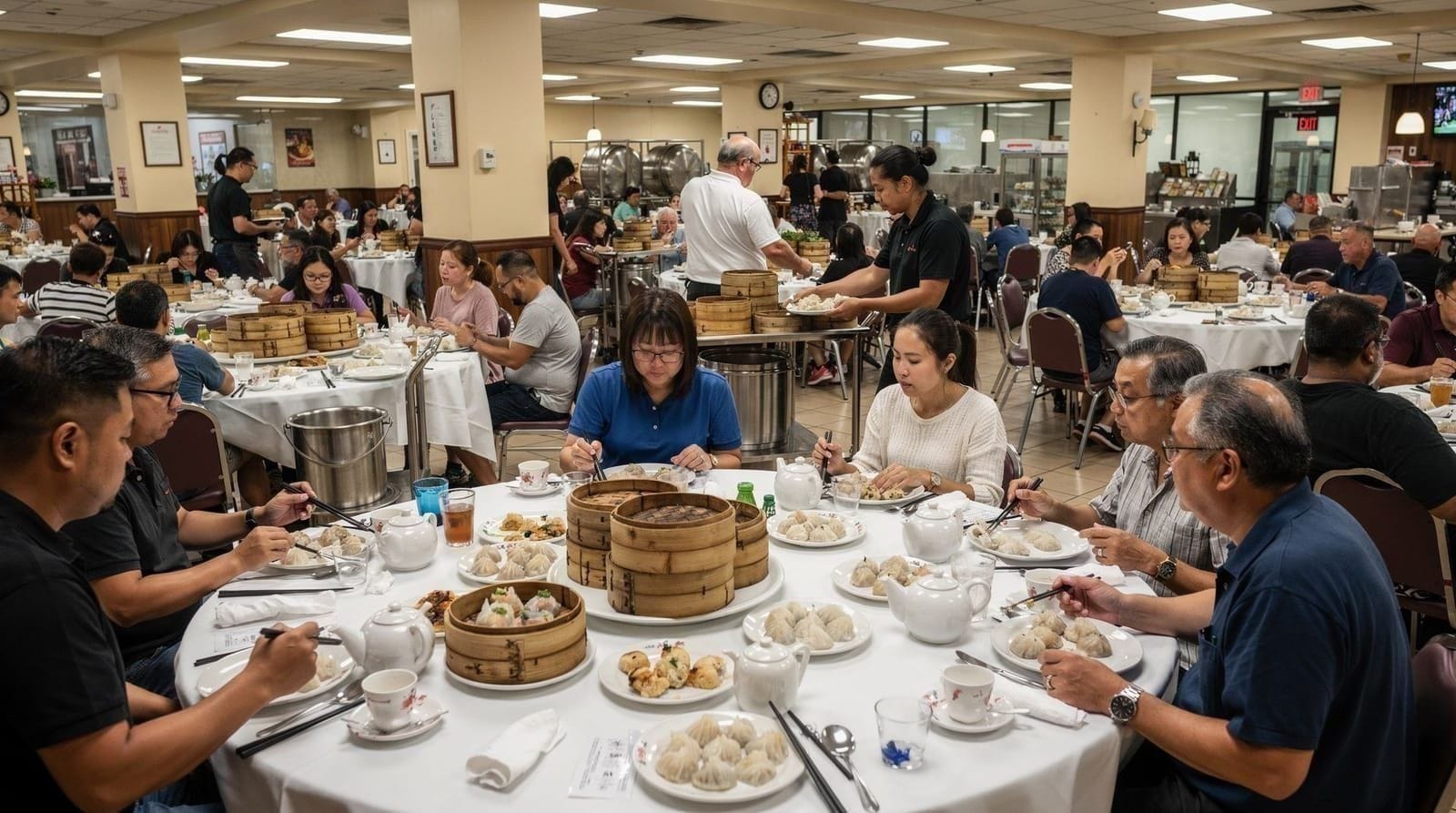
For travelers going fully self-guided, the highest-value moves are: a dim sum lunch in Chinatown, an afternoon at the Granville Island Public Market timed for a mid-morning arrival before tour groups fill the aisles, and — if time allows a trip out to Richmond — the dumpling houses along Alexandra Road, covered in full in the Richmond dumpling trail guide. None of this requires a booking, a deposit, or a fixed time slot, which is the main advantage self-guided eating has over any tour on this list.
Solo travelers and food tours
Solo travelers are often the group that benefits most from a guided food tour specifically, since eating alone at multiple restaurants across an evening can feel like more effort to plan than it’s worth, while a tour delivers the same variety with built-in company from the rest of the group and zero decisions about where to go next.
The Gastown and Granville Island tours both draw a reasonable share of solo bookings for exactly this reason, and operators are generally used to accommodating single travelers without an awkward seating arrangement at group tasting stops. For a solo traveler weighing a tour against solo self-guided eating, the calculus tips more toward the tour than it would for a couple or family, since the cost-per-person gap matters less against the value of built-in company and conversation.
Which one to book if you’re only doing one
For a first Vancouver visit with only one tour slot to fill, the Gastown option is the safest default — it’s central, walkable from most downtown hotels, and doubles as neighborhood sightseeing rather than a standalone food outing. Travelers who’ve already covered Gastown on a previous trip, or who specifically want less foot traffic, are better served by the North Van Shipyards option instead. Anyone traveling with a group that tires easily on cobblestones should lean toward Granville Island’s market-based format over the three walking tours.
Frequently asked questions — Best food tours in Vancouver
How much do Vancouver food tours cost?
Most guided tasting-walk tours in Vancouver run CAD 100-160 per person (roughly USD 70-110) for 2.5-3.5 hours and 6-10 tasting stops. Private or "elite" versions with smaller groups and extra stops push toward CAD 180-220.What does a typical food tour actually include?
A guide leading a small group (usually 8-14 people) between 5-10 pre-arranged restaurants, cafes or market stalls, with a tasting-portion (not a full meal) at each stop, plus neighborhood history and context along the way. Drinks are sometimes included, sometimes extra — check the listing before booking.Is a food tour worth it or should I just eat around on my own?
It depends on what you're paying for. You're buying curation (someone has already found the good stalls and skipped the tourist-trap ones), skip-the-line access at popular counters, and context you wouldn't get wandering alone. If you're comfortable researching restaurants yourself and don't mind a bit of trial and error, DIY costs far less and lets you eat full portions instead of tasting-sized ones.Which Vancouver food tour is best for a first visit?
The Gastown option, since it's central, walkable from most downtown hotels, and pairs naturally with sightseeing you're likely doing anyway (steam clock, Water Street). Granville Island's tour is a close second and works well if you're also planning to spend an afternoon at the market regardless.Do food tours accommodate dietary restrictions?
Most operators can handle vegetarian requests with advance notice, and some manage common allergies, but options are more limited than choosing your own restaurants. If you have a serious allergy or a restrictive diet, message the operator before booking rather than assuming it'll work out on the day.Are there food tours outside downtown, like in Richmond or Chinatown?
Not currently through GetYourGuide's Vancouver catalog in a dedicated form — Richmond and Chinatown's food scenes are better suited to self-guided exploration anyway, since both are dense, walkable, and inexpensive enough that a guide adds less value than in a scattered neighborhood like Gastown.How far in advance should I book a food tour?
A few days ahead in shoulder season is usually fine; in July and August, popular tours can sell out specific time slots a week or more out, especially weekend afternoons.
Top experiences
Bookable activities with verified prices and instant confirmation on GetYourGuide.