Vancouver's coffee culture
Vancouver: Gastown Historical Walking Food Tour
Duration: 3 hours
Is Vancouver known for good coffee?
Yes. Vancouver has a genuinely strong independent third-wave coffee scene, with well-known local roasters and a dense concentration of cafes in neighborhoods like Gastown, Commercial Drive, Main Street, and Kitsilano. There's no single dedicated "coffee tour" product, but coffee-forward neighborhoods overlap with several bookable food-walking tours.
Vancouver’s coffee scene sits closer to Melbourne or Seattle than to a generic North American chain-dominated city — independent roasters, third-wave brewing methods, and a genuine culture of cafe-hopping run through several neighborhoods, driven partly by the city’s Pacific Rim trade connections to coffee-growing regions and partly by a homegrown wave of specialty roasters that started gaining real traction in the 2000s and 2010s.
| Where | Gastown, Commercial Drive, Main Street, Kitsilano |
| Cost | Around CAD 4.50-6 for an espresso drink |
| Time needed | 90 minutes to 2 hours for a self-guided crawl |
| Getting there | Walkable within each neighborhood; SkyTrain between them |
| Best time | Any time; rainy afternoons suit a cafe crawl especially well |
Comparing the four neighborhoods at a glance
| Neighborhood | Character | Best for |
|---|---|---|
| Gastown | Heritage brick, design-forward third-wave | First-timers combining coffee with sightseeing |
| Commercial Drive | Old-school Italian espresso bars + newer arrivals | A slower, longer crawl with food history |
| Main Street/Mount Pleasant | Contemporary, laptop-friendly | Remote work days, craft beer pairing |
| Kitsilano | Beach-adjacent, patio-forward | A coffee break worked into a beach day |
What “third-wave” actually means here
Third-wave coffee treats the bean the way a wine list treats a grape varietal — origin, processing method, and roast profile get top billing on a menu rather than being an afterthought behind flavored syrups and drink-size marketing. In Vancouver cafes that follow this approach, expect to see single-origin beans identified by country and sometimes by specific farm or cooperative, roast dates printed or posted, and baristas who can describe the tasting notes of what’s in the hopper that week rather than reciting a fixed menu.
It’s a genuine shift from the coffee-as-commodity approach of a decade or two ago, and it’s now common enough across Vancouver’s independent cafes that it barely counts as a differentiator anymore — it’s closer to the baseline expectation.
The well-known local roasters
Several Vancouver-based roasters have built reputations extending well beyond the city, and their names come up repeatedly in any conversation about the local scene. 49th Parallel Coffee Roasters is probably the most nationally recognized, known for a Kitsilano location that pairs its coffee with Lucky’s Doughnuts, a genuinely popular combination for visitors looking for one stop that covers both.
Revolver Coffee, tucked into a Gastown laneway, built its reputation partly on rotating guest roasters from across the country, giving regulars a reason to return for beans they wouldn’t find at a single-roaster shop. Nemesis Coffee and Matchstick Coffee Roasters are two more names that come up often among locals discussing serious specialty coffee, each with a loyal following and a reputation for careful sourcing.
Specific addresses and hours shift over time in any city’s cafe scene, so treat these as a starting point for research rather than a guaranteed itinerary — a quick search before visiting confirms current locations and opening hours.
Gastown: coffee inside a historic backdrop
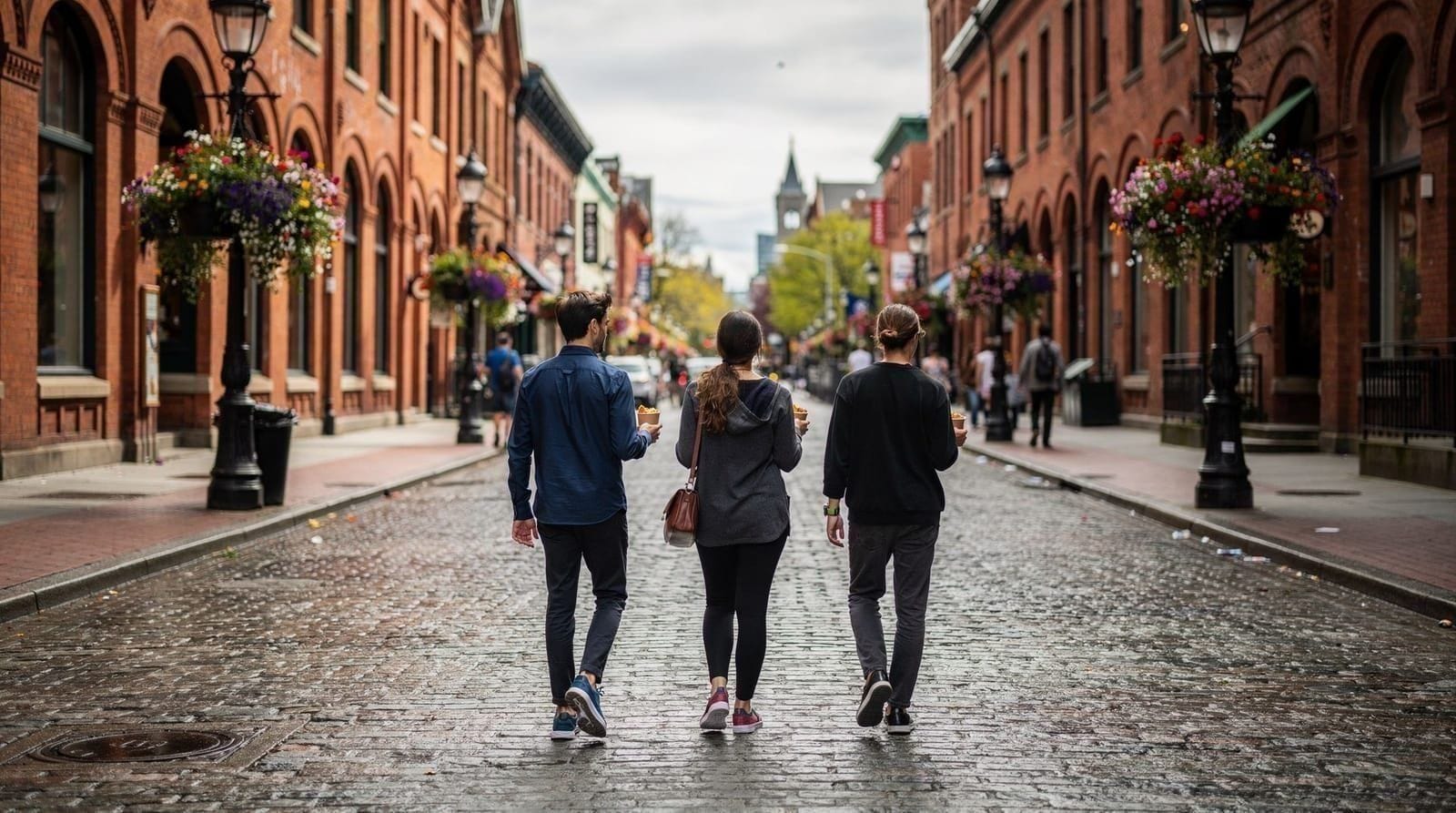
Gastown’s coffee scene benefits from the same density that makes it a food-tour destination — narrow, walkable streets packed with independent businesses, including several well-regarded cafes tucked into heritage storefronts and laneways. The neighborhood’s Victorian brick architecture gives Gastown cafes a distinctive setting that’s hard to replicate elsewhere in the city, and the area’s general tourist traffic means cafes here are generally used to visitors asking questions about the coffee itself, not just ordering and leaving. For a fuller picture of what else the neighborhood offers beyond coffee, see the Gastown food tour guide, which covers the wider tasting-stop scene the neighborhood is known for.
Commercial Drive: coffee and Italian heritage
Commercial Drive, running through what’s historically been called Vancouver’s Little Italy, has a coffee culture shaped directly by the neighborhood’s Italian immigrant history. Espresso bars along the Drive trace back to Italian families who settled in the area through the mid-20th century, and the neighborhood retains a noticeably different cafe atmosphere from Gastown’s newer, more design-forward spots — expect old-school espresso counters alongside newer third-wave arrivals, sometimes within a block of each other.
This overlap between coffee and Italian food culture is directly relevant if you’re also considering the Little Italy walking food tour, which passes through the same stretch and touches on the same immigrant history that shaped the neighborhood’s coffee bars in the first place.
Main Street and Mount Pleasant
Main Street, particularly the Mount Pleasant stretch, has developed into one of Vancouver’s more concentrated pockets of newer independent cafes over the past decade, often alongside the craft breweries the area is also known for. The neighborhood’s cafes lean toward a younger, laptop-and-work crowd more than Gastown’s tourist-heavy foot traffic, and several are genuinely set up for extended stays — comfortable seating, reliable WiFi, and a general tolerance for customers nursing one coffee for a couple of hours. It’s a useful neighborhood to know about if your trip includes any remote work days, since the atmosphere caters to that use case more deliberately than cafes in busier tourist zones.
Kitsilano’s beach-adjacent cafe scene
Kitsilano combines its beach-neighborhood identity with a solid cluster of cafes, several of which lean into an outdoor, patio-forward setup that suits the area’s generally more relaxed pace than downtown. The 49th Parallel and Lucky’s Doughnuts combination mentioned above sits here, and it’s a reasonable stop if you’re already planning a Kitsilano beach day and want a coffee break worked into the itinerary rather than a separate outing.
Typical prices
A standard espresso-based drink — latte, cappuccino, flat white — generally runs CAD 4.50 to 6 at Vancouver’s independent cafes, with drip coffee typically a dollar or two less. Converting roughly to USD at 0.70, that’s about USD 3.15 to 4.20 for an espresso drink, higher than a lot of chain coffee pricing in the US but broadly comparable to independent specialty coffee in other major cities. Pastries and light food items sold alongside coffee generally add CAD 4-8 per item. It’s not an expensive category relative to the rest of Vancouver’s food and drink scene, but it adds up quickly on a multi-stop cafe crawl, so budgeting CAD 15-25 for a two-or-three-stop coffee outing is realistic if you’re getting a drink plus a pastry at each.
Why there’s no dedicated coffee tour
Unlike food tours built around restaurant-hopping, Vancouver doesn’t currently have a dedicated bookable coffee tour product, and it’s worth being upfront about that rather than implying otherwise. Coffee-crawling is fundamentally a walk-and-drop-in category — cafes don’t typically host groups the way tasting-tour restaurants do, and the appeal of specialty coffee is often as much about lingering with one drink as it is about sampling many.
What does exist is a genuine overlap between coffee-forward neighborhoods and bookable food-walking tours: a Gastown walking food tour passes through the same streets as several well-known Gastown cafes and typically includes a coffee stop among its tasting stops, and a Little Italy walking food tour covers Commercial Drive’s Italian-heritage blocks, where espresso culture and food history are deeply intertwined.
Neither is a coffee tour specifically, but both are honest ways to experience coffee-forward neighborhoods as part of a broader guided walk if a self-guided crawl isn’t your preference.
Brewing methods worth knowing before you order
Ordering with a bit of vocabulary helps at Vancouver’s more serious specialty cafes, where staff generally appreciate a customer who knows roughly what they’re asking for. Pour-over refers to hot water poured manually over grounds in a filter, producing a cleaner, often brighter cup than drip machines, and it’s common on menus as a way to showcase a specific single-origin bean.
A cortado is a short espresso drink cut with a roughly equal amount of steamed milk, less milky than a latte and popular among visitors wanting something between a straight espresso and a full milk-forward drink. Flat whites, distinct from lattes mainly in milk texture and ratio, are common on Vancouver menus too, reflecting some Australian and New Zealand influence on the city’s cafe culture.
None of this vocabulary is required to get a good coffee in Vancouver, but it signals to baristas that you’re interested in the coffee itself rather than just a caffeine fix, which sometimes shapes the recommendation they offer.
Rain, refuge, and cafe culture
Vancouver’s coffee culture is inseparable from its weather. From roughly November through March, the city sees persistent rain and grey skies, and cafes function as genuine daytime refuges during that stretch — a reason locals cite often for why the specialty coffee scene grew as strong as it did, beyond simple market demand.
Cafes with substantial indoor seating tend to fill up on wet weekday afternoons with people reading, working, or just sitting out a downpour, a noticeably different atmosphere from the quick-grab-and-go pace more common in drier cities. Visitors traveling in the wetter months should expect this and can lean into it — a rainy afternoon is a legitimate excuse to post up in a Main Street or Commercial Drive cafe rather than pushing through outdoor plans in poor weather.
Laptop culture and cafe etiquette
Many Vancouver cafes, particularly in Main Street/Mount Pleasant and Commercial Drive, actively cater to laptop users with dependable WiFi, plenty of outlets, and a general tolerance for customers working through a slow afternoon over a single drink. That said, etiquette matters: ordering something roughly every hour or two during a long stay is generally expected at busy cafes, and some smaller, high-turnover spots — particularly in tourist-heavy pockets of Gastown during peak hours — post explicit no-laptop or time-limit policies to keep tables turning over for paying customers. If a cafe looks busy and doesn’t have people visibly working, it’s worth asking rather than assuming a long stay is welcome.
A self-guided coffee crawl through Gastown
Gastown’s compact footprint makes it an easy neighborhood to string together two or three coffee stops without much walking between them. A reasonable route: start near Water Street with a pour-over or espresso at one of the neighborhood’s known roasters, walk a few minutes to Revolver Coffee’s laneway location for a change of pace and a look at whatever guest roaster is currently featured, then finish with a pastry pairing at a bakery-cafe closer to Maple Tree Square.
The whole route covers well under a kilometre and can comfortably fit into 90 minutes to two hours depending on how long you linger at each stop, and it pairs naturally with the historical detail covered in the Gastown food tour guide if you want the neighborhood’s backstory alongside the coffee.
A self-guided coffee crawl through Commercial Drive
Commercial Drive rewards a slower, more exploratory crawl than Gastown’s tighter loop, since the strip runs longer and mixes old-school Italian espresso bars with newer third-wave arrivals along its length. A workable approach: start at the north end near Venables and work south, stopping at an established Italian espresso counter for a straight, no-frills espresso in the old-school style, then continuing toward Broadway for a more contemporary single-origin pour-over at one of the newer cafes. Budget more time here than in Gastown — the strip is longer, roughly 1.5 km of relevant blocks, and the appeal is as much about the neighborhood’s general atmosphere and Italian delis and shops as it is about the coffee stops themselves.
Combining a coffee crawl with the rest of a Vancouver day
A coffee-focused morning pairs naturally with a broader day plan rather than standing alone as the day’s main activity. Gastown’s cafes work well ahead of a Chinatown food exploration, given the two neighborhoods sit within easy walking distance of each other, or ahead of a downtown Vancouver sightseeing morning. Commercial Drive sits a bit further from the main tourist core, making it a better fit for a dedicated neighborhood afternoon rather than a quick add-on, possibly combined with a broader look at Vancouver’s food tour options if you want a fuller sense of how the coffee scene fits into the city’s wider food identity.
How the scene developed
Vancouver’s specialty coffee identity didn’t arrive overnight. The city had a strong cafe culture well before the third-wave label existed, partly a spillover effect from Seattle’s coffee industry just a few hours south, and partly homegrown through independent roasters experimenting through the 1990s and 2000s.
The real inflection point came through the 2010s, as a wave of roasters — several of the names now considered established, including 49th Parallel — built reputations for sourcing and roasting quality that put Vancouver coffee on a similar footing to Seattle and Portland in serious coffee conversations, despite Vancouver getting less attention in the broader North American coffee narrative than its two more coffee-famous West Coast neighbors.
That relative lack of hype, locals sometimes argue, kept the scene focused on quality over marketing, since Vancouver cafes weren’t competing for the same tourist-driven “coffee capital” reputation that shapes some of Seattle’s more visitor-oriented shops.
Vancouver versus Seattle and Portland
Comparisons to Seattle and Portland come up constantly in any discussion of West Coast coffee culture, and the honest answer is that Vancouver holds its own without quite matching either city’s sheer scale. Seattle has the deeper historical claim as the birthplace of the modern American specialty coffee movement and a correspondingly larger number of well-known roasters; Portland has a reputation for a particularly experimental, DIY-leaning cafe culture.
Vancouver’s version sits closer to a quieter, more understated version of the same third-wave values — strong roasters, careful brewing, less overt hype — spread across neighborhoods that each have their own character rather than one single “coffee district” the way some cities market a specific street or block. Visitors coming from either American city won’t find Vancouver’s scene unfamiliar, just distributed differently across the map.
Decaf, milk alternatives, and dietary accommodation
Vancouver’s independent cafes are generally well set up for common dietary requests. Oat milk in particular has become close to a default alternative at most third-wave cafes, often stocked alongside or even ahead of soy and almond, reflecting broader Pacific Northwest consumer trends.
Decaf options vary more in quality than regular coffee does — some cafes carry a specifically roasted decaf single-origin worth ordering, while others offer decaf mainly as an afterthought using a generic bean, so it’s reasonable to ask before ordering if decaf quality matters to you specifically. Sugar-free and dairy-free pastry options are less consistently available than milk alternatives, more common in Main Street and Kitsilano’s health-conscious cafe scene than in Gastown’s more traditional bakery-cafe offerings.
Cafe design and atmosphere
Part of what makes a Vancouver coffee crawl worthwhile beyond the drink itself is the range of physical spaces involved. Gastown cafes frequently occupy heritage brick storefronts with exposed beams and tall windows, a byproduct of the neighborhood’s protected historic architecture. Main Street and Mount Pleasant cafes lean toward a more contemporary, minimalist aesthetic — concrete floors, blond wood, large communal tables suited to the laptop crowd the neighborhood attracts.
Commercial Drive’s older Italian espresso bars retain a more old-world counter-service feel, sometimes with vintage signage and decor that predates the third-wave movement entirely, offering a genuinely different visual and social experience from the newer shops a few blocks away. Seeking out this variety, rather than defaulting to whichever cafe is closest to a hotel, is part of what makes a dedicated coffee crawl worth the extra planning.
Ordering in a hurry versus lingering
Vancouver’s cafe culture accommodates both a quick grab-and-go order and a genuinely long lingering visit, and knowing which mode a specific cafe leans toward saves time. Cafes with a visible counter queue and minimal seating, more common right at transit hubs and in the busiest stretch of Gastown, are built for speed — order, pay, move on.
Cafes with substantial indoor seating and a visibly slower pace, more common on Main Street and parts of Commercial Drive, are built for lingering and generally welcome a customer settling in with a laptop or a book for an hour or more. Matching the visit’s purpose to the right type of cafe avoids the mild awkwardness of trying to linger at a fast-turnover counter or rushing through an order at a cafe clearly built for a slower pace.
Tipping at Vancouver cafes
Tipping norms at counter-service cafes are looser than at full-service restaurants, but a tip jar or a prompt on the card machine is standard, and locals typically leave a dollar or round up the bill for a single drink, more for a larger order. It’s not obligatory the way restaurant tipping is, and no cafe staff will comment on skipping it, but a small tip is customary enough that visitors used to a no-tipping-on-coffee culture at home should expect to see the prompt and decide accordingly rather than being caught off guard.
A common mistake: defaulting to chains
The most common mistake visitors make with Vancouver coffee is sticking to familiar international chains out of habit, particularly downtown near hotels where those locations cluster most densely. It’s an understandable default when you don’t know a city, but it means skipping the part of Vancouver’s food and drink identity that locals actually take pride in.
The fix doesn’t require much effort — independent cafes are common enough in Gastown, Commercial Drive, Main Street, and Kitsilano that walking even two or three extra minutes from a chain location usually turns up a better, locally-roasted alternative at a similar or only slightly higher price. Checking a map for nearby independent options before defaulting to whatever’s directly across from a hotel lobby is a small habit that meaningfully changes the coffee experience of a trip.
Seasonal and rotating menus
Beyond the core espresso and drip menu, several Vancouver cafes rotate seasonal drinks and single-origin offerings throughout the year, tied loosely to harvest timing in various coffee-growing regions rather than the flavored-syrup seasonal marketing more common at large chains. Expect a cafe’s single-origin pour-over options to change every few weeks as new lots arrive, which is part of the appeal for regulars who treat cafe visits the way some people treat checking a rotating beer-tap list. Visitors won’t necessarily notice this rotation on a single visit, but it’s worth asking staff what’s new or interesting that week rather than defaulting to a familiar drink, since it often surfaces a more memorable cup than the standard order would.
Who should prioritize this, and who can skip it
Travelers who care about coffee as more than fuel — people who’d normally seek out a specialty roaster at home — will find Vancouver’s scene genuinely worth building time around, whether through a self-guided crawl or simply choosing hotels and itinerary stops near known cafe clusters.
Travelers with limited time and no particular coffee interest can safely treat it as incidental rather than planned: Vancouver’s density of good independent cafes means a decent coffee is rarely more than a short walk away regardless of neighborhood, so there’s no need to carve out dedicated time if it’s not a priority. For anyone unsure how to fit a coffee crawl into a tighter schedule, working it into a broader food-focused day via one of the neighborhood walking tours remains the simplest way to touch the scene without dedicating a separate outing to it.
Ordering for someone with a dairy or caffeine sensitivity
Beyond oat milk’s near-default status, Vancouver’s specialty cafes generally stock at least soy and almond as alternatives, though quality and price surcharges vary more between shops than the drink menu itself suggests — a small oat-milk upcharge of roughly CAD 0.50-0.75 is standard and worth budgeting for across a multi-stop crawl.
For anyone avoiding caffeine entirely, a well-stocked third-wave cafe usually carries a specifically sourced decaf single-origin rather than treating decaf as an afterthought, though it’s worth asking directly rather than assuming, since smaller shops sometimes carry only a generic decaf blend. Herbal tea and non-coffee options are close to universal across the neighborhoods covered here, useful for a travel companion joining a coffee crawl without drinking coffee themselves.
A note on independent versus chain hybrid cafes
A handful of Vancouver cafes occupy a genuine middle ground between fully independent third-wave shops and international chains — locally owned multi-location operations that source specialty beans but run at a scale closer to a small chain than a single-location roaster. These are a reasonable fallback if a specific independent cafe on this list is closed or too crowded, offering meaningfully better coffee than an international chain without requiring the same research a fully independent shop might. They’re most common in Yaletown and parts of downtown outside the four neighborhoods profiled above, useful to know about if a coffee stop needs to happen somewhere other than Gastown, Commercial Drive, Main Street or Kitsilano specifically.
Combining a coffee crawl with the rest of a downtown day
A Gastown coffee morning pairs naturally with a wider look at the neighborhood covered in the Gastown guide, or with a Vancouver Art Gallery visit if the weather turns and an indoor stop makes sense afterward. Kitsilano’s cafe cluster works well ahead of a beach afternoon, and Main Street’s laptop-friendly cafes are a reasonable base for a remote-work morning before an afternoon of sightseeing elsewhere in the city. None of these pairings require rebooking anything — they’re simply a matter of ordering a coffee before or after whatever else is already on the day’s plan.
Frequently asked questions — Vancouver's coffee culture
What is third-wave coffee?
Third-wave coffee treats coffee more like wine or craft beer, emphasizing bean origin, roast quality, and brewing method rather than just a caffeine delivery vehicle. In practice it means single-origin beans, visible roasting information, and baristas trained in methods like pour-over and precise espresso extraction, all of which are common in Vancouver's independent cafes.How much does coffee cost in Vancouver?
A standard espresso-based drink like a latte or cappuccino typically runs CAD 4.50 to 6 at an independent cafe, with drip coffee usually a dollar or two cheaper. That's noticeably higher than a lot of chain coffee in the US, but broadly in line with independent specialty coffee pricing across major North American cities.Which Vancouver neighborhood has the best coffee scene?
There's no single answer, since the scene is spread across several distinct neighborhoods rather than concentrated in one. Gastown and Commercial Drive are the two most commonly cited by locals, followed by Main Street/Mount Pleasant and Kitsilano, each with a different feel and cafe density.Is there a guided coffee tour in Vancouver?
Not as a dedicated bookable product. The closest options are general food-walking tours through coffee-forward neighborhoods like Gastown, which typically include a coffee stop as one of several tasting stops rather than being coffee-focused tours themselves.Can you work from a cafe in Vancouver?
Generally yes, especially in Main Street/Mount Pleasant and Commercial Drive cafes, many of which cater openly to laptop users with reliable WiFi and outlets. Some smaller, high-turnover cafes in busy tourist areas discourage extended laptop use during peak hours — check posted policies or ask before settling in for a long work session.
Top experiences
Bookable activities with verified prices and instant confirmation on GetYourGuide.