The best month to visit Vancouver, honestly assessed
Ask this question online and most answers default to “June through September” without much nuance, which is true as far as weather reliability goes but skips over what each individual month actually offers — and what it costs. The honest answer depends on what the trip is actually for: guaranteed sun, cherry blossoms, whale watching, ski season, or the lowest possible price.
| Best overall | September — near-summer weather, thinner crowds, strongest whale odds |
| Safest weather | July-August, around 20-25°C, driest months |
| Cheapest | January-February (post-holiday lull) |
| Cherry blossoms | Peak bloom typically April 5-15 |
| Ski season | Late November through mid-May, peak December-March |
Month-by-month at a glance
| Month | Typical temp | Rain | Best for |
|---|---|---|---|
| Jan-Feb | 4-8°C | Heavy | Lowest prices, Dine Out Vancouver festival |
| March | 6-12°C | Heavy | Budget travel, earliest blossoms |
| April | 8-15°C | Moderate | Cherry blossoms, shoulder pricing |
| May-June | 12-20°C | Light-moderate | Underrated ramp-up, orca season starts |
| July-Aug | 20-25°C | Light | Safest weather, peak crowds and prices |
| September | 15-20°C | Light | Best overall value, peak whale watching |
| October | 10-15°C | Increasing | Lingering humpbacks, lower prices |
| Nov-Dec | 4-8°C | Heavy | Whistler ski season, city off-season |
July and August: the safest bet, at a price
July is Vancouver’s warmest and driest month, averaging around 55mm of rain spread over roughly seven days, with temperatures typically 20-25°C and daylight stretching to a 9:15pm sunset. August runs nearly identical. This is peak season for a reason — it’s the most reliable stretch of good weather all year, ideal for Stanley Park seawall walks, Kitsilano beach days, and mountain hikes without snow concerns at higher elevations.
The trade-off is crowds and cost. Accommodation prices peak, popular attractions like Capilano Suspension Bridge and Grouse Mountain see their heaviest daily traffic, and whale watching tours from Victoria — which see the heaviest demand of any BC whale watching hub — need to be booked days in advance rather than same-day. For travelers who prioritize weather certainty over crowd avoidance or budget, this is still the pick.
September: the shoulder-season sweet spot
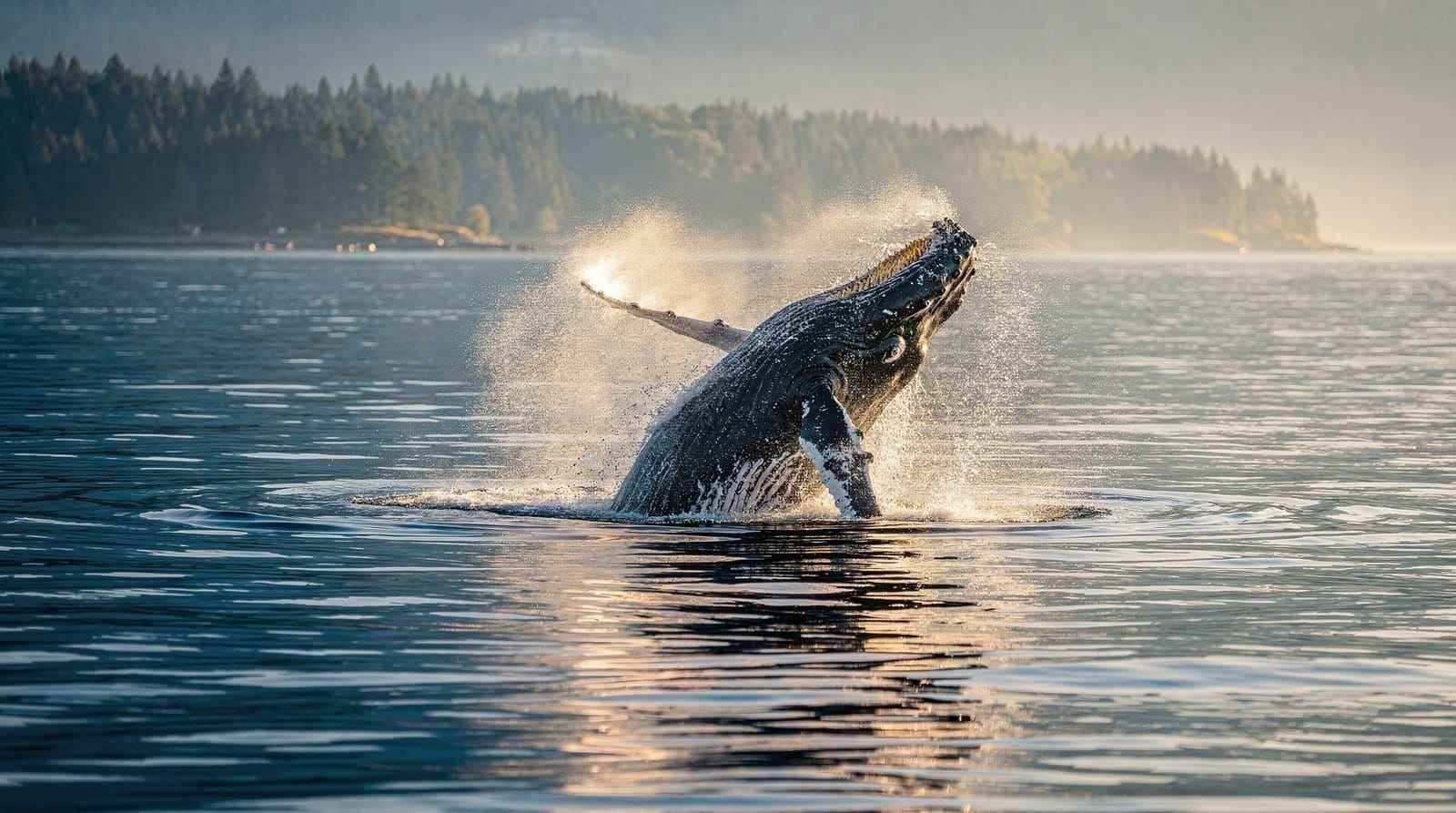
Local wisdom holds up here — September is genuinely close to summer in weather quality (10-15°C typical, still relatively dry) while crowds and prices ease meaningfully after Labour Day. It’s also the strongest single month for whale watching, since orca sightings remain solid through the first half of the month even as humpback numbers approach their annual peak — a Vancouver whale and wildlife watching tour in September tends to combine good odds with noticeably thinner boats than a July or August departure.
Hiking trails are in excellent shape with fewer bugs than midsummer, and the Vancouver International Film Festival adds a cultural layer late in the month. If forced to name one underrated month, this is it.
April: cherry blossoms, but real uncertainty
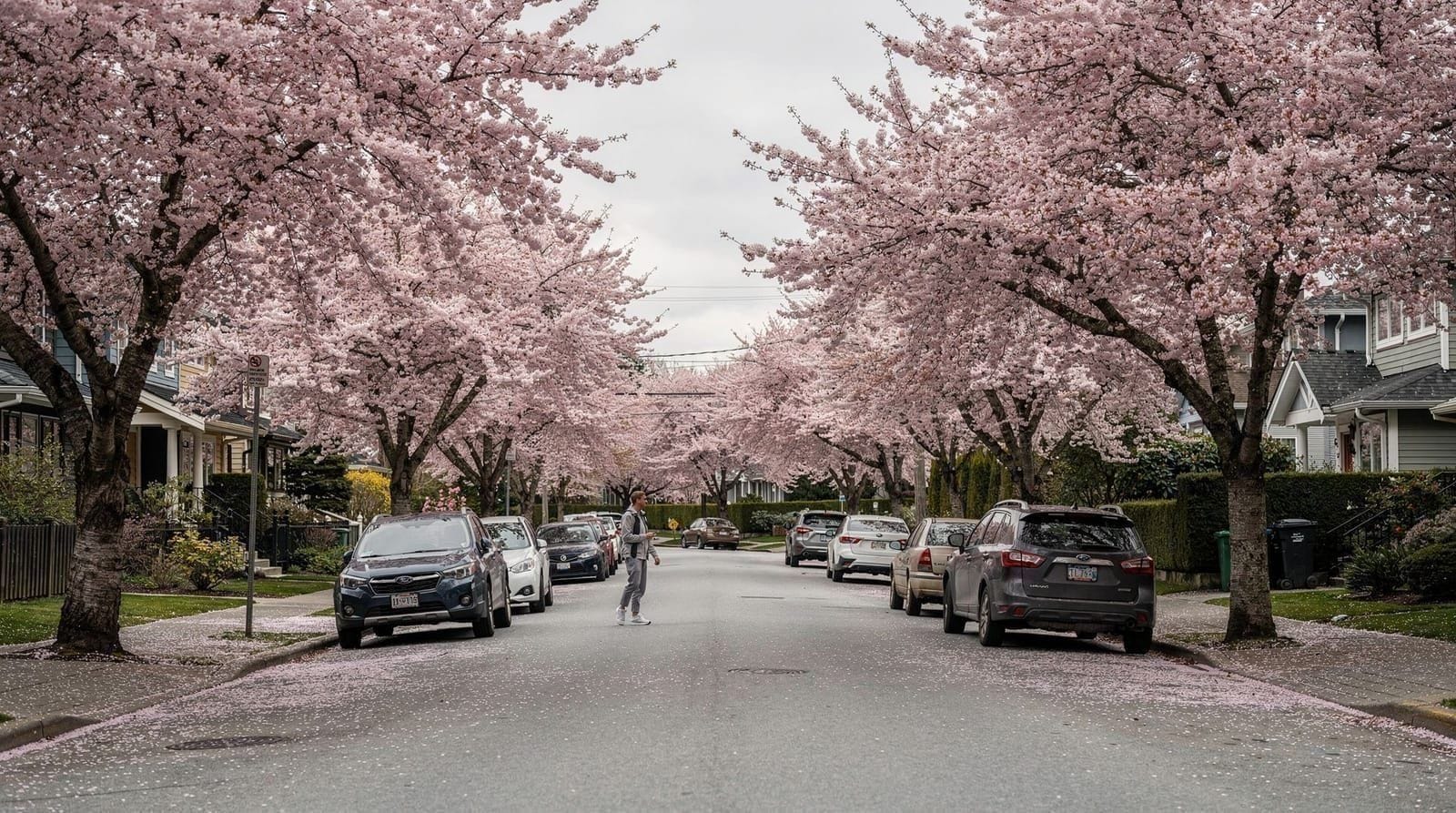
Early-to-mid April brings Vancouver’s cherry blossom season, with the festival running roughly late March to mid-April and peak bloom typically falling in the first half of the month. It’s also genuinely unpredictable weather — temperatures in the 8-15°C range, rain still common, and mountain trails likely still snow-covered at elevation. This is the month to pick specifically for the blossoms (see the cherry blossom forecast for timing detail) rather than for weather reliability, and it pairs with noticeably lower accommodation prices than summer.
May and June: the underrated ramp-up
May and June sit between the unpredictable spring and the reliable summer, with weather steadily improving and crowds still well below peak. Orca sightings move into what most operators consider peak territory by late June, and hiking trails at most elevations are dry and accessible. Prices are still below summer peak in most of May, climbing closer to peak by late June. For travelers who can’t get July or August dates but want summer-like conditions, late June is close to the best available compromise.
October: whales linger, weather turns
October is the trailing edge of both hiking and whale watching season. Humpback sightings are often still strong as whales linger before their migration south, but orca sightings drop off notably, and Pacific storm systems start arriving more frequently — open Zodiac whale tours in particular can get choppy or cancelled. It’s a reasonable month for budget-conscious travelers willing to accept weather risk, with meaningfully lower prices than summer and still-decent outdoor conditions in the first half of the month.
November through February: Whistler season, city off-season
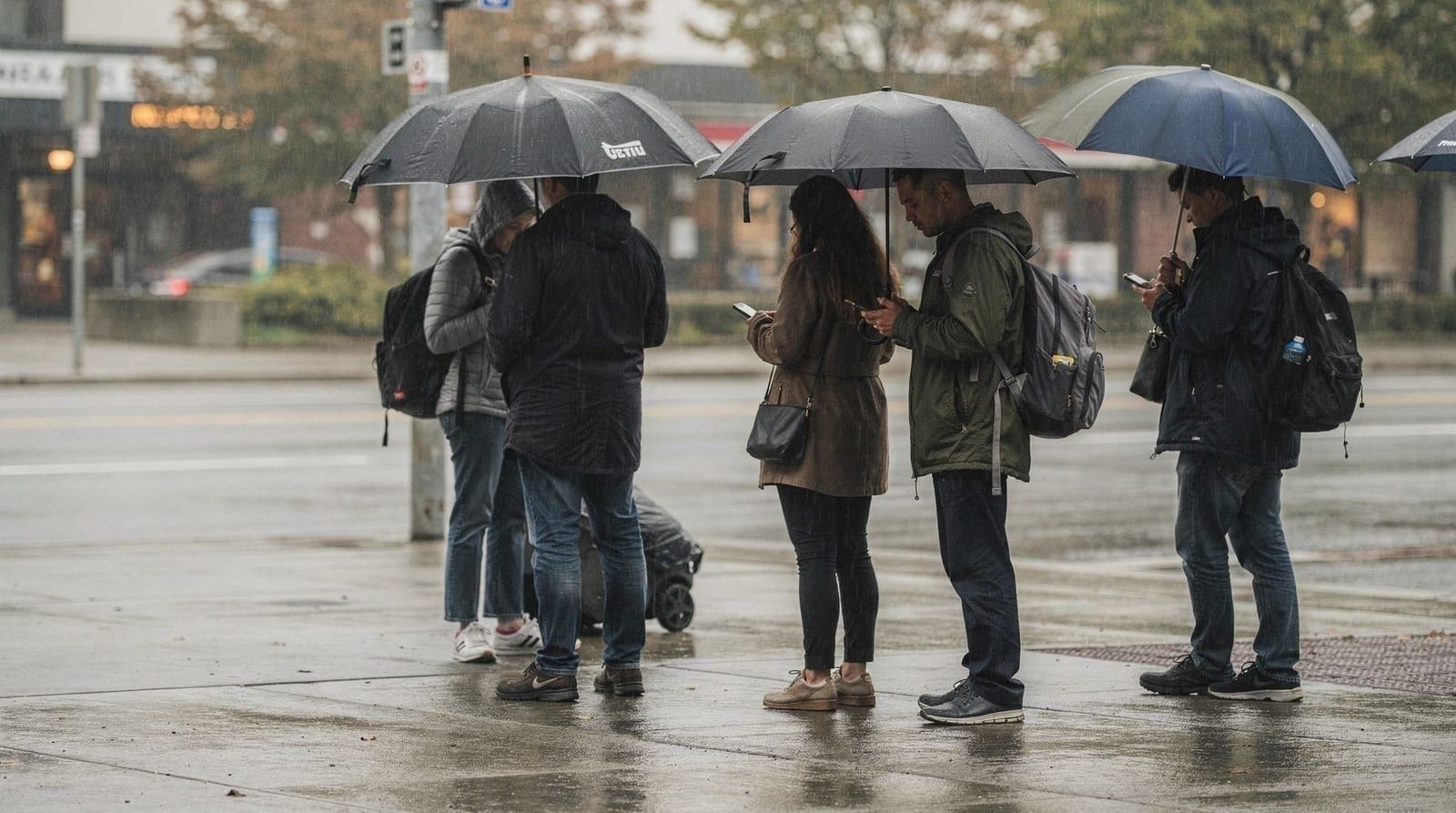
This stretch is Vancouver’s wettest and greyest, with 150-200mm of rain in the heaviest months and overcast conditions the default rather than the exception. It’s also when Whistler comes into its own — the ski season typically runs late November through mid-May, with peak conditions December through March. A trip built around skiing rather than city sightseeing makes sense in this window; a trip built purely around Vancouver’s outdoor attractions does not, since hiking is largely off the table and viewpoint-heavy sights lose most of their appeal under persistent cloud cover. See what to do in the rain for how to plan around this stretch if the dates are fixed.
March: the quiet transition
March is still wet — typically the wettest spring month — but temperatures are climbing and the earliest cherry blossoms sometimes appear late in the month. It’s the lowest-price, lowest-crowd option among the “shoulder-adjacent” months, suited to travelers prioritizing budget over weather certainty and willing to lean on indoor attractions like the Museum of Anthropology or a craft brewery tour through Granville Island as the weather backup plan.
Matching the month to the trip
For a first-time visitor whose main goal is seeing the highlights in good weather without obsessing over price, July or August remains the safest recommendation despite the crowds — see the 3-day first-timer itinerary for how to structure that kind of trip. For a return visitor or a traveler prioritizing value and fewer crowds, September is hard to beat. For anyone chasing a specific seasonal event — cherry blossoms, orca season, ski season — the event itself should drive the month choice more than a generic “best time” ranking, since a slightly worse average-weather month at the right moment for the target activity usually beats a “perfect weather” month at the wrong moment for it.
A useful gut check: whale watching rewards June through September, skiing rewards December through March, and cherry blossoms reward the first half of April — three activities that don’t overlap in the same visit, so a single trip generally has to pick a lane rather than try to catch everything. Building a longer trip that spans a shoulder season, like a 4-day Vancouver itinerary timed for late May or September, is often the most efficient way to catch decent weather, moderate crowds, and at least one seasonal highlight without paying peak-season prices throughout.
How flights and accommodation prices track the seasons
Airfare and accommodation pricing into Vancouver follow the same broad seasonal pattern as crowds — both climb through spring, peak in July and August, then ease through fall before bottoming out in the January-February post-holiday lull. Booking flights for a July or August trip several months ahead is worth it specifically because prices tend to climb as the peak season approaches and seats fill, more so than for shoulder-season travel where later booking carries less risk.
For travelers with real date flexibility, shifting a planned summer trip even two or three weeks earlier into late June, or later into September, can meaningfully reduce both flight and hotel costs while sacrificing only a small amount of weather reliability. This is a more effective lever than most in-destination budgeting tactics, since accommodation is usually the largest single line item in a multi-day trip.
Matching the month to specific interests
Beyond the broad seasonal breakdown, it’s worth thinking about what specifically draws a visitor to Vancouver. Food-focused travelers benefit from timing around festival dates like Dine Out Vancouver in January-February, when many restaurants offer prix-fixe menus. Outdoor-focused travelers without a whale watching or skiing priority get the most consistent hiking conditions from June through September, once alpine trails have cleared of snow. Culture-focused travelers benefit from late September’s Vancouver International Film Festival, which coincides with genuinely pleasant weather and thinner crowds than summer.
What locals actually plan their own trips around
Vancouverites planning a staycation or hosting visiting friends tend to lean toward late May, September, or the first two weeks of October rather than the July-August peak most out-of-town guides push hardest. The logic is straightforward: locals already know the summer weather is reliable, so they’d rather trade a slightly cooler afternoon for a table at a popular Gastown restaurant without a wait, or a parking spot at Grouse Mountain without circling for twenty minutes. Visitors with real date flexibility can borrow this same logic even without local knowledge of exactly which weekends to avoid.
How the choice changes for a Whistler-heavy trip
Everything above assumes Vancouver itself, not Whistler, is the main draw. Flip that priority and the calendar inverts almost entirely — December through March becomes the strongest window for skiing, while the shoulder months either side of ski season (late spring, early winter) are genuinely the worst time to visit Whistler specifically, caught between the lifts closing and the hiking trails not yet clear of snow. Summer, June through September, is Whistler’s second-best window, built around the Peak 2 Peak Gondola, the bike park, and alpine hiking rather than snow sports.
Frequently asked questions about timing a Vancouver trip
What is genuinely the single best month to visit Vancouver?
September, if forced to pick one — it combines near-summer weather, thinning crowds, easing prices, and the year’s strongest whale watching odds. July and August remain the safest choice for anyone who wants maximum weather certainty above all else.
What month should I avoid if I want to see the outdoors?
December and January are the toughest months for outdoor sightseeing in the city itself — persistent rain, short daylight, and poor hiking conditions at most elevations. This is the window to redirect toward Whistler skiing instead of city-based outdoor activities.
Is Vancouver cheaper to visit in winter?
Yes, meaningfully. Accommodation and attraction prices in the November-February stretch run well below summer peak, and the trade-off is weather rather than crowds, since the city sees its lowest visitor numbers in this window too.
When should I visit if I want to see cherry blossoms and whales in the same trip?
That’s a difficult combination — cherry blossom peak falls in early-to-mid April while whale watching doesn’t really pick up until late May or June. A single trip generally can’t optimize for both; late April into May is the closest compromise, catching the tail of blossom season and the early edge of decent whale sightings.
Does the “best month” change for a Whistler-focused trip versus a city-focused trip?
Yes, significantly. A city-focused trip favors July through September for weather and October for value. A Whistler-focused trip flips this entirely toward December through March for peak ski conditions, or June through September for the resort’s summer hiking and biking program.
What’s the single worst month to visit Vancouver?
January and February for outdoor-focused city sightseeing — heavy rain, short daylight, and poor hiking conditions at most elevations, without the offsetting benefit of ski season unless Whistler is specifically on the itinerary. Prices are lowest in this window, which is the only real upside for a city-focused visit.
Should I visit for a festival or plan around weather first?
Weather should generally take priority for a first Vancouver visit, since a rained-out Stanley Park day is a bigger loss than missing a specific festival. Return visitors or travelers with a specific festival priority — Dine Out Vancouver, the Vancouver International Film Festival — can reasonably let the event drive the date instead.