Vancouver in 4 days: a relaxed itinerary
For people who don’t want to rush
Four days doesn’t add a new headline attraction to the 3-day itinerary so much as it removes the time pressure from it. If three days already feels tight when you read the hour-by-hour plan, four days lets you cover the same core — downtown, Stanley Park, the North Shore, Gastown and Granville Island — at a genuinely relaxed pace, plus adds Kitsilano beach and museum time, and leaves room for one half-day trip out of the city if you want it.
If you’d rather commit that extra day to an actual overnight trip instead of a slower city pace, look at the 5-day Whistler itinerary or the 5-day Victoria itinerary — both use the extra time to leave Vancouver rather than linger in it. This plan assumes no car, since SkyTrain, SeaBus and bus handle every stop below comfortably.
Budget 180-240 CAD per person per day for food, transit and attractions, similar to the 3-day plan but spread over a slightly more relaxed schedule with fewer back-to-back activities per day.
| Where | Downtown, Stanley Park, North Shore, Granville Island, Kitsilano |
| Cost | Around CAD 650–850/person for 4 days, excl. hotel |
| Time needed | 4 days, no car needed |
| Getting around | SkyTrain, SeaBus, bus with a Compass Card |
| Best time | Summer for day-4 outdoor options; flexible otherwise |
Day 1: downtown and Stanley Park, without rushing
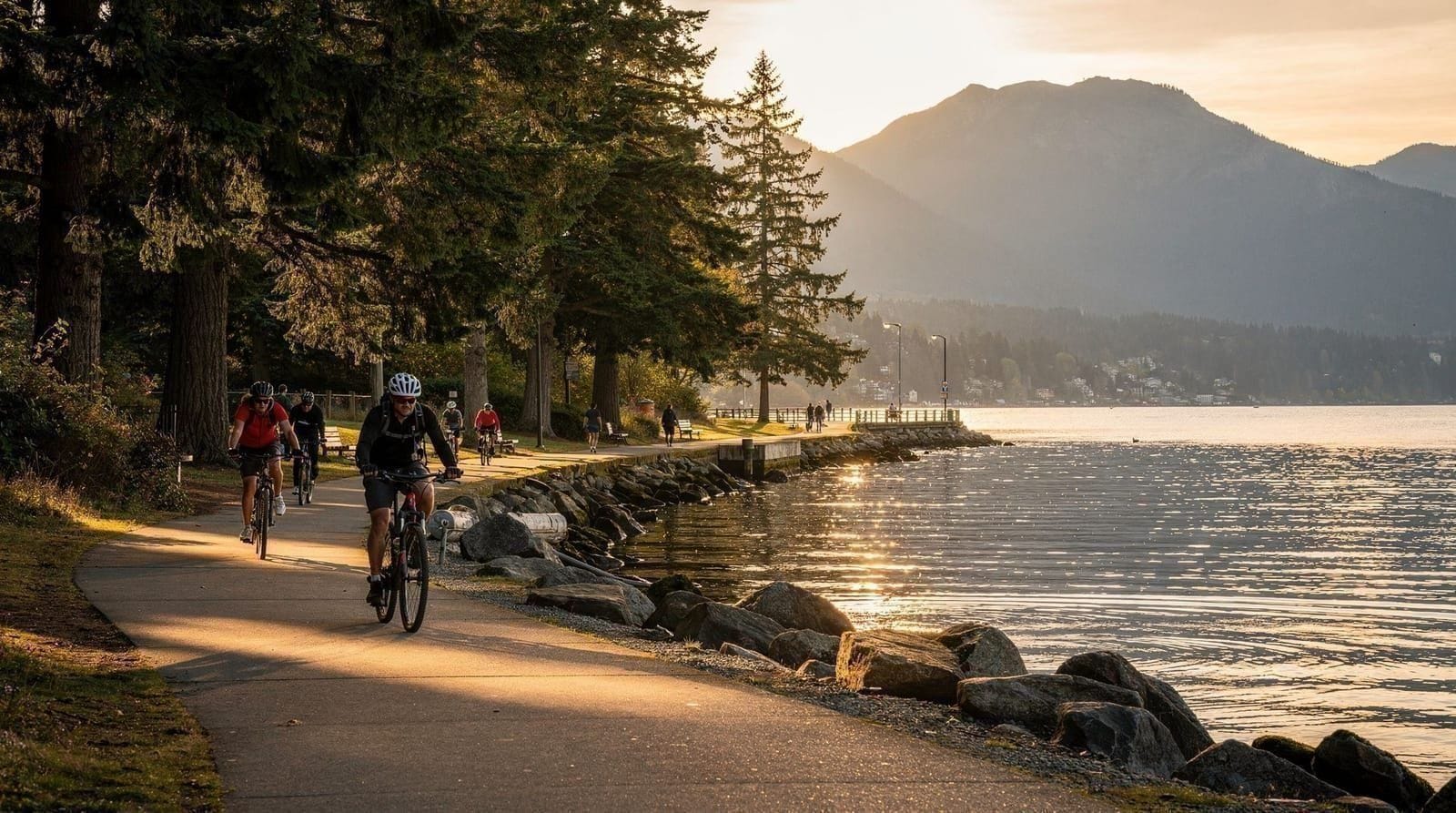
Give Stanley Park a full, unhurried morning — walk the seawall at whatever pace suits you rather than racing a schedule, and take the time to sit at Third Beach or Second Beach if the weather’s good. A guided bike tour through Stanley Park and downtown is a good option if you want to cover more ground than walking allows while still keeping the pace easy.
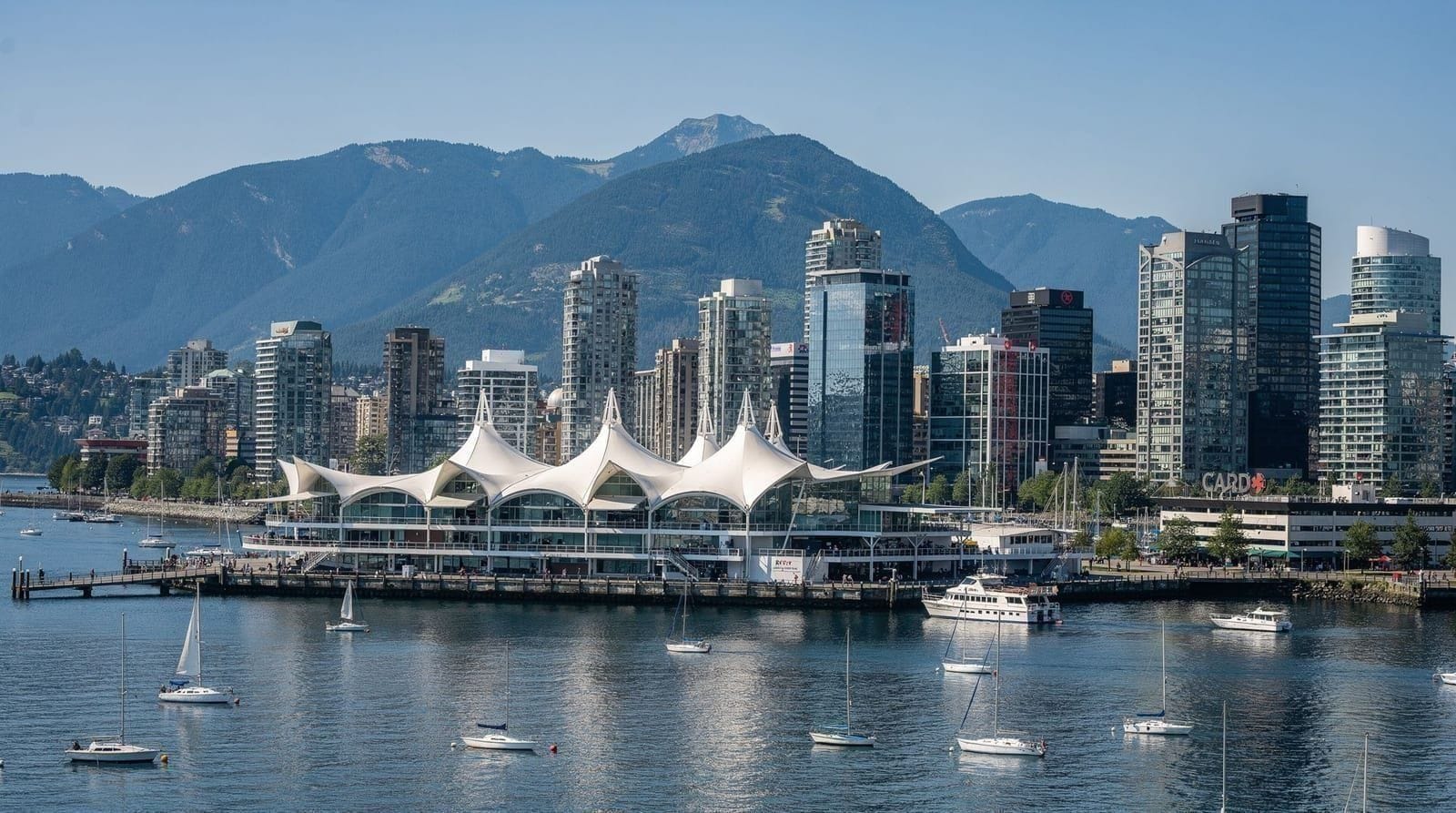
In the afternoon, drift into downtown Vancouver proper — Canada Place, the waterfront, maybe the Vancouver Lookout tower for a city overview, or the Vancouver Art Gallery if you’d rather spend an hour indoors. Nothing here needs to be scheduled tightly; that’s the point of the extra day.
Evening: Gastown for dinner, skipping the Water Street restaurants that cater to foot traffic in favor of Blood Alley or Carrall Street a block or two over — the food-to-price ratio is noticeably better once you’re off the main strip.
Day 2: the North Shore, at a walking pace
North Vancouver takes the whole day here rather than being squeezed into an afternoon. Start at Capilano Suspension Bridge Park — a Capilano and city highlights combination tour is a reasonable way to pair the bridge with a broader look at the city if you haven’t already covered downtown thoroughly, or just buy a standalone bridge ticket if you’d rather explore at your own speed.
Take the time here that the 3-day itinerary doesn’t allow for — the Cliffwalk and Treetops Adventure sections reward slow walking, and the gardens near the entrance are easy to skip past if you’re in a hurry, which on this trip you’re not.
Move on to Grouse Mountain in the afternoon for the gondola ride and mountaintop views. If the weather’s clear, this is worth lingering over rather than treating as a box to check — the raptor and lumberjack shows run on a schedule, so check times when you arrive and build your visit around them rather than the reverse.
Day 3: Granville Island and Kitsilano
Morning at Granville Island — the public market, artisan studios, and a leisurely lunch from one of the food stalls. From there, walk or take a short bus across to Kitsilano, Vancouver’s beach neighborhood. Kitsilano Beach itself is worth an hour or two if the weather cooperates, and the Museum of Vancouver and H.R. MacMillan Space Centre, both on the edge of Vanier Park nearby, are reasonable options if you’d rather spend the afternoon indoors. This pairing — market in the morning, beach and museum in the afternoon — is the kind of day the 3-day itinerary simply doesn’t have room for.
Dinner in Kitsilano itself is a good option; the neighborhood has a solid casual dining scene along West 4th Avenue that doesn’t carry the tourist markup of downtown.
Day 4: a half-day out, or one more slow morning
This is the flexible day. A North Vancouver Shipyard District food tour is a good half-day option if you want to see a less touristed corner of North Vancouver with a food focus — the Shipyards area has developed into a genuinely good waterfront dining and market district in recent years, distinct from the Capilano/Grouse side of North Van.
Alternatively, if the weather and your budget allow, a seaplane panorama tour over the city, Howe Sound and the surrounding mountains is a memorable way to use a half-day and gives you a perspective on the region’s geography that’s hard to get any other way.
If you’d rather not add another paid activity, the Sea-to-Sky Gondola near Squamish is reachable as a half-day trip if you’re willing to arrange transport, though it does require either a rental car or a tour, since it’s outside the city and not on the regular transit network. Otherwise, a slow final morning back in the West End — walking English Bay, browsing Denman Street — is a fine way to close out a trip that’s deliberately not been rushed.
Frequently asked questions about this itinerary
Is 4 days too much for Vancouver?
Not if you want a relaxed pace rather than a packed one. Four days covers the same ground as the 3-day itinerary with meaningfully more breathing room, plus adds Kitsilano and a flexible half-day. If you’d rather use the extra day to leave the city, Whistler or Victoria are better uses of it than a slower city pace.
What should I add on day 4?
It depends on your interests: a seaplane tour or the Shipyards food tour if you want a guided half-day, the Sea-to-Sky Gondola if you’re comfortable arranging transport out of the city, or simply a slow morning in the West End if you’d rather not schedule anything else.
Do I need a car for 4 days?
No — every stop in this itinerary, including the half-day options on day 4, is reachable by transit, shuttle, or a tour that includes transport. A car becomes more useful only if you extend the trip toward Whistler or Squamish on your own schedule.
How is this different from the 3-day itinerary?
The 4-day plan covers the same core neighborhoods but spreads the North Shore and Granville Island visits over more time, adds a full Kitsilano beach and museum afternoon, and leaves day 4 open for a half-day trip or a slow finish rather than packing in a new destination.
Should I do Kitsilano or Yaletown if I only have time for one?
Kitsilano suits this itinerary better because it pairs naturally with a Granville Island morning and offers a beach and museum combination the rest of the trip doesn’t have. Yaletown is worth a shorter visit for dinner or drinks on any of the other evenings rather than needing its own block of time.
Is 4 days enough to add a day trip instead of a half-day?
Not comfortably. A full day trip to Whistler, Victoria or the Sea-to-Sky corridor needs more than the half-day this itinerary sets aside for day 4, and squeezing one in means giving up the relaxed pacing that’s the whole point of the extra day. If a full day trip is the priority, look at the 5-day Whistler or 5-day Victoria itineraries, which build the travel time in properly.
What’s the biggest difference between this and the 3-day plan for families?
The extra breathing room matters more with kids than with adults — the Vancouver with kids guide notes that young children tire faster on back-to-back attraction days, and this itinerary’s slower North Shore day and open day 4 absorb that better than the tighter 3-day schedule. Building in nap-length downtime on day 1 or day 3, rather than treating every block as sightseeing time, is usually the single biggest quality-of-life improvement for a family doing this version of the trip.
Where to stay for a relaxed pace
Since this itinerary deliberately avoids rushing between neighborhoods, a hotel with easy access to both downtown and the Kitsilano/West End side of the city is worth prioritizing over pure proximity to any single attraction. The Fairmont Hotel Vancouver or Rosewood Hotel Georgia both work well as downtown anchors; if you’d rather be closer to the water and Kitsilano from the start, a West End hotel like the Sylvia Hotel puts you within an easy walk of both Stanley Park and the bus routes toward Kitsilano.
Travelers on a tighter budget can look at extended-stay or apartment-style accommodation in Kitsilano itself, which tends to run cheaper than downtown proper and suits the slower pace of a four-day trip. See where to stay in Vancouver for the full comparison.
Budget breakdown
Excluding lodging, budget roughly 25-30 CAD per person per day for transit, 60-90 CAD per day for food, and a combined 200-280 CAD across the trip for the North Shore tickets (Capilano and Grouse) plus whichever day-4 option you choose — the seaplane tour is the priciest single addition here, typically running well over 150 CAD per person, while the Shipyards food tour and a self-guided West End morning cost considerably less. A realistic four-day mid-range total lands somewhere around 650-850 CAD per person before accommodation, with the seaplane tour or Sea-to-Sky Gondola trip as the main variables that push it higher.
Seasonal notes
The extra day in this itinerary makes seasonal planning a bit more forgiving than the tighter 3-day plan, since you have more flexibility to shuffle days around bad weather. Summer (June-August) is the most reliable season for the day-4 outdoor options — the seaplane tour and the Sea-to-Sky Gondola are both considerably better experiences in clear weather, and this is also whale-watching season if you wanted to swap day 4 for a different half-day activity entirely.
Shoulder season (September-October) still works well for this itinerary and comes with noticeably lower hotel rates and thinner crowds at Capilano and Grouse. Winter trims the day-4 options — seaplane tours can be weather-dependent and the Sea-to-Sky Gondola access road occasionally closes in poor conditions — so a West End morning or an indoor option like the Museum of Vancouver becomes the more reliable choice for day 4 between November and March.
Why relaxed pacing is worth the extra day
It’s fair to ask whether a fourth day spent slowing down, rather than seeing something new, is worth the extra hotel night and travel time. For most first-time visitors, the honest answer is that it depends on your travel style more than on Vancouver itself. If you’re the kind of traveler who’s happy covering a lot of ground quickly and doesn’t mind a packed schedule, the 3-day itinerary covers the same core destinations and will feel complete on its own — a fourth day of slower pacing may feel like diminishing returns.
But if you consistently find that three-day trips leave you tired rather than satisfied, or if you’re traveling with someone who tires more easily, the fourth day pays for itself by turning what would otherwise be a somewhat rushed North Shore afternoon into a properly unhurried one, and by adding Kitsilano’s beach and museum combination that the tighter itinerary has no room for.
Common mistakes on this itinerary
Because this plan is built around slower pacing, the most common mistake is accidentally re-compressing it — booking a day-4 activity that itself requires a tight schedule (an early flight the same day, for instance) undoes the entire point of the extra day. Keep day 4 genuinely flexible rather than locking in a fixed-time tour unless you’re confident about your departure logistics.
A second common mistake is skipping Kitsilano because it sounds similar to other beach areas covered in shorter itineraries — Kitsilano’s combination of a genuine urban beach, walkable shops along West 4th Avenue, and the adjacent museums makes it a distinct stop worth the half-day, not a redundant one. Finally, resist the temptation to add a fifth destination just because you have extra time; the value of this itinerary is depth at the existing stops, not breadth across more of them — if you want more destinations, the 5-day Whistler or 5-day Victoria itineraries are built for that instead.
Extending into a longer trip
If, partway through this itinerary, you find yourself wishing you’d budgeted even more time, that’s a reasonable signal to consider extending rather than compressing a future visit. Vancouver connects naturally to several longer trips: the 5-day Whistler itinerary adds a proper mountain town visit via the Sea-to-Sky Highway, worthwhile if you enjoyed the North Shore day and want more of that scenery at a larger scale.
The 5-day Victoria itinerary instead heads across the water to Vancouver Island, a genuinely different pace and setting from the mainland city. Both are reachable without a car, though Whistler in particular is more comfortable with one if you want flexibility beyond the standard shuttle and bus options. Either extension turns this 4-day relaxed city itinerary into a longer trip without needing to redo any of the ground already covered here.
Making the most of the slower pace
The real value of four days over three isn’t a new destination, it’s the option to not schedule every hour. Resist filling every gap with another paid attraction — a slower coffee, an unplanned wander down a street that looked interesting, or simply sitting at Kitsilano beach for an extra hour without checking the time are exactly what this extra day is for.
Travelers coming from this itinerary often report that the unstructured stretches — not the North Shore gondola rides or the market stalls — are what they remember most fondly, precisely because a tighter itinerary doesn’t leave room for them. If you find yourself instinctively reaching for a fifth attraction to fill day 4’s open block, that’s worth noticing as a sign you might actually prefer the tighter 3-day itinerary after all — there’s no wrong answer, just a genuine difference in travel style worth being honest with yourself about before you book four hotel nights instead of three.
Final planning tips
A few smaller details make this itinerary run more smoothly in practice. Buy Capilano and Grouse Mountain tickets online in advance rather than at the gate, particularly in summer, since it avoids the entry queue and sometimes comes with a modest discount over walk-up pricing.
If you’re deciding between the seaplane tour and the Sea-to-Sky Gondola for day 4, weigh cost against flexibility: the seaplane tour is entirely self-contained and requires no additional transport arrangements, while the gondola trip needs you to sort out transport to Squamish first, which adds planning overhead even though the gondola ticket itself is often cheaper. And if you’re combining this itinerary with jet lag from an international flight, consider putting the more physically demanding North Shore day (day 2) on day 3 instead, giving yourself an extra day to adjust before tackling Capilano’s walkways and Grouse’s trails.
Four-day snapshot
| Day | Focus | Pace |
|---|---|---|
| 1 | Stanley Park, downtown, Gastown | Relaxed, no fixed schedule |
| 2 | Capilano and Grouse Mountain | Full day, unhurried |
| 3 | Granville Island, Kitsilano beach | Market morning, beach afternoon |
| 4 | Seaplane, Shipyards food tour, or a slow West End morning | Fully flexible |