Capilano Suspension Bridge
Vancouver: Capilano Suspension Bridge Park Ticket
- Free cancellation
How do you visit Capilano Suspension Bridge?
Capilano Suspension Bridge Park is in North Vancouver, about 20-25 minutes from downtown by car via the Lions Gate Bridge, or roughly 45-60 minutes by SeaBus plus bus 236. Adult admission runs around CAD 60-65, and most visitors need 2-3 hours to cover the bridge, Cliffwalk, Treetops Adventure and totem grounds.
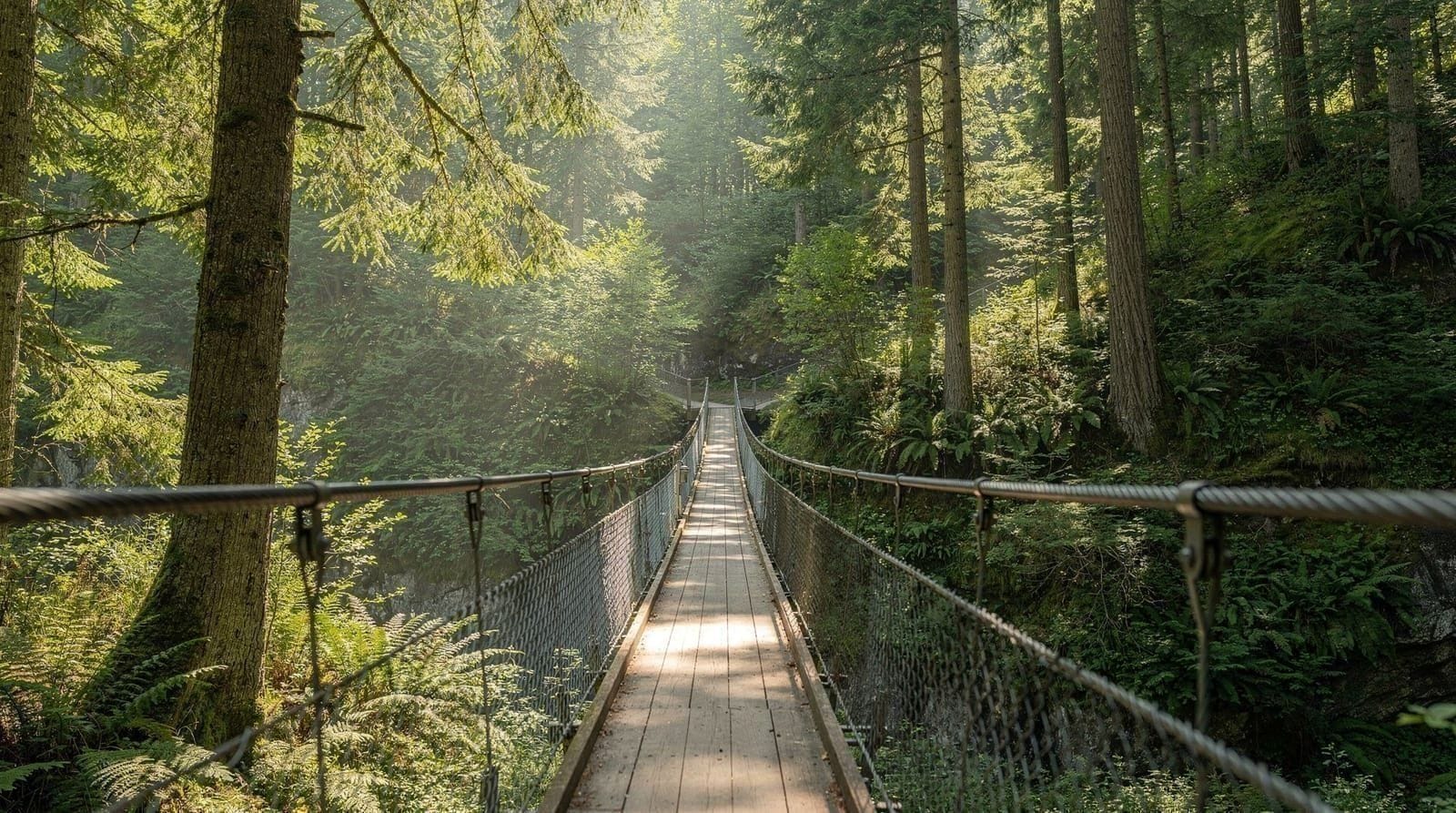
Most Vancouver guides describe what Capilano Suspension Bridge Park looks like. Fewer explain how to actually plan a visit that doesn’t turn into a slow shuffle behind fifty other people on a 137-metre bridge — and that logistics question matters as much as the scenery once you’ve decided to go.
| Where | North Vancouver, via the Lions Gate Bridge |
| Cost | Around CAD 60–65 adult admission |
| Time needed | 2–3 hours |
| Getting there | 20–25 min by car, or free shuttle / SeaBus plus bus 236 |
| Best time | Arrival at opening, or the last 90 minutes before closing |
A quick history of the site
The first bridge across this stretch of canyon went up in 1889, built by Scottish civil engineer George Grant Mackay using hemp rope and cedar planks — a far cry from the steel-cable structure in place today, but the same basic idea of a crossing suspended high above the Capilano River. Ownership and design changed hands several times over the following decades; the current cable bridge dates to a 1956 rebuild, engineered to modern load standards while keeping the same crossing point and general route.
The Treetops Adventure opened in 2004, and the Cliffwalk followed in 2011, both added specifically to extend what had otherwise become a fairly quick single-bridge visit into the multi-hour park it is today. Knowing this timeline helps make sense of why the park feels like three distinct attractions bolted together rather than one cohesive design — because that’s essentially what happened, built out in stages over more than a century.
Planning the visit, not just the bridge
Capilano rewards a bit of timing strategy more than most Vancouver attractions, because almost everyone who visits downtown Vancouver for more than two days ends up here, and the park doesn’t cap daily visitor numbers the way some sites do. That means the difference between a relaxed morning and a bottlenecked afternoon is entirely about when you show up, not luck.
Opening is typically 9am (hours shift seasonally, so check ahead of a winter or shoulder-season trip), and arriving within the first hour is the single most effective thing you can do to avoid the worst of it. Tour buses from downtown hotels and cruise terminals tend to land between 10:30am and 2pm, which is also when the bridge itself narrows to single-file foot traffic and crossing turns into a slow shuffle rather than a walk.
A standard admission ticket booked ahead of time skips the on-site ticket counter, which genuinely matters in July and August when that line alone can run 20-30 minutes. It doesn’t skip the bridge queue itself, since the park doesn’t sell timed entry — but it removes one variable from a day that otherwise depends on getting there early.
What admission actually covers
A single ticket covers everything inside the gates, and it’s worth knowing what that includes before deciding whether the price is worth it:
- The main suspension bridge — 137 metres long, 70 metres above the Capilano River canyon, in some form since 1889 though the current steel-cable structure dates to a 1956 rebuild.
- The Cliffwalk — a narrow, cantilevered walkway bolted into the granite cliff face, including a few glass-floored sections with no vegetation blocking the view down. This is the part that tends to make people hesitate more than the main bridge.
- Treetops Adventure — seven suspended walkways strung between old-growth Douglas fir trees roughly 30 metres up, connected by smaller bridges.
- The Story Centre and totem pole collection, including pieces carved on-site by contemporary Squamish and Kwakwaka’wakw artists.
- Rainforest trails and the Kia’palano living forest exhibit at ground level.
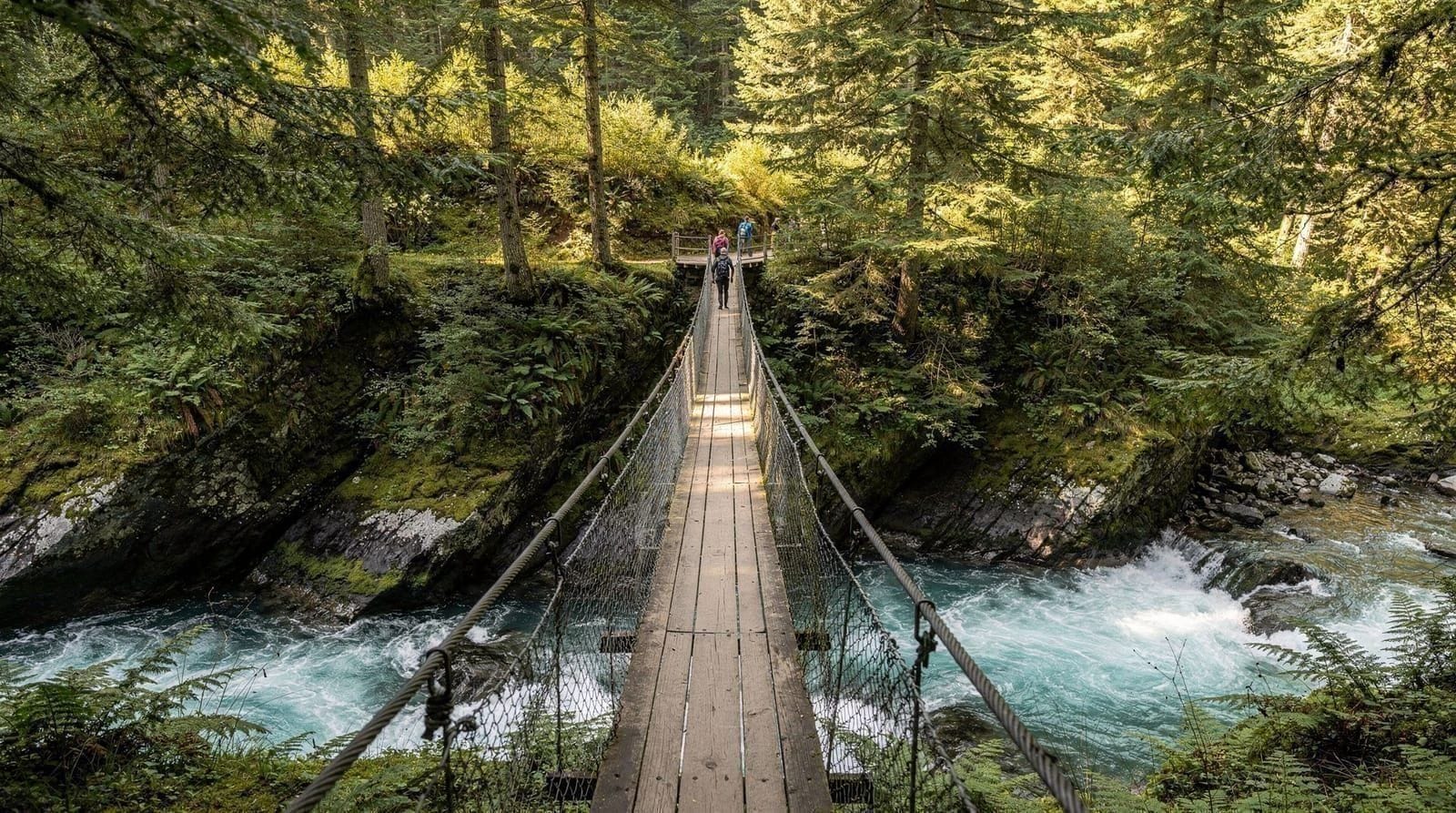
None of these cost extra once you’re through the gate, which is the strongest argument for paying rather than driving 15 minutes further to Lynn Canyon and getting the bridge crossing alone, for free.
Current prices and how they compare
Adult admission runs roughly CAD 60-65 as of this review, with reduced rates for youth, students and seniors, plus a family rate that typically beats paying for two adults and two-plus kids separately. That’s a real jump from what the park charged a few years ago, and it’s the number that fuels most of the honest debate about whether Capilano is worth it. For context: Lynn Canyon is free, and the Sea to Sky Gondola near Squamish, which offers a comparable alpine suspension bridge plus mountain views, runs at a similar price point to Capilano but adds a genuine summit hike.
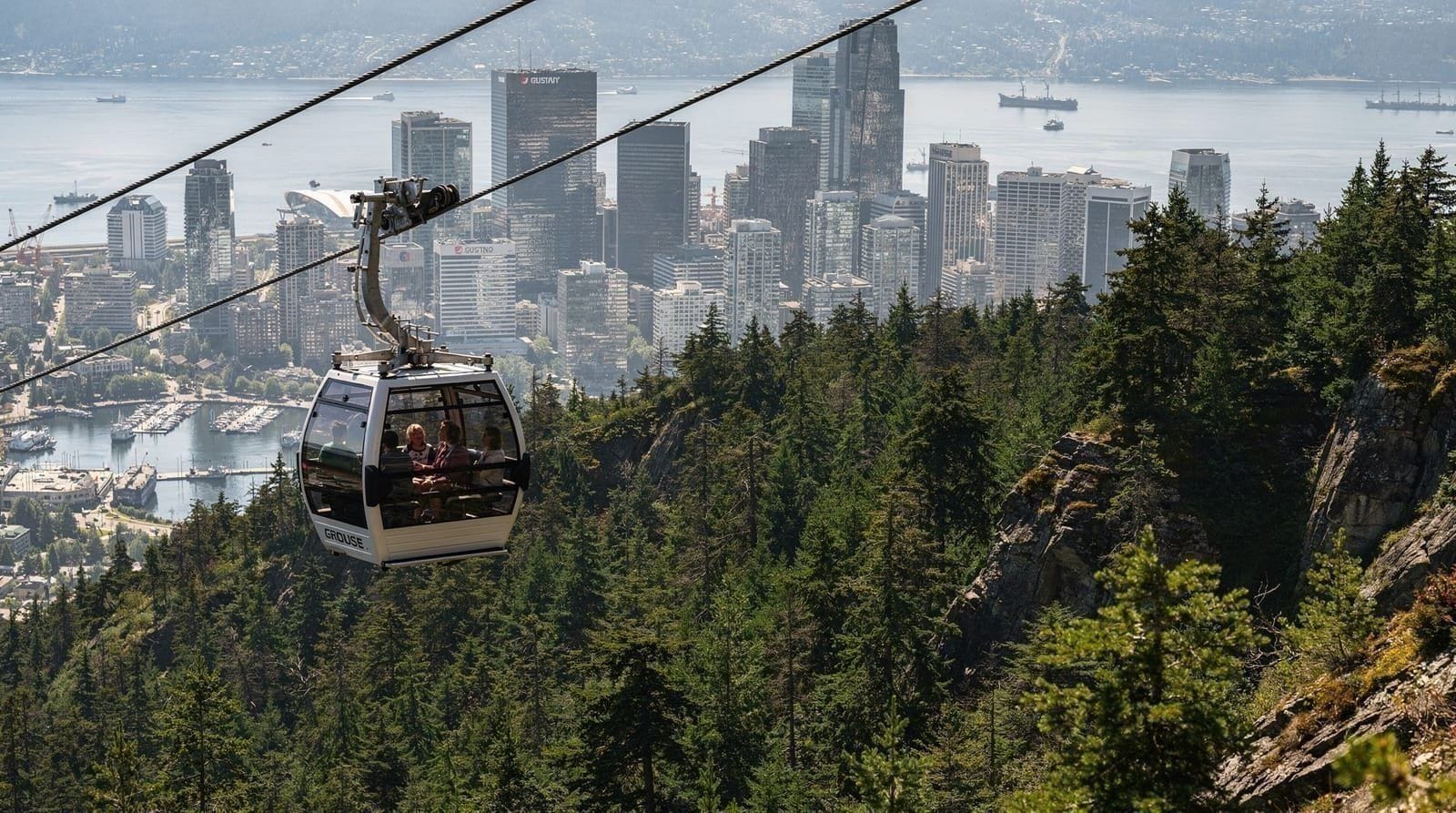
If you’re weighing Capilano against a same-day pairing with Grouse Mountain, a combined Capilano and Grouse Mountain day tour that bundles transport and both admissions usually costs less than booking each separately, and removes the need to figure out parking at two different North Shore lots in one day.
Getting there without a car
Three realistic options exist for car-free visitors:
- Free shuttle bus — the park runs shuttles from several downtown hotel-adjacent pickup points, including stops near Canada Place, roughly every 30 minutes during operating hours. Genuinely free with admission and the option most car-free visitors use.
- Public transit — SeaBus from Waterfront Station to Lonsdale Quay (about 12 minutes), then TransLink bus 236 toward Grouse Mountain, alighting at the Capilano stop. Total time from downtown runs 45-60 minutes depending on connections, on one fare thanks to the 90-minute transfer window built into Compass Card pricing.
- Taxi or rideshare — 20-25 minutes from downtown, useful if you’re short on time or traveling with people who have mobility constraints on the shuttle/transit combination.
Driving yourself takes 20-25 minutes from downtown via the Lions Gate Bridge outside rush hour, though the on-site lot fills by mid-morning through peak summer, pushing latecomers into a longer walk from overflow parking.
Combining Capilano with the rest of the North Shore
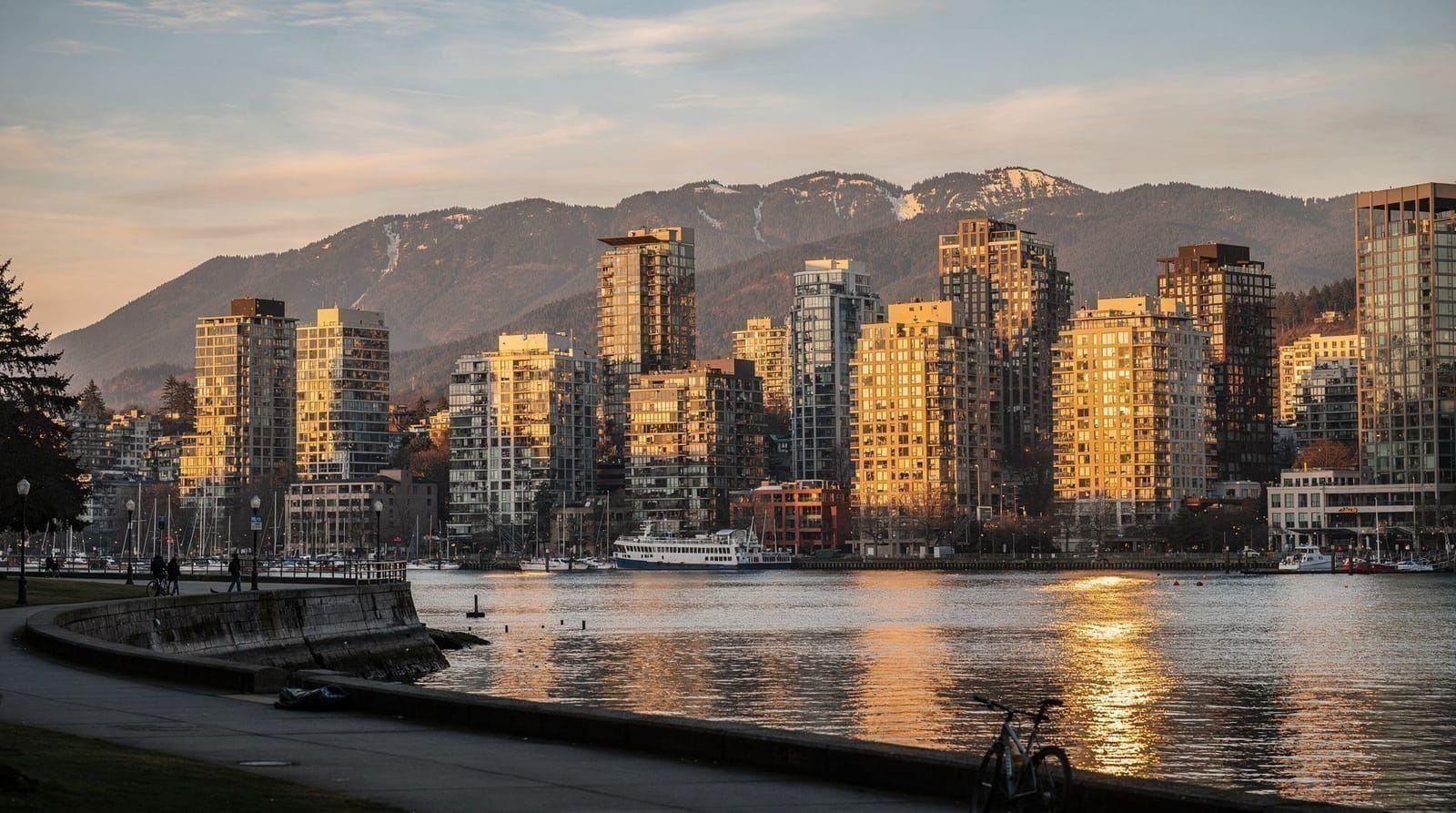
Capilano sits about 10 minutes by car from Grouse Mountain, and the two are commonly done as a single North Shore day — Capilano in the morning while it’s quieter, Grouse in the afternoon when its Skyride line tends to peak slightly later. Some operators also bundle a stop at the Vancouver Lookout downtown, letting you see the city from a rooftop observation deck and a forest canyon in the same day; a city, lookout and Capilano combo ticket covers all three without separate bookings, which is convenient if you’d rather not manage three separate confirmation emails.
Anyone without a car and with only a single free afternoon might prefer a half-day Vancouver and Capilano sightseeing tour, which handles transport and gives a guided overview rather than requiring self-navigation on transit.
What to wear and bring
The bridges are exposed to weather, and the forest floor around them stays damp even on dry days. A light rain layer is worth packing regardless of forecast between October and April, and closed-toe shoes matter more here than at most Vancouver attractions since the Cliffwalk’s metal grating and the Treetops’ wooden platforms can get slick. Photography is unrestricted, though the main bridge’s cable railings and constant foot traffic make tripods impractical — handheld shots work fine, and the Cliffwalk’s cantilevered sections give some of the better angles back toward the canyon.
When to visit by season
Summer (June-September) brings the most reliable weather and the longest daylight window for photos, but also the heaviest crowds and the fullest parking lot. Shoulder months — May, late September, October — thin the crowds substantially while keeping decent weather, and by mid-October the forest canopy turns for a genuinely different look than the summer green. Winter is wet, and the wooden and metal walkways can be slippery, but the park stays fully open, and the Canyon Lights display from late November through mid-January is a real reason to visit rather than a consolation prize — string lights cover the bridges, Treetops and forest floor after dark, and it draws a completely different crowd than a July afternoon.
Common mistakes first-time visitors make
A handful of avoidable missteps come up repeatedly. The biggest is arriving mid-morning instead of at opening — visitors who show up at 9am consistently report a noticeably better experience than those who arrive at 11am, even though it’s only a two-hour difference. The second is treating the visit as “just the bridge” and rushing through in 45 minutes; the Treetops Adventure and Cliffwalk are genuinely worth the time, and skipping them defeats much of the value of the admission price.
Third, some visitors skip the totem pole grounds and Story Centre entirely on the way out, assuming they’re minor add-ons — in practice, the totem collection is one of the more substantial First Nations art displays accessible without a museum visit, and it’s included in admission at no extra cost. Finally, driving without checking parking availability first can cost 20-30 minutes circling for a spot in peak summer; the free shuttle removes that problem entirely for anyone flexible on timing.
Food and rest stops on site
A café near the park entrance serves sandwiches, soups and hot drinks, useful for a mid-visit break rather than leaving the grounds for lunch. It’s casual, cafeteria-style food rather than a destination meal, priced roughly in line with what you’d expect at any mid-range attraction café — figure CAD 12-18 for a simple lunch. Picnic tables near the entrance plaza are available for anyone who’d rather bring their own food; there’s no ban on outside food and drink at the entrance area, though it’s not permitted on the bridges and walkways themselves. For a fuller meal, both Capilano’s exit and the drive back toward downtown pass several casual restaurants in North Vancouver worth considering if the on-site café doesn’t appeal.
Budget planning: Capilano within a North Shore day
For a party of two adults doing Capilano and Grouse Mountain together in one day without a car, a rough budget looks like: combined admission (the bundled ticket typically undercuts buying separately), a light lunch at each site or one sit-down meal in North Vancouver, and either free shuttle transport or a Compass Card day pass if using SeaBus and bus. All-in, that day typically runs CAD 180-260 for two people including food, before any souvenirs. Solo travelers or larger groups splitting a rental car for the day can sometimes bring the per-person cost down further, especially if combining the North Shore with other car-dependent stops the same day.
Accessibility notes
The main bridge and much of the ground-level rainforest trail are stroller- and wheelchair-passable with assistance, though the bridge’s gentle sway and narrow width make it genuinely difficult for anyone using a mobility device without a companion. The Treetops Adventure and Cliffwalk both involve stairs and are not wheelchair accessible. Staff at the entrance can advise on the most manageable route through the grounds for visitors with mobility limitations before you buy a ticket.
What locals do differently
Vancouverites who visit Capilano — usually while hosting out-of-town guests rather than on their own initiative — tend to follow a slightly different pattern than first-time tourists. They almost never go in July or August, favoring a weekday in late spring or early fall instead. Many treat the Canyon Lights winter display as the real draw rather than a side note, since it offers a genuinely different experience from the daytime summer version and thins out some of the daytime crowd complaints entirely.
A number skip the on-site café in favor of eating beforehand or afterward in North Vancouver, where options like Lonsdale Quay’s public market offer more variety at lower prices than an attraction café. And almost everyone who’s done it more than once recommends the early-opening strategy over any other single piece of advice — it consistently comes up as the difference between a good visit and a merely acceptable one.
Weather and what it changes
Because the entire park sits within a rainforest canyon, weather affects the experience more here than at most Vancouver sights. Heavy rain doesn’t close anything, but it does make the wooden Treetops platforms and metal Cliffwalk grating genuinely slippery, and photography becomes harder with water on camera lenses and phone screens.
Fog is a more unusual factor — on damp mornings, especially in shoulder season, mist can settle into the canyon in a way that’s atmospheric for photos but reduces visibility on the Cliffwalk’s exposed sections. Checking a same-day forecast rather than a multi-day one is worth doing, since canyon weather can shift faster than the general Vancouver forecast suggests, particularly moving from downtown (often drier) into the North Shore mountains (often wetter).
Where it fits in a wider itinerary
For most first-time visitors, Capilano is a half-day North Shore excursion rather than a standalone trip — pairing naturally with Grouse Mountain, or with a broader day that also touches Stanley Park or Gastown if you’re based downtown and building around a 2-3 day stay.
It also shows up regularly in Vancouver’s honest one-day sightseeing plans for visitors trying to hit the North Shore and downtown in a single busy day, though that pace only works if you commit to the early-opening strategy above. For a longer stay, see how it fits into a broader 3-day Vancouver plan alongside Granville Island and the Sea-to-Sky corridor.
Frequently asked questions about visiting Capilano Suspension Bridge
What time should I arrive to avoid crowds?
Arrive at or just after opening, typically 9am (confirm current hours seasonally). Tour buses and cruise-passenger groups tend to arrive from mid-morning through early afternoon, so the first hour and the last 90 minutes before closing are consistently the quietest windows.
Do I need to book tickets in advance?
It’s not strictly required outside peak summer, but booking ahead skips the on-site ticket counter, which matters in July and August when that line can run 20-30 minutes deep on its own.
Is there food on site?
Yes, a café near the entrance serves casual meals and snacks; it’s not destination dining, but it’s convenient if you’re spending a full morning on the grounds and don’t want to leave for lunch.
How does Capilano compare to Lynn Canyon?
Capilano is taller (70 metres above the canyon versus roughly 50 metres at Lynn Canyon), longer, and comes with the Cliffwalk and Treetops Adventure included in admission. Lynn Canyon’s bridge is smaller and simpler, set inside a free regional park with hiking trails and a swimming hole. See the full Capilano versus Lynn Canyon comparison for a longer breakdown.
Is parking available on site?
Yes, paid parking is available at the park, but the lot fills by mid-to-late morning during summer. Arriving early or using the free downtown shuttle avoids the issue entirely.
Is Capilano suitable for people with a fear of heights?
The main bridge itself is manageable for most people with mild unease around heights, since the cable railings and forest canopy provide some visual buffer from the drop. The Cliffwalk’s glass-floored sections are a different matter — they remove that buffer entirely, and it’s reasonable to skip that portion of the park while still enjoying the rest of the grounds.
Can I do Capilano as a half-day trip from a cruise ship?
Yes — it’s one of the more common shore-excursion choices for Vancouver cruise passengers, and several tours are built specifically around a half-day window with hotel or port pickup included.
Is Capilano worth it compared to the free Lynn Canyon alternative?
It depends on what you want. Capilano’s Treetops Adventure and Cliffwalk are genuinely distinctive additions Lynn Canyon doesn’t have, which is the strongest argument for paying; Lynn Canyon delivers a free suspension bridge crossing and rainforest trails without those extras. See the full Capilano versus Lynn Canyon comparison for a detailed breakdown.
Top experiences
Bookable activities with verified prices and instant confirmation on GetYourGuide.