Whistler in summer vs. winter — which one to book
Whistler is really two destinations depending on when it’s booked. The ski season, running roughly late November through mid-May with peak conditions December through March, is what built the resort’s global reputation. But Whistler runs a genuinely full summer program too — hiking, mountain biking, and the Peak 2 Peak Gondola operate June through September — and the two versions of the resort attract different travelers for different reasons.
| Winter | Summer | |
|---|---|---|
| Season | Late Nov-mid May, peak Dec-March | June-September |
| Signature activity | Skiing/snowboarding | Mountain biking, hiking |
| Cost | Highest at peak weeks | Lower baseline than peak ski |
| Best for families without ski experience | Harder — skill barrier | Easier — gondola, hiking |
| Getting there | Sea-to-Sky Highway, winter driving conditions | Same drive, easier conditions |
Winter Whistler: the main event
Whistler Blackcomb is North America’s largest ski resort by skiable terrain, and the season typically opens in mid-to-late November after early snowfall (the mountain averages around 2.4 meters in November alone in a normal year). Peak season runs January through March, when snow conditions are most consistent and the terrain — from beginner runs to genuinely advanced backcountry-adjacent options — is at its fullest extent.
The trade-off is cost and crowds. Lift tickets, accommodation, and equipment rental all sit at their highest prices during peak winter weeks, particularly over the December-January holidays and February’s mid-winter break periods. A Whistler skiing trip built around late season — April into early May — can capture reasonable snow conditions at meaningfully lower prices and thinner crowds than the December-March peak, a genuinely underused strategy for budget-conscious skiers.
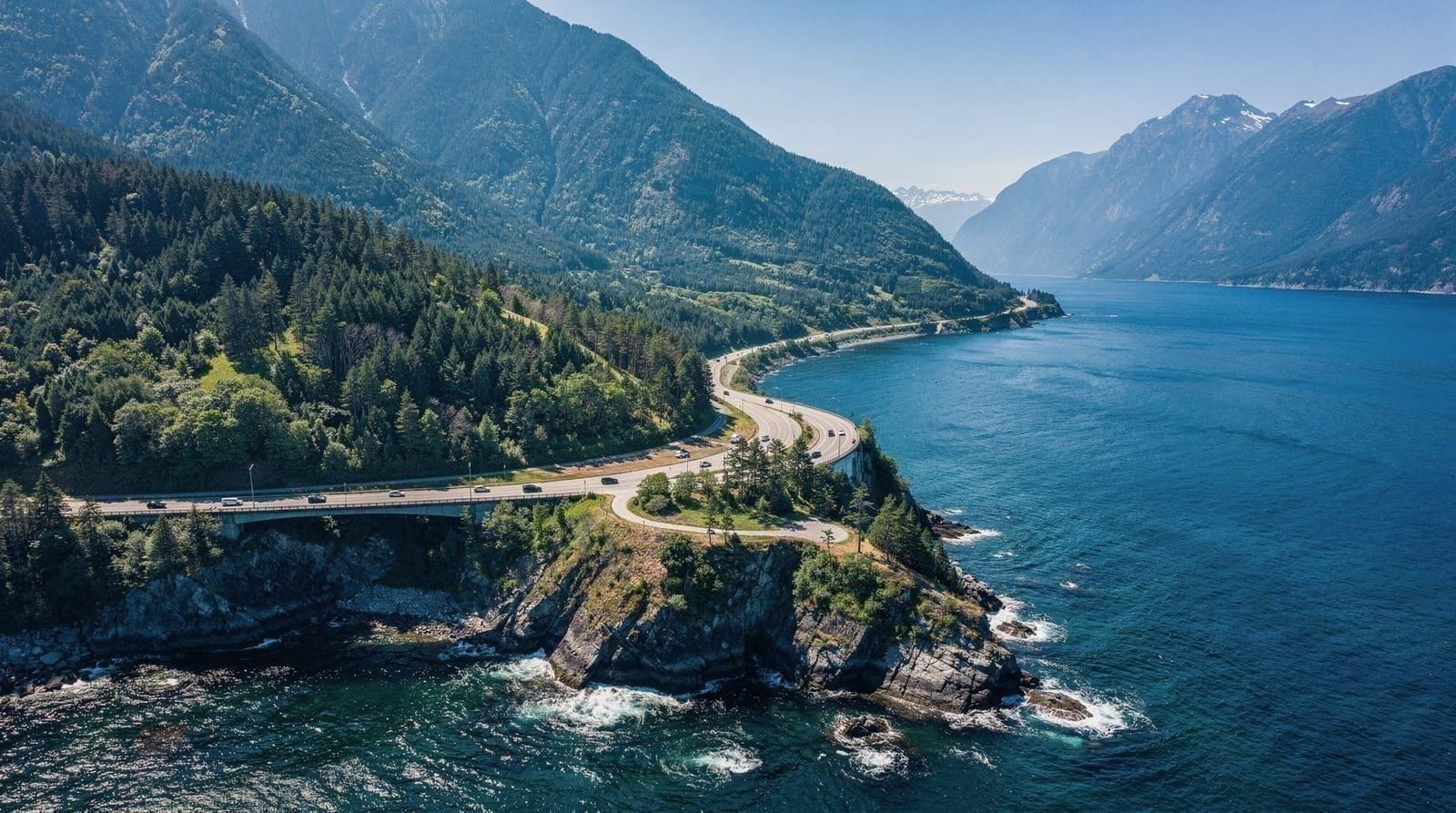
Getting to Whistler from Vancouver takes roughly 1.5-2 hours via the Sea-to-Sky Highway (Highway 99), a scenic but sometimes weather-affected drive in winter — snow tires or all-wheel drive matter here, and travelers uncomfortable with mountain driving in winter conditions should book a shuttle or tour rather than self-driving, especially for an evening return after a full ski day.
Summer Whistler: a different resort entirely
Once the snow clears, Whistler shifts into a genuinely different identity — mountain biking on a purpose-built bike park considered one of the best in the world, hiking trails that open up as snow melts through June, and the Peak 2 Peak Gondola, the highest lift of its kind in North America, connecting Whistler and Blackcomb mountains with sweeping alpine views that are arguably even more striking without snow obscuring the terrain below.
Summer crowds are real but different in character from winter — Whistler Village stays busy with a more varied crowd (families, cyclists, hikers) rather than the ski-focused demographic of winter, and pricing, while still resort-level, doesn’t carry the same peak-week premiums that define the December-March ski season. A Whistler zipline experience — one of the longest ziplines in North America — is one of the more popular warm-weather additions, alongside guided hikes and the bike park itself.
For hikers specifically, the Whistler summer guide covers trail options in more depth, and a guided wilderness hike is a reasonable way to access trails safely for visitors unfamiliar with the terrain or without their own gear.
Comparing the honest trade-offs
Winter Whistler delivers a specific, high-intensity experience — world-class skiing — that has no real summer equivalent; there’s no substitute activity that replicates what skiing offers. Summer Whistler, by contrast, offers more variety in a single visit — hiking, biking, gondola sightseeing, and village browsing can all fit into one day, whereas a ski day is largely a single-activity commitment.
Cost-wise, winter peak weeks (holidays, February break) run noticeably higher than summer for equivalent accommodation, while lift-ticket-equivalent costs (bike park day passes, gondola tickets) tend to run lower than peak ski lift tickets. Families traveling with young children who don’t ski often find summer Whistler more accessible — hiking and gondola rides don’t carry the same skill-level barrier that skiing does, and the Whistler day trip format works well as a single-day summer excursion from Vancouver in a way that a serious ski day, requiring rental logistics and lesson bookings, generally doesn’t.
Which season fits which traveler
Skiers and snowboarders with any real level of commitment to the sport should obviously target winter — nothing in the summer program replaces the actual skiing. Families or travelers who want a scenic mountain day without a steep learning curve, and those visiting Vancouver outside the November-May ski window anyway, are better served by summer Whistler’s more varied, lower-commitment offerings.
Travelers who can only visit in the shoulder months — May or October-November — should check trail and lift status directly before committing, since these transition periods can have limited operations on both the ski and summer sides as the resort switches over. A Whistler day trip combined with the Sea-to-Sky Gondola in Squamish is a reliable shoulder-season option, since the gondola itself runs year-round regardless of Whistler’s own seasonal transition.
Building it into a broader trip
For travelers who want a taste of both without committing to a ski-specific or hike-specific trip, the Sea-to-Sky road trip itinerary covers Squamish and Whistler together as a corridor rather than a single stop, which works reasonably well in either season since Squamish’s own attractions — the Sea-to-Sky Gondola, Shannon Falls — operate year-round.
Whichever season gets chosen, the drive itself along Highway 99 is one of the more scenic stretches of road near Vancouver and worth budgeting time for rather than treating as a rushed transit leg between two points. It’s also just one entry on a longer list of best day trips from Vancouver, worth weighing against Whistler for travelers with only one day to spend outside the city.
The shoulder months, honestly assessed
Late spring and late fall don’t get much attention in most Whistler guides, and there’s a reason — this is when the resort is genuinely between identities, with the ski season winding down or the summer program not yet fully operational. May can still have snow at higher elevations while lower trails are muddy and only partially open, and late October into November is the reverse, with the resort waiting on enough snowfall to open lifts for the ski season while summer hiking trails are closing for the year.
That said, these months aren’t dead zones — they’re simply unpredictable enough that a trip built around a headline activity (skiing or a specific hike) carries real risk of disappointment if conditions haven’t fully turned over yet. Travelers with flexible plans who mainly want to see Whistler Village itself, without a specific outdoor activity as the trip’s centerpiece, can still find shoulder-season visits worthwhile — quieter, cheaper, and with the mountain scenery intact regardless of what’s operating.
Cost comparison across a full year
Winter holiday weeks (mid-December through early January) and February’s mid-winter break represent Whistler’s most expensive stretches for accommodation, sitting well above both the rest of ski season and any point in summer. Late-season skiing (April into early May) offers a meaningful discount against peak winter pricing while often still delivering solid snow conditions on upper mountain terrain. Summer pricing runs lower than peak winter throughout, with July and August — the resort’s busiest summer weeks — still typically undercutting the December-March ski season on a like-for-like accommodation basis.
What a first-time visitor should actually book
For a first Whistler trip with no strong season preference, the decision comes down to the rest of the traveler’s itinerary and party. A ski-focused group should target December through March despite the higher cost, since the terrain and conditions are genuinely at their best then, and no summer substitute exists. A family with young non-skiers, or anyone visiting Vancouver outside the ski window anyway, gets more consistent value from the summer program’s lower skill barrier and broader activity mix. Travelers unsure which to pick, and without a fixed date already set, can lean on whichever season aligns with the rest of their Vancouver trip rather than making a special detour purely for Whistler’s shoulder-season transition period.
Combining a Whistler visit with the wider Sea-to-Sky corridor
Whichever season gets picked, pairing Whistler with a stop at the Sea to Sky Gondola in Squamish works year-round, since the gondola operates independently of Whistler’s own seasonal transition. The Sea-to-Sky road trip itinerary treats the corridor as a multi-stop route rather than a single destination, which suits travelers who want to see more of Highway 99 than just Whistler Village itself, in either season.
Frequently asked questions about Whistler’s seasons
When does the Whistler ski season actually start and end?
Typically late November through mid-May, with peak conditions running December through March. Early and late-season dates carry more variability in snow coverage, so checking current conditions closer to the trip is worth it for anyone booking outside the December-March core.
Is Whistler worth visiting in the off-season shoulder months?
May and late October to mid-November sit between the two main seasons and can have limited operations on both the ski and summer sides. It’s generally worth checking trail and lift status directly before committing to a shoulder-month visit, since the resort is genuinely transitioning during these windows.
Do I need a car to visit Whistler?
Not strictly — day tours and shuttles handle the Sea-to-Sky Highway drive without requiring a rental car, which is a reasonable choice for visitors uncomfortable with winter mountain driving. A car adds flexibility for stopping at Squamish along the way, but isn’t required for either a ski trip or a summer visit.
Which season is better for families with young kids who don’t ski?
Summer, generally. Hiking, the Peak 2 Peak Gondola, and lower-intensity village activities don’t carry the skill-level barrier that skiing does, making summer Whistler more accessible for families without a strong ski background.
How much does a Whistler day trip cost from Vancouver?
Costs vary widely by season and activity — winter lift tickets during peak weeks run at a premium compared to late-season rates, while summer gondola and activity passes tend to sit at a lower baseline. A guided day tour bundling transport and a specific activity is often more predictable for budgeting than assembling the pieces independently.
Is one day enough to experience Whistler properly, in either season?
A single day covers the highlights — the village, the gondola, and one activity — but doesn’t come close to exhausting what the resort offers in either season. Serious skiers and mountain bikers in particular tend to find a single day frustratingly short once they’ve experienced the terrain available.
Does Whistler Village itself change much between seasons?
Yes, noticeably. Winter brings a ski-town atmosphere with apres-ski bars, gear shops doing brisk business, and a crowd dressed for snow. Summer shifts toward outdoor cafes, patio dining, and a more relaxed, family-oriented pace, with the same physical village hosting a genuinely different daily rhythm depending on the season.