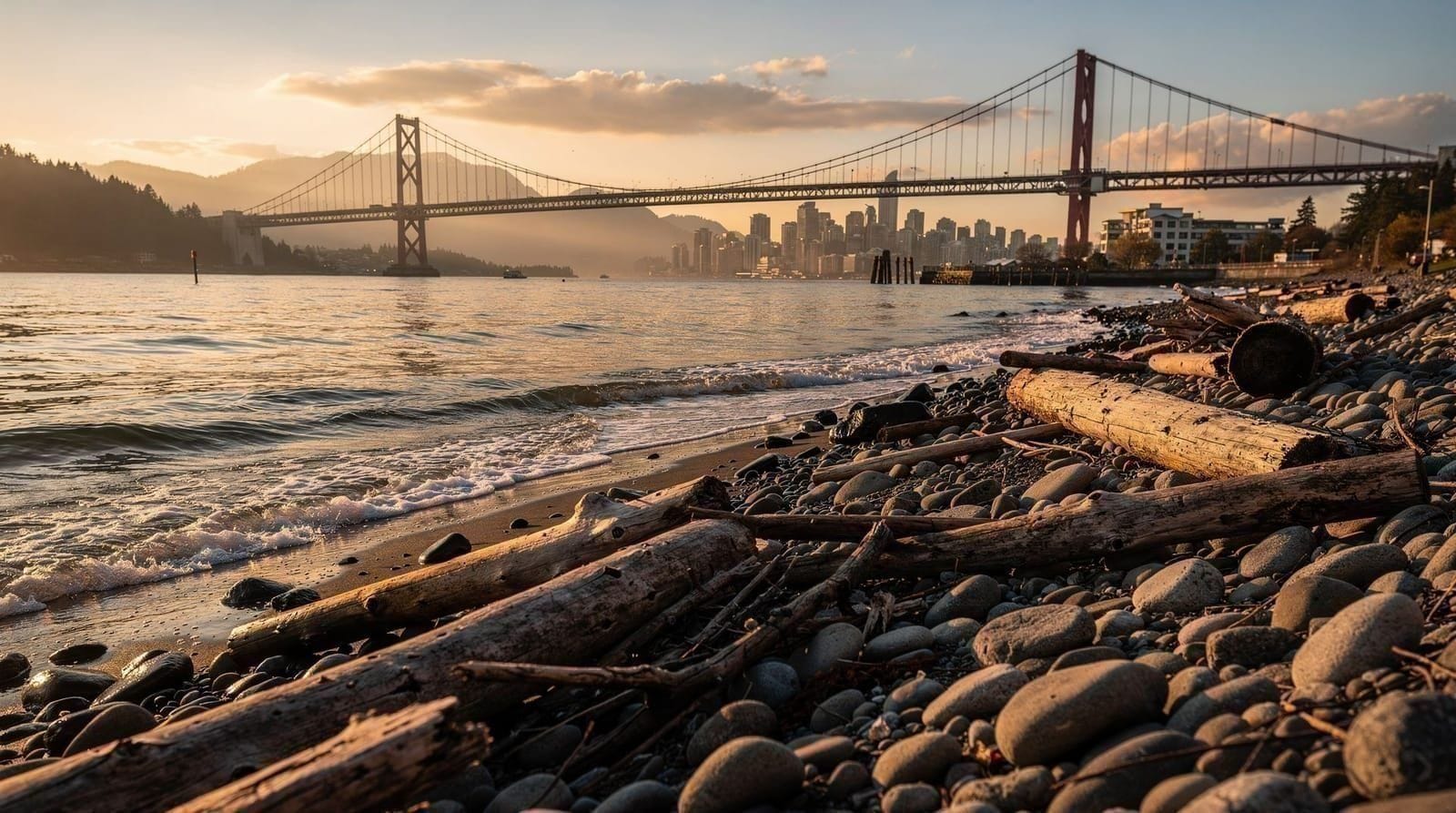
Sea to Sky Gondola guide
Squamish: Sea to Sky Gondola Admission Ticket
- Free cancellation
What is the Sea to Sky Gondola?
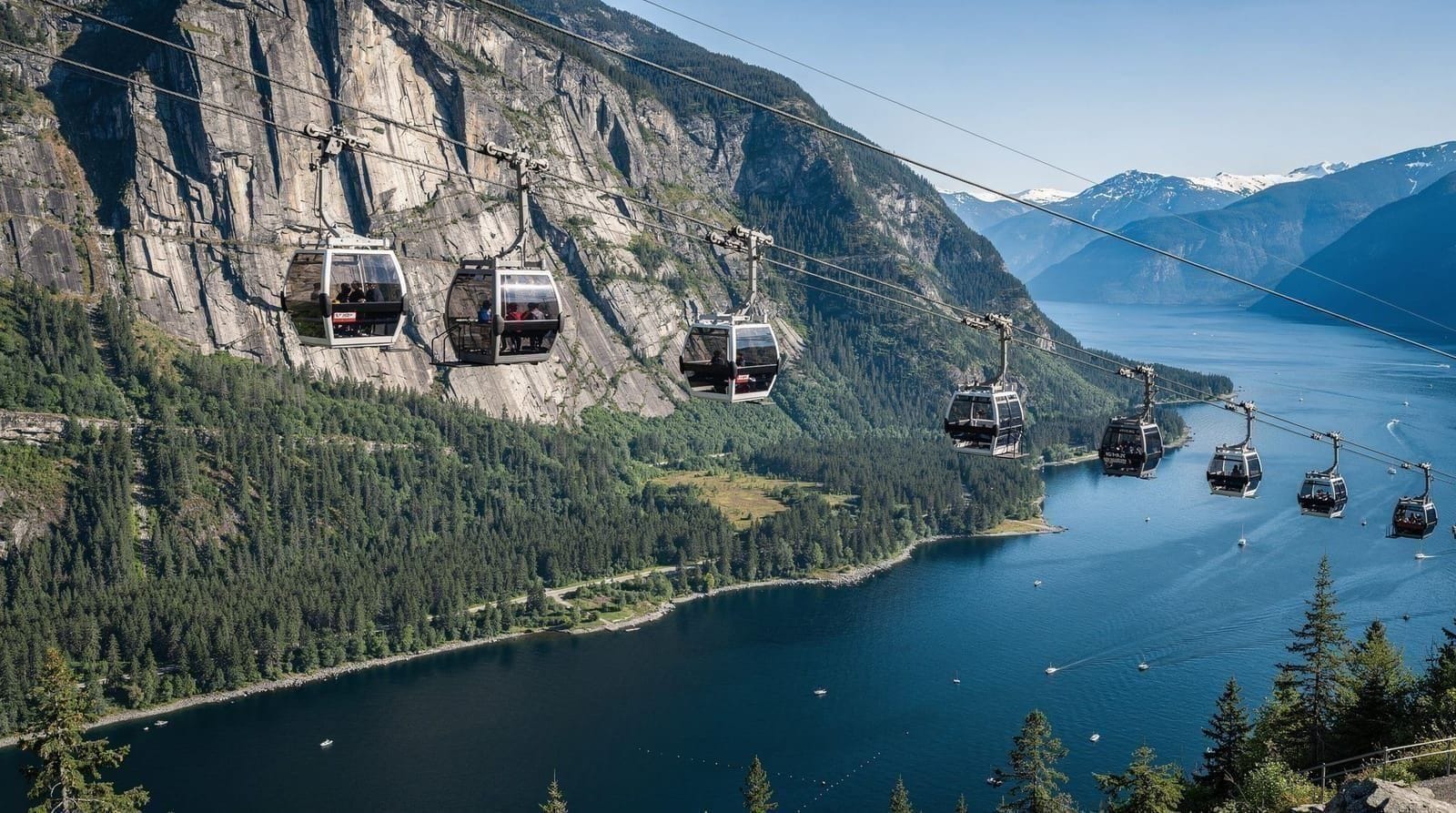
The Sea to Sky Gondola is a cable car in Squamish, about 45 to 60 minutes north of downtown Vancouver, that rises 885 metres from sea level to an alpine viewpoint over Howe Sound and the Stawamus Chief. It includes a suspension bridge, hiking trails, and a summit lodge, and operates year-round.
Squamish sits roughly halfway between Vancouver and Whistler on Highway 99, a stretch of road known as the Sea-to-Sky Highway for the way it threads between fjord-like Howe Sound and the granite face of the Stawamus Chief. The Sea to Sky Gondola, which opened in May 2023 after its predecessor cable system was deliberately sabotaged and shut down for over a year, is the reason a growing number of Vancouver day-trippers now build a stop into that drive instead of treating Squamish as a pass-through town.
The gondola itself is straightforward: an enclosed cable car climbing 885 vertical metres from a base station near sea level to an alpine plateau below Mount Habrich, in about 10 minutes. What’s at the top is more varied than a single viewpoint — a suspension bridge, several trails of different lengths, and a lodge with food service, enough to fill anywhere from 90 minutes to most of a day depending on how much hiking gets added.
| Where | Squamish, 45-60min north of downtown Vancouver |
| Cost | Around CAD 60-65 adult |
| Time needed | 1.5-3 hours, longer with a summit hike |
| Getting there | Car or guided tour; no direct transit |
| Best time | Year-round; summer for views, winter for snowshoeing |
| Booking | Advance ticket avoids base-station lines |
A brief history: sabotage and rebuilding
The original Sea to Sky Gondola opened in 2014 and operated for roughly two years before an act of vandalism in 2019 severed the haul cable overnight, dropping cabins and shutting the operation down entirely. It happened a second time in 2020 before repairs from the first incident were even finished, forcing the operator into a longer rebuild with upgraded security and cable monitoring. The current system, which reopened in May 2023, is a rebuilt and reinforced version of the original — worth knowing mainly because it explains why some older travel write-ups reference a gondola that, for a stretch of several years, simply wasn’t running. It’s been operating without incident since the 2023 reopening.
The ride up
The base station sits just off Highway 99, a few minutes north of downtown Squamish, roughly 45 to 60 minutes from downtown Vancouver by car depending on traffic — the drive is usually the more scenic part of the trip, hugging the Howe Sound shoreline for much of the route, past West Vancouver and the small communities along the water before the highway climbs inland toward Squamish.
Cabins depart at short, regular intervals rather than on a fixed schedule, so waits are typically short outside peak summer weekends and holiday periods, when lines at the base can stretch 20 to 30 minutes. A Sea to Sky Gondola admission ticket covers the round-trip ride and all summit trails and viewpoints.
Sky Pilot Suspension Bridge
At the top, a suspension bridge spans a gap between two viewing platforms, offering an unobstructed look down at Howe Sound and across at the Stawamus Chief’s granite face — the same cliff that draws rock climbers from around the world to Squamish. It’s a shorter, simpler bridge than Capilano’s canyon crossing near Vancouver, built more as a connector between viewpoints than as a standalone attraction, but the setting does more work than the bridge itself; there’s little of Capilano’s canopy-walk theatrics here, just a clean alpine panorama. Visitors who’ve already done Capilano or Lynn Canyon shouldn’t expect a similar bridge-focused experience — this one is a means to a viewpoint, not the main event.
Summit Lodge and dining
The Summit Lodge houses a cafeteria-style restaurant and a bar area with the same Howe Sound views as the outdoor platforms, useful for a coffee break or a full meal without leaving the summit area. It’s not fine dining — expect burgers, soup, and similar mountain-lodge fare at prices roughly in line with other BC ski resort food service — but the location does most of the work. Outdoor seating areas let visitors eat with the fjord and mountains in view rather than inside a building. For a more substantial meal, downtown Squamish itself has a wider range of restaurants and breweries a short drive back down the highway, worth considering for anyone who’d rather eat at the base after the visit than pay lodge prices at the summit.
The view over Howe Sound and Shannon Falls
The signature view from the summit platforms looks out over Howe Sound, the long fjord separating Vancouver’s North Shore mountains from the Sunshine Coast, dotted with small islands and, on clear days, extending out toward Vancouver Island’s edge. Below and to the side, Shannon Falls — one of the tallest waterfalls in British Columbia, visible from Highway 99 itself — drops down the mountainside, best seen from certain trail viewpoints rather than the main platform.
The Stawamus Chief, a granite monolith that’s one of the largest of its kind in the world, dominates the opposite side of the valley and is often busier with climbers than the gondola side is with hikers. Photographers generally get the clearest light in early morning or a couple of hours before sunset, when the sun angle avoids washing out the Howe Sound water in the frame; midday visits still deliver a solid view, just with flatter light.
Hiking trails at the summit
Beyond the main viewing platforms, a network of shorter trails spreads across the alpine plateau, ranging from easy 10 to 15 minute loops to longer routes connecting toward Mount Habrich and beyond for more ambitious hikers. None of the summit trails require technical skill, but elevation and exposed rock sections mean sturdy footwear matters more here than it would on a paved seawall. Trail conditions shift meaningfully by season — summer offers dry, straightforward walking, while shoulder-season visits can mean mud or lingering snow patches at the higher points.
For hikers who want to skip the gondola ticket entirely, the Sea to Sky Trail climbs the same mountainside on foot, a multi-hour, genuinely strenuous ascent that most casual visitors won’t attempt; the vast majority of visitors ride up and, if they want more exercise, use the shorter summit trails once there. Visitors who’ve already tackled harder North Shore climbs closer to Vancouver, like the trails covered in the best hikes near Vancouver roundup, will find the gondola’s summit trails considerably gentler by comparison.
Getting there from Vancouver
The drive from downtown Vancouver takes roughly 45 to 60 minutes under normal traffic, longer on summer weekends and long weekends when Sea-to-Sky Highway traffic backs up heading toward Whistler. There’s no direct public transit route, which makes a rental car or a guided tour the two realistic options for visitors without their own vehicle. A full-day guided tour from Vancouver handles transport and typically bundles in stops at Shannon Falls or Squamish viewpoints along the way, useful for anyone who’d rather not drive an unfamiliar highway.
Travelers continuing north can combine the stop with Whistler on a single outing via a Sea to Sky Gondola and Whistler day trip, or book a private full-day tour for more flexibility on pacing and stops.
Year-round access
Unlike Joffre Lakes or Garibaldi Lake further up the highway, the Sea to Sky Gondola operates year-round, which is one of its real advantages over the region’s alpine hiking trails. Summer (June through September) brings the clearest views and driest trails; winter transforms the summit into a snowshoeing area, with rented gear available and marked trails through the snow-covered forest. Spring and fall see the fewest crowds but the most variable weather — the summit sits high enough that conditions can differ sharply from what’s happening in Squamish or Vancouver at the same time, so layers are worth bringing regardless of season.
Occasional closures happen during high wind events, since the cable system is more exposed at this elevation than a city gondola would be; checking the operator’s status page before a special-occasion visit is worth the two minutes it takes.
How it compares to Grouse Mountain
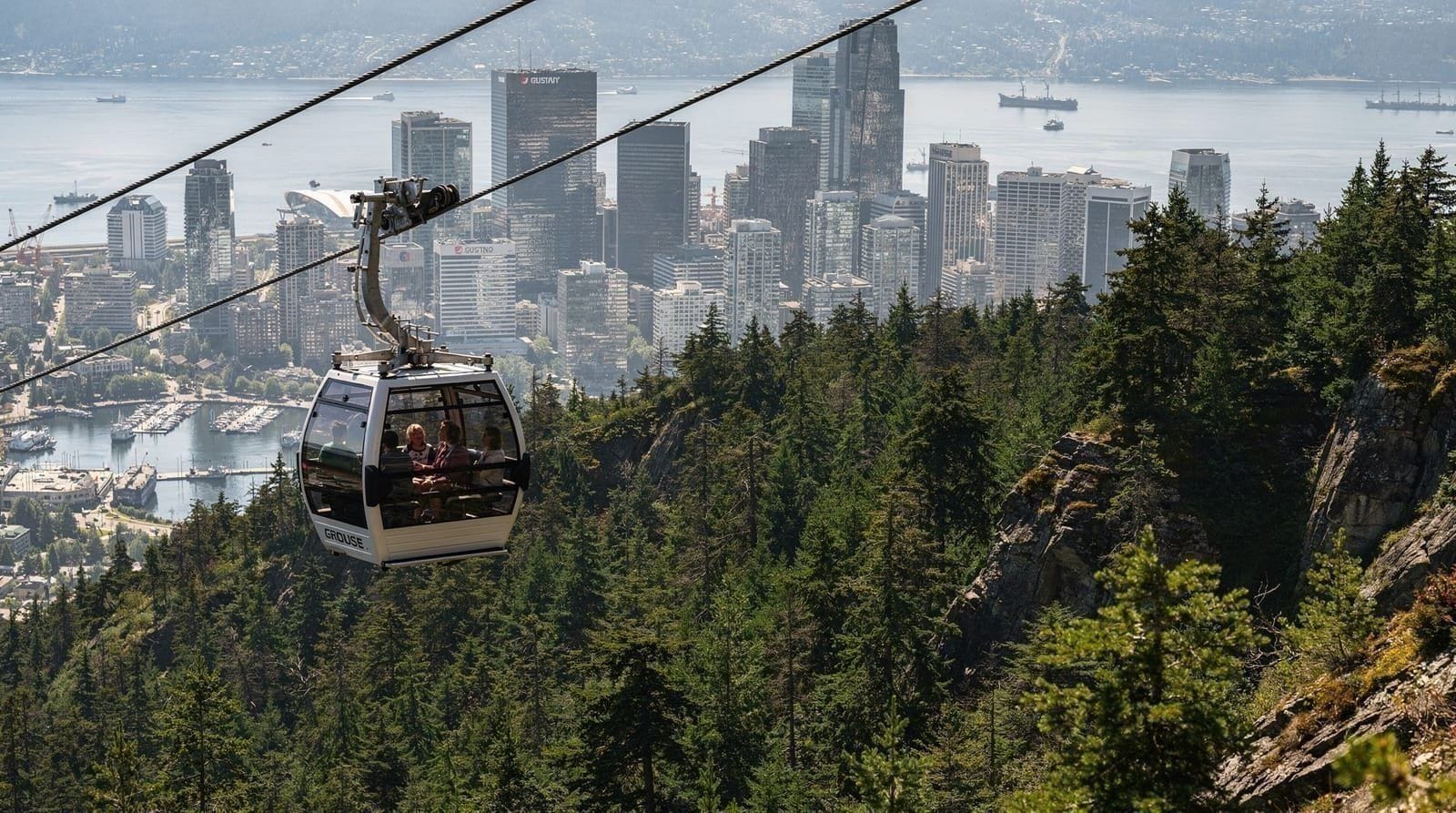
The obvious comparison is to Grouse Mountain, Vancouver’s own cable-car-to-alpine-summit attraction, and the two get cross-shopped constantly by visitors trying to pick one. The short version: Grouse is closer to downtown and has resident grizzly bears, while the Sea to Sky Gondola has a more dramatic setting overlooking Howe Sound and sits directly on the route to Whistler. The full Sea to Sky Gondola vs Grouse Mountain comparison breaks down price, distance, and what each does better.
How it compares to Whistler’s Peak 2 Peak Gondola
Visitors continuing north to Whistler sometimes wonder whether the Sea to Sky Gondola is redundant with the Peak 2 Peak Gondola linking Whistler and Blackcomb Mountain. They’re not really comparable — Peak 2 Peak connects two already-alpine summits together at a much higher elevation and larger scale, built for skiers and summer sightseers already at the resort, while the Sea to Sky Gondola is a standalone sea-level-to-alpine ride with no resort infrastructure around it. Doing both on the same trip isn’t redundant; they show different parts of the Coast Mountains at different scales.
Combining with the rest of the Sea-to-Sky corridor
Because it sits on Highway 99 between Vancouver and Whistler, the gondola works naturally as a stopover rather than a dedicated round trip. Visitors driving up for a Whistler summer visit can build in an hour or two here without much detour, and those continuing further north toward Garibaldi Lake pass directly by the gondola’s base station on the way to the Rubble Creek trailhead. For a Vancouver-based day trip that doesn’t continue on to Whistler, the gondola alone — plus a short stop at Shannon Falls or a Squamish lunch — fills a comfortable half day without an overnight.
What to bring
Even though the gondola does the climbing, the summit sits at real elevation and weather there is often noticeably different from Squamish at the base. A light jacket earns its space in a bag even on a warm summer day, since wind at the top can cut the perceived temperature well below what it feels like in the parking lot. Sturdy, closed-toe shoes make the summit trails and viewpoints more comfortable than sandals, particularly on the rockier sections near the suspension bridge. Sunscreen and sunglasses matter more than expected at altitude, since UV exposure is stronger and there’s less tree cover than lower on the mountain. For winter visits, waterproof boots are worth the extra bag space if snowshoeing is part of the plan.
Rock climbing culture at the Stawamus Chief
Squamish has built an international reputation as a rock climbing destination almost entirely around the Stawamus Chief, the granite face visible from the gondola’s summit platforms. On any clear day between spring and fall, it’s common to spot climbers as small specks working their way up established routes on the Chief’s face, visible with the naked eye and considerably more so with binoculars or a zoom lens from the gondola side of the valley.
Visitors with an interest in climbing culture sometimes treat the gondola primarily as a viewing platform for this rather than for Howe Sound itself — it’s one of relatively few places where casual sightseers can watch technical rock climbing happen at scale without any climbing experience of their own. The gondola doesn’t offer any climbing activities itself; it’s purely an observation point for what’s happening on the rock face across the valley.
Family suitability
The gondola ride itself works well for families with young kids — it’s a seated cable car with no walking or climbing involved, and the ride’s short 10-minute duration means even restless children generally manage it without issue. At the summit, the main viewing platforms and the Sky Pilot Suspension Bridge are stroller-accessible in most sections, though the bridge itself involves some sway that occasionally unsettles very young children unused to the sensation.
The longer summit trails are less suited to strollers, given exposed rock and uneven terrain, but the core visit — ride, bridge, viewpoint, lodge meal — is a manageable half day for most families without requiring any hiking fitness. Bathrooms and food service at the summit reduce the usual logistics headaches of a longer outdoor outing with kids.
Safety notes
The suspension bridge and main viewing platforms have railings throughout and are built to standard safety codes, making them no more hazardous than a typical elevated viewpoint. The bigger safety consideration is weather-related: wind speeds increase substantially at the summit compared to the base, and on the occasional day with high gusts, the gondola itself may pause operation as a precaution — checking conditions before setting out, particularly on a day with a storm forecast, avoids a wasted drive.
For visitors venturing onto the longer summit trails beyond the main platforms, standard alpine hiking precautions apply: proper footwear, enough daylight to complete the route, and awareness that conditions at this elevation change faster than they do down in Squamish.
Wheelchair and stroller access
The main viewing platforms, the Sky Pilot Suspension Bridge, and the Summit Lodge are all built with accessible, level or ramped access from the gondola cabin, making the core experience workable for wheelchair users and strollers without needing to attempt any of the summit hiking trails. This puts it ahead of most alpine viewpoints in the region, where reaching a comparable vantage point normally requires a genuine hike. The base station similarly has accessible parking and a level approach to the gondola boarding area. The summit hiking trails beyond the main platforms are a different matter — uneven, rooty, and not accessible in the same way — but the core gondola-and-viewpoint experience doesn’t require them.
Winter snowshoeing at the summit
Winter transforms the summit plateau into a genuinely different destination than the summer version most travel photos show. Rental snowshoes are available at the base for visitors without their own gear, and a network of marked snowshoe trails winds through the snow-covered forest beyond the main viewing platforms, generally easy enough for first-time snowshoers without prior experience.
It’s a quieter season overall — fewer visitors make the drive north in winter, and the ones who do tend to be locals rather than international tourists, giving the summit a noticeably different, more local feel than a July afternoon. The trade-off is shorter daylight hours and the possibility of wind-related closures, so winter visits benefit from more flexible timing than a fixed summer itinerary would need.
Is it worth the price compared to a free viewpoint?
Squamish and the surrounding area do have free vantage points on Howe Sound, mainly pullouts along Highway 99 itself, and a fair question is whether the gondola ticket buys enough over simply stopping at one of those on the drive north. The honest answer is that it does, but not because the view from the top is categorically better than what’s visible from the highway in places — it’s because the gondola delivers a genuine alpine setting, with real elevation, a suspension bridge, and marked trails, rather than a five-minute roadside stop.
For a traveler purely optimizing for the cheapest possible Howe Sound photo, the highway pullouts work. For anyone wanting an actual few hours in an alpine environment without a serious hike, the gondola justifies its price in a way a five-minute stop can’t replicate.
Practical notes on timing
Parking at the base station is paid and can fill on the busiest summer weekends, so arriving before mid-morning avoids most of the hassle. The gondola typically operates from around 9 or 10am into the evening in summer, with shorter hours in winter — checking current operating hours before driving up saves a wasted trip, particularly outside peak season when hours shift seasonally. Most visitors spend 1.5 to 3 hours total at the site, including the ride, a walk to the suspension bridge and main viewpoint, and a stop for food; adding a summit trail hike extends that to a half day.
Combining the gondola with Shannon Falls
Because Shannon Falls sits practically across the highway from the gondola’s base station, most self-driven visitors combine both in the same stop rather than treating them as separate destinations — a five-to-ten-minute walk to the falls’ viewing platform pairs naturally with the gondola visit, either before or after, without much added driving. The Sea-to-Sky day trip guide lays out a full itinerary combining both plus downtown Squamish for travelers building a half-day or full-day plan around this stretch of the corridor.
Booking tips for peak season
Summer weekends and the July-August school holiday window see the heaviest base-station traffic of the year, and booking a specific time slot in advance — rather than a same-day walk-up ticket — is the more reliable way to avoid a genuine wait at the ticket counter. Early morning slots, in the first hour or two after opening, tend to have the shortest lines and the clearest light for photography, a useful combination for visitors who can manage an early start.
Frequently asked questions — Sea to Sky Gondola guide
How long is the ride on the Sea to Sky Gondola?
The ascent takes about 10 minutes, covering 885 vertical metres from the base in Squamish to the summit area near Mount Habrich. Cabins depart roughly every few minutes, so wait times are usually short outside of peak summer weekends.Is the Sea to Sky Gondola open in winter?
Yes, it operates year-round, and winter is a genuinely different experience — snowshoe trails open at the summit, and the alpine viewpoint over Howe Sound often looks more dramatic under snow. Occasional high-wind closures happen in any season, so it's worth checking conditions before driving up on a stormy day.How does the Sea to Sky Gondola compare to Grouse Mountain?
They're similar in concept — a cable car to an alpine viewpoint near Vancouver — but the Sea to Sky Gondola is roughly twice as far from downtown, has no resident wildlife, and its views center on Howe Sound and the Stawamus Chief rather than the city skyline. See the direct comparison for a fuller breakdown of which suits a given trip better.Do you need a car to visit the Sea to Sky Gondola?
Effectively yes, or a guided tour. There's no direct public transit route from downtown Vancouver, and while some tour operators run shuttle service, most independent visitors drive the roughly 45 to 60 minute route north on Highway 99.How much does the Sea to Sky Gondola cost?
Adult admission runs around CAD 60 to 65 (roughly USD 44 to 48), covering the gondola ride and all summit trails and viewpoints. Prices are somewhat lower in winter months and higher during peak summer weekends; children and family rates are available.Can you hike instead of taking the gondola?
Yes, the Sea to Sky Trail climbs the same slope on foot for hikers who want to skip the ticket, though it's a steep, multi-hour climb and most visitors take the gondola up and optionally hike the shorter summit trails once there.Is the Sea to Sky Gondola worth combining with Whistler?
It sits directly on Highway 99 between Vancouver and Whistler, making it a natural stop on the drive rather than a separate trip. Many visitors break up the roughly 2.5-hour drive to Whistler with an hour or two at the gondola on the way.Is the Sea to Sky Gondola suitable for young kids?
Yes, generally. The gondola ride itself is a seated cable car requiring no walking, and the main summit platforms and the Sky Pilot Suspension Bridge are stroller-accessible in most sections, though the bridge's gentle sway can unsettle very young children unused to the sensation.What should I bring to the summit?
A light jacket regardless of season, since wind at the summit cuts the perceived temperature well below what it feels like at the base, plus sturdy closed-toe shoes for the rockier sections near the suspension bridge and sunscreen given stronger UV exposure at altitude.
Top experiences
Bookable activities with verified prices and instant confirmation on GetYourGuide.