Okanagan from Vancouver — why it's not a day trip and how to plan the visit
Kelowna: West Kelowna Half Day Guided Wine Tour
Duration: 4 hours
Can you visit the Okanagan as a day trip from Vancouver?
Not by road — the drive is about 5 hours each way via the Coquihalla Highway, making a same-day round trip impractical. Flying from YVR to Kelowna takes about an hour and makes a very long single day technically possible, but most visitors treat the Okanagan as a 2-to-4-day trip rather than a day trip.
The Okanagan Valley is British Columbia’s dominant wine region, and it’s far enough from Vancouver that treating it as a day trip is a genuine planning mistake — the drive alone takes most of a day each way. This guide covers what the real travel options look like and how to plan a visit that actually works for the distance involved.
| Where | Kelowna area, ~390km east of Vancouver |
| Driving time | ~5hrs each way via the Coquihalla Highway |
| Flying time | ~1hr YVR–Kelowna (YLW) |
| Minimum stay | 2 days, 1 night |
| Best time | June–September for lake and wine; Sept–Oct for harvest |
Why it’s not a day trip
Kelowna, the Okanagan’s largest city and the usual base for wine touring, sits roughly 390 kilometres from Vancouver by road, reached via the Coquihalla Highway (Highway 5) through the Cascade Mountains. The drive takes about 5 hours under normal conditions, meaning a same-day round trip would mean 10 hours of driving for a few hours of actual wine touring — impractical for nearly any visitor, and genuinely risky in winter when the Coquihalla’s higher elevation sections can see snow and challenging conditions well into spring.
Flying as the realistic fast option
Direct flights between Vancouver (YVR) and Kelowna take about an hour, run multiple times daily on several carriers, and are the only way to make an Okanagan visit fit into anything resembling a single day. Even so, most visitors flying in use the time saved to extend their stay to two or three days rather than attempting a true single-day round trip, since the whole point of visiting the Okanagan is the wine touring itself, which rewards a relaxed pace over a rushed itinerary squeezed around flight times.
Driving as part of the experience
For travelers with the time, driving the Coquihalla is a legitimate way to see a different side of British Columbia than the coastal, mountain, and forest scenery that dominates most of the region’s other trips — dry, semi-arid grassland and rolling hills replace the wet coastal forest as the highway crests the mountains and descends into the Okanagan Valley, a genuinely different landscape within the same province. The drive itself, while long, is a well-maintained, divided highway for most of its length, and is broken up naturally by the Fraser Valley and the town of Merritt roughly at the halfway point.
What a realistic itinerary looks like
Given the travel time, the practical minimum for an Okanagan visit is two days and one night, though three or four days lets visitors actually experience the wine region’s breadth rather than rushing through a handful of wineries before turning back. A typical two-day version means a travel day out, a full day of wine touring and lake time around Kelowna, and a travel day back — tight, but workable for visitors with limited time. The 6-day Vancouver and Okanagan wine itinerary lays out a considerably more thorough version for travelers who can spare the extra days.
Wine touring around Kelowna
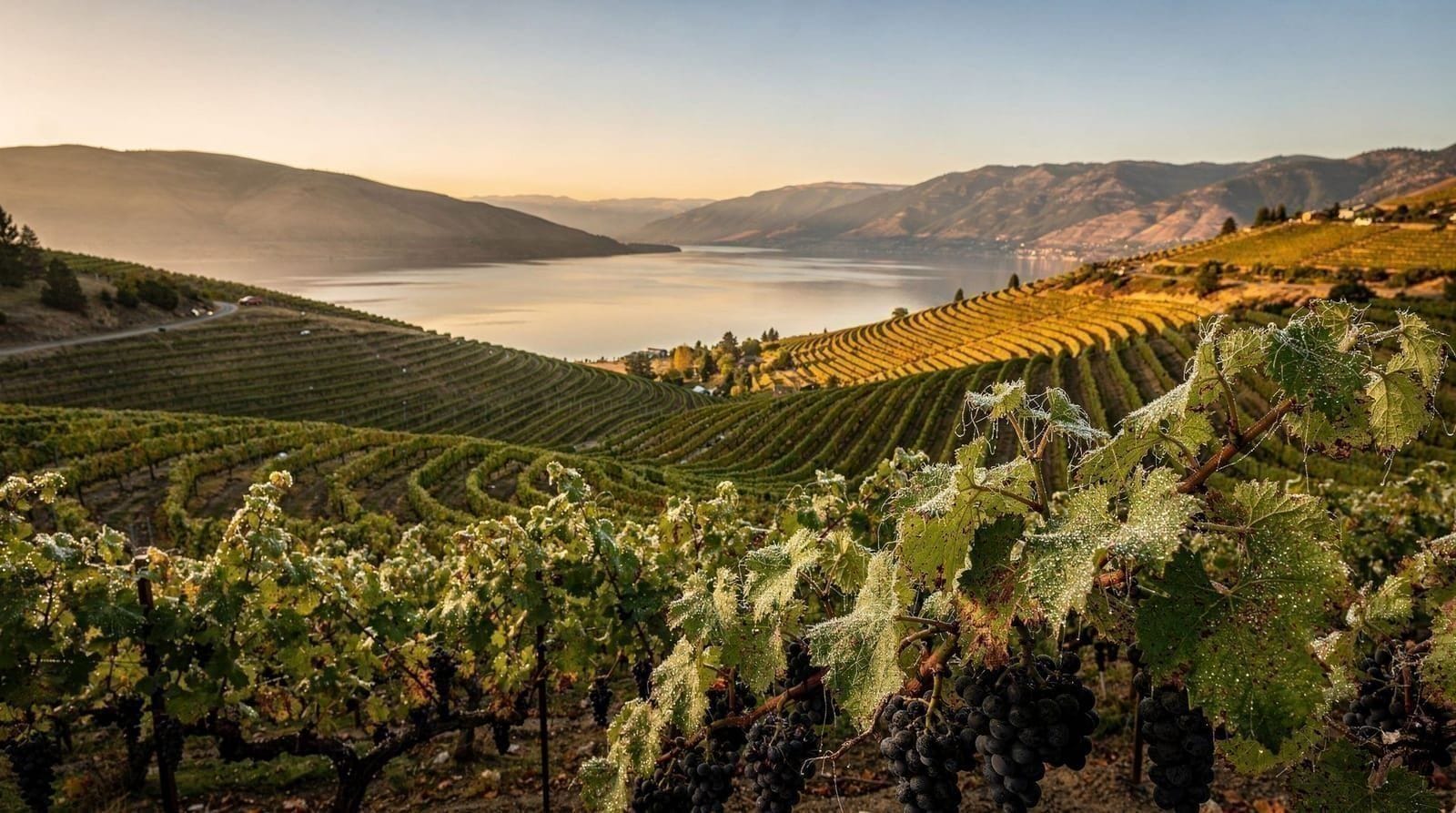
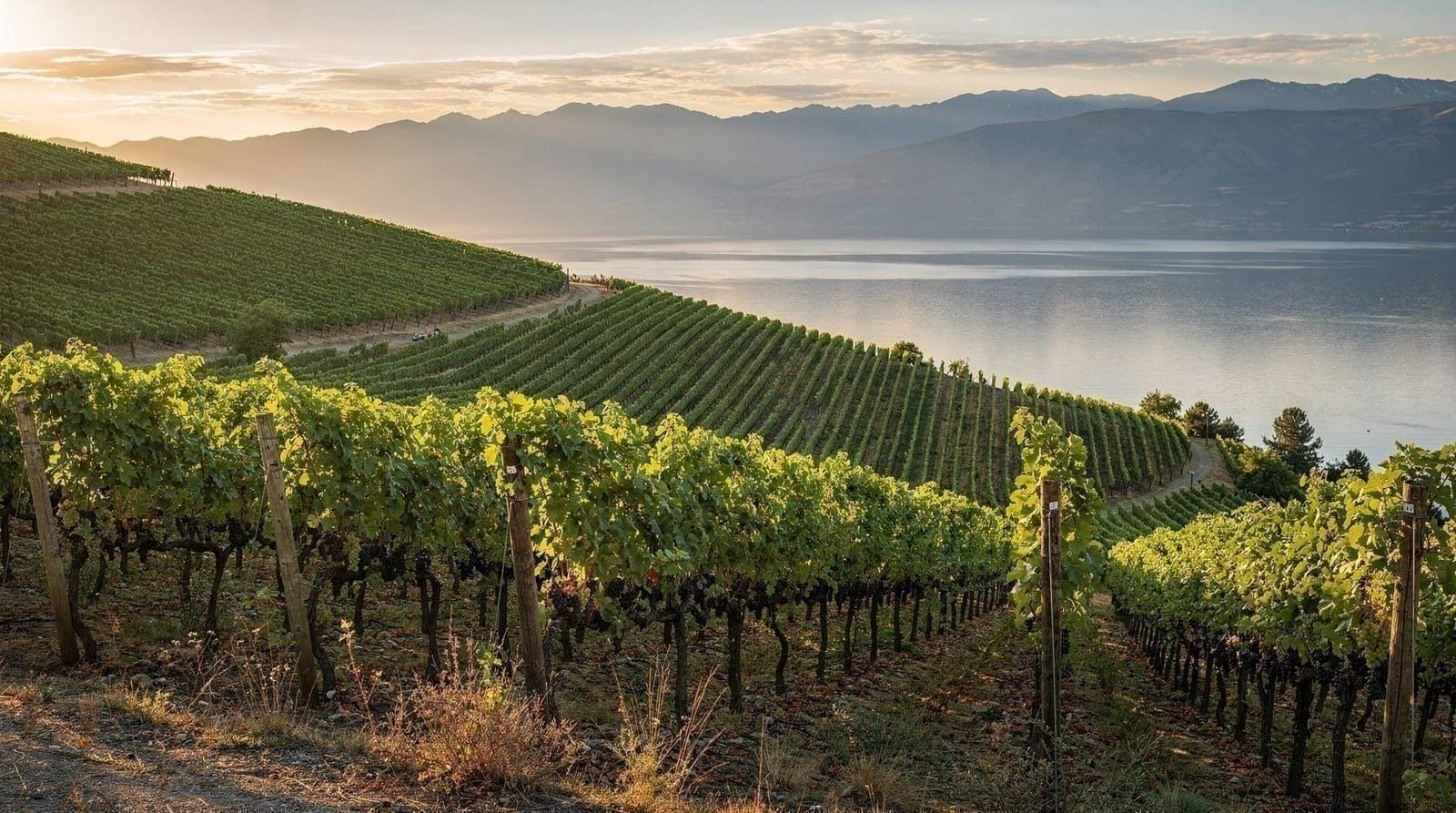
The Okanagan’s wine industry is concentrated around Kelowna, West Kelowna, and further south toward Penticton and Naramata, with over a hundred wineries spread across the valley’s lake-moderated microclimate. A half-day West Kelowna wine tour is a reasonable introduction for visitors with limited time, covering several wineries with tastings and transport included, while a full-day Okanagan Valley wine tasting tour covers considerably more ground for travelers dedicating a whole day to the wine region specifically.
Visitors who’d rather set their own pace, choosing which wineries to prioritize, can book private or small-group West Kelowna wine tours instead of a fixed-stop group itinerary.
Beyond wine: the lake and outdoor scene
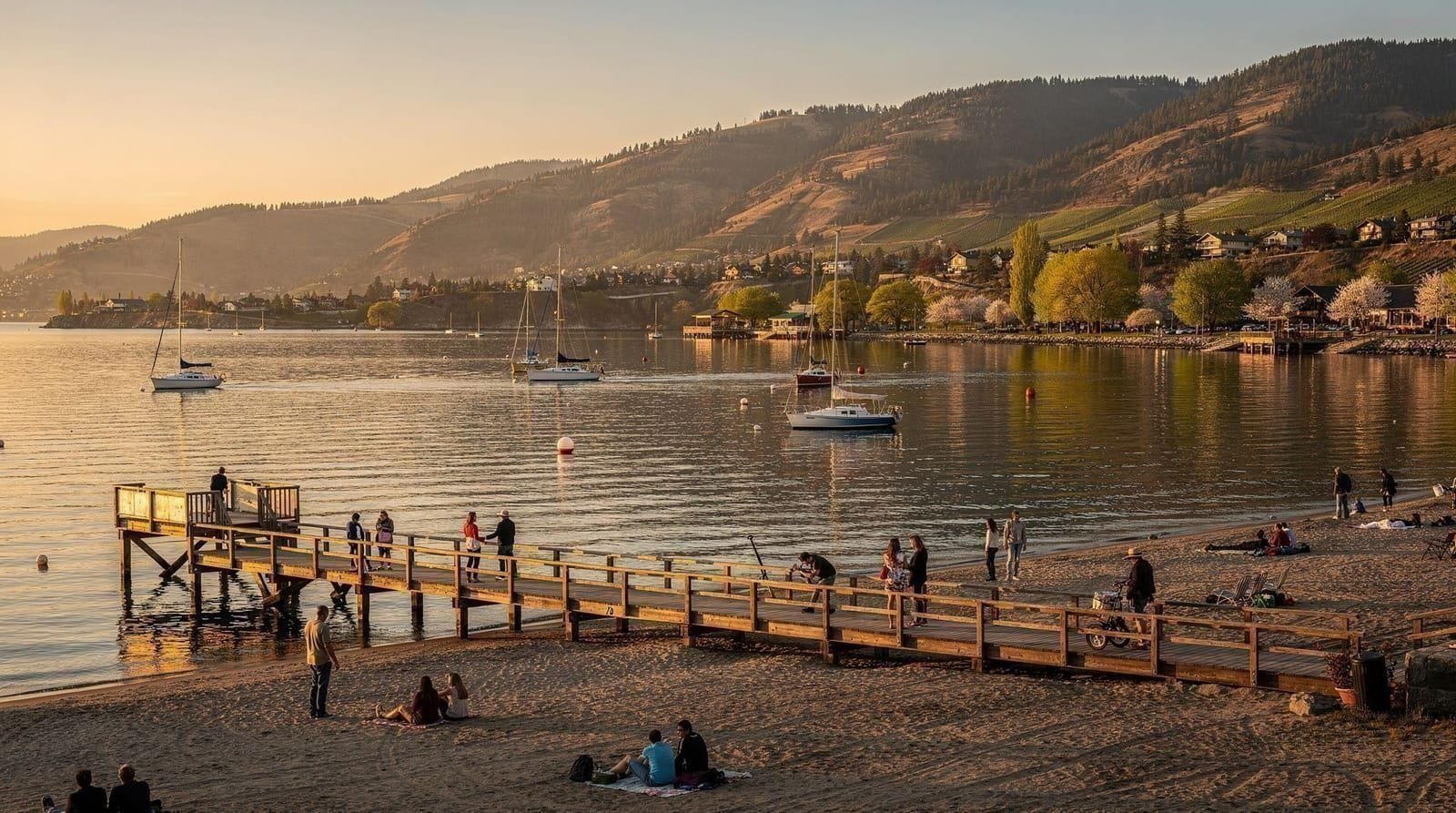
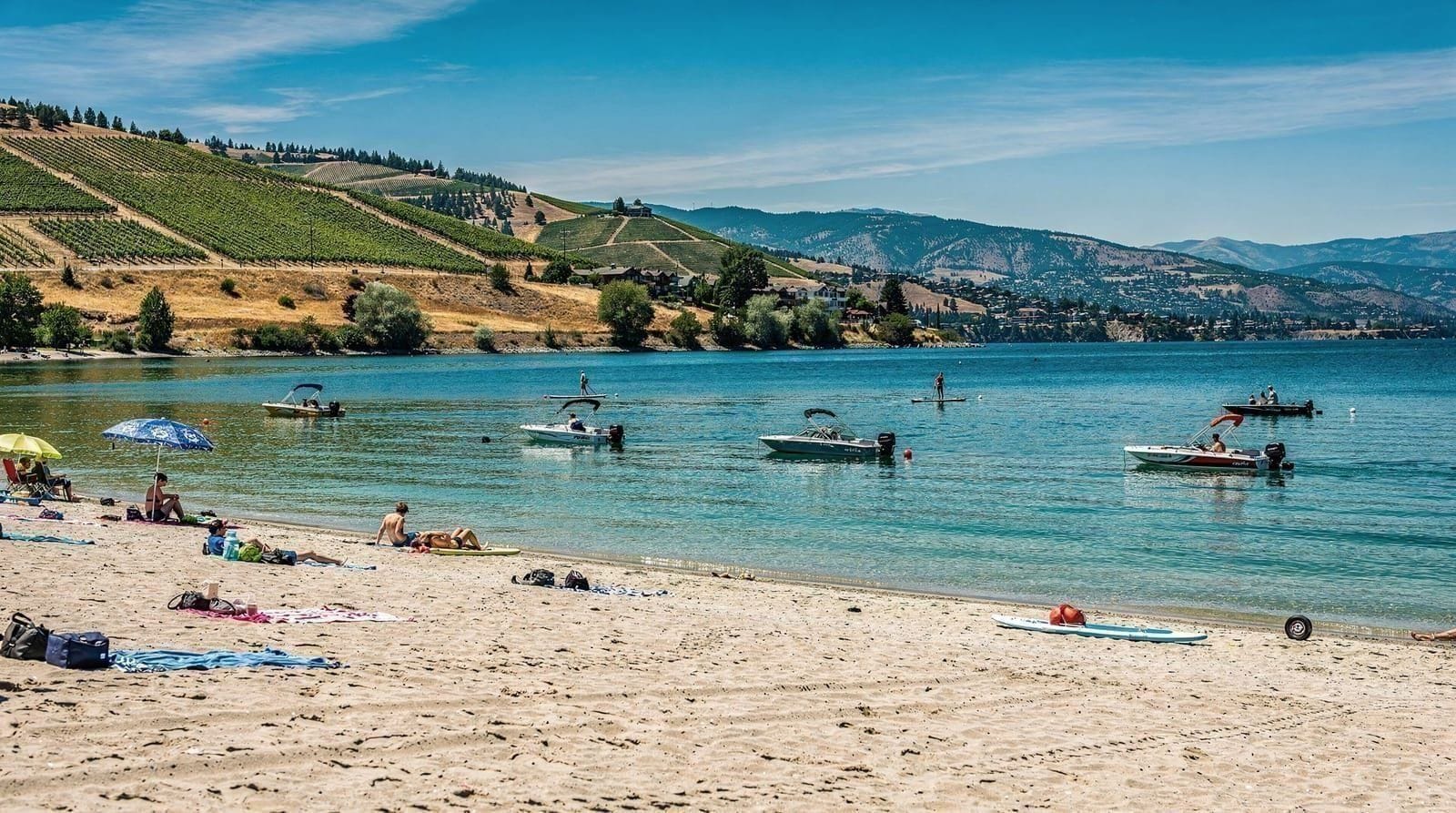
Okanagan Lake itself is a major draw independent of the wineries — a long, warm-in-summer lake that supports swimming, boating, and paddleboarding, with Kelowna’s waterfront a genuinely pleasant place to spend part of a day away from vineyard touring. The valley’s dry, warm summer climate also supports orchards and fruit stands, an agricultural counterpart to the Fraser Valley’s own farm-stand culture but with a notably drier, sunnier character given the region’s near-desert conditions in the surrounding hills.
Booking wineries in advance
Some of the Okanagan’s smaller, more sought-after wineries, particularly along the Naramata Bench near Penticton, require advance tasting reservations rather than accepting walk-up visitors, a shift that’s become more common across the valley in recent years as the region’s popularity has grown. Larger estates around Kelowna are generally more walk-up friendly, but booking at least a few key wineries ahead of arrival, especially for a Friday or Saturday visit in peak summer, avoids the disappointment of turning up to a fully booked tasting room after a five-hour drive or a flight specifically to get there.
What it costs
| Item | Approximate cost (CAD) |
|---|---|
| Flight, one-way per person | $120–250 |
| Rental car, per day | $60–100 |
| Half-day wine tour, per person | $110–160 |
| Full-day wine tour, per person | $180–250 |
| Accommodation, per night, seasonal | $150–350+ |
Given the multi-day nature of this trip, total costs run considerably higher than the region’s true day trips, closer in scale to a short Whistler or Victoria stay than to a single-day outing.
Best time of year
Summer (June through September) is peak Okanagan season — warm, dry weather, full lake activities, and wineries at their busiest, with harvest season in September and October adding its own appeal for wine-focused visitors wanting to see the working side of the valley’s vineyards. Spring brings blossoming orchards and thinner crowds, and winter shifts the valley’s appeal toward Big White and Silver Star, two significant ski resorts near Kelowna and Vernon respectively, a very different kind of Okanagan visit than the summer wine-and-lake version.
Vernon and the northern valley
For travelers with extra time, Vernon, north of Kelowna, offers its own wine region and a quieter alternative to the busier Kelowna wineries. A full-day Vernon wine tour extends the standard Kelowna-focused visit further north, worth considering for repeat Okanagan visitors or anyone specifically wanting to avoid the more heavily trafficked wineries closer to Kelowna itself during peak summer weekends.
How this fits with the rest of a BC trip
For travelers building a longer itinerary around Vancouver, the Okanagan works best as a distinct multi-day chapter rather than an add-on to a city-based stay — similar in that sense to Tofino or a full Vancouver Island loop, both of which also require a real time investment beyond a single day.
Visitors weighing which multi-day extension to prioritize should consider climate and activity type as the deciding factor: the Okanagan offers dry heat, lake recreation, and wine; Vancouver Island offers coastal scenery, whale watching, and a genuinely different rainforest and ocean environment. Few travelers manage both in a single trip without a longer overall BC itinerary of two weeks or more.
Who should make this trip
The Okanagan suits travelers with a genuine interest in wine, lake recreation, or a change of scenery from the coastal and mountain landscapes that dominate the rest of a typical Vancouver trip, and who have at least two full days available. It’s a weaker fit for anyone trying to fit a single regional excursion into an already packed Vancouver-based itinerary, given the travel investment required relative to the region’s other, shorter day trips.
Whose territory this is
The Okanagan Valley is the traditional territory of the Syilx (Okanagan) Nation, whose presence in the valley long predates the wine and orchard industries that now define much of the region’s economy and tourism identity. Several Syilx communities remain active throughout the valley today, and a small but growing number of Indigenous-owned wineries and agricultural operations, including Nk’Mip Cellars near Osoyoos — the first Indigenous-owned winery in North America — offer visitors a way to engage with the region’s wine industry through an Indigenous-owned lens rather than exclusively through the larger, non-Indigenous-owned estates most itineraries default to.
A brief history of Okanagan wine
The Okanagan’s modern wine industry is relatively young by global standards, having developed its serious reputation mainly from the 1990s onward, following a wave of vineyard replanting after Canada’s free trade agreement with the US reshaped the domestic wine market in the late 1980s. Before that shift, the valley’s agricultural economy leaned more heavily on orchards — apples, cherries, and other tree fruit — which remain a significant part of the regional economy alongside wine today.
That relatively recent wine-industry maturation is part of why the Okanagan, while increasingly well-regarded internationally, still has a different character than longer-established wine regions — more experimentation, a wider range of scales from boutique operations to larger estates, and a still-evolving sense of its own signature styles.
Penticton and the southern wine route
South of Kelowna, Penticton anchors the Naramata Bench, one of the Okanagan’s most concentrated and highly regarded wine-touring areas, with dozens of wineries within a compact, bikeable stretch along the benchland above Okanagan Lake. Visitors with more than a single Kelowna-focused day should consider extending south to Penticton and Naramata specifically, since the wineries there tend to be smaller, family-run operations offering a different, often more personal tasting experience than some of the larger Kelowna-area estates.
Orchards and fruit stands
Beyond wine, the Okanagan remains one of Canada’s most productive tree-fruit growing regions, and roadside fruit stands selling cherries, peaches, apricots, and apples through the summer and into fall are as much a part of a valley visit as the wineries themselves for many travelers. Cherry season in particular, running roughly from late June through July depending on the specific variety and year, draws its own dedicated visitor interest, distinct from the wine-touring crowd, and stands selling fresh-picked fruit are common along the highways connecting Kelowna, Penticton, and the valley’s other towns.
Climate and why it’s different from the coast
The Okanagan sits in a rain shadow created by the Coast Mountains and Cascades, giving it a dramatically different climate than Vancouver — hot, dry summers with regular days above 30°C, and considerably less annual rainfall than the coast, to the point that the valley’s southern end near Osoyoos is sometimes described as Canada’s only desert. That dry heat is precisely what makes the region suitable for both grape growing and the more general lake-and-sun tourism draw, and it’s worth packing accordingly — sun protection and hydration matter more here in summer than almost anywhere else covered across this site’s day-trip guides.
Skiing in winter
Big White, near Kelowna, and Silver Star, near Vernon, are both significant ski resorts that give the Okanagan an entirely different tourism season in winter, drawing skiers rather than wine tourists. Both are considerably smaller and less internationally known than Whistler, but offer a notably different skiing character — drier, often colder snow given the valley’s interior climate, and a more low-key, less crowded resort atmosphere than Whistler’s peak-season intensity. Travelers specifically comparing Okanagan skiing against a Whistler trip should treat them as genuinely different experiences rather than direct substitutes.
Bee tours and beyond-wine experiences
For travelers wanting a lighter, less alcohol-focused activity alongside the standard wine touring, a guided Okanagan bee tour combining beekeeping and honey tastings with a winery stop and lunch is a reasonable way to add variety to a multi-day itinerary rather than touring wineries exclusively for several days in a row. It’s also a more family-friendly option than a straight wine tour for travelers visiting with children who can’t participate in the tastings themselves.
Comparing the Okanagan to other BC wine touring
Travelers who’ve heard of BC wine mainly through the Fraser Valley’s smaller, newer wineries should understand the Okanagan represents a meaningfully different scale and depth of wine tourism — more established vineyards, a wider range of grape varieties suited to the valley’s specific microclimates, and an industry with decades more development behind it. The Fraser Valley day trip offers a lower-commitment, closer-to-Vancouver taste of BC wine for travelers without the time for a proper Okanagan trip, but it isn’t a substitute for the real depth and scale the Okanagan offers to visitors who can spare the extra travel days.
Planning the drive itself
For travelers driving rather than flying, the Coquihalla crosses a genuinely high-elevation summit (over 1,200 metres at its highest point), and winter driving conditions there can be significantly more demanding than anywhere covered in this site’s Sea-to-Sky or North Shore guides — snow, high winds, and occasional highway closures are a real possibility between November and April. Summer driving is comparatively straightforward, though the highway’s toll-free status (tolls were removed in 2008) hasn’t reduced its status as one of BC’s busier long-distance routes, particularly around summer long weekends when Okanagan-bound traffic peaks alongside returning Lower Mainland residents.
Extending toward a full BC interior loop
Travelers with a week or more sometimes combine the Okanagan with the broader Fraser Valley and Fraser Canyon route, treating the whole drive east as a single extended road trip rather than a single-destination visit. This kind of extended itinerary makes considerably more efficient use of the long drive time than a strict there-and-back Okanagan trip, and pairs naturally with the 6-day Vancouver and Okanagan wine itinerary for travelers wanting a structured version of this longer route already mapped out.
Rental car versus tours once you’re there
Renting a car in Kelowna is the more flexible option for travelers wanting to set their own pace between wineries, orchards, and the lake, but BC’s drinking-and-driving laws make self-driving between tastings impractical for anyone actually planning to drink the pours.
Most visitors end up combining the two: a rental car for getting around generally, plus a driver-included West Kelowna half-day wine tour or full-day wine tasting tour for the actual tasting portion of the visit. Travelers flying in without a car can rely entirely on tours and hotel transfers, though a car opens up independent stops like fruit stands and lake beaches that guided tours don’t always include.
Frequently asked questions about Okanagan from Vancouver — why it’s not a day trip and how to plan the visit
Is it worth flying instead of driving to the Okanagan? For most visitors without a rental car already booked, yes — flying saves real time even after accounting for airport buffers, and it avoids the Coquihalla’s winter driving risk entirely. Drivers who want the highway scenery or plan to continue the road trip eastward often prefer driving instead.
How many days should a first Okanagan trip be? Two days, one night is the practical minimum for a worthwhile visit; three to four days lets you add Penticton or Vernon and slow the pace considerably, which most repeat visitors say they wish they’d done the first time.
The honest verdict
The Okanagan rewards travelers willing to commit real time to reaching it — the wine touring, lake scenery, and genuinely different climate are worth the trip for the right visitor, but it categorically isn’t a day trip, and treating it as one leads to an exhausting, rushed visit that undersells what the region actually offers. Anyone with two or more free days during a longer BC trip should seriously consider it; anyone strictly limited to single-day excursions from Vancouver should look toward the Sea-to-Sky corridor, Victoria, or the Fraser Valley instead.
Top experiences
Bookable activities with verified prices and instant confirmation on GetYourGuide.