Gastown
Vancouver: Gastown Historical Walking Food Tour
Duration: 3 hours
What is Gastown and how much time does it take to see?
Gastown is Vancouver's oldest neighborhood, a compact area of cobblestone streets and restored Victorian buildings anchored by the Gastown Steam Clock. Most visitors need 1.5-2 hours for a walking loop covering the steam clock, Water Street's architecture and a coffee or food stop, though it easily extends to a half-day with shopping and a sit-down meal.
Gastown is Vancouver’s oldest neighborhood, named after “Gassy” Jack Deighton, a saloon owner whose statue still stands in Maple Tree Square where the settlement started in the 1860s. Most visitors know it for one photo op — the steam clock — but the neighborhood has genuinely good restaurants, bars and shopping beyond that single stop, and knowing the difference between the tourist-facing strip and the better blocks just off it makes for a much stronger visit.
| Where | Water Street to Maple Tree Square, downtown Vancouver |
| Cost | Free to walk; food and drink extra |
| Time needed | 1.5-2 hours for a loop; a half-day with food and shopping |
| Best time | Weekday mornings for a quieter walk; evenings for dining |
| Getting there | 5-min walk from Waterfront SkyTrain/SeaBus |
From saloon town to heritage district
The neighborhood traces its name to Gassy Jack Deighton, who opened a makeshift saloon on the shore of Burrard Inlet in 1867 to serve workers from a nearby sawmill, and the settlement that grew up around it became the original townsite that would eventually be renamed Vancouver in 1886. That same year, the Great Fire of Vancouver destroyed nearly the entire settlement in under an hour, and the brick and stone Victorian-era buildings that define Gastown’s current streetscape were largely rebuilt in the fire’s aftermath, part of a deliberate shift away from the wooden construction that had burned so completely.
The neighborhood declined through much of the 20th century as Vancouver’s commercial center shifted elsewhere, and it wasn’t until a heritage preservation push in the 1970s — leading to Gastown’s designation as a National Historic Site in 2009 — that the current mix of restored architecture, restaurants and boutique retail took shape.
The steam clock, and what it actually is
The Gastown Steam Clock at the corner of Water and Cambie streets is the neighborhood’s single most-photographed spot, and it’s worth knowing upfront that it’s not a genuine 19th-century artifact — it was built in 1977, using a design intended to complement the surrounding Victorian-era architecture rather than being original to it. It runs on an underground steam heating system, chiming every 15 minutes and playing the Westminster Quarters melody on a full steam whistle at the top of each hour. It’s a legitimately fun few minutes to watch, and worth timing a visit to coincide with an hourly chime, but it shouldn’t be the sole reason for the trip.
Photography tips for Gastown
The steam clock corner gets crowded enough that a clean shot without other tourists in frame can take patience, particularly midday in summer — arriving right at an hourly chime means more people gathered to watch, so a few minutes before or after the hour, when the crowd thins slightly, can actually work better for photography despite missing the whistle itself.
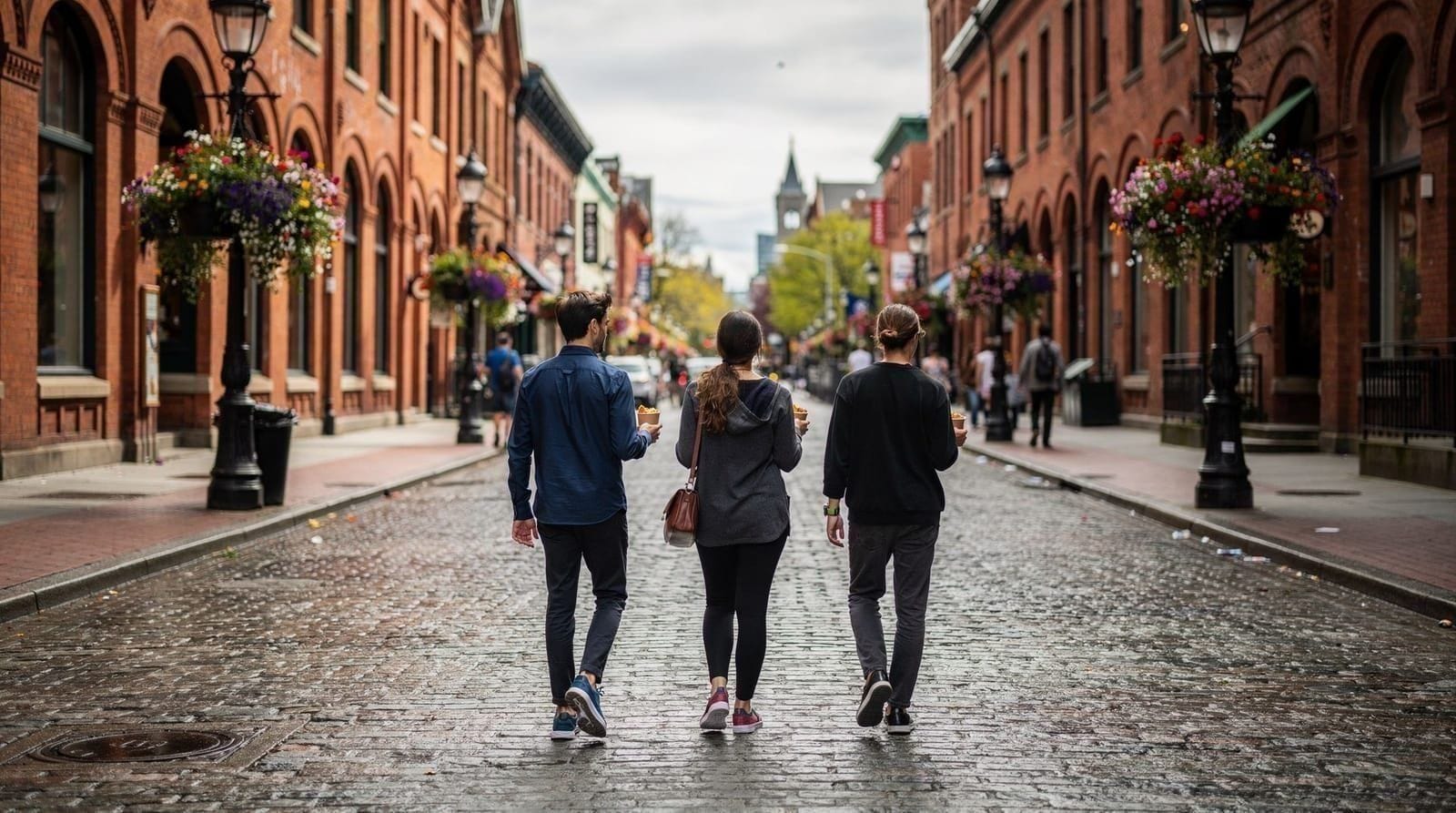
The cobblestone streets and brick facades photograph particularly well in the soft, even light of an overcast day (common in Vancouver) or during the golden hour before sunset, when the warm light complements the Victorian brickwork. Side streets like Blood Alley and the smaller lanes branching off Water Street offer atmospheric, less crowded compositions than the main clock corner, worth seeking out for photographers wanting something beyond the standard shot.
Walking the neighborhood properly
Water Street itself, running from Richards Street to Maple Tree Square, is the core tourist stretch — cobblestone paving, restored Victorian-era brick buildings, and a dense run of souvenir shops, cafés and the steam clock. It’s worth walking slowly here for the architecture alone, much of it dating to the rebuilding after Vancouver’s 1886 Great Fire. Beyond Water Street, the surrounding blocks (particularly Carrall, Cordova and Alexander streets) hold a genuinely different Gastown — independent boutiques, design studios, and some of the city’s better-regarded restaurants and cocktail bars, generally with fewer tourists and better prices than the main strip.
Coffee culture in Gastown
Beyond restaurants and bars, Gastown has a genuinely strong independent coffee scene, with several roasters and cafés on and just off the main strip serving as a reasonable mid-walk break rather than committing to a full meal. It’s worth treating a coffee stop as part of the neighborhood experience rather than an afterthought, particularly on a slower, unhurried walk through the district rather than a rushed photo-only visit.
Food and drink worth seeking out
Gastown’s restaurant and bar scene has real depth beyond the tourist-facing cafés directly on Water Street, part of the broader Vancouver food tour landscape across the city, and a Gastown historical walking food tour is a genuinely efficient way to sample several strong spots in one outing while getting the neighborhood’s history explained along the way, rather than guessing which door to walk through.
An elite Gastown walking food tour covers a similarly curated route with a smaller group size, worth comparing on schedule and group size if timing matters more than route.
For a self-paced option, a self-guided smartphone walking tour of Gastown covers the neighborhood’s history at your own pace, useful for visitors who’d rather explore independently and eat wherever looks appealing rather than following a fixed itinerary.
The tourist-trap honesty check
Not every business fronting Water Street offers good value — several souvenir shops and a handful of restaurants directly facing the steam clock lean into tourist foot traffic with inflated prices and forgettable food. The neighborhood’s actual strength (independent restaurants, design shops, genuine architectural history) sits a block or two off the busiest corner. A useful rule of thumb: if a restaurant’s patio directly overlooks the steam clock queue, it’s worth checking a review or two before committing, since prime tourist-corner rent tends to correlate with lower food quality relative to price — the same honest-planner logic covered more broadly in the Vancouver tourist traps guide.
Seasonal events in Gastown
Beyond the steady year-round restaurant and bar scene, Gastown hosts a handful of seasonal events worth checking against travel dates: a summer night market and occasional street festivals close sections of Water Street to traffic for a livelier evening atmosphere, and the neighborhood’s holiday lighting through December adds a genuinely photogenic layer to the Victorian architecture after dark, part of the wider calendar covered in the Vancouver festivals guide. These events aren’t guaranteed on a fixed annual calendar the way the Cherry Blossom Festival or Celebration of Light are, so checking current listings closer to a trip date is worth doing if a specific event might shape the itinerary.
Safety and the Downtown Eastside
Gastown sits immediately adjacent to Vancouver’s Downtown Eastside and a short walk from Chinatown, an area with visible and serious poverty, homelessness and drug-use issues that has been a persistent, well-documented challenge for the city for decades.
The core Gastown tourist area — Water Street and the blocks immediately around it — is generally fine to walk during the day and early evening, and most visitors experience no issues sticking to that zone. Walking east past Main Street or south into the Downtown Eastside proper is a different environment, and it’s reasonable for visitors, especially after dark, to stay within the well-lit, business-dense core rather than wandering further without a specific reason to.
Maple Tree Square and Gassy Jack’s statue
Maple Tree Square, at the eastern end of the main tourist stretch, marks the neighborhood’s original founding point and remains anchored by a statue of Gassy Jack Deighton standing atop a whisky barrel — a fitting tribute given his saloon-keeper origins. The square itself is smaller and quieter than the steam clock corner, worth a stop for visitors interested in the neighborhood’s founding story specifically rather than just its Victorian architecture.
Shopping beyond souvenirs
Gastown’s retail scene has grown considerably beyond the postcard-and-magnet shops on the main tourist strip. Independent boutiques scattered through the neighborhood, particularly along Water Street’s quieter western stretch and the side streets branching off it, carry Canadian and locally designed clothing, home goods and outdoor gear from brands that have chosen Gastown specifically for its architectural character rather than tourist foot traffic alone. It’s a reasonable stop for visitors looking for a genuine Vancouver-made souvenir rather than a mass-produced one, though prices at these boutiques run closer to standard retail than souvenir-shop bargain pricing.
Common mistakes visitors make
The most frequent misstep is treating Gastown as a 20-minute photo stop centered entirely on the steam clock, missing the neighborhood’s actual depth in food, drink and architecture. A second mistake is eating at the first restaurant encountered directly facing the clock, when a short walk to Cordova or Alexander streets typically turns up better food at comparable or lower prices. Third, some visitors visit only in daylight and miss Gastown’s genuinely strong evening scene — several of the neighborhood’s best-regarded cocktail bars and restaurants are built for an after-dark visit rather than a daytime walk-through.
Getting there
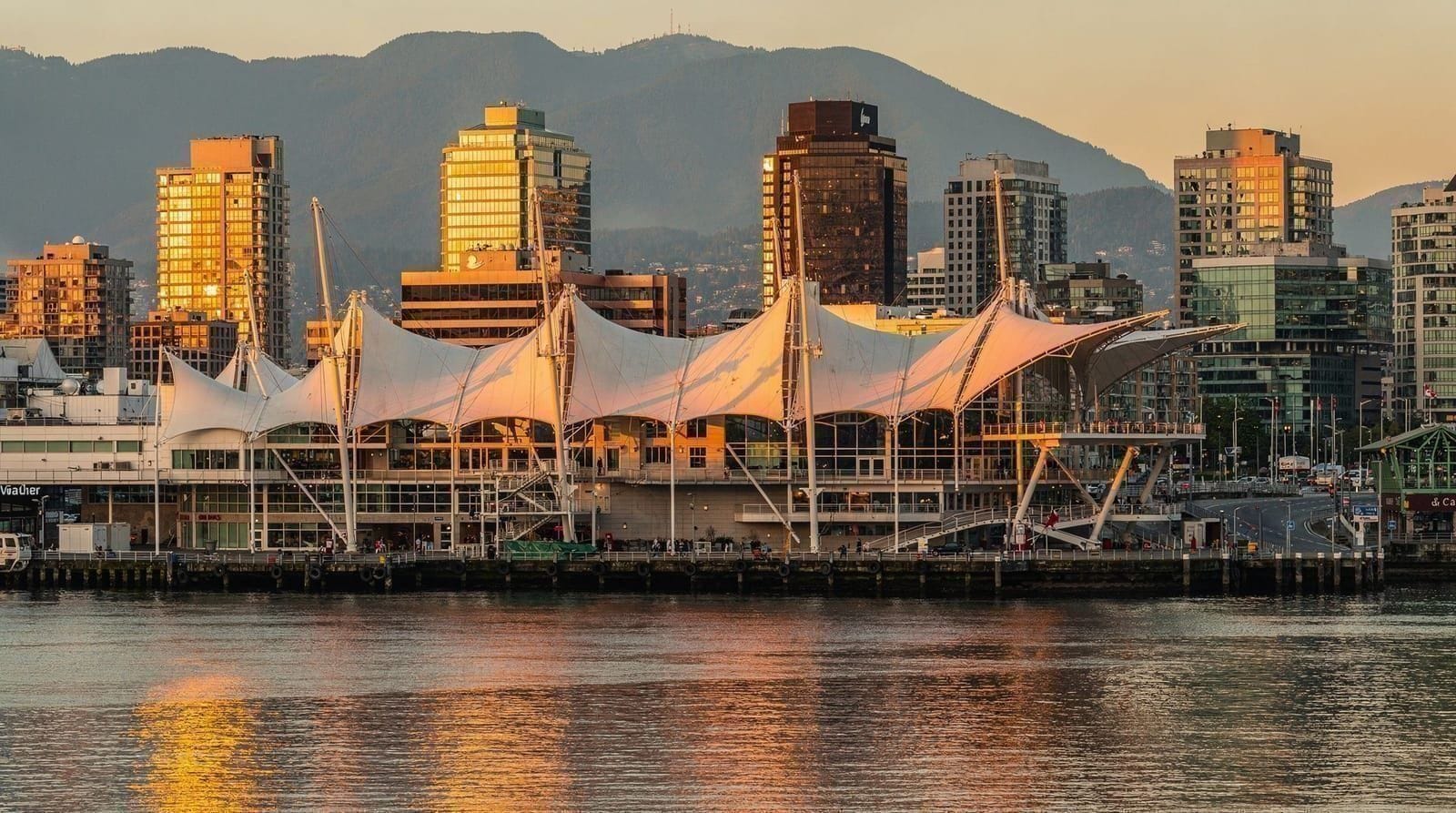
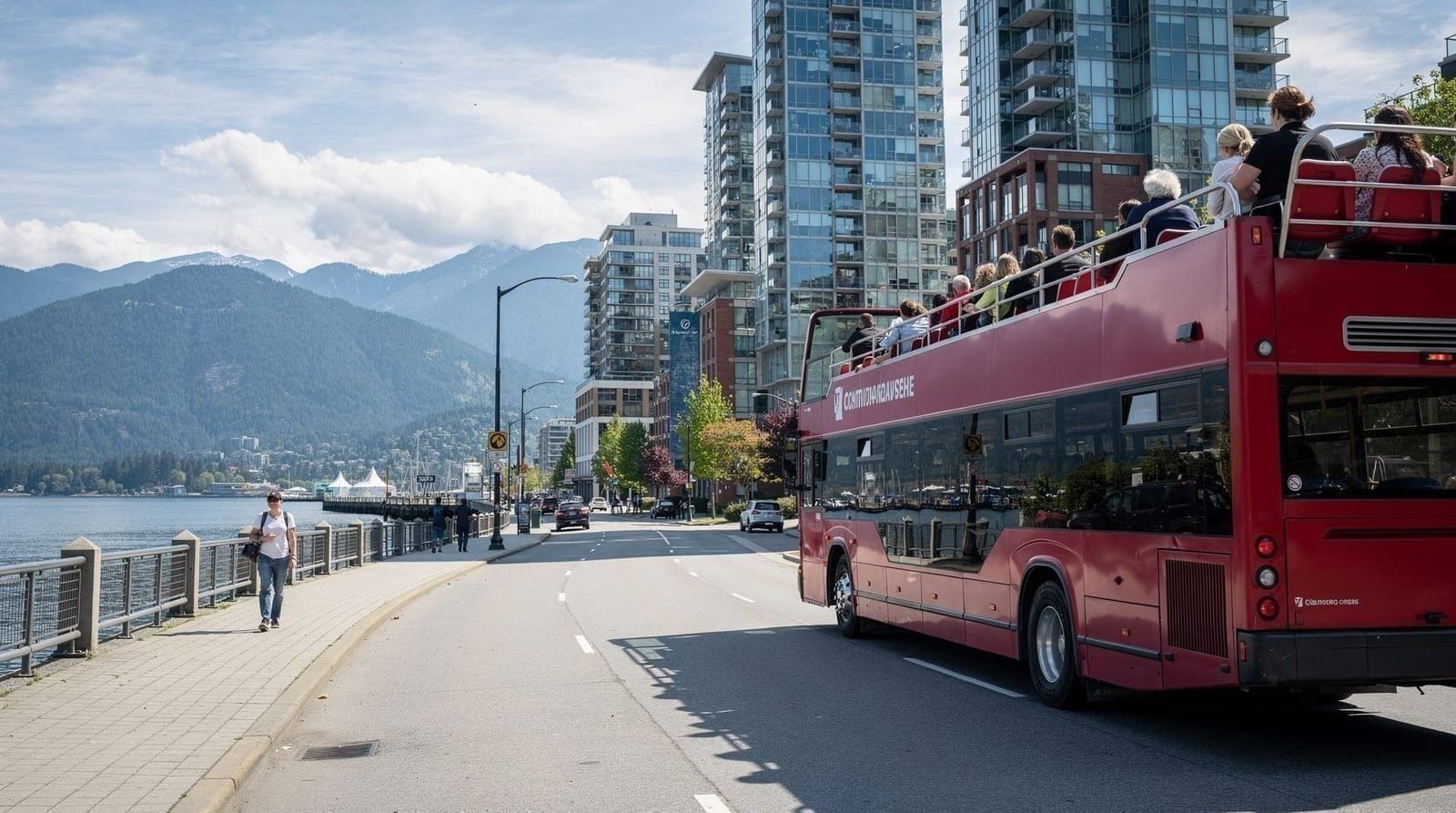
Waterfront SkyTrain station, served by the Canada Line and Expo Line, sits a five-minute walk from Gastown’s western edge, making it the simplest transit approach from anywhere else on the SkyTrain network, including a direct line from Canada Place and the cruise terminal. It’s also an easy 10-15 minute walk from most downtown hotels, and several hop-on hop-off bus routes stop directly in the neighborhood.
Budget planning for a Gastown evening
For a couple planning dinner and drinks in Gastown away from the tourist-priced strip, a realistic budget runs roughly CAD 100-160 for a two-course dinner and a round or two of cocktails at one of the neighborhood’s better-regarded independent restaurants, on the higher end of Vancouver’s general dining costs given Gastown’s concentration of destination-worthy kitchens. A more casual option — a shared appetizer plate and a beer each at a lower-key spot — brings that down to roughly CAD 50-80. Lunch, particularly from a quick counter-service spot rather than a sit-down restaurant, runs considerably less, in the CAD 15-25 per person range.
When to visit
Daytime through early evening is when Gastown is at its best for walking and photography, with the steam clock and architecture well lit and the restaurant patios filling for dinner. Weekday mornings are the quietest window if photos without crowds matter; weekend afternoons draw the heaviest foot traffic, particularly when cruise ships are in port nearby.
What locals think of Gastown
Vancouverites have a somewhat mixed relationship with Gastown — it’s widely acknowledged as having some of the city’s best restaurants and bars, and locals genuinely go there for dinner and drinks regularly, but there’s also a common local complaint about the tourist-facing pricing and crowding on the main Water Street strip specifically. The practical local approach mirrors the visitor advice above: treat Water Street and the steam clock as a quick photo stop, then head a block or two off the main drag for the neighborhood’s actual dining strength. Locals also tend to visit Gastown more in the evening than during the day, when the restaurant and bar scene is at its best and the daytime tourist crowds have thinned.
A short walking route through the neighborhood
For visitors without a fixed plan, a reasonable self-guided loop starts at Maple Tree Square (where Gassy Jack’s statue stands), heads west along Water Street past the steam clock, continues to the edge of the historic district near Richards Street, then loops back via Cordova Street to see the quieter, less touristed side of the neighborhood before finishing back near Maple Tree Square. The full loop, walked slowly with stops for photos, takes about an hour without factoring in a meal or extended shopping browse.
Architecture worth looking for
Beyond the general Victorian-era character, a few specific buildings are worth pointing a camera at deliberately: the Hotel Europe, a flatiron-style building at the corner of Powell and Alexander streets, is one of the most distinctive shapes in the neighborhood and among the first reinforced-concrete buildings constructed in Canada when it went up in 1909. Several converted warehouse buildings along Water and Cordova streets retain their original loading-dock doors and industrial signage, now repurposed as retail and restaurant entrances — a detail easy to miss while focused on the steam clock but worth a slower look for anyone interested in the neighborhood’s industrial past.
Accessibility notes
Gastown’s cobblestone sections, particularly around Maple Tree Square and parts of Water Street, present a genuine mobility challenge — uneven historic paving is harder to navigate than standard sidewalk for wheelchairs, strollers or anyone with mobility limitations. Smoother, standard sidewalk sections exist on the neighborhood’s edges and side streets, offering an alternative route for visitors who need to avoid the cobblestones specifically.
Where it fits in a wider Vancouver trip
Gastown pairs naturally with a downtown waterfront day that also includes Canada Place and the Vancouver Lookout, both a short walk away, making it easy to string together into a half-day loop. It shows up in nearly every one-day Vancouver sightseeing plan and 3-day itinerary as the historic-neighborhood stop, usually scheduled for late afternoon into dinner given the strength of its restaurant scene after dark.
Frequently asked questions about visiting Gastown
How long should I spend in Gastown?
1.5-2 hours covers a walking loop of the steam clock and Water Street’s architecture at a relaxed pace; extending to a half-day with shopping and a sit-down meal is easy given the neighborhood’s density of good restaurants.
Is the Gastown Steam Clock the original from the 1800s?
No — despite the surrounding Victorian architecture, the steam clock itself was built in 1977, designed to complement the neighborhood’s older buildings rather than being an original artifact.
What time does the steam clock chime?
Every 15 minutes, with a full whistled tune played on the hour — worth timing your visit to catch at least one hourly chime.
Is Gastown worth visiting at night?
The core tourist stretch along Water Street is generally fine in the early evening and has a genuinely good bar and restaurant scene after dark; exercise normal city caution and stick to the well-lit, business-dense core rather than wandering toward the Downtown Eastside.
Can I walk from Gastown to Canada Place or the Vancouver Lookout?
Yes, both are within a 10-15 minute walk of Gastown’s western edge, making it easy to combine into a single downtown waterfront day.
What’s the story behind the name Gastown?
It comes from “Gassy Jack” Deighton, a talkative saloon owner (hence the nickname) who opened a bar for sawmill workers on the Burrard Inlet shoreline in 1867, and the small settlement that grew around his saloon became the original townsite that later grew into Vancouver.
Is Gastown the same as Chinatown?
No, they’re adjacent but distinct neighborhoods — Gastown centers on Water Street and the steam clock, while Chinatown sits a short walk south and east, with its own separate history, architecture and food scene.
Are there good food tours in Gastown?
Yes, several operators run walking food tours through the neighborhood combining history with tastings at multiple independent restaurants and cafés, a good option for visitors who want curated stops rather than picking blind.
Top experiences
Bookable activities with verified prices and instant confirmation on GetYourGuide.