VanDusen Botanical Garden
Vancouver: Botanical Gardens Tour and Museum of Anthropology
What is VanDusen Botanical Garden and how much does it cost?
VanDusen Botanical Garden is a 22-hectare botanical garden in South Vancouver with more than 7,500 plant species, an Elizabethan hedge maze, and a LEED Platinum visitor centre. Admission runs roughly CAD 12-18 depending on season, and most visitors spend 1.5-2.5 hours walking the grounds.
VanDusen Botanical Garden occupies 22 hectares in South Vancouver, on land that was once part of a golf course before being redeveloped into one of the city’s major horticultural collections — more than 7,500 plant species drawn from around the world, organized into themed sections that make the sheer scale manageable to explore rather than overwhelming.
| Where | South Vancouver, roughly 15-20 min from downtown |
| Cost | Around CAD 12-18 for adults, seasonal pricing |
| Time needed | 1.5-2.5 hours for a relaxed visit |
| Getting there | Bus, rideshare, or a short drive — no direct SkyTrain |
| Best time | Spring for bloom, summer for longest hours, Dec for lights |
From golf course to botanical collection
The land VanDusen now occupies was originally part of the Shaughnessy Golf Club, leased from the Canadian Pacific Railway, before a public campaign in the 1960s and 70s pushed to preserve the green space as parkland rather than see it developed for housing. The garden opened to the public in 1975, named for W.J. VanDusen, a local businessman and philanthropist whose family foundation contributed significantly to the project’s development.
In the decades since, the collection has grown steadily through plant expeditions and international partnerships with other botanical institutions, building toward the roughly 7,500 species and cultivars found on the grounds today — a scale that puts it among the more significant botanical collections in Canada.
Why the scale matters for planning
A garden with 7,500-plus species spread across 22 hectares behaves differently for planning purposes than a smaller city park — it’s genuinely possible to visit VanDusen multiple times and see different sections in depth each time, rather than exhausting its interest in a single pass. First-time visitors with limited time should treat the garden as a highlights tour rather than attempting comprehensive coverage, prioritizing two or three themed sections (the maze, one geographic garden, the rose garden or whichever aligns with the current season) over trying to walk every path.
What’s inside
The garden is organized into distinct zones — a rhododendron walk, a Sino-Himalayan garden, a Mediterranean garden, and formal beds alongside more naturalistic plantings — connected by a network of paths that make it easy to cover as much or as little as a visit’s time budget allows. The Elizabethan-style hedge maze is the garden’s most recognizable single feature and a reliable stop for families and photographers alike, distinct in character from the more formal botanical collections elsewhere on the grounds. The Visitor Centre, a LEED Platinum-certified building near the entrance, houses a café and gift shop and is worth a look on its own for the sustainable architecture, with a roofline inspired by the shape of an orchid.
Weather and the garden’s year-round appeal
Unlike a purely built attraction, VanDusen genuinely changes character with the weather and seasons rather than simply being open or closed regardless of conditions. A rainy visit still has real appeal — the garden’s overall lushness is partly a product of the same wet climate that makes Vancouver’s weather a common visitor complaint, and mist or light rain can add real atmosphere to the more forested sections of the collection. Heavier rain does make gravel paths and some of the naturalistic sections less pleasant underfoot, and the maze’s hedges hold water on their leaves long after a rain shower has passed, so brushing against them can leave visitors damper than the general weather might suggest.
How VanDusen compares to other Vancouver gardens
Beyond the direct comparison with Queen Elizabeth Park, it’s worth placing VanDusen against the city’s other green spaces. Stanley Park is a large-scale natural forest and waterfront park rather than a curated botanical collection, appealing to a different kind of visitor than one seeking a deliberately designed garden experience.
The Museum of Anthropology grounds at UBC include some landscaped elements but are primarily a cultural institution rather than a garden destination. For visitors specifically seeking a curated, internationally significant plant collection, VanDusen remains the clearest choice in the city, with Queen Elizabeth Park as the natural, free complement rather than a substitute.
Prices and hours
Admission runs roughly CAD 12-18 for adults, with pricing shifting seasonally — generally higher in summer, when the garden is at its fullest and hours extend later into the evening, and lower in the shorter, quieter winter months. Reduced rates apply for youth and seniors, and the garden occasionally runs free or discounted entry days worth checking for around specific dates.
Membership and repeat visits
For visitors who anticipate returning to Vancouver within a year, or who have family or friends locally likely to visit multiple times, a VanDusen membership can be worth the upfront cost after just a handful of visits, and typically includes reciprocal admission benefits at partner botanical gardens elsewhere, useful for gardening enthusiasts who travel more broadly. For a single-trip visitor, standard single-day admission remains the more sensible choice, since the membership’s value depends on a return-visit pattern that a one-time trip doesn’t support.
Seasonal highlights
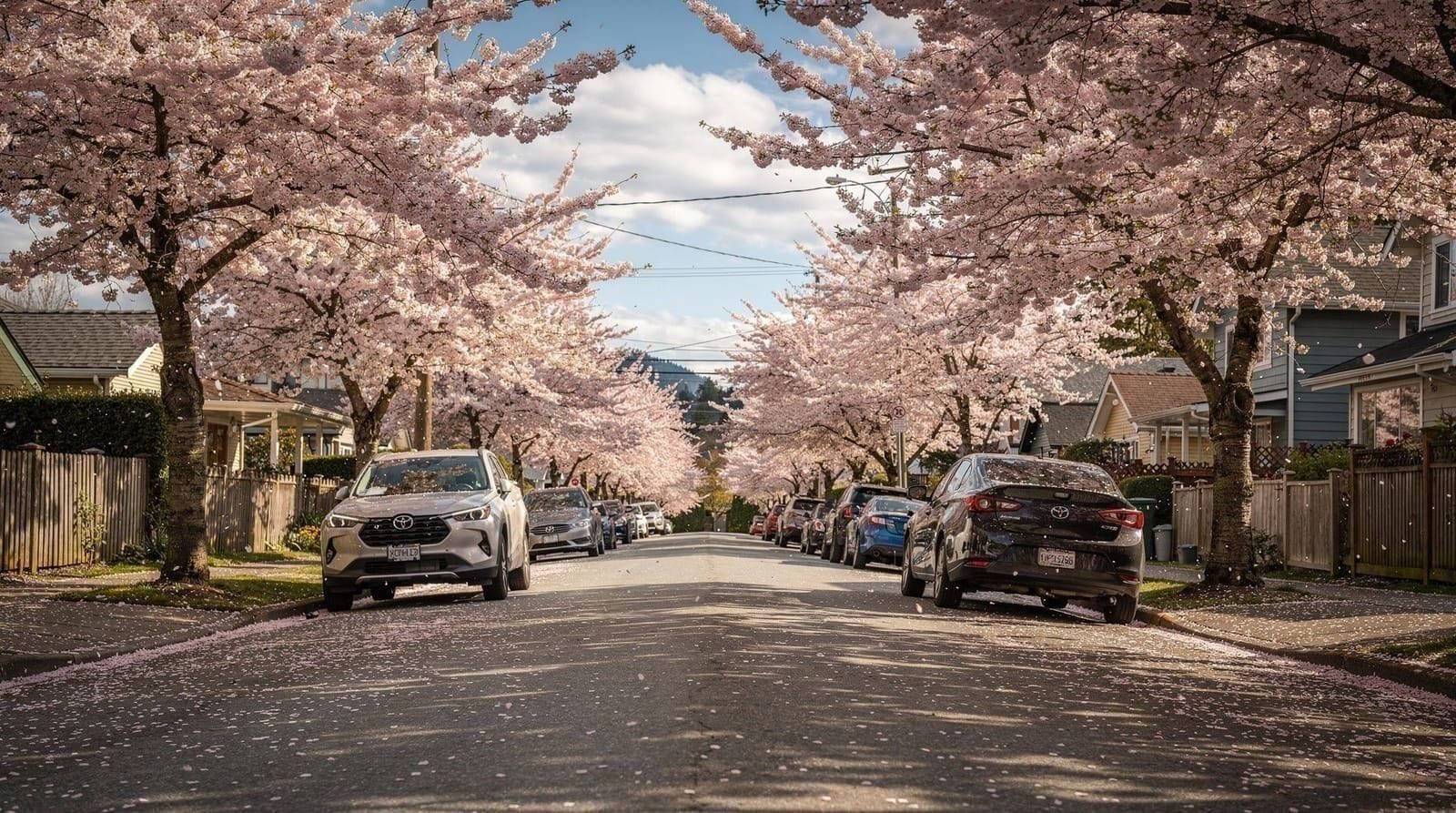
Spring (April-May) is the strongest single window for flowering across most of the garden’s major collections, and the annual Sakura Days Japan Fair in mid-April draws crowds specifically for the garden’s cherry blossom displays — worth checking the current year’s dates if cherry blossoms are a trip priority, since Vancouver’s broader bloom window runs only a couple of weeks. See the cherry blossoms in Vancouver guide for the fuller citywide bloom calendar beyond VanDusen specifically.
Summer brings the fullest, greenest version of the garden with the longest opening hours of the year, while December’s Festival of Lights transforms the grounds into an evening light display, a genuinely popular seasonal draw distinct from the garden’s daytime botanical focus — worth booking ahead if visiting during the festival’s run, since evening capacity is more limited than a standard daytime visit.
What to bring for a full visit
Comfortable walking shoes matter given the garden’s scale — a thorough visit covers real distance across gravel and paved paths alike. Sun protection is worth packing for a summer visit, since much of the garden sits in open, unshaded beds rather than forest canopy. A reusable water bottle is useful given the size of the grounds, though the Visitor Centre café offers drinks and snacks partway through a longer visit if needed.
Combining with the Museum of Anthropology
A Vancouver botanical gardens and Museum of Anthropology tour pairs a VanDusen visit with the Museum of Anthropology at UBC in a single guided day, a sensible combination for visitors without a car who’d rather not manage transit connections between South Vancouver and the UBC peninsula independently. It’s a reasonable option for anyone treating gardens and Northwest Coast First Nations art as complementary parts of the same cultural and natural-history interest rather than separate trips.
Comparing it to Queen Elizabeth Park
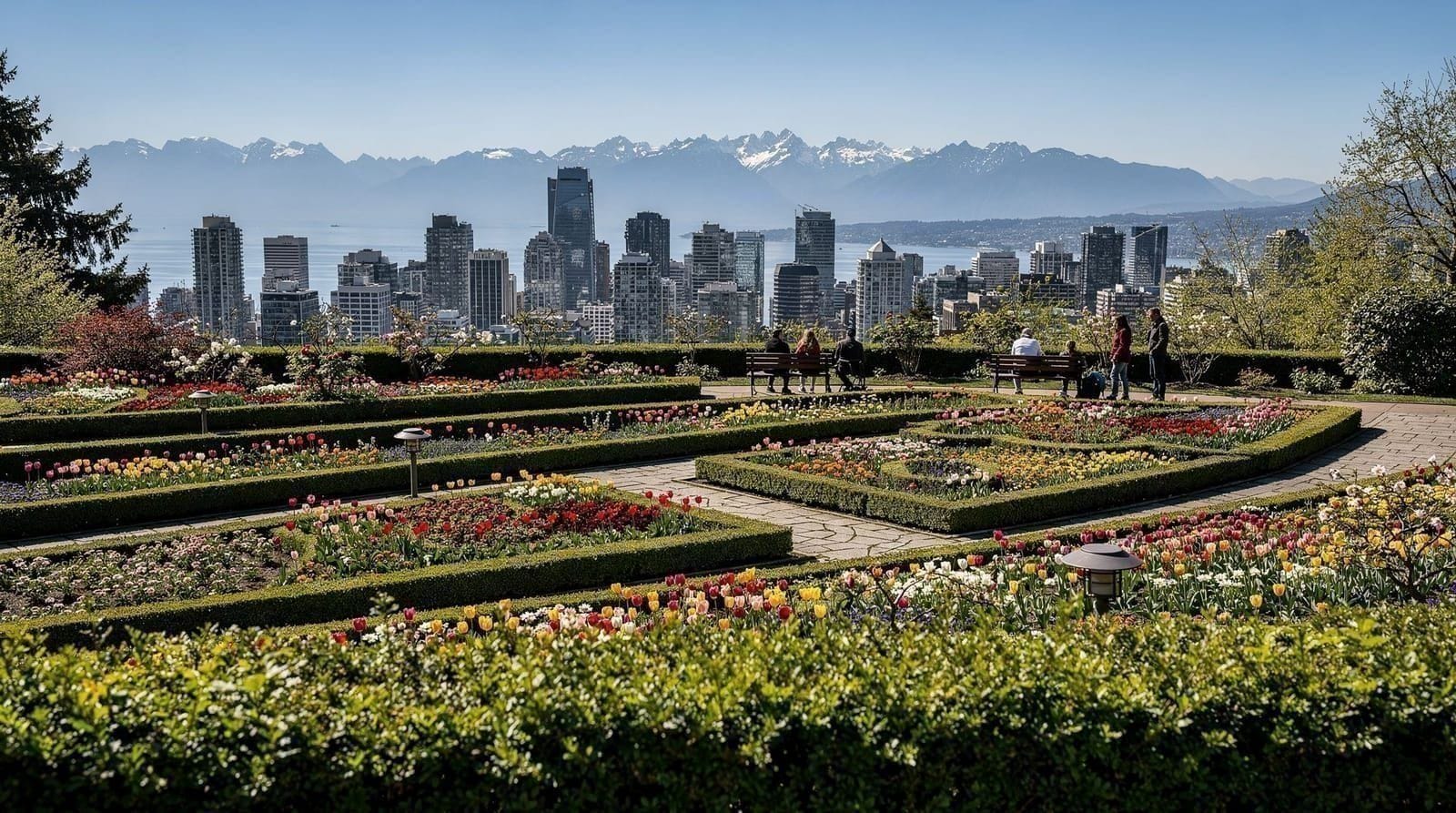
Queen Elizabeth Park sits a short drive from VanDusen and is often mentioned in the same breath, but the two aren’t quite interchangeable. Queen Elizabeth Park is free, smaller, and built around a former quarry with a hilltop city viewpoint; VanDusen is considerably larger, charges admission, and offers a far broader plant collection plus the hedge maze, without an equivalent city view. Visitors with a genuine interest in gardens and a few free hours are generally better served doing both in the same outing, since they sit close enough together to combine without much added transit time.
Common mistakes visitors make
The most frequent misstep is trying to see the entire garden in under an hour, rushing past themed sections that reward a slower pace — VanDusen’s scale means a thorough visit genuinely benefits from treating it as a half-day activity rather than a quick stop. A second mistake is visiting in winter expecting the same bloom and color as a summer visit; the garden remains open and has its own quieter appeal in the colder months, but flowering displays are considerably more limited outside spring and summer. Third, some visitors skip the Visitor Centre entirely, missing both the sustainable architecture itself and the café and gift shop inside, which round out a fuller visit beyond just the outdoor plant collections.
Accessibility notes
VanDusen’s main paths are paved and wheelchair accessible throughout most of the garden, including the Visitor Centre, though the hedge maze’s narrow internal passages and a handful of naturalistic garden sections with uneven terrain are less accessible than the main formal walkways. Accessible parking is available near the entrance, and mobility scooters or wheelchairs may be available to rent on-site — worth checking current availability ahead of a visit if needed.
Volunteer and community involvement
VanDusen relies partly on a active volunteer program, with trained garden guides available for scheduled walks and a broader community of horticultural volunteers supporting maintenance and events throughout the year. This community dimension is part of why the garden feels more like a living institution than a static attraction — programming and plantings shift based on ongoing community involvement rather than a fixed, unchanging layout.
Getting there
VanDusen is reachable by bus from downtown, though — like Queen Elizabeth Park nearby — there’s no direct SkyTrain connection to the garden itself, making a bus transfer, rideshare or roughly 15-20 minute drive the most practical options. On-site parking is available for visitors arriving by car.
For visitors without a car, the most reliable route combines a SkyTrain ride to a nearby station with a short connecting bus, generally totaling 30-40 minutes door to door from downtown depending on the exact starting point. Rideshare or taxi from downtown runs roughly 15-20 minutes in normal traffic and is the simplest option for visitors short on time or unfamiliar with the local bus network. Parking at the garden itself is generally straightforward outside peak weekends and the Festival of Lights, when the on-site lot can fill and overflow parking on nearby residential streets becomes the fallback.
Photography tips
VanDusen’s scale and variety make it a strong photography location year-round, but timing matters for different goals. Early morning visits, right at opening, offer the softest light and the fewest other visitors in frame, ideal for photographing individual specimens or garden vistas without crowds. The hedge maze photographs well from an elevated vantage point if one exists nearby, capturing its geometric pattern in a way that’s harder to convey from ground level within the maze itself. Autumn (September-October) brings a different but equally strong photography season as foliage colors shift across the garden’s diverse tree and shrub collection, an underrated window compared to the more obvious spring bloom.
Educational programs and workshops
Beyond casual visits, VanDusen runs a regular schedule of horticultural workshops, guided walks and educational programming aimed at both casual garden enthusiasts and more serious hobbyist gardeners. These typically carry a separate fee from general admission and require advance registration, worth checking if a specific interest (pruning technique, native plant gardening, seasonal maintenance) aligns with a scheduled session during your visit dates. Guided walks led by garden staff or volunteers run on a more casual schedule and are sometimes included with standard admission, offering a deeper introduction to specific collections than a self-guided walk provides.
How much time to budget
1.5-2.5 hours covers a relaxed walk through the main garden sections and the maze; add extra time during the Sakura Days fair or Festival of Lights, when the garden draws larger crowds and a slower pace through the busier sections.
What locals think of VanDusen
For Vancouverites with an interest in gardening, VanDusen is a genuine ongoing resource rather than a once-per-trip stop — many hold annual memberships and visit repeatedly across seasons specifically to track how different sections change through the year, from spring’s flowering peak to the more subdued but still interesting winter garden. It’s also a popular spot for local plant sales, workshops and horticultural society events, giving it a role in Vancouver’s gardening community beyond simply being a place to walk. For a first-time visitor without that ongoing relationship to the garden, a single well-timed visit still delivers most of what makes the collection worth seeing, particularly if timed for spring or summer bloom.
The Visitor Centre’s sustainable design
The LEED Platinum-certified Visitor Centre, completed in 2011, is worth appreciating as a destination in its own right rather than just a functional entry point. Its curving roofline, inspired by the shape of an orchid, integrates several sustainable design features including rainwater harvesting, natural ventilation and a green roof, reflecting the broader institution’s environmental mission beyond just the plant collections themselves. The building houses a café serving light meals and coffee, a gift shop with garden-themed and locally made goods, and space for temporary exhibitions and educational programming.
Plant collections worth seeking out
Beyond the rhododendron walk and Sino-Himalayan garden mentioned already, a few other sections reward specific attention: the Korean garden, one of relatively few dedicated Korean-style gardens in North America, offers a different aesthetic tradition than the garden’s more Western-style formal beds; the alpine garden showcases high-elevation plant species in a rockery setting distinct from the broader collection’s lower-elevation focus; and a dedicated rhododendron collection, among the garden’s founding specimens, remains one of VanDusen’s signature strengths given the plant’s prominence in Pacific Northwest horticulture generally.
Ticketing and advance booking
Standard daytime admission is generally available at the gate without advance booking, though buying online ahead of a visit avoids the ticket-counter line during peak spring weekends and the Sakura Days fair. The December Festival of Lights is the clearest exception — evening timed-entry slots do sell out on popular nights, so booking a few days to a week ahead is worth doing specifically for that event rather than assuming walk-up entry will be available.
A realistic budget for a garden day
For a couple visiting VanDusen for a half-day, admission runs roughly CAD 24-36 total for two adults depending on season, plus a light lunch at the Visitor Centre café (roughly CAD 15-25 per person) if eating on-site rather than bringing food. Adding a visit to Queen Elizabeth Park the same day costs little extra beyond transport between the two sites, since Queen Elizabeth Park itself is free. All told, a full South Vancouver garden day for two typically runs CAD 80-130 including a casual lunch.
Where it fits in a wider Vancouver trip
VanDusen works best as a half-day addition for visitors staying three or more days, typically paired with Queen Elizabeth Park for a South Vancouver garden-focused outing, or with the Museum of Anthropology for a broader culture-and-nature day. It’s a strong seasonal add-on for spring visitors chasing cherry blossoms beyond the more famous street-tree displays downtown, and fits naturally into longer 3-day Vancouver itineraries.
VanDusen versus other Vancouver-area gardens
Beyond Queen Elizabeth Park and Stanley Park, a handful of other Vancouver-area green spaces get compared to VanDusen, usually without quite the same scale. Bill Reid Gallery and the Museum of Anthropology both have some landscaped or outdoor elements but are fundamentally cultural institutions rather than plant collections, so they complement rather than substitute for a garden visit.
Smaller neighbourhood parks around the city offer green space but nothing close to VanDusen’s curated diversity of 7,500-plus species. For visitors who specifically want a second, different garden experience within the same trip, the Museum of Anthropology guide is the closest comparable half-day cultural-and-outdoor pairing, rather than a true botanical alternative.
Group visits and guided options
Most visitors see VanDusen independently, buying admission at the gate or online and walking the grounds at their own pace, but the garden also accommodates pre-arranged group tours for larger parties, school groups and garden clubs, typically booked ahead through the garden’s own visitor services rather than as a standalone commercial product.
For travelers who’d rather combine VanDusen with another UBC-area stop in a single organized day without arranging transport themselves, the Vancouver botanical gardens and Museum of Anthropology tour remains the most practical guided option, bundling entry and transit logistics for both stops into one booking.
Visiting with limited mobility or young kids
Families with strollers and visitors using wheelchairs both do well on the main paved loop, which covers most of the garden’s headline sections — the rhododendron walk, the Sino-Himalayan garden and the Visitor Centre — without requiring the gravel side paths. Kids tend to gravitate to the hedge maze and the open lawn areas near the entrance rather than the more contemplative formal beds, so a family visit is often shorter and more maze-focused than a dedicated gardening enthusiast’s slower, fuller circuit. Combining VanDusen with the free, hillier Queen Elizabeth Park the same day works well for families wanting a mix of paid, curated garden time and unstructured playground and lookout time.
Frequently asked questions about visiting VanDusen Botanical Garden
Is VanDusen Botanical Garden worth the admission fee?
For visitors with a genuine interest in gardens or botany, yes — the scale and variety of the collection go well beyond what a casual city park offers, and the hedge maze adds a distinct, family-friendly feature not found at Vancouver’s free green spaces.
How long does a visit take?
1.5-2.5 hours covers the main garden sections and maze at a relaxed pace; dedicated garden enthusiasts can easily spend longer exploring specific themed collections in depth.
Is VanDusen Garden open year-round?
Yes, though hours and specific sections open can vary by season, with the fullest hours and bloom in summer and a more limited winter schedule outside the December Festival of Lights.
Is VanDusen good for a rainy day?
Yes, with the caveat that it’s an outdoor garden rather than a fully enclosed attraction — the Visitor Centre offers some indoor shelter, but a rainy visit still means walking outdoor paths for most of the experience. Bring a rain jacket rather than relying on staying dry throughout.
Does VanDusen have a gift shop?
Yes, located in the Visitor Centre, stocking garden-themed and locally made goods, along with a selection of gardening books and plant-related souvenirs.
What’s the difference between VanDusen and a typical city park?
VanDusen is a curated, scientifically organized botanical collection with plants sourced deliberately from around the world, whereas a typical city park preserves or plants for general recreational and aesthetic use rather than a structured horticultural collection.
Can I visit VanDusen and Queen Elizabeth Park in the same day?
Yes, easily — they’re a short drive apart in South Vancouver, and many visitors combine both into a single half-day garden-focused outing.
Top experiences
Bookable activities with verified prices and instant confirmation on GetYourGuide.