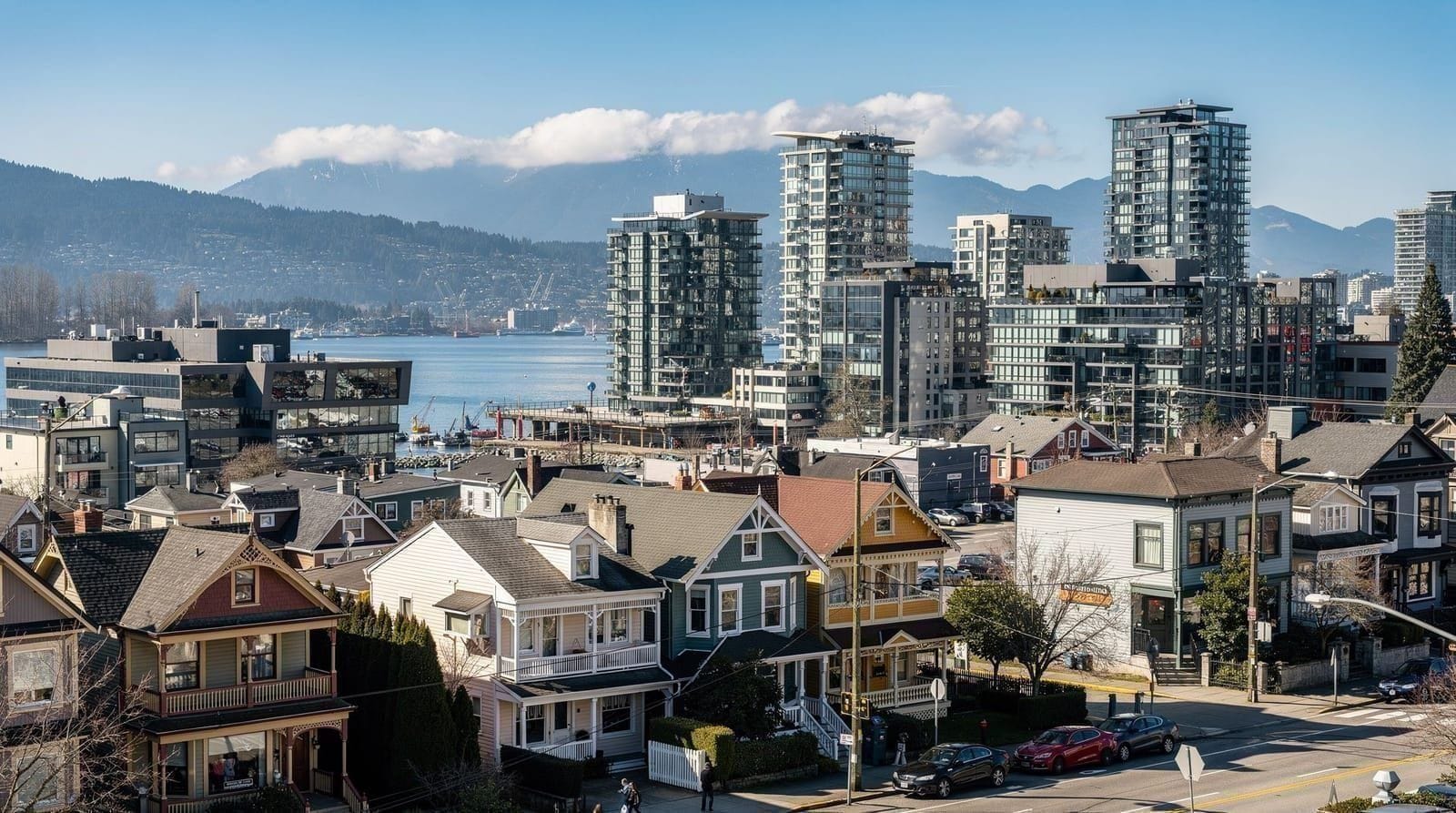
Cherry blossoms in Vancouver — when and where to see them
Vancouver: Stanley Park Bike Tour | E-Bike Upgrade Available
Duration: 3 hours
When do cherry blossoms bloom in Vancouver?
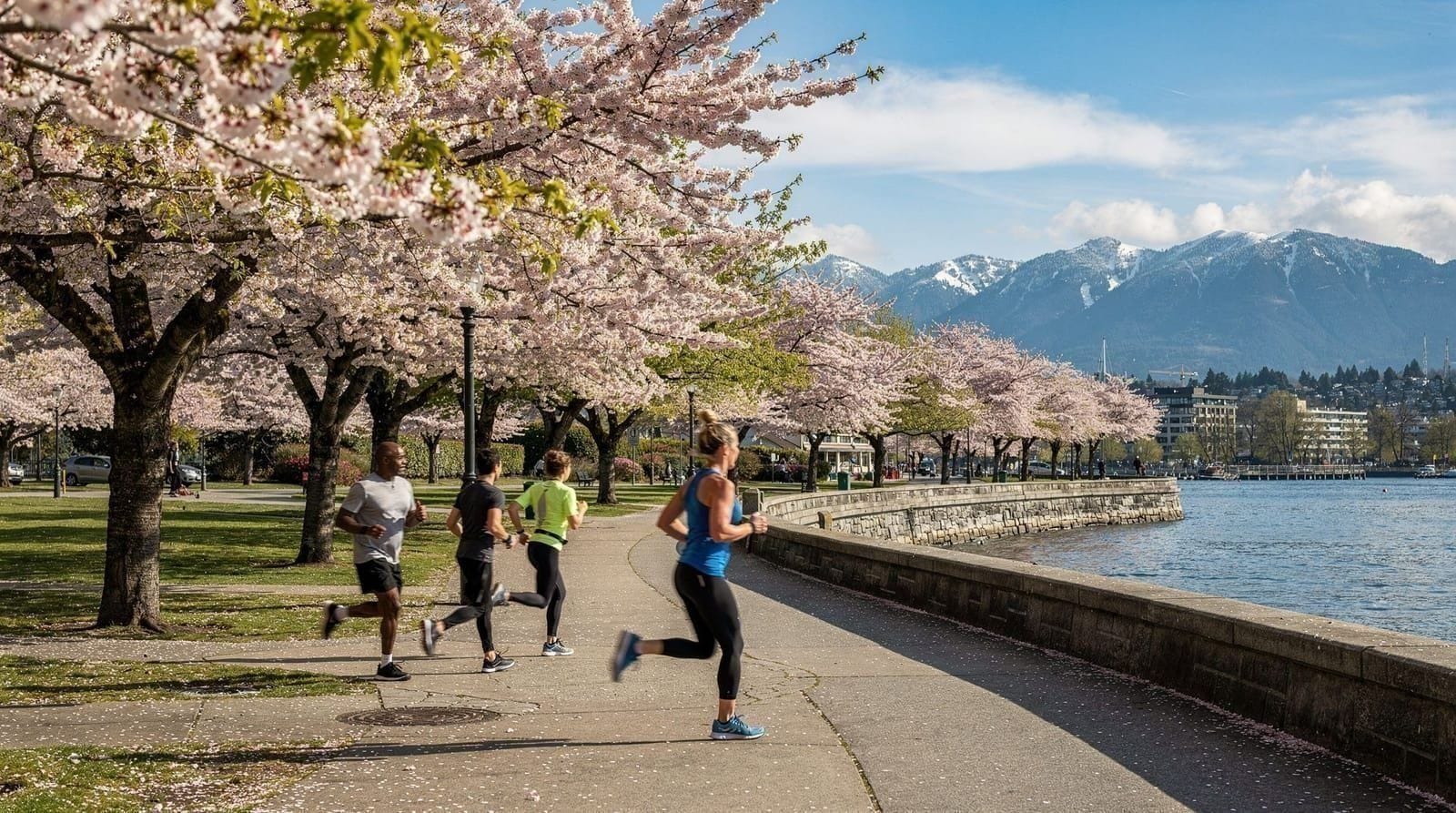
Vancouver's roughly 43,000 ornamental cherry trees typically reach peak bloom between April 5 and April 15, though the exact window shifts by a week or more depending on the winter's temperature pattern. The Vancouver Cherry Blossom Festival runs late March through mid-April to cover the full bloom period across the city's different neighborhoods and tree varieties.
Vancouver plants more ornamental cherry trees than almost any city outside Japan — roughly 43,000 of them, spread across streets, parks, and gardens citywide — which means the bloom isn’t a single event so much as a rolling wave that moves through different neighborhoods and varieties over several weeks each spring. Getting the timing right matters more here than for most seasonal attractions, since peak bloom for any individual tree typically lasts only a week or two before petals begin to fall, and the overall window shifts noticeably from year to year depending on how the winter played out.
| Peak bloom | Typically April 5-15, shifts year to year |
| Cost | Free (VanDusen Botanical Garden is the one paid option) |
| Best free spots | West End, Queen Elizabeth Park |
| Season length | Late March through mid-April overall |
| Best light | Overcast mornings, before crowds build |
When peak bloom actually happens
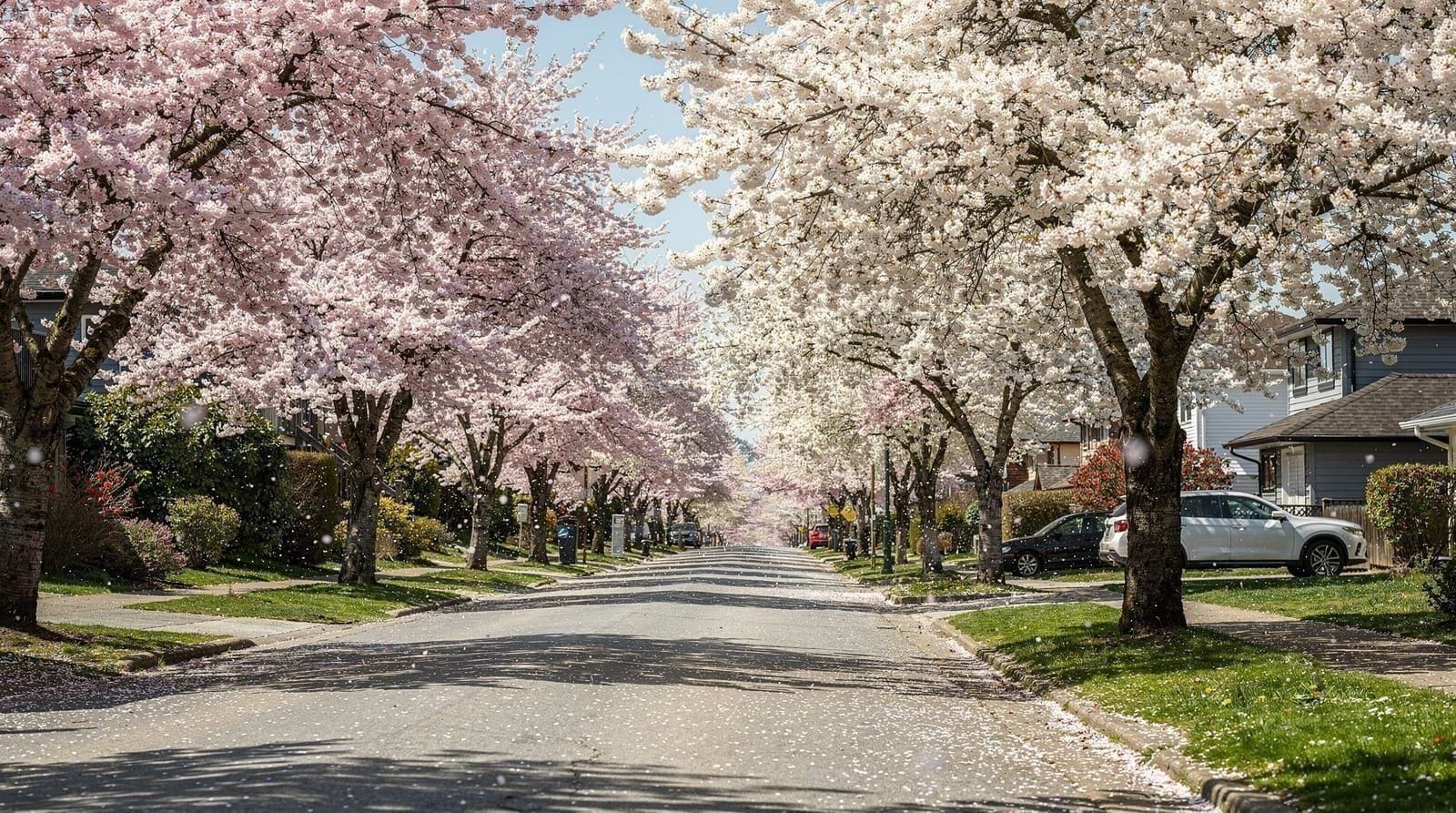
Peak bloom in Vancouver typically falls between April 5 and April 15, but that’s a guideline rather than a guarantee — a mild winter can push the window a week earlier, while a cold, late spring can delay it similarly. The Vancouver Cherry Blossom Festival, which runs from late March through mid-April, exists specifically to cover this uncertainty by tracking bloom progress across the city’s different tree varieties, which don’t all flower simultaneously. Early-blooming varieties like Akebono, common in the West End, typically lead the season, with the showier, pink, double-flowered Kanzan variety — often what people picture when they imagine Vancouver’s cherry blossoms — following a week or two later.
This staggered timing is genuinely useful for visitors: arriving slightly before or after the “true” peak doesn’t mean missing blossoms entirely, since some variety somewhere in the city is likely still in bloom across most of the festival’s several-week window. Individual trees typically hold their blossoms for one to two weeks before petals begin to drop, and a rain event or strong wind during that window can shorten it further, scattering petals across sidewalks in a display some visitors find just as photogenic as the trees themselves — worth knowing if a trip happens to land right after a storm rather than expecting the exact same view described in an earlier week’s photos.
Best neighborhoods for viewing
The West End has one of the densest concentrations of street-planted cherry trees in the city, with entire residential blocks — particularly around Nelson and Comox streets — forming a canopy of pink during peak bloom. It’s an easy add-on to a Stanley Park visit, since the neighborhood sits directly adjacent to the park’s entrance.
Queen Elizabeth Park, on the city’s east side, combines cherry blossoms with elevated views over the city and North Shore mountains, making it a strong choice for anyone who wants blossoms and skyline photography in the same stop. VanDusen Botanical Garden, a short distance away, adds a curated, ticketed alternative with a broader mix of flowering trees and a longer overall bloom window than street trees alone, since its collection includes varieties timed to bloom at different points across the season.
Kitsilano and pockets of the West Side also carry significant street tree coverage, and for visitors staying in those neighborhoods, a short blossom walk is often possible without a dedicated trip elsewhere in the city. None of these routes charge admission — VanDusen is the one exception, requiring standard garden entry — which makes cherry blossom viewing one of the few genuinely free major seasonal draws on the calendar.
Beyond these core spots, scattered plantings along parts of Commercial Drive and residential pockets of North Vancouver add further options for visitors staying outside the downtown core, though none match the West End’s density for a dedicated blossom walk.
A blossom-focused day
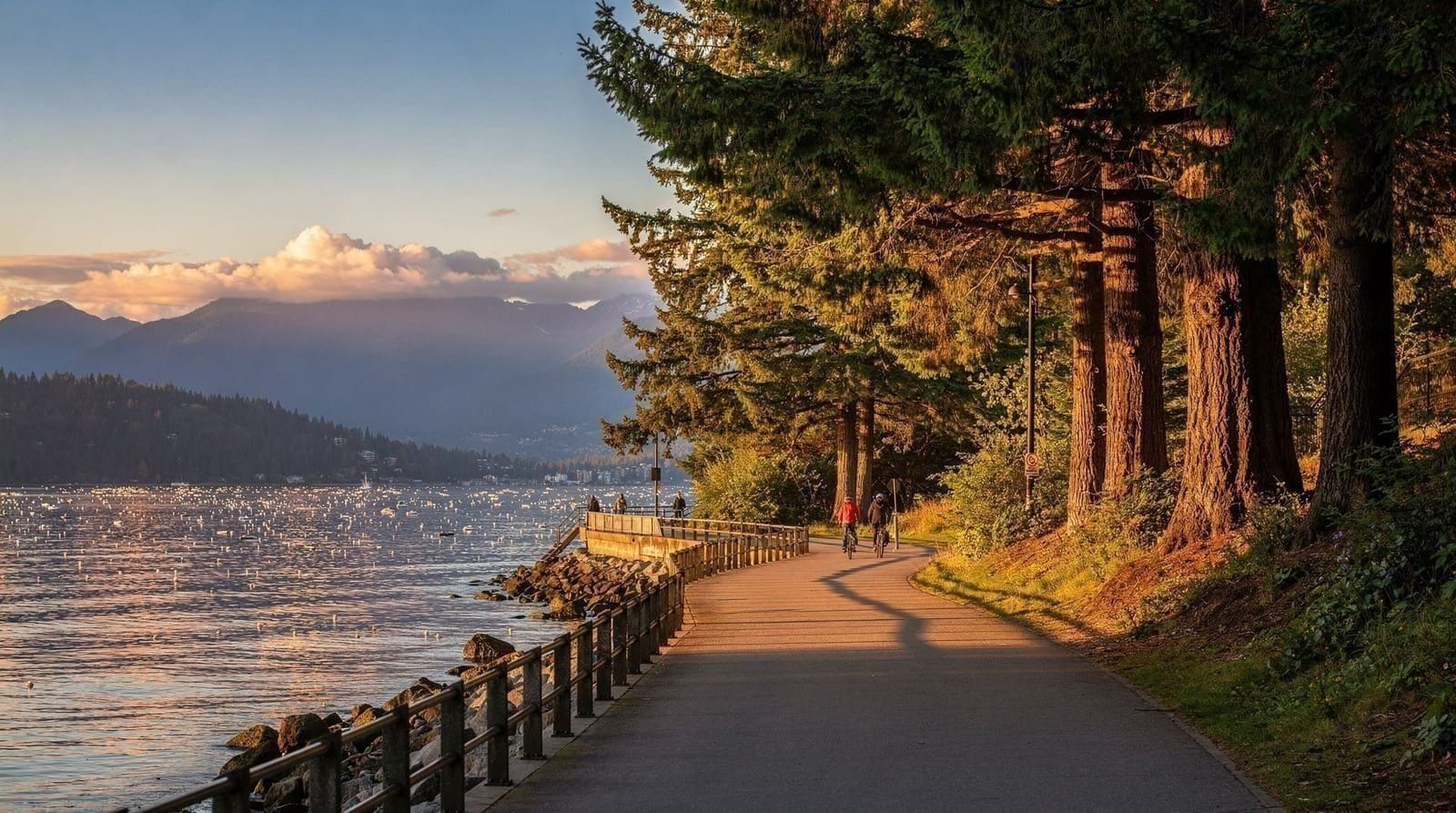
A dedicated cherry blossom day works well built around the West End and Stanley Park together, since they sit next to each other and cover both street blossoms and park scenery in a single walkable loop. A Stanley Park bike tour covers more ground than walking alone and takes in the Seawall alongside the park’s own blossom displays near the park’s southern entrances, while a self-guided smartphone tour of Stanley Park suits travelers who’d rather move at their own pace and stop for photos without a group schedule.
For visitors combining blossom viewing with general first-day orientation to the city, a Vancouver city highlights tour during blossom season passes through several of the same blossom-heavy areas as part of its standard downtown route.
The festival itself
The Vancouver Cherry Blossom Festival is largely a free, self-guided event rather than a ticketed festival in the conventional sense — its core offering is a bloom-tracking map, updated through the season, that points visitors toward whichever neighborhoods are currently at peak.
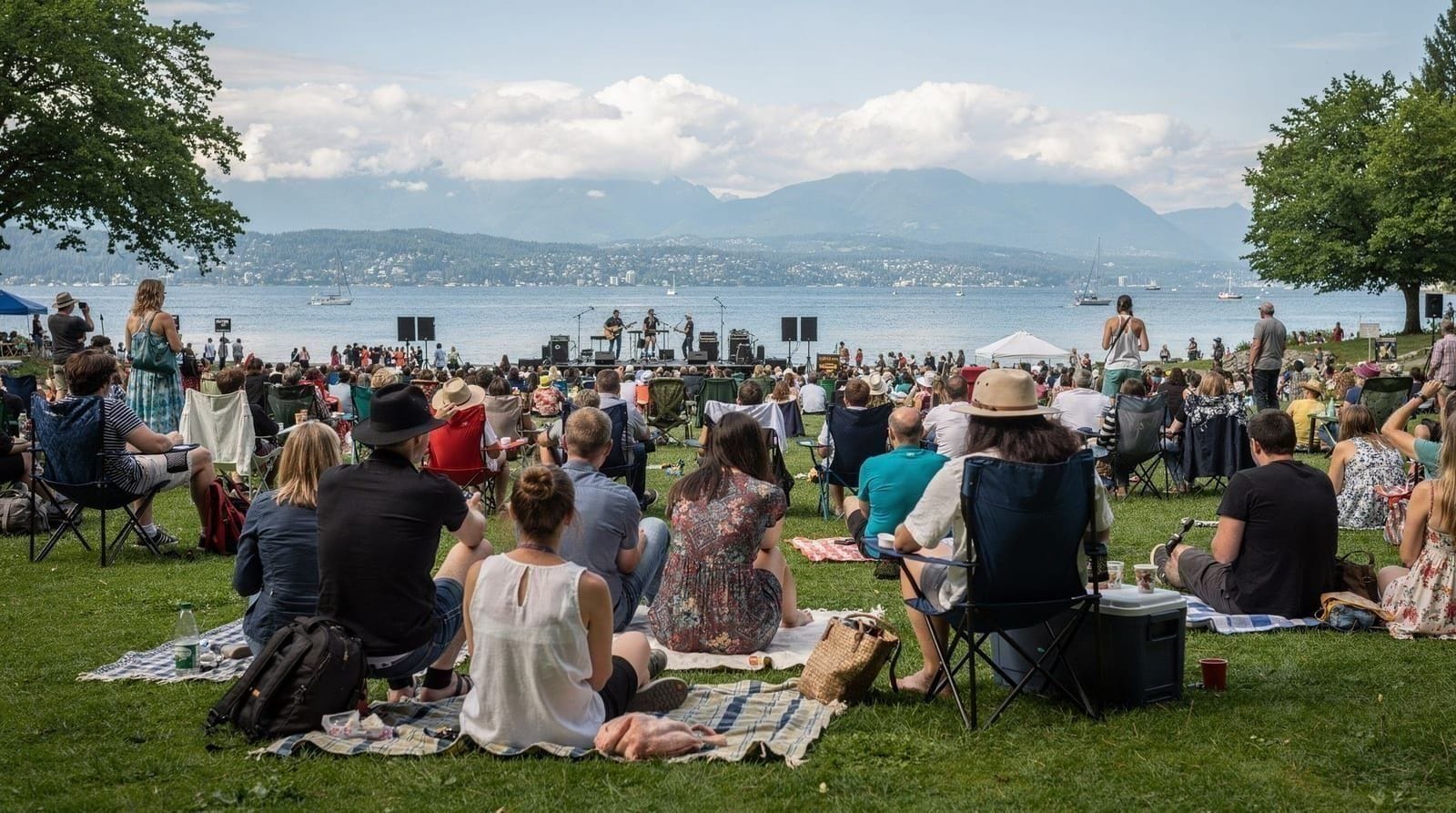
The festival also organizes specific events during its run — picnics, illuminated evening displays at select locations, and occasional street fairs — some of which may carry their own registration or small fees, but none of these are required to see the blossoms themselves. Checking the festival’s current-year dates and bloom map in the weeks immediately before travel is far more useful than planning around a fixed date set months in advance, given how much the timing can shift.
The festival’s picnic events in particular tend to be community-organized gatherings at specific parks rather than large ticketed affairs, and they’re a reasonable way to experience the season alongside locals rather than as a purely visitor-focused activity, though attendance isn’t required to enjoy the bloom on any given day. Checking the festival’s official website in the weeks before travel, rather than relying on a general web search that may surface outdated dates from a previous year, is the most reliable way to confirm the current season’s specific programming and bloom tracker link.
Photography tips
Cherry blossoms photograph best in soft, overcast light rather than harsh midday sun, which — somewhat ironically, given Vancouver’s rain reputation — means a cloudy spring day often produces better blossom photos than a bright one, since strong sunlight tends to wash out the delicate pink tones and create harsh shadows through the branches. Early morning, before street traffic and other visitors build up, is the best window for uncluttered shots along residential West End streets. For skyline-and-blossom combination shots, Queen Elizabeth Park’s elevated position works well in clearer weather, when the North Shore mountains are visible behind the trees.
Building a trip around blossoms
Since the bloom window is only two to three weeks wide in any given year, and the true peak within that window narrower still, it’s worth building flexibility into a trip rather than locking a single fixed date. A 3-4 day stay anchored in the second week of April, adjusted based on the festival’s live tracker once dates approach, gives reasonable odds of catching at least a strong partial bloom even if the exact peak shifts.
For travelers with fully fixed dates who can’t move around the calendar, arriving anywhere from late March through mid-April still offers a real chance of seeing some varieties in bloom, particularly given the staggered flowering across different tree types described above. The broader spring guide covers how to combine a blossom-focused stay with the rest of what April has to offer, and the best time to visit Vancouver guide places cherry blossom season within the full year-round comparison.
What else pairs well with a blossom trip
Cherry blossom season overlaps with the early edge of whale watching season and the start of better hiking weather, though neither is at its full strength yet in early-to-mid April — see the whale watching season guide for realistic April expectations versus the summer peak. VanDusen Garden’s own Sakura Days Japan Fair, typically held in April, pairs naturally with a blossom trip and adds a cultural program — tea ceremony demonstrations, taiko drumming, and similar — around the same seasonal theme.
For visitors staying multiple days, splitting time between blossom neighborhoods and a broader first-time orientation to the city, covered in the first-time visitor guide and the neighborhoods guide, makes for a well-rounded April itinerary rather than one built entirely around a single seasonal event. A 2-day itinerary timed to peak bloom covers the West End, Stanley Park, and Queen Elizabeth Park comfortably without rushing.
Where the trees came from
Vancouver’s cherry tree population traces back largely to a series of gifts and civic plantings through the 20th century, including donations tied to Japanese-Canadian community history and later citywide beautification programs that expanded the collection into the tens of thousands of trees it holds today.
That history is part of why the trees are so widely distributed through residential neighborhoods rather than concentrated in a single dedicated park the way some cities manage their blossom displays — Vancouver’s approach means the bloom shows up as a citywide backdrop to ordinary streets rather than a single ticketed destination, which is unusual among major cherry blossom cities and part of what makes the free, self-guided nature of viewing here work as well as it does.
How Vancouver compares to other cherry blossom cities
Travelers familiar with Tokyo’s or Washington DC’s cherry blossom seasons will find Vancouver’s version calmer and less crowded, even during peak bloom. There’s no single iconic gathering point comparable to DC’s Tidal Basin or Tokyo’s Ueno Park, and no comparable crowd density — Vancouver’s blossoms are spread thin enough across the city that even popular streets in the West End rarely feel packed the way a single-point destination does elsewhere. The trade-off is that Vancouver’s season lacks a singular postcard moment; what it offers instead is a genuinely pleasant, low-effort, low-cost way to experience peak spring across an entire city rather than a single curated garden.
Getting between blossom spots
The West End and Stanley Park are easily walkable together, and both are a short walk or quick bus ride from most downtown hotels. Queen Elizabeth Park and VanDusen Garden sit further out, on the city’s east side and west side respectively, and are best reached by a short taxi, rideshare, or bus ride rather than on foot from downtown — see the getting around Vancouver guide for exact routes and Compass Card fares.
Because the different viewing spots are spread across the city rather than clustered in one area, it’s worth picking two, at most three, locations for a single day rather than trying to cover the entire city’s bloom in one outing; a rushed, transit-heavy day tends to produce a worse experience than a slower visit to fewer, well-chosen spots.
Crowds during blossom season
Cherry blossom season draws a genuine bump in both domestic and international visitors specifically timed to the bloom, and it overlaps with BC’s spring break in many years, adding a second layer of local demand on top of blossom tourism. Even so, crowd levels at Vancouver’s blossom spots remain modest by comparison to summer’s peak tourist season or to other cities’ blossom destinations — weekday mornings in particular tend to be genuinely quiet even during peak bloom week. Weekend afternoons at the most photogenic West End blocks and at Queen Elizabeth Park see the heaviest foot traffic, so timing a visit for a weekday or early morning meaningfully improves the experience without any real cost or booking requirement.
What to wear and bring
Early April weather in Vancouver is transitional — mornings can start near 8°C with afternoons reaching 15°C or higher on a good day, and rain remains a real possibility even during peak bloom week. A light rain layer is worth carrying regardless of the forecast, since a shower doesn’t ruin blossom viewing the way it might other outdoor activities (wet blossoms against grey skies photograph differently, not necessarily worse).
Comfortable walking shoes matter more than any specialized gear, since a full blossom day typically involves several kilometres of walking between residential streets and park paths. A camera or phone with a reasonably wide lens covers most blossom shots well, though a longer lens helps for isolating individual branches against the sky rather than capturing an entire tree, which is a common technique among the photographers who return to the same West End blocks year after year during peak week.
A sample half-day blossom route
A workable half-day route starts in the West End, walking the residential blocks around Nelson, Comox, and Barclay streets before entering Stanley Park through one of its western entrances, picking up the Stanley Park Seawall for a shorter loop past the park’s own blossom trees near the southern edge.
From there, a short bus or taxi ride reaches Queen Elizabeth Park for elevated skyline views framed by blossoms, with VanDusen Garden a further short trip away as an optional paid add-on for anyone wanting a longer, curated finish to the day. This route covers the two strongest free viewing areas plus one paid option, fits comfortably into an afternoon, and avoids the cross-city backtracking that a less planned route risks.
Combining blossoms with the rest of a spring trip
Cherry blossoms rarely justify a trip on their own for visitors coming from far afield, and the strongest spring itineraries treat blossom viewing as one strong day within a broader 3-5 day visit rather than the entire trip’s purpose, since a bloom-only trip risks disappointment if the timing shifts by even a few days in either direction and there’s nothing else built into the plan to fall back on.
Pairing a blossom day with Granville Island, Gastown, and a North Shore outing to Capilano Suspension Bridge rounds out a spring visit without over-indexing on a single seasonal event that, by nature, only occupies a narrow window of any given day’s light and weather. The 3-day itinerary works well as a base structure, with a blossom-focused day substituted in during the appropriate week.
Common mistakes to avoid
The single most common mistake is booking a rigid one-day plan around a specific calendar date announced months ahead, then discovering on arrival that the actual peak shifted a week either direction — a flexible multi-day window checked against the live festival tracker closer to travel dates avoids this almost entirely.
The second is assuming every neighborhood blooms simultaneously; because varieties differ by area, a visitor who checks only one location and finds bare branches may simply be a week early or late for that specific spot while other areas are at full bloom. The third is overlooking VanDusen Garden as “just another park” — its mixed variety collection genuinely extends the usable viewing window beyond what street trees alone offer, which matters most for visitors whose fixed travel dates don’t line up neatly with the citywide peak.
Frequently asked questions — Cherry blossoms in Vancouver
What is the exact peak bloom date for Vancouver cherry blossoms?
There's no fixed date — peak bloom typically falls between April 5 and April 15, but it moves year to year based on how mild or cold the preceding winter and early spring were. The Vancouver Cherry Blossom Festival publishes a live bloom map closer to the season that tracks which neighborhoods and tree varieties are blooming week by week, which is far more reliable than planning around a specific calendar date months in advance.Where are the best neighborhoods to see cherry blossoms in Vancouver?
The West End and Queen Elizabeth Park are two of the most concentrated viewing spots, both with dense plantings of Akebono and Kanzan cherry varieties along residential streets and park paths. Kitsilano and parts of the West Side also have significant street tree coverage. VanDusen Botanical Garden adds a curated, ticketed option with mixed bloom timing across its varied collection, which can extend the viewing window beyond a single peak week.Do I need to pay to see cherry blossoms in Vancouver?
No — the vast majority of the city's cherry trees line public streets and free parks, so street-by-street viewing costs nothing. VanDusen Botanical Garden charges standard garden admission, but it's an optional add-on rather than a requirement for seeing blossoms, since the West End and Queen Elizabeth Park routes are entirely free.How long does the cherry blossom season last overall?
The full season, accounting for different varieties blooming at different times, spans roughly late March through mid-April, even though any single tree's bloom typically lasts only one to two weeks. Early-blooming varieties like Akebono peak first, with the showier double-flowered Kanzan variety typically following a week or two later, which is why the festival's overall window is wider than any one tree's individual bloom.What happens if I visit outside the peak bloom window?
Because different varieties bloom at different times across late March through mid-April, visitors arriving a week early or late from the true peak will usually still find some trees in bloom, particularly if checking the festival's variety map rather than assuming every tree peaks simultaneously. Visitors arriving in May or later have generally missed the season entirely, since even late varieties are typically finished by the last week of April.Is the Vancouver Cherry Blossom Festival a ticketed event?
The festival itself is largely free and consists of self-guided viewing routes, picnics, and some illuminated evening displays and street fairs at specific locations and dates. A handful of festival-organized events, like specific picnic gatherings or ticketed talks, may have separate registration, but the core experience — walking the blossom routes — doesn't require a ticket.
Top experiences
Bookable activities with verified prices and instant confirmation on GetYourGuide.