Bowen Island as a day trip from Vancouver
Vancouver: Bowen Island Boat Cruise with Dinner
How do you get to Bowen Island from Vancouver?
Take BC Ferries from Horseshoe Bay in West Vancouver, a crossing of roughly 20 minutes that lands directly in Snug Cove, Bowen Island's small village. It's straightforward as a foot-passenger trip if you're staying central and don't need a car once you arrive, since Snug Cove itself is entirely walkable.
Bowen Island is a real, genuinely popular day-trip destination reached by BC Ferries from Horseshoe Bay in West Vancouver, a crossing of roughly 20 minutes that lands directly in Snug Cove, the island’s small village. It’s become a well-established escape for people who want a change of pace without a long drive or an overnight commitment — hiking trails, beaches, a walkable village with shops and cafes, and yes, kayak and paddleboard rentals available locally if getting out on the water is part of the plan.
| Where | Snug Cove, Bowen Island, via BC Ferries from Horseshoe Bay |
| Cost | Around CAD 17–20 round trip on foot; CAD 35–45 with a vehicle |
| Time needed | Half a day minimum, comfortably a full day |
| Getting there | BC Ferries, roughly 20-minute crossing, plus the drive to Horseshoe Bay |
| Best time | Late spring through early fall for reliable weather; shoulder months for quieter trails |
What to pack for the day
Layered clothing is the sensible default for any outdoor day in this region, since weather on the water and in the forest can shift over the course of a day even when the mainland forecast looks settled. Comfortable walking shoes cover the Killarney Lake loop and general village wandering; anyone planning to add Mount Gardner or another longer trail should treat it as a proper hike and pack accordingly, with more water and sturdier footwear than a casual village day requires.
A swimsuit and towel are worth packing if there’s any chance of beach time or a kayak rental, and cash or a card for the village’s small shops and cafes, since it’s not the kind of place to assume every option takes every payment method. Sunscreen matters even on overcast days, given how much of the day trip happens outdoors.
Getting there: the ferry from Horseshoe Bay
BC Ferries runs the Horseshoe Bay to Snug Cove route frequently throughout the day, and the crossing itself is short enough that it barely interrupts the trip — about 20 minutes across Howe Sound, with reasonable views back toward the mainland and out toward the surrounding islands. Horseshoe Bay is in West Vancouver, reachable from downtown by car via the Sea to Sky Highway or by connecting bus service; budget extra time getting to the terminal itself, since Horseshoe Bay’s small footprint and limited parking can slow things down on busy days, particularly summer weekends.
Foot passenger vs. bringing a car. For a day trip focused on Snug Cove and the nearby trail network, going as a foot passenger is the simpler and cheaper option — you walk on, walk off, and the village itself is entirely walkable from the terminal. Bringing a car costs more, requires a vehicle reservation during busier periods to avoid a long wait in the vehicle line, and is only really worth it if you’re planning to explore the island’s more remote beaches or trailheads that sit a genuine drive from Snug Cove. Most first-time visitors doing a straightforward day trip are well served going on foot.
How Bowen Island compares to other North Shore day trips
Bowen Island is a genuinely different kind of outing from the paddling-focused destinations covered elsewhere in this cluster. Deep Cove and Indian Arm are built around getting on the water as the main activity, with hiking and village time as secondary add-ons; Bowen Island flips that emphasis, with the ferry crossing, the village, and the Killarney Lake loop as the core of the day, and kayaking or paddleboarding available as an optional extra rather than the centerpiece.
It’s also a longer round trip in practical terms than either Deep Cove or Granville Island, since it involves a ferry crossing rather than a SeaBus hop or a short walk, so it suits visitors with a full day free rather than a quick half-day outing.
If the appeal is specifically a boat crossing, a small-town atmosphere, and a slower pace, Bowen Island delivers that combination better than any of the other spots in this guide; if the priority is simply getting on the water for a paddle with minimal travel time, Deep Cove or Granville Island are the more direct options.
What Bowen Island actually is
Bowen Island sits in Howe Sound, close enough to the mainland that it functions almost like an extension of West Vancouver for day-trip purposes, while still having a genuine small-island identity of its own — it’s an incorporated municipality with a year-round resident population, not a park or an uninhabited nature reserve. It’s sometimes referred to locally as a laid-back escape valve for Vancouverites, popular precisely because the short ferry crossing makes it feel like a real getaway without requiring a full day just for transportation. The island’s terrain is a mix of forested hills, several small lakes, and a shoreline with coves and beaches of varying size, all radiating out from Snug Cove as the natural hub.
Snug Cove: the village at the ferry dock
Snug Cove is Bowen Island’s main village, sitting right at the ferry terminal, and it sets the tone for the whole island — small, low-key, and clearly built around a slower pace than the mainland. There’s a cluster of shops, cafes, and a general store within a short walk of the dock, enough to fill an hour browsing or grabbing a coffee before heading out to the trails. It’s not a shopping destination in any serious sense, and that’s part of the appeal; it functions more as a pleasant, low-effort start and end point for a day mostly spent outdoors.
Crippen Regional Park and the Killarney Lake loop
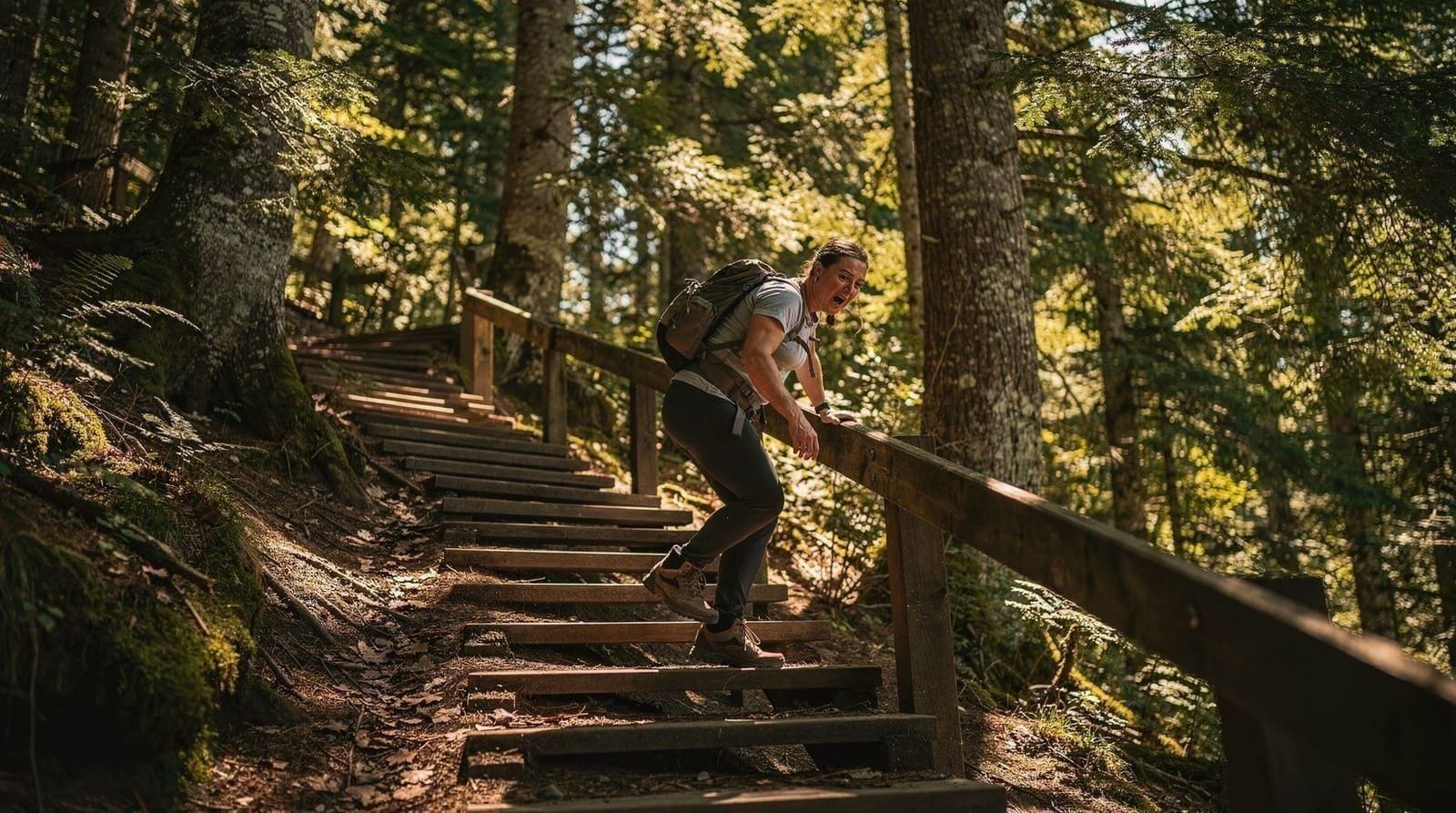
Crippen Regional Park sits immediately behind Snug Cove and is the easiest introduction to Bowen Island’s outdoor side, a mix of forest trail and open space within easy walking distance of the ferry dock. From within the park, trails lead to Killarney Lake, and the loop around the lake itself is the island’s best-known easy hike — flat to gently rolling, well-shaded, and manageable for most fitness levels in an hour or two depending on pace and stops. It’s a solid choice for visitors who want a genuine forest walk without a demanding climb, and it pairs naturally with a picnic or a rest at the lake itself partway around.
Beyond Killarney Lake, Bowen Island has a broader network of trails extending toward the island’s interior and out to various points along the shoreline, though those routes generally require more time, more elevation, or a car to reach the trailhead efficiently. For a straightforward day trip on foot from the ferry, Crippen Regional Park and the Killarney Lake loop are the realistic core of the hiking plan.
Getting around beyond Snug Cove
If Crippen Regional Park and Killarney Lake cover what you’re after, walking from the ferry is entirely sufficient. For anyone wanting to reach further points on the island — more remote beaches, the trailhead for Mount Gardner, the island’s highest point and a considerably more strenuous hike than the Killarney Lake loop, or other viewpoints — options narrow without a car.
Some visitors bike around the island, either bringing a bike on the ferry or renting one locally, which extends your range well beyond what’s comfortably walkable while still keeping the trip car-free. A small local transit or shuttle option may also be available depending on the season; it’s worth checking current schedules once you’re planning the specific day, since service on a small island like this can vary.
For a day trip with limited time, though, sticking to the walkable core around Snug Cove and Crippen Regional Park is the more realistic plan, and it’s genuinely enough to fill a satisfying day without needing to chase the more remote corners of the island.
A sample day-trip plan
A reasonable structure for a car-free day trip: catch an early or mid-morning ferry from Horseshoe Bay, arrive in Snug Cove, and start with the Killarney Lake loop through Crippen Regional Park while the trail is quieter. Back in the village by early afternoon, grab lunch at one of the cafes near the dock, then spend the remaining time either browsing the village shops, relaxing at one of the nearby beaches if the weather is good, or renting a kayak or paddleboard for an hour if being on the water appeals.
Aim to be back at the terminal with buffer time before your return sailing, since missing a specific departure on a route with limited frequency can mean a longer wait than expected. The whole loop comfortably fits into a single day without feeling rushed, which is a large part of why Bowen Island works so well as a day trip rather than requiring an overnight stay.
Best time of year to visit
Late spring through early fall is the most reliable window, with July and August bringing the busiest ferries and the fullest village, but also the most consistent weather for hiking and any time at the beach. Shoulder season — May, June, September — offers a quieter version of the same experience, with a real chance of good weather and noticeably thinner crowds both on the ferry and around Snug Cove. Winter is quieter still and the island’s trails and village remain accessible, though shorter daylight hours and wetter conditions make it a less obvious choice for a first visit focused on hiking.
Beaches and the waterfront
Bowen Island has several beaches worth knowing about, ranging from small pebble coves near Snug Cove to slightly larger stretches further around the shoreline. None of them are the wide sand beaches you’d find further afield, but they’re pleasant, generally uncrowded compared to mainland beaches, and a reasonable place to spend an hour if the weather cooperates. The waterfront around Snug Cove itself, including the marina, is worth a walk regardless of whether you plan to swim, since it’s a good vantage point for the harbor and passing boats.
Kayaking and paddleboarding on Bowen Island
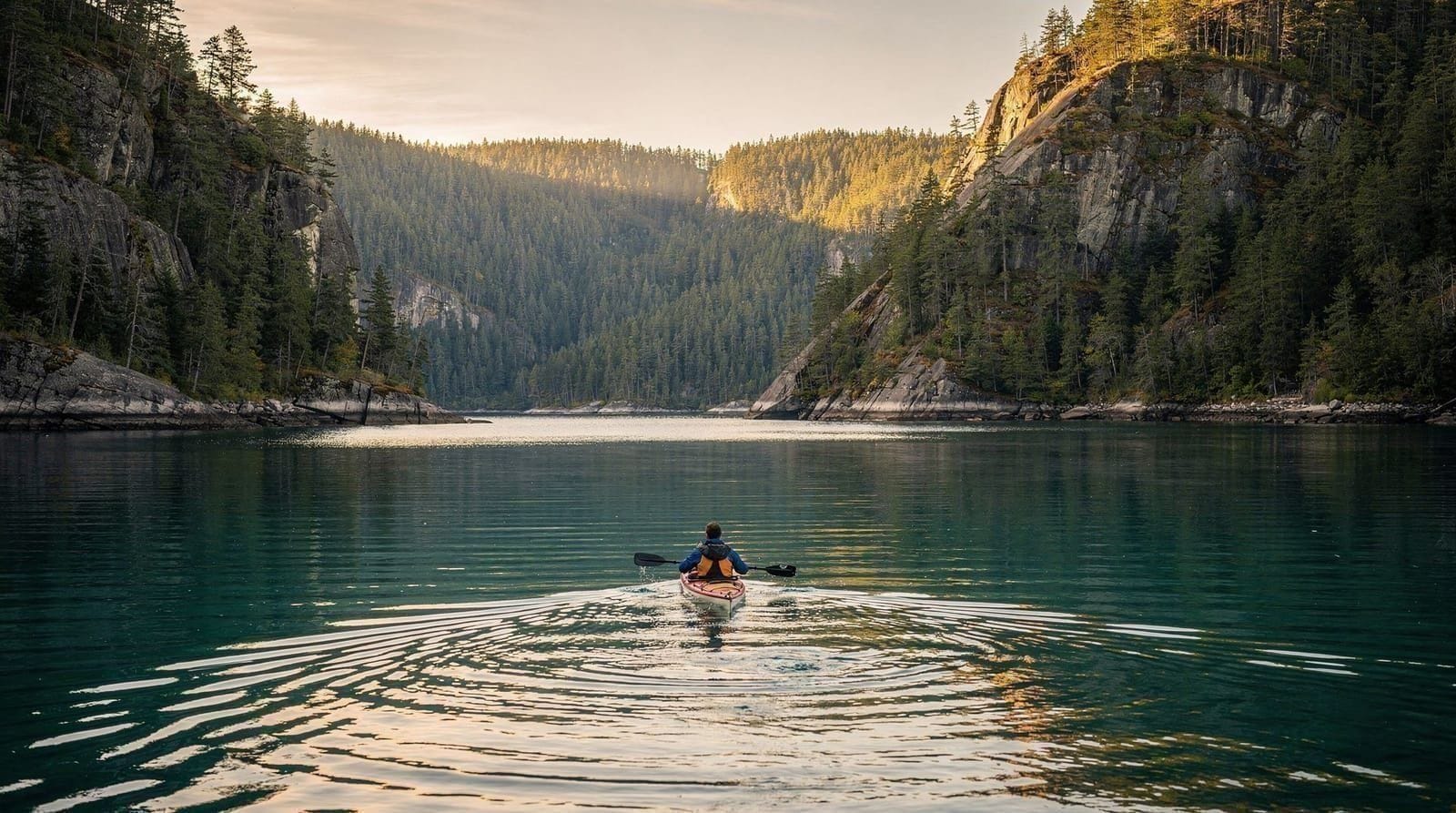
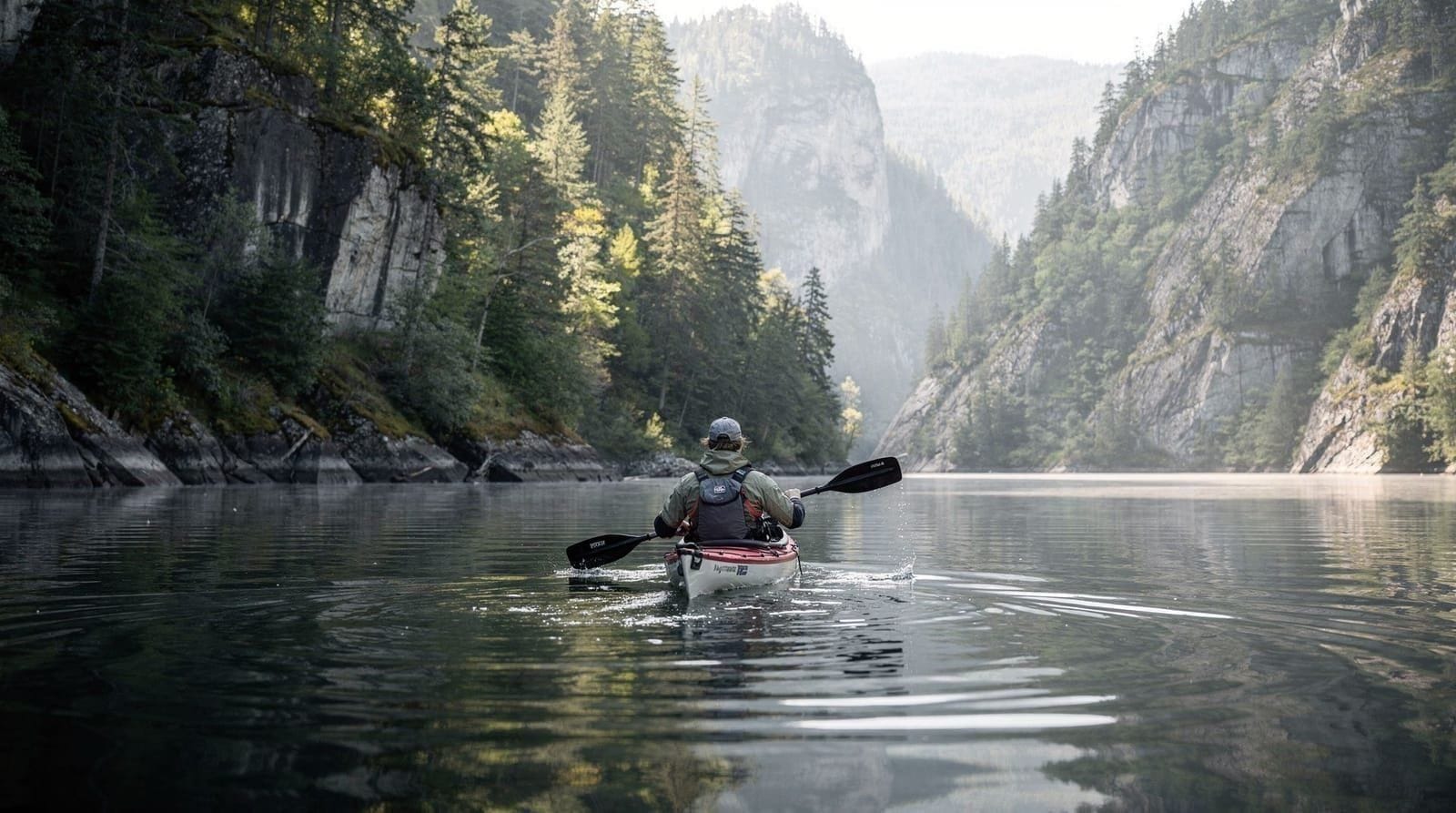
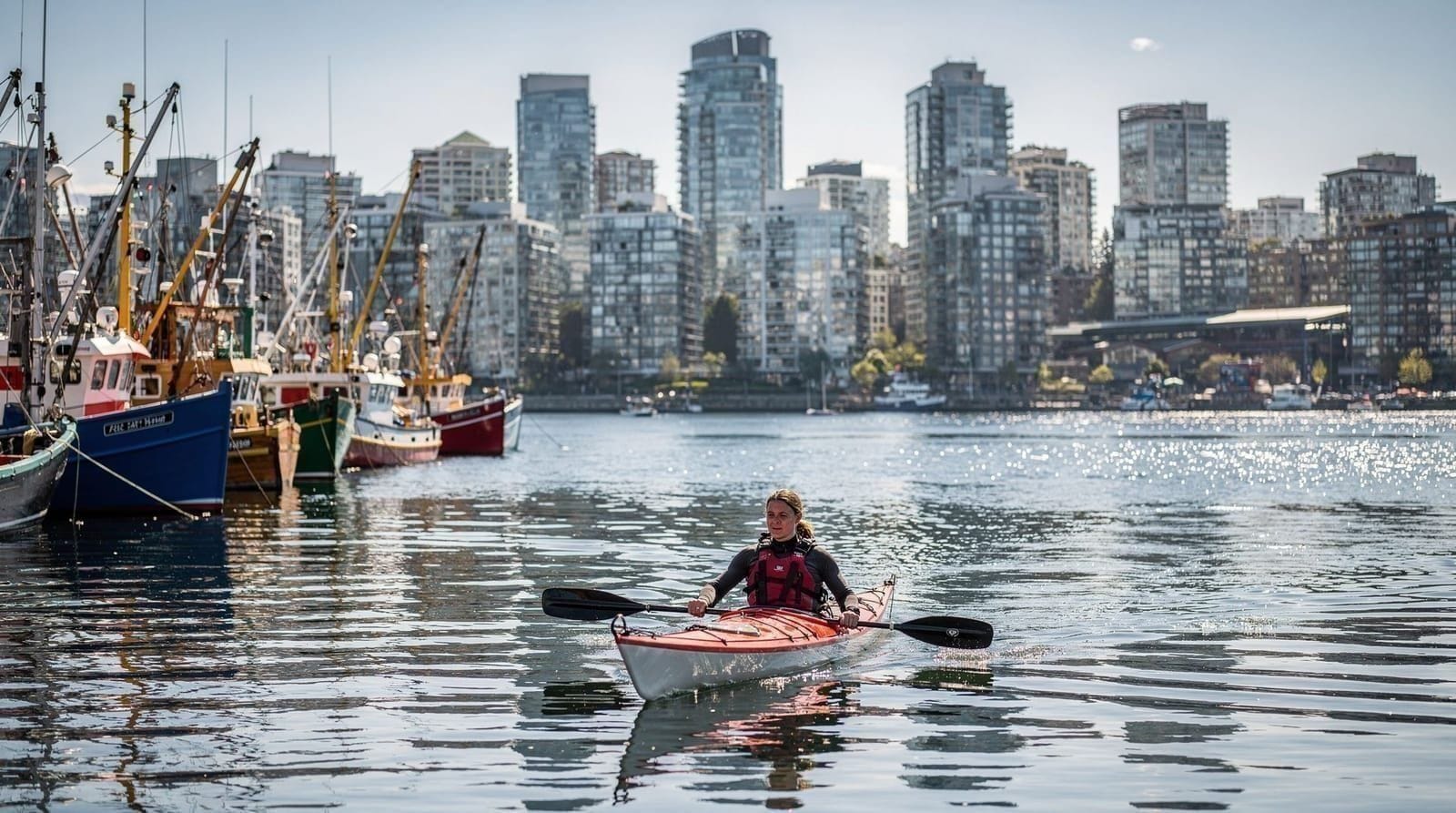
Kayak and paddleboard rentals are available locally on the island, generally through small operators based near the Snug Cove waterfront, and renting for an hour or two is a reasonable way to add time on the water to a day trip that’s otherwise focused on hiking and the village. Conditions around Bowen Island are generally more sheltered than open coastal water further out, though it’s still real ocean water, cold year-round the way the rest of the region’s coastline is — the same cold-water caution that applies everywhere else in this kayaking cluster applies here too.
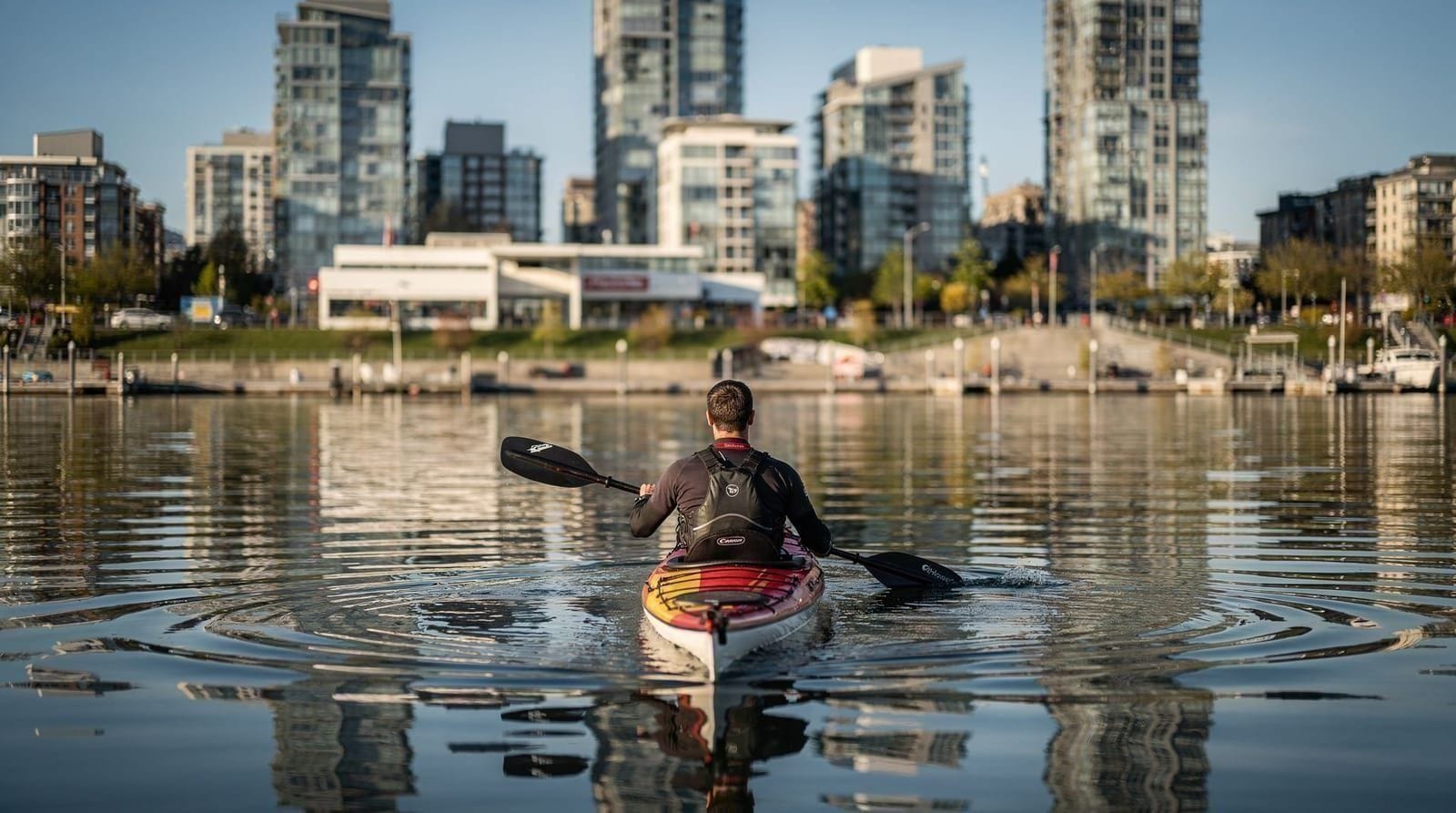
If paddling is the main priority for your day rather than a nice-to-have add-on, Deep Cove or Granville Island on the mainland offer more established rental infrastructure and, in Deep Cove’s case, direct access to Indian Arm’s more dramatic scenery; Bowen Island’s water activities are better thought of as a pleasant complement to a day built around the village and trails rather than the main event.
The Bowen Island boat cruise with dinner: a different kind of experience
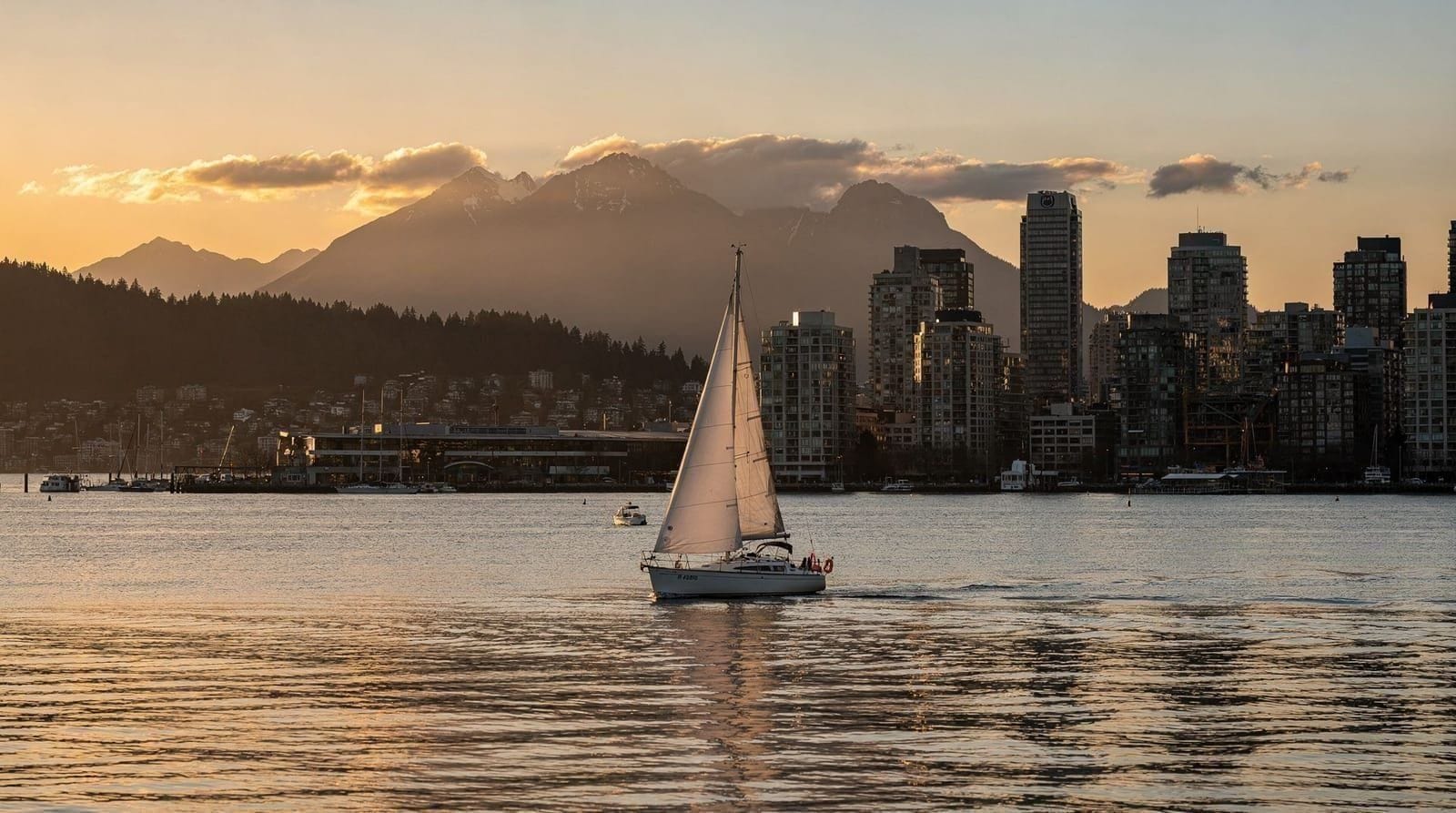
Worth being precise about this one, since it’s easy to conflate with paddling given the “Bowen Island” name overlap: the Bowen Island boat cruise with dinner is a scenic evening cruise on a larger vessel that includes a dinner service, passing by Bowen Island as part of its route rather than landing you there for a day of hiking and paddling.
It’s a legitimate and genuinely different way to experience the scenery around Howe Sound and Bowen Island — from the water, in the evening, with a meal included — but it’s not a substitute for the ferry day trip covered in the rest of this guide, and it’s definitely not a kayaking product. If an evening on the water with dinner sounds more appealing than a daytime hike-and-village visit, or you want to add it as a separate outing on a different day of your trip, it’s worth booking with that framing in mind rather than expecting it to double as your Bowen Island day trip.
Eating on the island
Snug Cove’s dining options are limited compared to anything on the mainland, which is expected for a village this size, but there’s enough to put together a decent lunch or coffee stop without planning ahead — a general store, a handful of cafes, and a few small restaurants within a short walk of the ferry dock.
It’s not a food-focused day trip destination the way Granville Island is, and treating it as one will disappoint; the better mindset is that the village provides a pleasant, unhurried break between outdoor activities rather than a dining destination in its own right. Bringing snacks or a packed lunch for the Killarney Lake loop is a reasonable backup plan, particularly if you’re visiting on a quieter day when fewer places might be open.
What the ferry actually costs and how booking works
BC Ferries prices the Horseshoe Bay–Snug Cove route the way it prices its other short routes — a per-passenger fare plus an additional fare if you’re bringing a vehicle, generally inexpensive enough that it’s not a meaningful factor in deciding whether to make the trip. Foot passengers typically don’t need a reservation and can walk on with minimal wait outside of the busiest summer weekends.
Vehicles, on the other hand, can face longer waits at Horseshoe Bay during peak periods, and a reservation, where available, removes the uncertainty of whether you’ll make a specific sailing. Checking the current BC Ferries schedule and fare page before heading out is worth doing regardless, since sailing times and any reservation requirements can shift seasonally.
Planning a realistic day
A full day trip built around the ferry, Snug Cove, and the Killarney Lake loop is comfortably achievable without a car, and it leaves reasonable time for lunch or a coffee stop in the village on either end. Checking the BC Ferries schedule before heading to Horseshoe Bay is worth doing regardless of the day of the week, since sailing frequency varies and missing a departure means a longer wait than you might expect for a route this short. Summer weekends bring more foot and vehicle traffic on the ferry, so arriving with some buffer time at Horseshoe Bay is sensible if you have a specific sailing in mind.
For anyone weighing Bowen Island against other ways to spend a day on or near the water around Vancouver, it sits at the more relaxed end of the spectrum compared to a paddling-focused day at Deep Cove or an Indian Arm trip, and it’s a genuinely different experience from the urban paddle around Granville Island or a sailing outing on the water closer to downtown.
If the goal is a slower-paced island day with a bit of everything — a short ferry crossing, a walkable village, an easy hike, and the option of some time on the water — Bowen Island delivers that combination about as well as anywhere within easy reach of the city.
None of this requires much advance planning beyond checking the ferry schedule and a rough weather forecast. It’s one of the more forgiving day trips near Vancouver precisely because the ferry crossing is short and frequent enough that a missed connection or a change of plan mid-day rarely turns into a real problem — worst case, you wait for the next sailing back, with a village and a waterfront that are pleasant enough to make that wait feel like part of the day rather than a delay.
What it costs
Bowen Island is one of the cheaper day trips within reach of Vancouver, and the main cost is the ferry itself rather than anything on the island.
| Item | Approximate cost (CAD) |
|---|---|
| BC Ferries passenger fare, round trip | $17–20 |
| BC Ferries vehicle fare, round trip | $35–45 |
| Kayak or paddleboard rental, per hour | $25–35 |
| Lunch or coffee in Snug Cove | $12–25 per person |
| Bowen Island boat cruise with dinner, per person | $90–130 |
A foot-passenger day, including lunch and a coffee stop, typically comes in well under CAD 50 per person, which is a large part of why the island works so well as a spontaneous, low-stakes plan rather than something that needs to be budgeted around.
Frequently asked questions — Bowen Island as a day trip from Vancouver
Do I need a car to visit Bowen Island?
No, not for a day trip focused on Snug Cove and nearby trails. The village and Crippen Regional Park are walkable from the ferry terminal, and the Killarney Lake loop starts within reasonable walking distance too. A car helps if you want to reach the island's more remote beaches or trailheads, but bringing one on the ferry adds cost and a reservation requirement in peak season.How long is the ferry ride to Bowen Island?
The BC Ferries crossing from Horseshoe Bay to Snug Cove takes roughly 20 minutes, making Bowen Island one of the more convenient short island getaways from the Vancouver area.Can you kayak or paddleboard at Bowen Island?
Yes, kayak and paddleboard rentals are available locally on the island, generally through small operators based near Snug Cove. It's worth checking current availability and conditions once you arrive rather than assuming a specific rental will be open, since options can vary by season.Is the Bowen Island boat cruise with dinner the same as a kayak tour?
No. It's a separate product entirely — a scenic evening boat cruise that includes a dinner service and passes by Bowen Island, not a paddling or kayaking experience. It's worth booking for the cruise and dinner itself, not as a substitute for getting out on the water under your own power.How much does a Bowen Island day trip cost overall?
For a foot passenger, the BC Ferries fare is the main cost, around CAD 17–20 round trip, plus whatever you spend on lunch, coffee, or a kayak rental in Snug Cove. A couple can comfortably do the whole day, food included, for well under CAD 100 combined, making it one of the least expensive regional day trips from Vancouver.Can you visit Bowen Island without a car?
Yes, easily, as long as you have a way to reach Horseshoe Bay itself. Once you're on the ferry, Snug Cove, Crippen Regional Park, and the Killarney Lake loop are all walkable from the terminal, so a car is only useful for reaching the island's more remote beaches or trailheads.
Top experiences
Bookable activities with verified prices and instant confirmation on GetYourGuide.