Sea-to-Sky day trip from Vancouver — Squamish and the gondola without Whistler
Vancouver: Full-Day Gondola Tour to Squamish
What is a Sea-to-Sky day trip and how is it different from a Whistler day trip?
A Sea-to-Sky day trip focuses on the highway corridor itself — Shannon Falls, the Sea to Sky Gondola, and Squamish — rather than continuing another hour north to Whistler. It's a shorter, more flexible day than a full Whistler round trip, typically 5 to 7 hours door to door instead of 10-plus, and suits travelers who want mountain scenery without a full-day commitment.
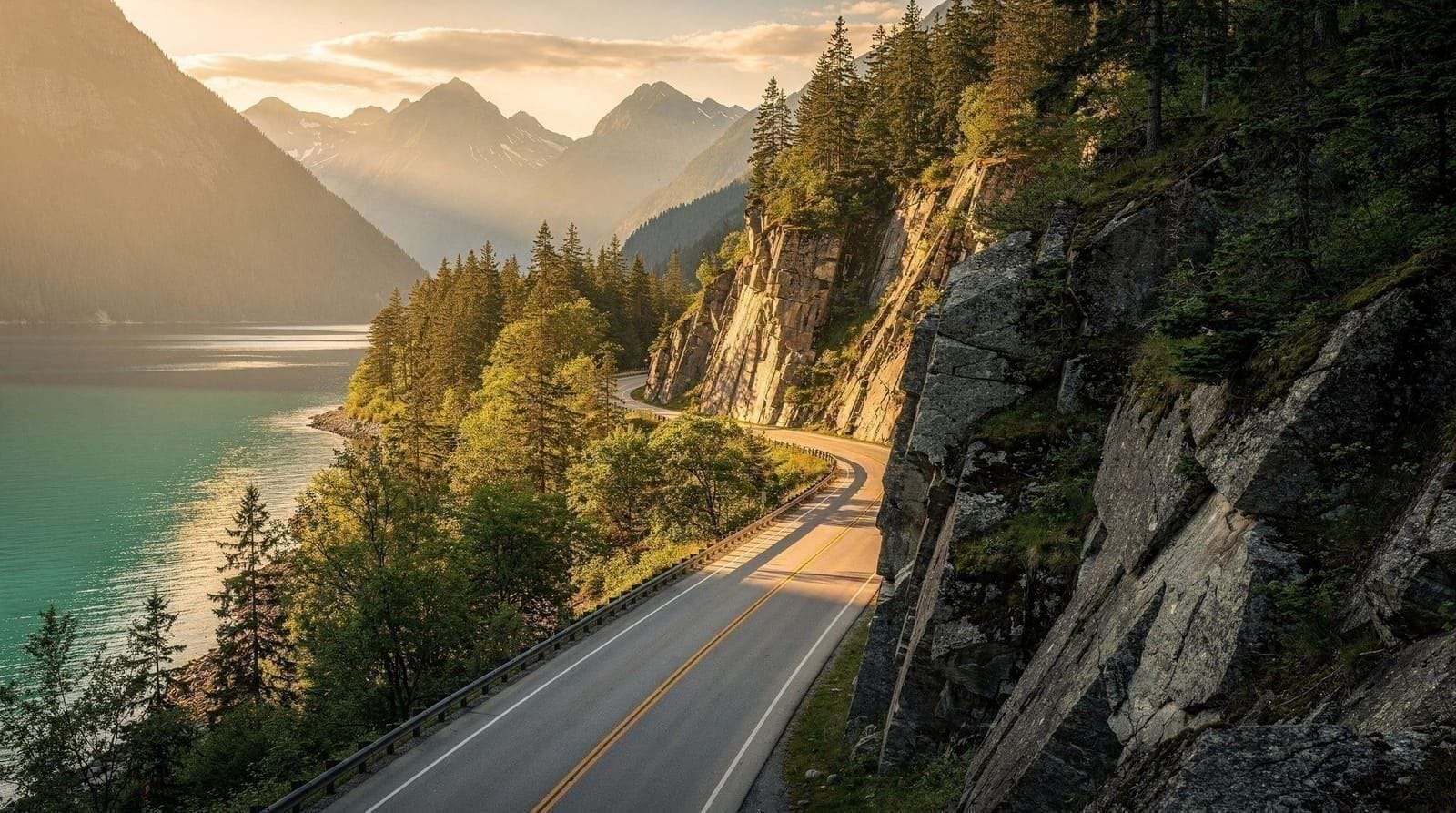
The Sea-to-Sky Highway between Vancouver and Whistler is often treated as pure transit — the road you drive to get to the ski resort — but the corridor itself holds enough on its own to justify a dedicated day trip that never actually reaches Whistler Village. For travelers with limited time, or anyone who’s already done Whistler and wants a shorter, different day, treating the Sea-to-Sky corridor as the destination rather than the route changes the whole shape of the day.
| Where | Shannon Falls, Sea to Sky Gondola, downtown Squamish |
| Time needed | 5-7 hours door to door |
| Cost | Under CAD 150 for two, self-driven |
| Getting there | 45min-1hr drive from Vancouver, or Squamish Connector bus |
| Best time | May–October |
| Booking | Gondola ticket ahead avoids summer weekend base-station lines |
Why stop short of Whistler
A full Whistler day trip is a genuine commitment — 10 to 12 hours door to door once travel time and time in the village are added together, as covered in the Whistler day trip guide. Stopping at Squamish and the gondola instead cuts that significantly: the drive from Vancouver to Squamish is only 45 minutes to an hour, versus 2 to 2.5 hours to Whistler, which means a 5-to-7-hour round trip is realistic even with a leisurely pace at each stop. This matters for travelers with only a half-day free, families with young children who don’t want an exhausting 10-hour outing, or anyone who’s already booked a separate Whistler visit and wants a shorter, complementary day.
Shannon Falls
Just south of downtown Squamish, Shannon Falls is British Columbia’s third-highest waterfall and one of the easiest high-impact stops on the entire highway — a flat, paved path of about five minutes from the parking lot delivers a full view of the falls, with no hiking fitness required. It’s free, well-signed from Highway 99, and busiest on summer weekend afternoons; an early or later visit avoids the worst of the parking-lot crowding. The falls run fullest in late spring and early summer during snowmelt, and noticeably thinner by late summer in dry years.
The Sea to Sky Gondola
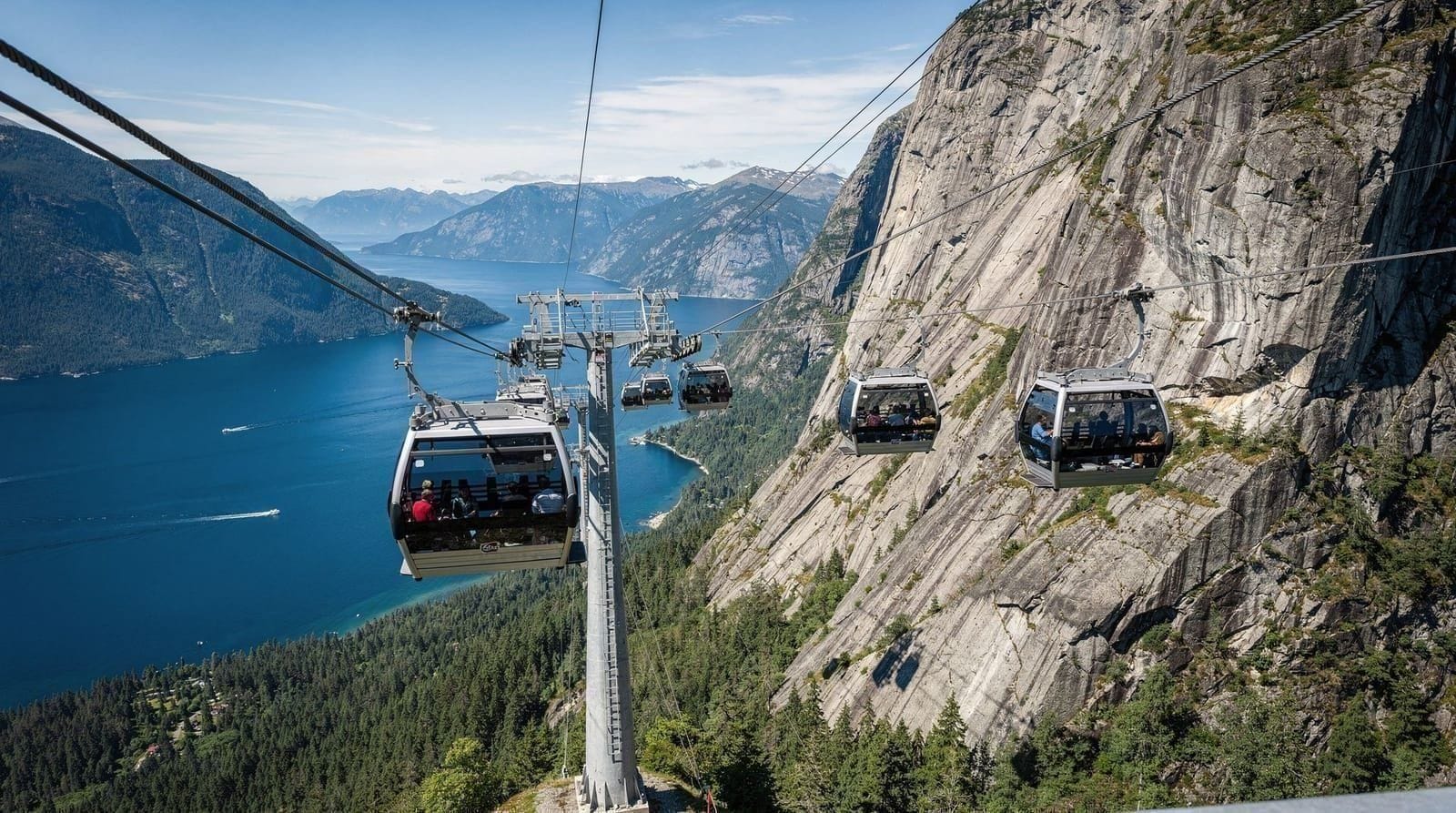
The Sea to Sky Gondola climbs from near sea level to 885 metres on Mount Habrich, delivering sweeping views over Howe Sound, the Stawamus Chief, and the surrounding Coast Mountains in about a 10-minute ride. At the top, a network of short walking trails, a suspension bridge, and a viewing platform extend the visit, and there’s a restaurant for those wanting to make a longer stop of it.
A round trip including the gondola ride and some time at the summit runs 1.5 to 2.5 hours depending on how much walking you do once up top. Booking a Sea to Sky Gondola admission ticket ahead of a summer weekend visit avoids the ticket-line wait that builds at the base station by mid-morning.
Squamish itself
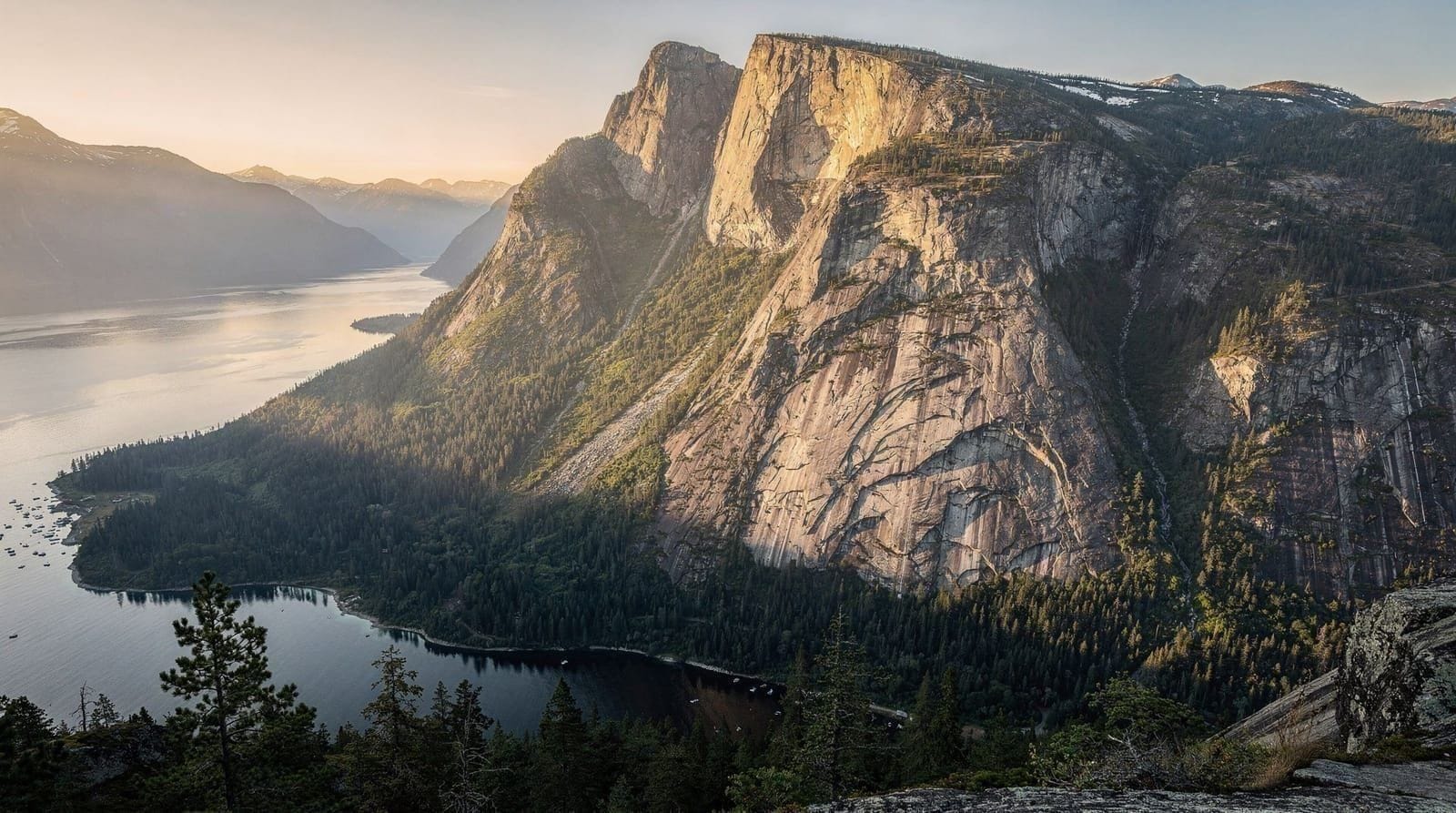
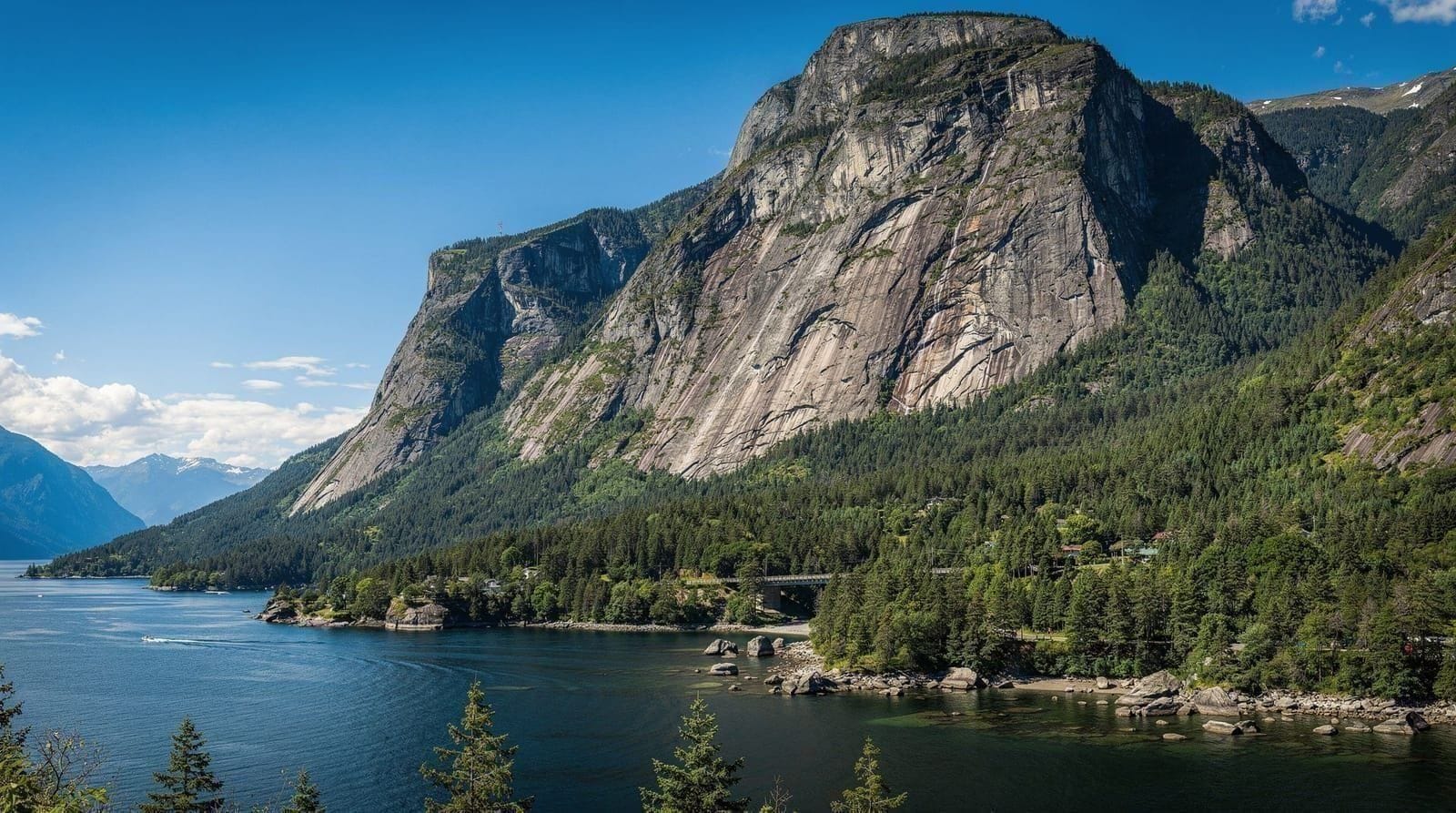
Downtown Squamish has grown considerably as an outdoor recreation hub in recent years, and it’s worth a stop beyond just the gondola and falls. The Stawamus Chief — a massive granite monolith visible from the highway — is one of the most significant rock-climbing destinations in Canada, and even non-climbers can appreciate the scale from the base or from a short viewpoint trail. Squamish’s downtown core has a growing selection of cafes and breweries that make a reasonable lunch stop, a welcome break from the more tourist-oriented dining directly at the gondola base or Shannon Falls parking areas.
Should you drive or book a tour
Self-driving suits this trip well, since the distances are shorter and the parking situation at each stop, while it can be busy on peak weekends, is generally more manageable than Whistler’s summer day-lot crunch. A rental car for the day runs roughly CAD 60 to 90, plus fuel, putting a self-driven Sea-to-Sky day comfortably under CAD 150 for two people before gondola admission.
A guided full-day Sea to Sky Gondola tour from Vancouver is still a reasonable option for travelers without a car, handling both the drive and, usually, a Shannon Falls stop as part of the itinerary. Adventure-focused travelers wanting more than sightseeing should look at a whitewater rafting trip on the Elaho River near Squamish, which turns the same general trip into a genuinely active day rather than a scenic drive with stops.
What it costs
| Item | Approximate cost (CAD) |
|---|---|
| Rental car, half-day | $40–60 |
| Fuel round trip | $15–20 |
| Sea to Sky Gondola admission, adult | $60–70 |
| Guided full-day tour, per person | $130–180 |
| Lunch in Squamish | $18–30 per person |
These figures assume a self-driven trip for two people sharing a rental car; a solo traveler on the bus with gondola admission and lunch can complete the whole day for well under CAD 100, making this one of the more budget-friendly regional day trips available from Vancouver regardless of which transport method is chosen.
Parking and arrival timing
Parking at both Shannon Falls and the Sea to Sky Gondola base fills noticeably by mid-morning on summer weekends, and overflow parking at the gondola in particular can add a 10-to-15-minute walk to the base station during the busiest periods. Arriving before 9:30am on a Saturday or Sunday between June and August avoids most of this — a genuinely useful piece of timing advice given how much smoother the rest of the day runs without a parking search eating into the visit. Weekday visits, where your schedule allows it, sidestep the issue almost entirely even in peak summer.
Best time of year
Late spring through early fall (May–October) offers the fullest experience — Shannon Falls runs strongest with spring snowmelt, the gondola summit trails are snow-free and fully accessible, and daylight supports a relaxed pace without rushing. Winter is still workable for the gondola specifically, which operates year-round and offers snowshoeing at the summit in season, but Shannon Falls is less dramatic in colder months and some summit trails may be snow-covered or require additional gear.
Combining with other stops
This trip pairs naturally with a broader look at the corridor. The dedicated Squamish day trip guide goes deeper into the town itself, including climbing and rafting options beyond what fits into a gondola-focused day, while the Sea to Sky Gondola guide covers the attraction in more detail for anyone prioritizing it specifically. Travelers who decide mid-trip that they have time and energy to push on to Whistler can simply continue north — the drive from Squamish to Whistler Village is only about 50 minutes further — turning this into the front half of a full Whistler day rather than a standalone trip.
Getting there without a car
For travelers without a rental car, a scheduled bus service (commonly branded as the Squamish Connector) runs multiple times daily between downtown Vancouver and Squamish, taking roughly an hour and costing a fraction of a guided tour.
It’s a workable option for anyone comfortable managing their own time at each stop rather than following a set itinerary, though it doesn’t include transport to Shannon Falls or the gondola base from the Squamish bus stop — a short taxi ride or a 20-to-30-minute walk covers that last stretch, depending on where the bus drops off relative to Highway 99. Travelers who want the door-to-door convenience without driving themselves are generally better served by the guided tour option, which handles every leg of the trip directly.
A brief history of the corridor
The Sea-to-Sky Highway’s current form is relatively recent — a major multi-year widening and safety upgrade, completed ahead of the 2010 Winter Olympics held in Whistler, transformed what had been a narrower, more accident-prone route into the divided highway seen today, with additional passing lanes and improved guardrails on the steepest sections near Porteau Cove and Britannia Beach.
Squamish itself has a longer industrial history tied to logging and, at Britannia Beach just south of town, a former copper mine now preserved as the Britannia Mine Museum — a worthwhile stop for anyone with extra time and an interest in the region’s mining history, distinct from the natural scenery that dominates most Sea-to-Sky itineraries. The highway itself begins its climb out of the Lower Mainland at West Vancouver, passing through Horseshoe Bay before the road narrows into its more scenic, coastal-hugging stretch toward Britannia Beach and Squamish.
Weather and what to pack
Coastal mountain weather along this corridor shifts quickly, and it’s common to leave a sunny Vancouver morning and arrive at the gondola summit in noticeably cooler, sometimes cloudier conditions — elevation alone accounts for several degrees of difference, and wind at the summit adds to the effect. A light jacket is worth carrying regardless of season, and closed-toe shoes with reasonable grip matter more here than in most of Vancouver’s flatter city attractions, given the paths at Shannon Falls and around the gondola summit. Rain is a genuine possibility outside the July–August window and doesn’t typically close the gondola, though it does reduce the visibility that’s much of the summit’s appeal.
Traveling with kids
This trip scales well for families, arguably better than a full Whistler day given the shorter overall time commitment. The Shannon Falls walk is flat and short enough for most kids to manage easily, and the Sea to Sky Gondola ride itself tends to be a highlight — an enclosed cabin, a short ride, and a payoff view that doesn’t require much patience from younger children. The summit’s suspension bridge and short trails give kids room to move around without a long, tiring hike. Families should still budget for the drive time itself, particularly if travelling with car-sickness-prone children on the highway’s more winding sections north of Horseshoe Bay.
Comparing the cost against a full Whistler day
Because this trip covers less ground, it’s meaningfully cheaper than a full Whistler day trip in most categories — less fuel, less time on a rental car, and the gondola admission alone is a smaller expense than a Whistler lift ticket or the Peak 2 Peak Gondola. For budget-conscious travelers deciding between the two, a Sea-to-Sky-only day delivers a large share of the corridor’s scenic appeal — arguably the most photogenic single stretch of the whole highway — for a fraction of the time and cost of the full Whistler round trip.
Hiking the Stawamus Chief for fitter travelers
Beyond the roadside viewpoints, the Stawamus Chief itself offers one of the region’s most rewarding hikes for travelers with the time and fitness for it — a steep but well-maintained trail to any of three summit peaks, taking roughly 2 to 4 hours round trip depending on which peak and how far you go.
It’s a genuinely different way to experience the same landmark most day-trippers only view from the highway pullout, with expansive views over Howe Sound from the top that rival or exceed the gondola’s summit views. Fitting the hike into a day trip that also includes the gondola and Shannon Falls isn’t realistic — the hike alone consumes most of a half-day — so travelers should treat it as an alternative to, rather than an addition to, the gondola-focused itinerary described above.
Photography along the corridor
The Sea-to-Sky corridor is one of the most photographed stretches of highway in British Columbia, and a few spots consistently deliver the best results. The Furry Creek and Porteau Cove pullouts, roughly 20 to 30 minutes north of Horseshoe Bay, offer some of the most expansive Howe Sound views along the entire drive and are far less crowded than Shannon Falls or the gondola base. The gondola summit itself is best photographed in the hour or two after opening, before midday haze and the fullest crowds arrive, and Shannon Falls photographs most dramatically in late spring when snowmelt keeps the flow at its heaviest.
Where to eat in Squamish
Downtown Squamish has developed a genuine dining and coffee scene distinct from the more tourist-facing options directly at the gondola base, and it’s worth the short detour off Highway 99 rather than defaulting to whatever’s closest to the parking lot. A handful of breweries and cafes cluster around Cleveland Avenue, Squamish’s main commercial street, offering a more relaxed, less rushed lunch stop than the gondola’s on-site restaurant, which tends toward standard tourist-attraction pricing and pace.
Fitting this into a longer regional trip
Travelers building a longer Sea-to-Sky itinerary rather than a single day trip should look at the 3-day Sea-to-Sky road trip itinerary, which extends this same corridor into Whistler and beyond with overnight stops along the way. For a single-day visit, though, the trip described here — Shannon Falls, the gondola, and downtown Squamish — represents a genuinely complete, well-paced day rather than a truncated version of something bigger, and doesn’t need a Whistler stop to feel worthwhile on its own terms.
How it compares to other Vancouver day trips
Among the region’s short outdoor day trips, this one sits closest in character to a Grouse Mountain or Capilano Suspension Bridge outing on the North Shore — a gondola or short hike delivering big mountain views without a full-day commitment — but stretched across a slightly longer drive and a genuinely different landscape further up the coast.
Compared to a Bowen Island day trip, which trades mountains for a quieter island atmosphere reached by a short ferry, the Sea-to-Sky corridor is the better choice for travelers who specifically want alpine views and a working mountain-town stop; Bowen Island suits those wanting a slower, more low-key half-day closer to the city.
Squamish’s growing food and coffee scene
Beyond the quick lunch stop mentioned above, Squamish has developed enough of an independent dining identity in recent years that some travelers now build a chunk of the day trip specifically around it, rather than treating food purely as a refueling stop between the falls and the gondola. A mid-afternoon coffee or a proper sit-down lunch downtown, away from the gondola base’s more standard tourist-attraction food service, is a reasonable way to slow the day’s pace if the falls and gondola alone leave time spare before the drive back.
What a rushed versus relaxed version of this day looks like
A rushed version — Shannon Falls for ten minutes, the gondola for 90 minutes, straight back to Vancouver — can be done in about 4 hours round trip, useful for travelers genuinely squeezed for time. A relaxed version adds a proper lunch in Squamish, more time at the gondola summit trails, and unhurried stops at Furry Creek or Porteau Cove on the way back, stretching the same day to a full 7 hours. Neither is wrong; deciding which version fits before setting out avoids the common trap of planning a relaxed day but running the schedule of a rushed one.
The honest verdict
Top experiences
Bookable activities with verified prices and instant confirmation on GetYourGuide.