Grouse Mountain with kids — grizzlies, coaster and pacing tips
Grouse Mountain Skyride Admission Ticket
Is Grouse Mountain good for kids?
Yes — the grizzly bear refuge, lumberjack shows and alpine coaster are all built with families in mind, and the Skyride gondola ride itself is a genuine highlight for most children. Most families spend 3-5 hours at the summit; the Grouse Grind hiking trail, by contrast, is a serious workout better suited to older kids and adults.
| Best for | Ages 4+ (Ultimate pass); Grind not for young kids |
| Time needed | 3-5 hours for a well-paced visit |
| Cost | Around CAD 85-90/adult (Ultimate day pass) |
| Family budget | Roughly CAD 400-500 for a family of four, all-in |
| Getting there | SeaBus + bus 236, or 20-25 min drive |
Among Vancouver’s North Shore attractions, Grouse Mountain markets itself to families for good reason — between the grizzly bear refuge, the lumberjack show and the alpine coaster, it’s built more like a small resort than a viewpoint, and most of what’s there is specifically designed for kids rather than adapted from an adult-oriented attraction as an afterthought.
Why Grouse works so well for active families
Grouse’s core appeal for families comes down to how much of the visit is built around genuine activity rather than passive viewing — kids aren’t just looking at things, they’re riding a coaster, watching a live show, and observing real animals in a naturalistic setting, all within one admission. Compared to a more traditionally structured museum or gallery visit, Grouse’s pacing suits kids who need to move and engage physically rather than sit and absorb information, which is a meaningful part of why it consistently ranks among the most family-recommended Vancouver attractions.
Grinder and Coola, the resident grizzlies
The mountain’s grizzly bear refuge, home to two rescued orphaned bears named Grinder and Coola, is the single most reliable kid-pleaser at the summit. The viewing area is a secured, elevated boardwalk with no direct animal contact, so there’s no real safety concern beyond standard supervision, and interpretive staff run scheduled talks explaining the bears’ rescue story in terms that hold younger kids’ attention better than a static information placard would. It’s worth timing a visit around the scheduled talks if possible, since staff-led sessions get noticeably more engagement from kids than passive viewing alone.
A note on managing expectations
It’s worth setting expectations honestly before a visit: Grouse is genuinely excellent for families, but it’s also genuinely expensive relative to a lot of Vancouver’s other options, and the summit’s attractions, while varied, are still a finite set that most families exhaust within a single well-paced visit. Treating it as a single, well-planned highlight day rather than something to repeat multiple times on the same trip generally produces the best value for the cost.
The alpine coaster
Grouse’s alpine coaster sends single- or double-seat carts down a curving mountainside track, with riders controlling their own speed via a hand brake. It’s genuinely popular with kids old enough to operate the brake themselves, and tandem seating is generally available for younger children who ride with an adult controlling speed. Lines build through the day in summer, particularly around midday, so riding early or planning for a wait during peak hours is worth factoring into the day’s pacing.
What families consistently say afterward
Feedback from visiting families tends to cluster around a few consistent themes: the Skyride and grizzly viewing are almost universally described as highlights, the alpine coaster draws mixed reactions depending on how much a given child enjoys controlling their own speed versus preferring a calmer ride, and the most common complaint involves the overall cost once the Ultimate pass, parking or transport, and any meals are all totaled up. That’s useful context for budgeting realistically — Grouse delivers genuine value for most families, but it’s priced at the higher end of Vancouver’s family attractions, and going in with realistic total-cost expectations avoids any end-of-day sticker shock.
The lumberjack show
Running several times daily in peak season, the lumberjack show is a 30-minute demonstration of axe-throwing, log-rolling and chainsaw carving rooted in BC’s logging history. It’s genuinely entertaining rather than staged purely for spectacle, and the live-action format — real risk, real skill, audience interaction — tends to hold kids’ attention better than a lot of scripted family entertainment. Check the day’s show schedule on arrival, since timing shifts and it’s worth building the rest of the visit around catching at least one performance.
How Grouse compares to a typical “mountain gondola” attraction elsewhere
Families who’ve been to other mountain gondola or cable car attractions elsewhere sometimes expect Grouse to be a similarly brief stop — ride up, look at the view, ride down. Grouse is built for considerably more time than that comparison suggests, since the grizzly refuge, coaster and shows genuinely turn the summit into a half-day-plus destination rather than a quick scenic stop, worth factoring into how much of a Vancouver day gets allocated to it.
The Skyride itself
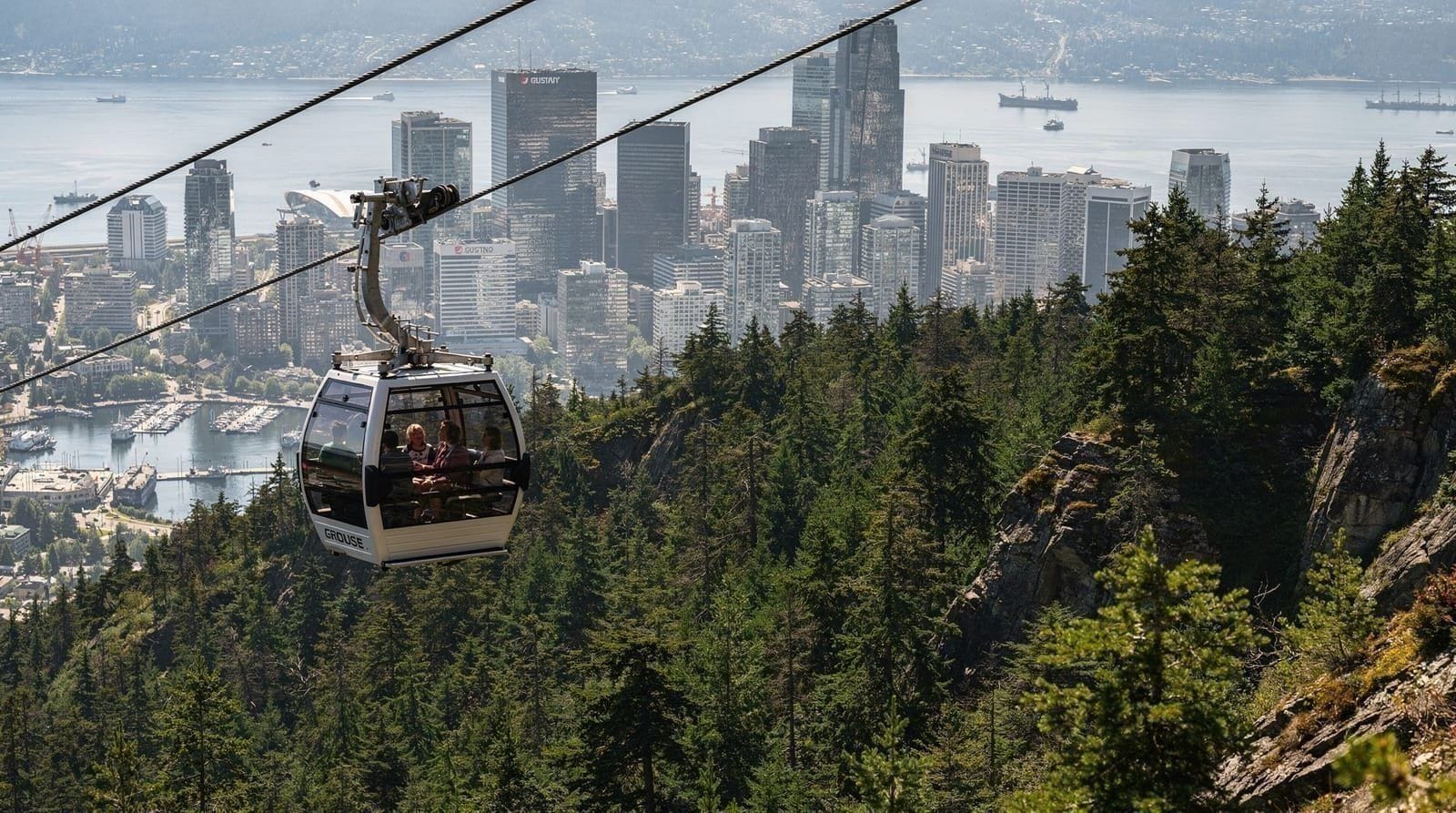
For a lot of kids, the 12-minute aerial tram ride up to the 1,250-metre summit is a highlight in its own right, independent of everything waiting at the top — the sensation of rising above the forest canopy with the city and Strait of Georgia opening up below is a genuine “wow” moment for most first-time riders. The enclosed cabin means there’s no real safety concern for kids, unlike an open chairlift, which makes it an easier sell for anxious young riders than some alternative mountain-access options.
What a typical 4-hour family visit looks like
A well-paced family visit generally starts with the Skyride up first thing, followed by the grizzly refuge while energy and attention spans are still fresh, a lumberjack show timed to the day’s schedule, lunch at one of the summit’s dining venues, and the alpine coaster as an afternoon highlight before heading back down. Families trying to reverse this order — coaster first, wildlife viewing last — sometimes find kids more reluctant to engage with the calmer grizzly-viewing experience after the adrenaline of the coaster, so front-loading the quieter activities tends to produce a smoother overall day.
Prices and booking
A Grouse Mountain Skyride admission ticket covers the tram both ways plus grounds access, running roughly CAD 70-75 for adults with reduced child pricing. The Ultimate day pass, which folds in the alpine coaster and other add-ons, runs closer to CAD 85-90 — worth the upgrade for most families, since the coaster and grizzly viewing are exactly the elements that make Grouse a strong family choice in the first place. For visitors without a car, a Grouse Mountain Express with Skyride option bundles transport with admission.
A realistic budget for a family visit
Beyond the Ultimate day pass itself, families should budget for parking (paid, generally available at the base), any meals purchased at the summit’s dining venues (priced at a premium given the logistics of the location), and a modest gift shop allowance if that’s part of the family’s routine. All told, a family of four visiting Grouse with the Ultimate pass, parking and a summit meal typically spends somewhere in the CAD 400-500 range, at the higher end of Vancouver’s family attraction costs, reflecting both the admission tier and the summit dining premium.
How long to plan
Most families spend three to five hours at the summit, covering the Skyride, grizzly habitat, one lumberjack show, and a round or two on the alpine coaster. Families trying to fit in more — multiple coaster rides, a full loop of the summit trails, extended time at each viewing area — sometimes stretch a visit toward the higher end of that range or into a genuinely full day.
Restrooms and practical facilities
The summit has restroom facilities positioned near the main dining and viewing areas, generally sufficient for the crowd volumes even on busy summer days, though worth locating early in a visit given how spread out the summit’s attractions are compared to a more compact venue. Families managing young kids’ bathroom needs should factor a bit of extra walking time between the grizzly viewing area, the coaster, and the nearest facilities into their overall pacing for the day.
What to bring
Beyond standard sun protection and layers for the summit’s cooler, breezier conditions relative to downtown, families should pack snacks and water for the Skyride and outdoor viewing sections, since dining options, while present, are concentrated in specific summit buildings rather than scattered conveniently near every attraction. A light jacket is worth bringing even on a warm summer day, since the 1,250-metre elevation is noticeably cooler and windier than sea level, especially once the sun starts dropping toward late afternoon.
What to skip with young kids
The Grouse Grind, the mountain’s famous 2.9-km stair-and-root hiking trail gaining roughly 850 metres, is a serious fitness challenge rather than a family activity — it’s not recommended for young children, and even fit teens find it genuinely demanding. It’s worth knowing this distinction clearly before a visit, since first-time visitors sometimes assume “hiking at Grouse” is a casual family option; it isn’t, and the summit’s other attractions are the actual family-appropriate program.
Eye of the Wind and other summit features
Beyond the headline attractions, Grouse’s summit includes a working wind turbine with an observation pod near its top, offering a different vantage point over the surrounding terrain than the main viewing decks — a novelty stop that older kids in particular tend to find memorable, given the unusual experience of standing inside an active wind turbine structure. Scheduled bird-of-prey demonstrations also run seasonally, showcasing raptors in flight with handler commentary, a lower-key but genuinely engaging addition for kids interested in wildlife beyond the grizzly refuge.
Dining at the summit
Grouse’s summit dining options range from casual, quick-service food suited to a mid-day refuel between activities to a more formal sit-down restaurant with panoramic views, worth booking ahead for a family wanting a proper meal as part of the visit rather than a quick bite. Given the summit’s relative remoteness — everything has to be transported up via the Skyride — pricing runs higher than typical Vancouver dining, worth factoring into the day’s overall budget alongside admission.
Best time of day to visit with kids
Arriving earlier in the day, ideally close to opening, gives families the best combination of shorter Skyride lines, cooler temperatures for outdoor activities, and better odds of catching the first lumberjack show and grizzly talk of the day before crowds peak. Afternoon visits, particularly on clear summer days, see the heaviest crowds and longest waits for the alpine coaster specifically — a real consideration for families whose kids are counting on multiple coaster rides.
A brief history
Grouse Mountain’s ski operation dates back to the 1920s, among the oldest in Western Canada, though the modern Skyride and the mountain’s built-out visitor attractions — the grizzly refuge, the coaster, the current lumberjack show format — developed considerably later as the mountain shifted toward a broader year-round tourism operation rather than a purely local ski hill. Sharing a bit of that history, particularly the ski heritage, can add context for older kids who might otherwise see Grouse as purely a modern attraction built for tourists.
Seasonal crowd differences
Summer draws the heaviest crowds of the year, driven by both peak tourist season and the full sightseeing program (grizzlies, shows, coaster) all running simultaneously. Shoulder-season visits in spring and fall see meaningfully thinner crowds, though families should confirm which attractions are running during these transitional weeks, since some programming ramps up or winds down gradually around the edges of the main summer season rather than switching on and off on a fixed date.
Winter visits with kids
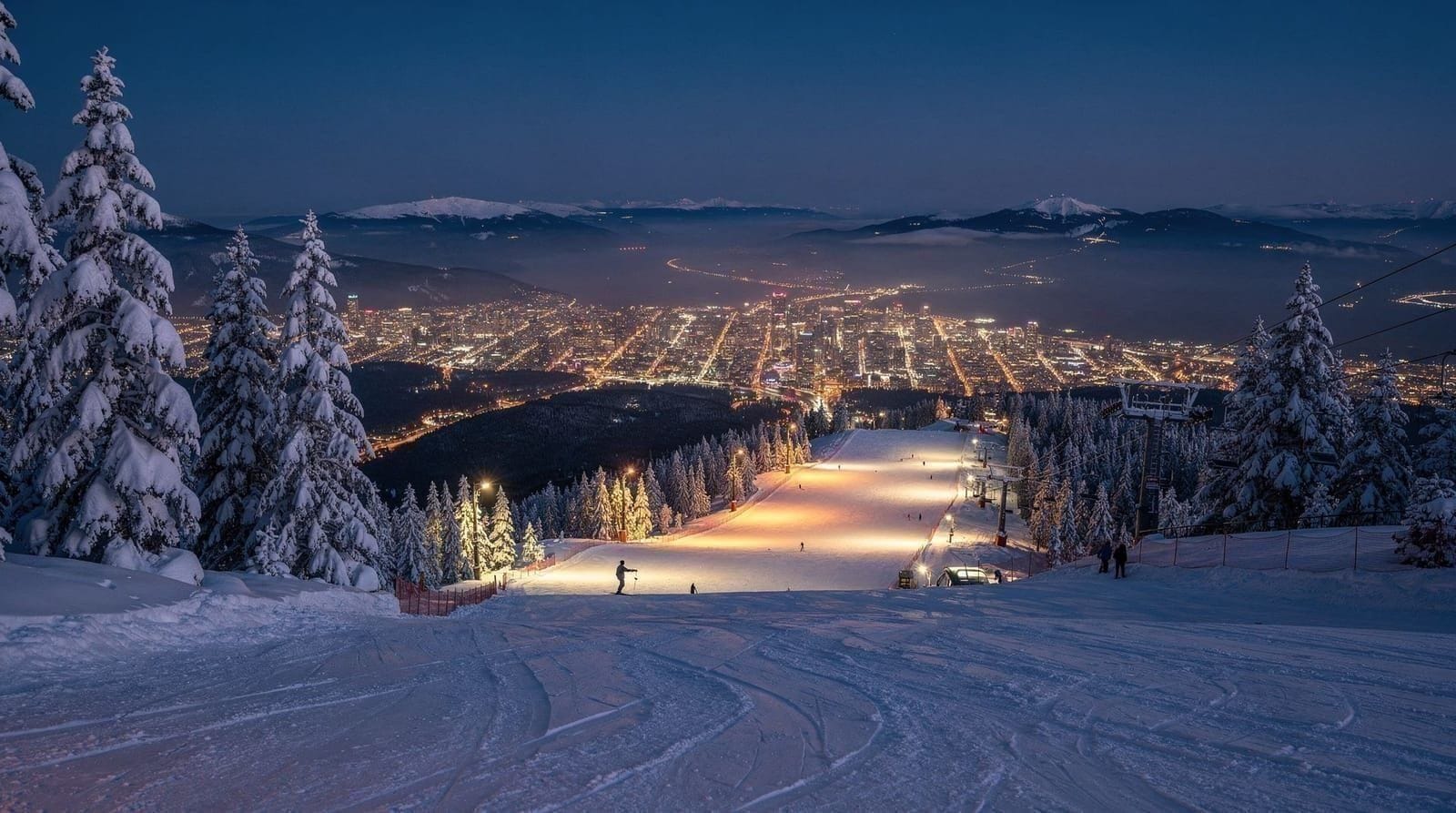
Grouse switches to a ski and snowboard operation from roughly late November through March, and the grizzly bears hibernate for the season, so families specifically wanting the wildlife viewing should plan a visit outside those winter months. Winter does bring an outdoor ice-skating pond at the summit and, for families with kids old enough to ski or snowboard, Grouse’s beginner-friendly terrain and night skiing — details in the Grouse Mountain in winter guide.
Managing kids who are nervous about the Skyride or the coaster
Some kids hesitate at the idea of an enclosed gondola ride climbing over open forest, or feel uncertain about controlling their own speed on the alpine coaster. The Skyride cabin is fully enclosed with no real sensation of exposure once inside, generally reassuring even for nervous first-time riders once they’re actually aboard rather than anticipating it from the ground.
The alpine coaster’s tandem seating option, where an adult controls speed for a younger or hesitant rider, is worth requesting specifically at the coaster’s start for any child unsure about controlling the brake independently — there’s no requirement to ride solo, and starting with a tandem run before deciding whether to try solo afterward works well for building confidence gradually.
Combining with Capilano and the fish hatchery
Grouse sits about 10 minutes by car from Capilano Suspension Bridge, and a combined North Shore day is common enough that bundled tickets exist for it. A Grouse Mountain, Capilano Bridge and fish hatchery tour covers all three in one booking, a good option for families without a car who want the full North Shore family circuit handled in a single day. Most families do Capilano first, while it’s quieter in the morning, then Grouse in the afternoon once energy has built back up.
Getting there without a car
From downtown, the SeaBus to Lonsdale Quay (about 12 minutes) connects to TransLink bus 236, which continues to the Grouse base station — total transit time roughly 45-60 minutes depending on connections, and a genuinely manageable route for families comfortable navigating a couple of transit connections with kids in tow.
Driving takes 20-25 minutes outside rush hour via the Lions Gate Bridge, with paid parking at the base that fills on clear summer weekends. For families wanting the whole day handled without navigating transit or driving themselves, a city and mountain adventure tour with Grouse Mountain combines the North Shore visit with downtown sightseeing in one guided day.
Comparing morning versus afternoon visits
Morning arrivals get the shortest Skyride line, the best odds of catching the grizzly bears active and visible (they tend to be more active earlier in the day, particularly in warmer months), and first access to the alpine coaster before lines build. Afternoon visits work for families who prefer a slower start or who’ve combined the day with another morning activity elsewhere in the city, though they should expect longer waits for the coaster specifically and a busier overall summit, particularly on clear summer weekends when good weather draws the heaviest crowds.
Weather and clear-day planning
Clear days matter more at Grouse than almost anywhere else in Vancouver, since the whole point of the visit is the view and outdoor viewing areas — checking a mountain-specific forecast rather than the downtown one is worth the extra step, since the North Shore peaks can sit in cloud while downtown stays sunny. A foggy or rainy summit visit still delivers the grizzly viewing, coaster and lumberjack show, but loses much of the payoff of the gondola ride itself.
Where it fits in a wider family trip
Grouse works well as a half-day to full-day North Shore anchor within a broader family itinerary — see the Vancouver with kids guide for how it pairs with downtown and Stanley Park attractions, and the family-focused 4-day itinerary for a realistic multi-day structure that balances a physically active North Shore day like this one against lower-key city time.
Frequently asked questions about Grouse Mountain with kids — grizzlies, coaster and pacing tips
What’s the minimum age for the alpine coaster?
Most children old enough to sit securely and follow instructions can ride tandem with an adult controlling the brake; solo riding generally requires being tall and old enough to operate the brake independently. Check current age and height requirements at the coaster entrance on arrival.
Is Grouse Mountain or Capilano better for a family with young kids?
They pair well rather than compete — Capilano’s Cliffwalk and Treetops suit slightly older, more adventurous kids, while Grouse’s grizzly refuge and coaster work for a wider age range. Many families do both in one day via a combined ticket.
Top experiences
Bookable activities with verified prices and instant confirmation on GetYourGuide.