Grouse Mountain in winter — skiing, night skiing and snow season
Grouse Mountain Skyride Admission Ticket
Is Grouse Mountain good for skiing?
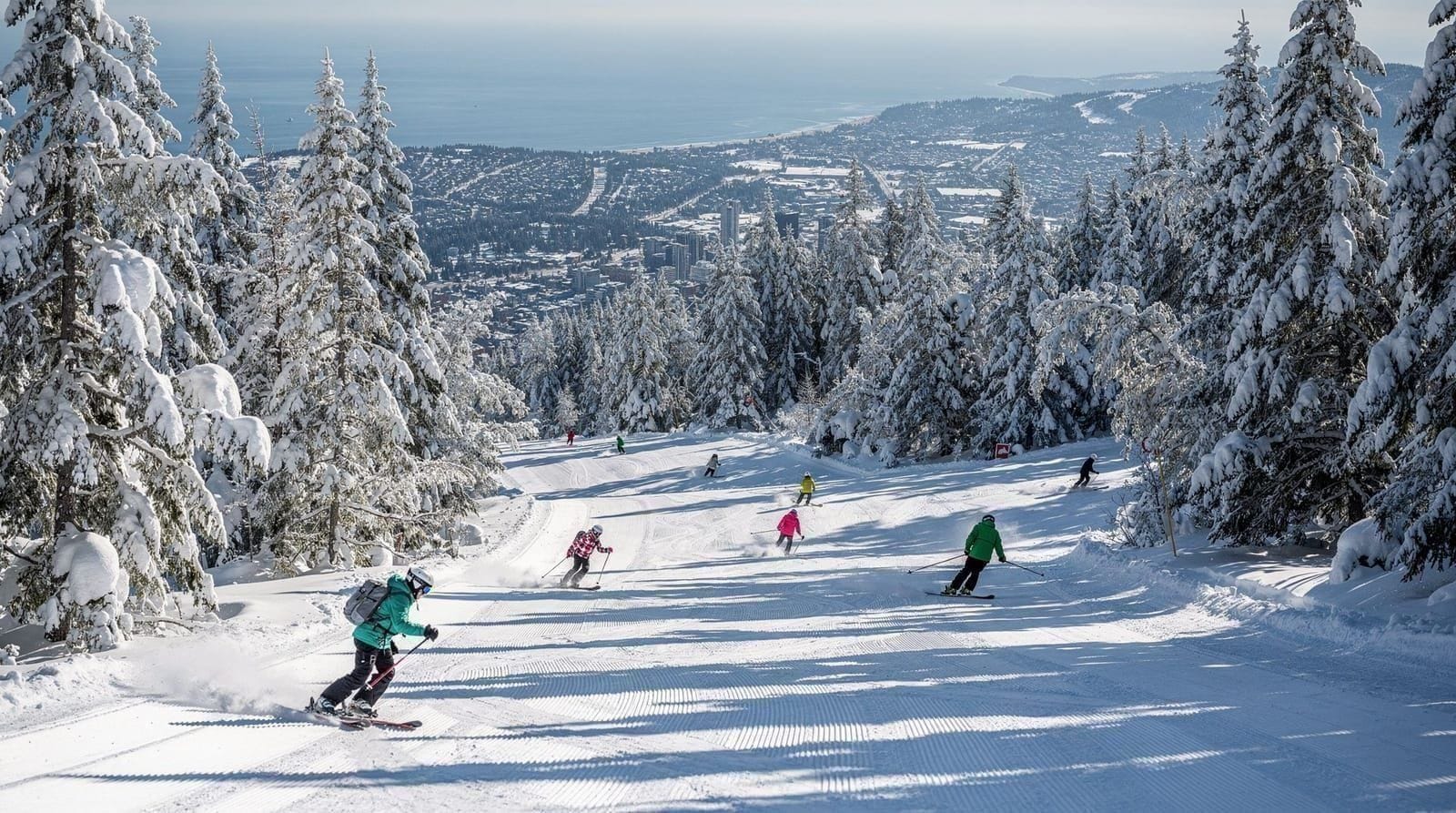
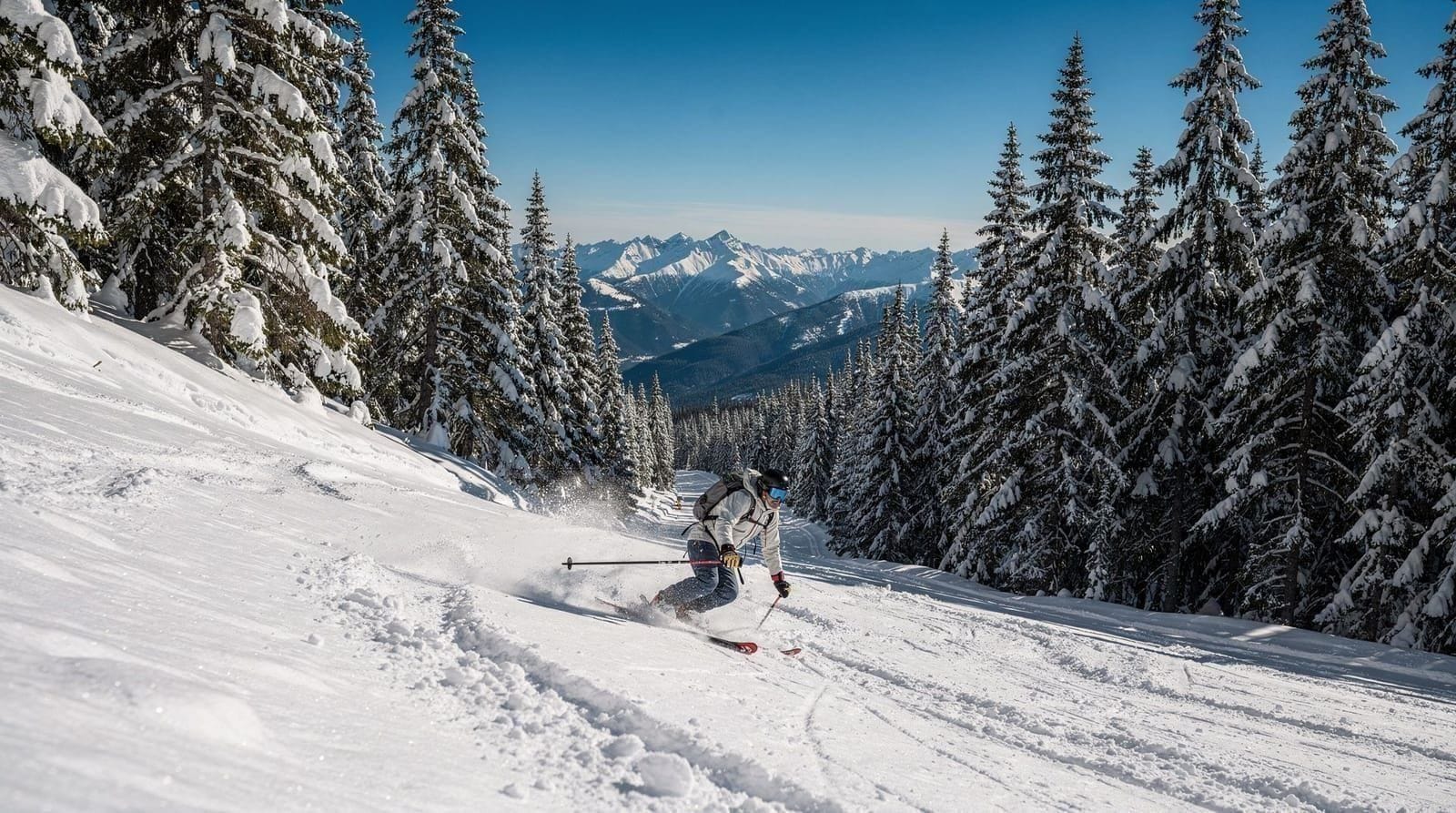
Yes, for a specific purpose — Grouse operates as a compact ski and snowboard hill roughly mid-December through March, with night skiing under lights that lets Vancouver-based visitors ski after work or after a morning of other sightseeing. It's a fraction of Whistler's size and better suited to a half-day or evening session than a full alpine ski trip.
| Season | Roughly mid-December through March |
| Lift ticket | Around CAD 75-95/day; cheaper night-only |
| Terrain | Compact, beginner-to-intermediate friendly |
| Best for | Evening sessions, families, first-timers |
| Getting there | SeaBus + bus 236, or 20-25 min drive |
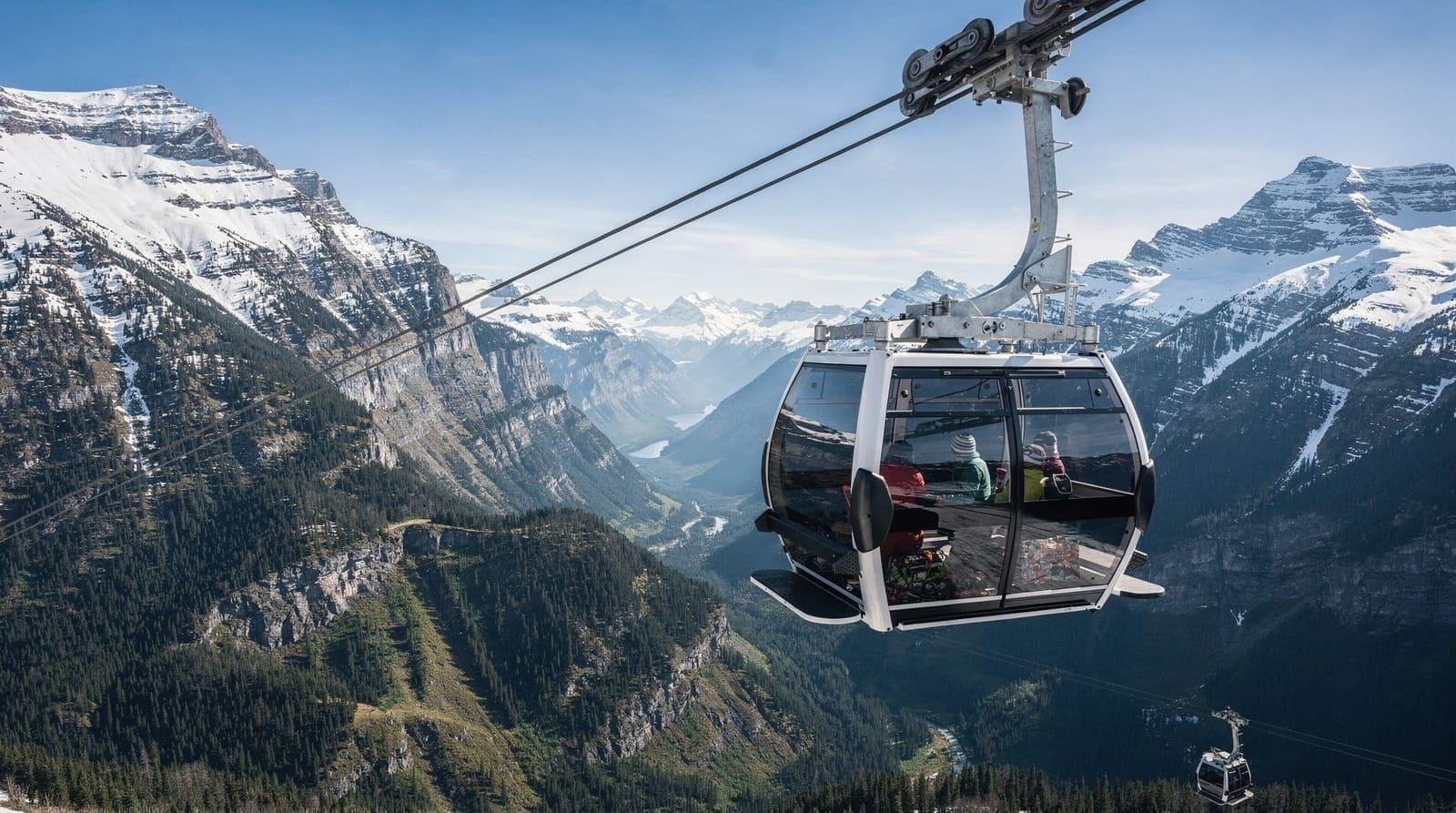
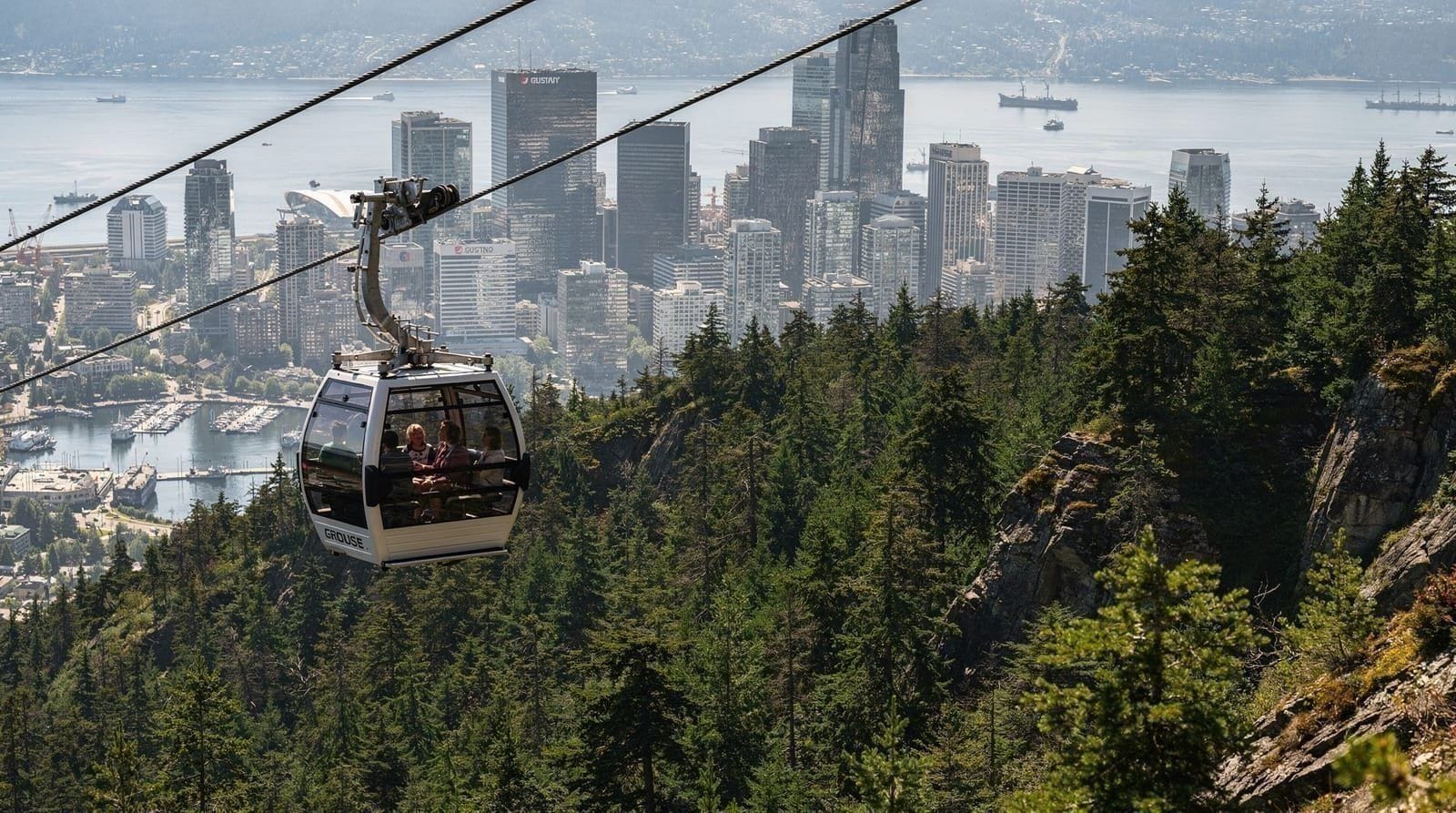
Most visitors know Grouse Mountain as a summer sightseeing attraction — the Skyride, the grizzly bears, the lumberjack show. From roughly mid-December through March, the mountain runs a completely different operation: the grizzlies hibernate, the lumberjack show pauses, and the Skyride becomes lift access for skiing and snowboarding rather than a scenic ride. It’s a genuinely different visit than the summer version, and worth understanding on its own terms rather than assuming it’s a scaled-down Whistler.
What Grouse’s ski season actually looks like
The exact opening date depends on snowfall at the 1,100-metre summit, which sits low enough in elevation that a warm, wet December can delay the start compared to a colder year. Once open, the hill typically runs into March, sometimes early April in a good snow year, though coastal North Shore elevations are more weather-dependent than Whistler’s higher alpine terrain — a mild rain event can compress the season from either end. Checking Grouse’s own snow report before a planned visit is more reliable than assuming a fixed calendar window.
Terrain and who it suits
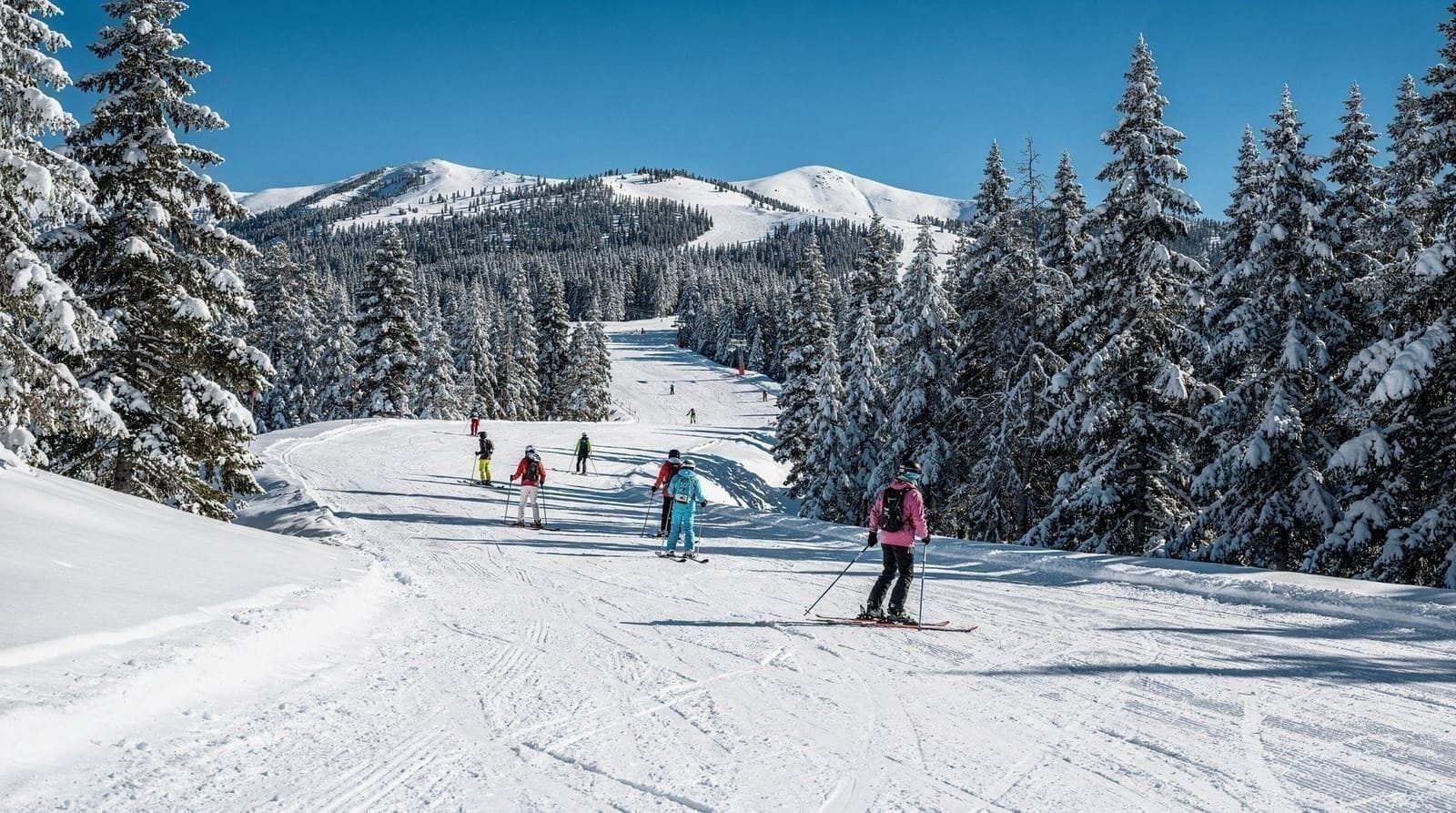
Grouse’s ski terrain is compact — a fraction of Whistler’s scale — and generally rated beginner-to-intermediate friendly, with a handful of steeper runs for more confident skiers. It’s not the place to go looking for expert terrain or long descents; the appeal is proximity and convenience rather than terrain volume. Families with beginner skiers, locals fitting in an evening session, and visitors who want to say they skied near Vancouver without committing a full day to Whistler are the realistic audience here.
Prices
A ski and snowboard lift ticket at Grouse typically runs somewhere in the CAD 75-95 range for a full day, with night-skiing-only tickets priced lower for visitors planning an evening session rather than a full day. This sits well below Whistler’s peak-day pricing, though it also buys considerably less terrain.
The base Skyride admission ticket used for sightseeing is a separate product from the ski lift ticket — a Grouse Mountain Skyride admission ticket covers the tram and grounds access, worth booking for visitors combining a winter visit with the non-ski attractions still running (the alpine coaster and dining generally continue through winter, weather permitting).
Night skiing — the real reason locals go
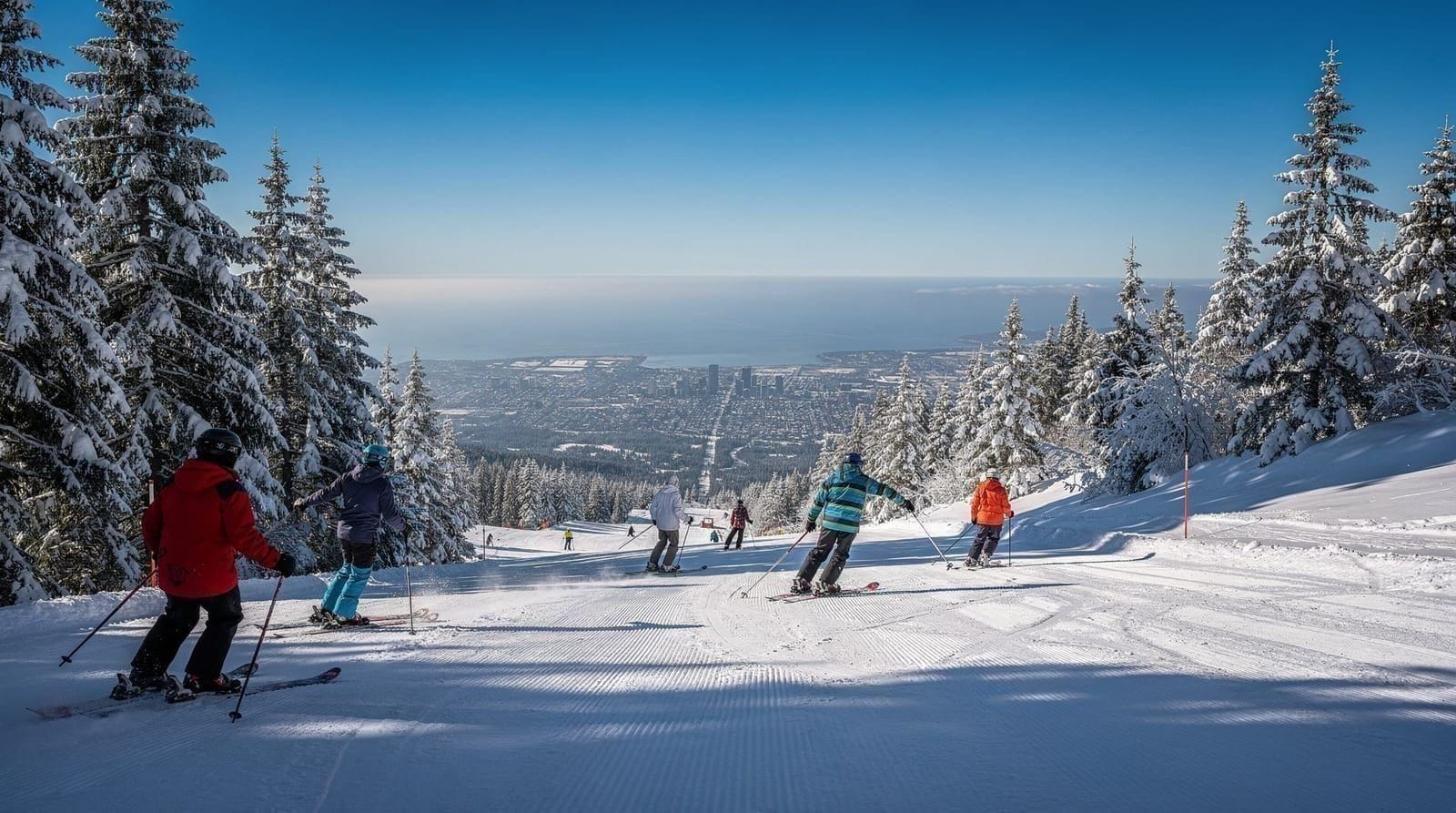
Grouse’s standout feature in winter isn’t its terrain, it’s timing. Night skiing under lights runs into the evening most operating days, which means a Vancouver resident or visitor can finish a workday or an afternoon of city sightseeing and still get two or three hours on snow before dinner. Nothing at Whistler offers that kind of convenience, since the drive alone eats most of an evening. For visitors without a car who still want the streamlined version of a Grouse trip, a Grouse Mountain Express with Skyride option bundles transport and admission.
Getting there in winter conditions
From downtown, driving via the Lions Gate Bridge takes 20-25 minutes outside rush hour, though winter road conditions on the upper approach to the base station can require caution — the access road climbs enough to see snow and ice even when downtown Vancouver stays wet and rain-only. Transit is a workable alternative: the SeaBus to Lonsdale Quay (about 12 minutes) connects to TransLink bus 236, which continues to the Grouse base station, for a total transit time of roughly 45-60 minutes depending on connections. A combined Capilano and Grouse Mountain day tour is worth considering for visitors without a car who want a full North Shore winter day covering both.
Renting gear
Rental packages for skis, snowboards, boots and helmets are available at the base, sized for a hill that’s realistically a half-day or evening commitment rather than requiring the kind of pre-booked, multi-day rental planning a Whistler trip demands. Lines are generally short outside weekend peak hours, a genuine advantage over larger resorts during busy periods.
Grouse versus Whistler, honestly
Grouse cannot substitute for a real Whistler ski day, and it isn’t trying to. Its terrain is a fraction of Whistler’s, its vertical drop is modest by comparison, and it lacks the alpine bowls and glacier terrain that give Whistler its international reputation. What Grouse offers instead is proximity: no highway drive, no winter tire requirements for a two-hour mountain pass crossing, and the option of an evening session that simply isn’t possible with Whistler’s distance. For a full comparison built around exactly this trade-off, see Whistler versus Grouse for skiing.
Skiing versus the summer sightseeing visit
It’s worth being direct about a real trade-off visitors sometimes miss when booking based on general Grouse Mountain reviews: almost everything people rave about from a summer Grouse visit — the grizzly bears, the lumberjack show, the alpine coaster at full operation — either pauses or scales back for the ski season.
Winter visitors are getting a genuinely different product: skiing and snowboarding on compact terrain, plus whatever dining and limited attractions continue running, rather than the fuller summer program. Anyone hoping to combine winter skiing with the wildlife-and-shows experience that dominates Grouse’s marketing photos should recalibrate expectations before booking, or plan a separate non-winter visit specifically for that side of the mountain.
Injury and safety basics
Grouse’s compact, mostly beginner-to-intermediate terrain is generally more forgiving than a larger resort’s, but it’s still a real ski hill with real injury risk, particularly on its handful of steeper sections. Helmets are increasingly standard among visiting skiers and worth wearing regardless of ability level, and staying within marked, ability-appropriate runs matters as much here as anywhere. Ski patrol operates on-mountain throughout the ski season, and travel insurance covering winter sports is worth confirming before any ski trip, including a short Grouse session, since some standard policies exclude skiing injuries without an added rider.
Grouse versus Cypress and Seymour
Among the three North Shore ski hills, Grouse is the most developed and the most expensive, largely because it carries the infrastructure — the Skyride tram, the dining, the wider visitor base — from its summer sightseeing operation into winter. Cypress Mountain generally has more technically demanding terrain, a legacy from hosting 2010 Winter Olympic freestyle and snowboard events, while Mount Seymour is the quietest and cheapest of the three, leaning toward beginners and families.
None of the three requires driving past Vancouver’s city limits in any meaningful sense, which is the core appeal that separates all of them from Whistler. See the fuller three-way breakdown in Grouse vs Cypress vs Seymour.
Frequently overlooked details
A few practical details trip up first-time winter visitors to Grouse more than anything covered above. First, the base-station parking lot can genuinely fill on clear weekend evenings during peak ski weeks, since night skiing draws a steady stream of after-work locals on top of visiting skiers — arriving with a backup transit plan in mind isn’t unreasonable during the busiest stretches. Second, weather at the summit can differ meaningfully from conditions at the base or downtown, given the roughly 1,100-metre elevation gain — a clear, dry evening in Vancouver doesn’t guarantee the same at the top, so checking the mountain’s own current conditions rather than a general city forecast avoids an unwelcome surprise.
Third, because Grouse’s ski operation and its summer sightseeing operation are genuinely different products, ticket types, passes and promotional offers don’t automatically carry over between the two seasons — worth double-checking exactly what a given ticket covers before purchase, particularly for visitors who’ve read about Grouse primarily through summer-focused reviews and photos.
Comparing a Grouse evening to a full Whistler weekend
For visitors trying to decide how to allocate a limited ski budget across a Vancouver trip, it helps to think in terms of what each option actually buys. A Grouse evening session, at roughly CAD 75-95 plus an hour or so of transit or driving, delivers two to three hours of real ski time on modest terrain — a reasonable value for a spontaneous or budget-conscious session.
A Whistler weekend, by contrast, represents a much larger investment of both time and money, but unlocks terrain variety and scale that no amount of repeated Grouse visits can replicate. Neither is the objectively smarter purchase; the right choice depends on whether the goal is maximizing ski days within a tight schedule and budget, or having one genuinely memorable alpine ski experience during the trip.
Snowshoeing as an alternative
Skiers who’d rather skip lift lines and equipment altogether have a lower-commitment winter option nearby: guided snowshoeing at the top of the Sea to Sky Gondola covers similarly snowy alpine terrain without needing to ski or ride at all — a reasonable choice for visitors traveling with a mixed group of skiers and non-skiers. The full breakdown of this option and other snowshoe trails near Vancouver is in the dedicated snowshoeing guide.
Lessons and rentals in more detail
Grouse’s ski and snowboard school runs group and private lessons for both adults and kids, generally organized around the mountain’s compact beginner-to-intermediate terrain rather than the multi-day progression a larger resort like Whistler builds toward. A first-timer lesson package, which typically bundles instruction, rental gear and beginner-area lift access into one price, is worth booking ahead during weekends and holiday periods when the rental counter and lesson desk both see their heaviest volume. Because Grouse’s terrain is small enough to learn on quickly, most beginners see real progress within a single lesson in a way that can feel slower to notice on a much larger mountain.
Terrain layout
Grouse’s ski area is organized around a handful of connected runs served by a small number of lifts, considerably simpler to navigate than a destination resort’s trail map — most visitors get a working sense of the whole mountain within their first hour or two on snow. The terrain generally splits into a gentler zone suited to beginners and lower-intermediate skiers near the base, with a smaller selection of steeper pitches for more confident skiers higher up. There’s no real equivalent to Whistler’s alpine bowls or long sustained descents; runs are shorter, which in practice means more laps per hour rather than fewer, longer ones.
Dining at the summit in winter
Grouse’s summit dining venues generally stay open through the ski season, giving visitors a warm indoor break between runs without needing to head back down the mountain. Options typically range from casual cafeteria-style food to a sit-down restaurant with a view, useful for a lunch break that doesn’t eat too far into limited ski time, or for a slower dinner after night skiing wraps up. Given the summit’s small footprint compared to a full resort village, dining options are more limited than at Whistler, but the convenience of not having to travel anywhere for a meal is a genuine plus for a half-day or evening visit.
Accessibility and who might find it easier than Whistler
For visitors uncertain about their fitness for a full ski day, or families easing a child into skiing for the very first time, Grouse’s small scale is a genuine advantage rather than just a limitation. Shorter runs mean shorter recovery time between attempts, lift lines are typically much shorter than at a destination resort even on busy days, and the option to simply stop after an hour or two without feeling like a full-day ticket went to waste (given the lower price point) takes some of the pressure off a first attempt at the sport.
Wheelchair and mobility-limited visitors interested in the sightseeing side of a winter Grouse visit, rather than skiing itself, should note that the Skyride and main viewing areas remain accessible through winter, separate from the ski operation.
What else runs at Grouse in winter
Beyond skiing, some of Grouse’s non-wildlife attractions continue operating through the winter season, weather permitting — the alpine coaster typically runs year-round with weather-dependent closures, and the mountain’s dining venues stay open. The grizzly bear habitat closes for the season since Grinder and Coola hibernate through winter, and the lumberjack show pauses until it resumes with the spring sightseeing season. Visitors hoping to combine a winter ski session with the wildlife viewing that makes Grouse popular in summer should plan the trip for outside ski season instead — see the Grouse Mountain guide for the full sightseeing-season rundown.
Booking strategy
Because Grouse’s pricing is simpler and less dynamic than Whistler’s, there’s less to gain from booking far in advance purely for price — the bigger benefit of booking ahead is avoiding the base-station line on a busy evening or weekend, particularly during the first few weeks after opening when curious visitors turn out in higher numbers to check conditions. Weeknight sessions, especially outside the immediate post-opening period, are consistently the least crowded time to visit, worth prioritizing for anyone with flexible timing who mainly wants uncrowded runs rather than a specific date.
Summer pricing versus winter pricing
Worth understanding clearly: Grouse’s summer Ultimate day pass (covering the Skyride, grizzly viewing, coaster and shows) at roughly CAD 85-90 is a different product from the winter ski lift ticket at roughly CAD 75-95, even though both grant access to the same mountain. Visitors sometimes assume one ticket covers both seasons’ offerings; it doesn’t; the sightseeing-focused summer pass and the ski-focused winter lift ticket are priced and sold separately, reflecting the mountain’s genuinely different operations in each season.
What locals do differently
Regular North Shore skiers tend to buy a season pass rather than repeated day tickets, given how quickly the per-visit cost drops for anyone skiing more than a handful of times through the winter. Locals also skew heavily toward evening and weeknight sessions specifically to avoid weekend crowds, a pattern worth borrowing even for visitors on a short trip — a Tuesday or Wednesday evening session, if it fits the itinerary, will consistently be less crowded than a Saturday visit regardless of season timing.
Packing for a Grouse winter visit
Because a Grouse ski session is typically shorter than a full Whistler day, packing needs are somewhat simpler — waterproof outer layers, warm gloves, and a helmet if you’re bringing your own rather than renting one, along with the usual base and mid-layers for cold, wet coastal winter weather. Visitors combining a ski session with the mountain’s other winter offerings (dining, the ice-skating pond) should pack a change of dry layers for after skiing, since finishing a session in wet ski gear and then wanting to linger for dinner or a skate is considerably more comfortable with fresh clothes on hand.
Who should actually make the trip
Grouse’s winter operation makes the most sense for three groups: Vancouver-based visitors or long-stay travelers wanting an evening ski session without a highway drive, families with beginner skiers who don’t need Whistler’s scale, and anyone curious about trying skiing for the first time without committing a full vacation day to it. Serious skiers who’ve already budgeted time and money for a proper alpine ski trip are better served heading to Whistler directly rather than treating Grouse as a warm-up — the terrain simply doesn’t overlap enough to make both trips necessary for the same visit.
Frequently asked questions about Grouse Mountain in winter — skiing, night skiing and snow season
Can beginners learn to ski at Grouse?
Yes — the compact, mostly beginner-to-intermediate terrain and shorter runs are genuinely well suited to a first attempt, and the ski school runs lesson packages bundling instruction, rental gear and beginner-area access.
Does a summer Grouse ticket work in winter?
No. The summer Ultimate day pass and the winter ski lift ticket are separate products, priced and sold independently, even though both grant access to the same mountain.
Top experiences
Bookable activities with verified prices and instant confirmation on GetYourGuide.