Snowshoeing near Vancouver — trails, rentals and prices
Snowshoeing At The Top Of The Sea To Sky Gondola
Where can you go snowshoeing near Vancouver?
The Sea to Sky Gondola near Squamish, plus Grouse Mountain, Cypress Mountain and Mount Seymour on the North Shore, all maintain marked snowshoe trails separate from their ski runs. Rentals run roughly CAD 20-35 for a half or full day, and no prior experience is needed — it's one of the more accessible ways to experience BC's alpine winter scenery.
Snowshoeing is the easiest way for a first-time winter visitor to get onto genuine alpine terrain near Vancouver without buying a lift ticket, renting ski gear, or having any prior snow-sport experience. The learning curve is close to zero — if you can walk, you can snowshoe — which makes it a realistic option for families, mixed-ability groups, and travelers who want mountain scenery without committing to skiing.
| Where | Sea to Sky Gondola, Grouse, Cypress, Mount Seymour |
| Cost | Rentals around CAD 20–35/half or full day |
| Season | Roughly December–March/April |
| Skill needed | None — beginner-friendly |
| Booking | Guided tours worth booking ahead on weekends |
Why snowshoeing gets overlooked
Compared to skiing, snowshoeing gets relatively little visibility in most Vancouver trip planning, largely because it lacks the destination-resort marketing budget of Whistler or even the sightseeing-attraction packaging of Grouse. That’s a genuine gap for visitors specifically looking for a low-cost, low-skill way to experience real alpine winter scenery, since it delivers a comparable visual payoff to skiing at a fraction of the cost, equipment complexity, and physical risk.
Where to go
Four locations near Vancouver maintain marked snowshoe trails through winter: the Sea to Sky Gondola near Squamish, and Grouse Mountain, Cypress Mountain and Mount Seymour on the North Shore. Each reaches its trail network via a lift or gondola rather than requiring a long uphill hike to the snowline, which is the main practical advantage over trying to snowshoe from a lower-elevation trailhead where snow cover is unreliable.
Sea to Sky Gondola
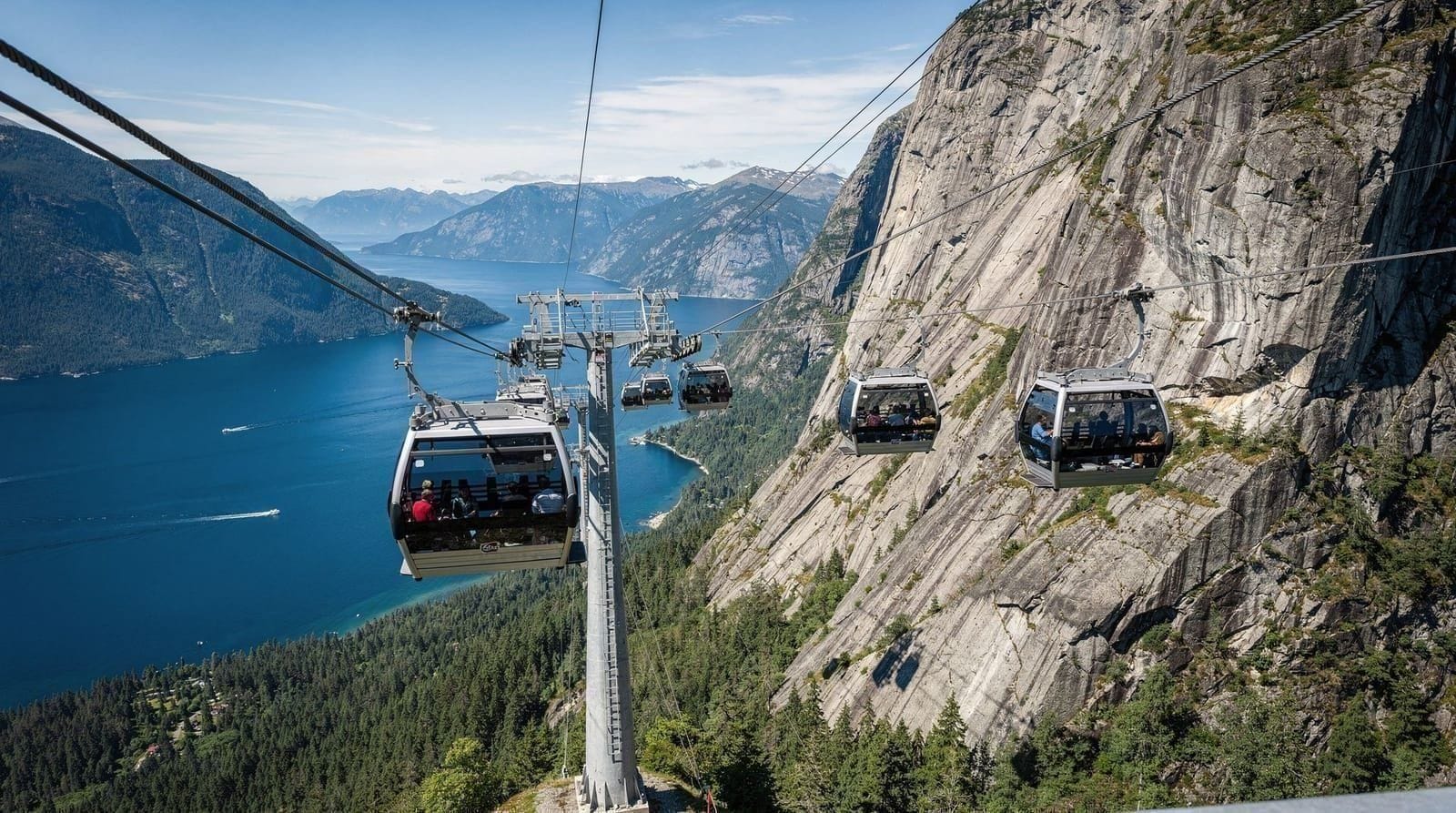
The Sea to Sky Gondola climbs from near sea level to 885 metres above Howe Sound in about 10 minutes, and its summit area maintains groomed and backcountry-style snowshoe routes through subalpine forest with views across the Sound and toward the Tantalus Range. A guided snowshoeing tour at the top of the Sea to Sky Gondola pairs a naturalist guide with rental gear, useful for visitors who want context on the terrain and wildlife signs rather than just walking a marked loop unaccompanied.
For visitors who’d rather explore independently, the Sea to Sky Gondola admission ticket covers gondola access, with snowshoe rentals available separately at the summit. Full details on the gondola itself, including summer operation, are in the Sea to Sky Gondola guide.
Grouse, Cypress and Mount Seymour
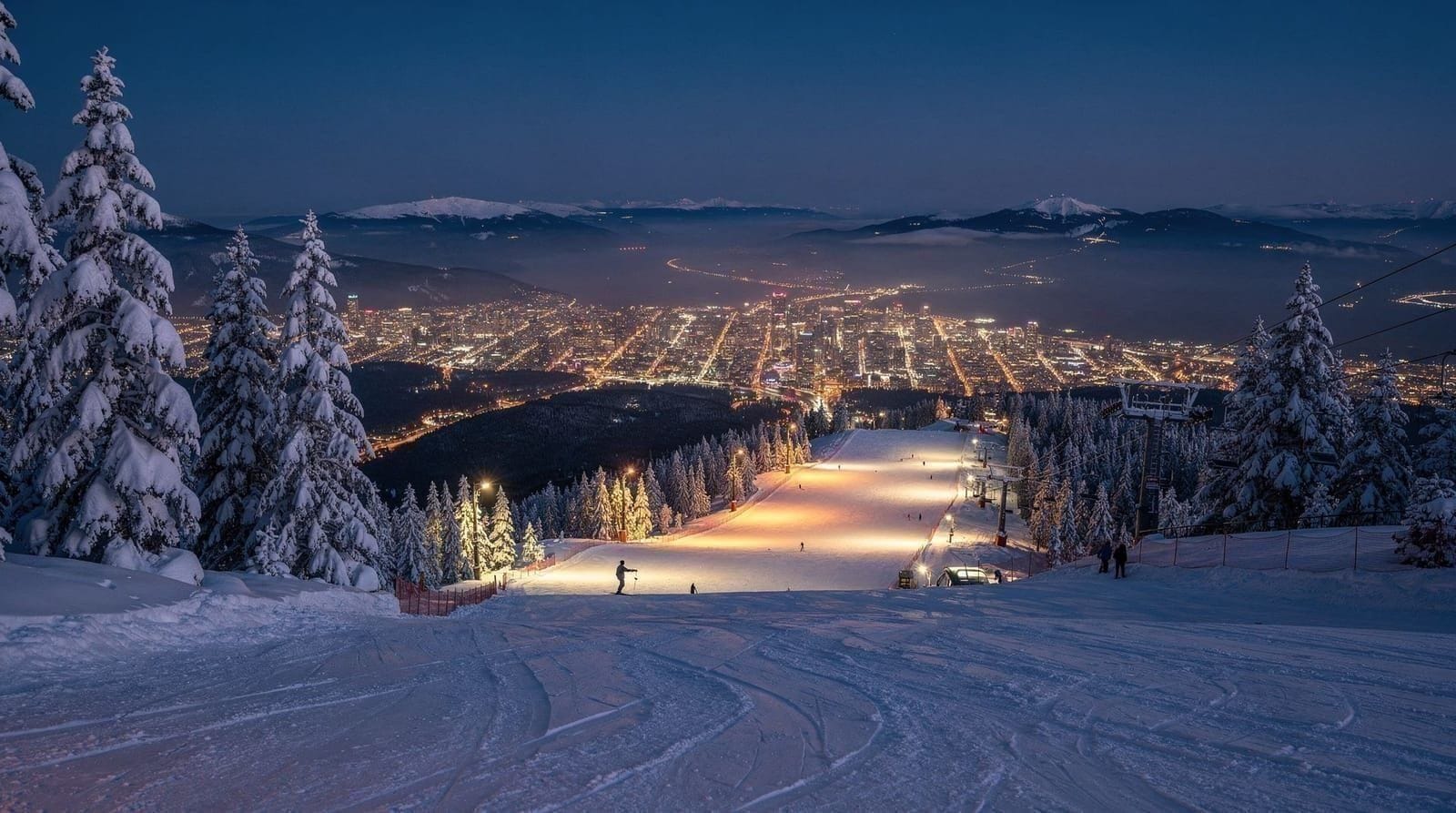
All three North Shore ski hills maintain snowshoe trails distinct from their downhill ski runs, generally at gentler grades and shorter distances than the Sea to Sky Gondola’s network. Grouse Mountain combines snowshoeing with the option of riding the Skyride up rather than requiring a ski lift ticket, making it workable for visitors who want a snow walk without engaging with the ski operation at all. Cypress and Mount Seymour both maintain marked trails as well, generally with fewer crowds than Grouse given their lower visitor volume overall.
Rentals and cost
Snowshoe rentals typically run CAD 20-35 for a half or full day depending on location, and most trailheads offer trekking poles alongside the snowshoes themselves, which help with balance on uneven or icy sections. Guided tours bundle rental gear into the tour price, generally a better value than renting separately if you’re new to snowshoeing and want instruction on technique and safety before heading out. Combined with a gondola or lift ticket to reach the trailhead, a full snowshoeing outing typically runs CAD 60-120 per person depending on location and whether it’s guided or self-directed.
Difficulty and who it suits
Snowshoeing trails at all four locations are generally graded from easy loops near the base lift station to longer, more strenuous backcountry-adjacent routes for visitors wanting a real workout. The easy loops require no particular fitness and are genuinely suitable for kids old enough to walk a few kilometres and for older travelers who might find hiking boots on icy terrain uncertain — snowshoes actually improve traction and stability compared to regular winter boots on packed snow. The longer routes, by contrast, gain real elevation and can take two to three hours, better suited to fit hikers comfortable navigating variable winter conditions.
What to wear
Waterproof, insulated boots are the single most important item — regular sneakers or fashion boots don’t hold up on snow-covered trails even for a short walk. Layered clothing with a waterproof outer shell, warm gloves, and a hat round out the essentials; sunglasses are worth packing too, since sun reflecting off snow at altitude is brighter than it looks from the base. Trails at all four locations are groomed or well-marked enough that specialized winter navigation skills aren’t required for the standard routes, though the more advanced backcountry-adjacent trails at the Sea to Sky Gondola and Cypress warrant more caution and, ideally, a guide.
Guided versus self-guided — how to decide
A guided snowshoe tour is worth the extra cost for first-timers, for visitors wanting context on the terrain, plants and wildlife signs they’re walking past, and for anyone heading onto the longer, more backcountry-adjacent routes at the Sea to Sky Gondola or Cypress. A guide also removes the small but real logistical friction of figuring out trail markers and turnaround points independently, useful for travelers who’d rather not spend part of a limited vacation day double-checking a trail map.
Self-guided snowshoeing makes more sense for the shorter, well-marked loops near the base lift stations at any of the four locations, and for repeat visitors or locals who already know a given trail network and simply want the rental gear without a scheduled tour time.
Wildlife on the trail
Winter snowshoe trails near Vancouver occasionally turn up wildlife sign even when the animals themselves stay out of sight — tracks from snowshoe hares, squirrels, and birds are common, and on quieter trails, deer sightings aren’t unusual at lower elevations. Black bears are hibernating through the core snowshoe season, so bear encounters are essentially a non-issue in winter, unlike summer hiking on the same terrain. Guides at the Sea to Sky Gondola and other guided tours typically point out tracks and signs that independent walkers would likely miss, part of the value a guided outing adds beyond simply providing rental gear.
Best time of day
Mid-morning starts, once trails have been groomed or packed down from the previous day’s traffic but before the busiest midday crowds arrive, tend to offer the best combination of good trail conditions and manageable crowds, particularly at the more popular Sea to Sky Gondola and Grouse locations.
Afternoon light in winter is limited given how early sunset comes (typically 4:30-5pm through December and January), so an outing planned to wrap up by early-to-mid afternoon avoids finishing a trail in fading light. Clear days dramatically improve the visual payoff at all four locations, given how much of the appeal is the alpine scenery itself — checking a mountain-specific forecast rather than the general Vancouver one is worth doing before committing to a specific day.
Photography on snowshoe trails
Alpine snowshoe trails near Vancouver offer some of the most reliably photogenic winter scenery in the region — snow-laden conifers, wide views across Howe Sound from the Sea to Sky Gondola, and the North Shore’s own skyline views from Grouse and Cypress looking back toward the city. Overcast days actually work reasonably well for photography here, since flat light reduces harsh shadows on snow, though a clear bluebird day delivers the more dramatic wide shots most visitors are chasing. Bringing a spare battery is worth it regardless of camera type, since cold temperatures at altitude drain battery life noticeably faster than at sea level.
What a typical guided snowshoe outing includes
A standard guided snowshoe tour, such as the option at the Sea to Sky Gondola, typically runs one and a half to two and a half hours on the trail itself, bookended by rental fitting and a short orientation on technique before setting out. Groups are generally kept small enough that the guide can point out specific features — tree species, animal tracks, geological points of interest — without the outing feeling rushed, and the pace is set to accommodate a mixed-fitness group rather than pushing toward a fitness benchmark. Most tours conclude back at the base facility, where warm food and drink options are typically available afterward, a welcome finish after a couple of hours in the cold.
Combining snowshoeing with other winter activities
Snowshoeing pairs naturally with a broader winter day trip rather than standing alone as a full day’s plan for most visitors. A full-day Sea to Sky Gondola tour from Vancouver typically bundles gondola access, guided snowshoeing, and transport into a single booking, useful for visitors without a car who want the whole experience handled.
For travelers continuing north, combining a snowshoe morning at the Sea to Sky Gondola with an afternoon in Whistler Village is a common way to build a full Sea-to-Sky day that doesn’t require actually skiing. Serious hikers wanting a longer guided outing on snow-covered alpine terrain should also look at a guided wilderness hike in Whistler, which runs winter routes using similar snowshoe-friendly terrain when conditions call for it.
What snowshoeing actually feels like for a first-timer
For visitors who’ve never tried it, snowshoeing is closer to hiking with slightly awkward footwear than to any kind of specialized winter sport — the learning curve is measured in minutes rather than lessons. The main early adjustment is a wider stance to avoid stepping on the opposite snowshoe, and lifting feet slightly higher than a normal walking stride to clear snow, both of which most people pick up naturally within the first few hundred metres. Poles help considerably with balance, particularly on any uphill or downhill sections, and most rental packages include them alongside the snowshoes themselves.
Frequently overlooked details
A few practical points are worth knowing before a first snowshoe outing near Vancouver. Trailhead elevations matter more than trip planners sometimes expect — the Sea to Sky Gondola and the North Shore hills all sit at elevations where snow cover can vary significantly from one week to the next during a mild winter, so a trail that was fully snow-covered two weeks earlier might see patchy coverage after a warm spell.
Group sizes on guided tours are typically capped for both safety and experience-quality reasons, so families or groups of more than about six to eight people should check ahead about whether a single tour departure can accommodate everyone together. And because all four locations require reaching a base facility first (via gondola, lift, or drive up a mountain access road), a full snowshoe outing takes noticeably longer door-to-door than the on-trail time alone suggests — budgeting a half-day minimum, door to door, is more realistic than assuming a quick hour-long stop.
Season and conditions
Snow reliability follows the same general pattern as the local ski hills: the Sea to Sky Gondola and the higher terrain near Whistler hold consistent snow from roughly December through March or April, while the North Shore’s lower-elevation trails at Grouse, Cypress and Seymour are more weather-dependent and can see thin or patchy coverage during warm, wet stretches. Checking current trail conditions before a planned visit — most locations post daily updates — avoids arriving to find a trail closed or unsafe for the conditions.
Safety basics
Snowshoeing is low-risk compared to downhill skiing, but it’s not risk-free, particularly on the longer, more backcountry-adjacent trails at the Sea to Sky Gondola and Cypress. Staying on marked trails, checking current conditions and closures before setting out, and carrying basic essentials (water, a charged phone, an extra layer) matter even on a seemingly casual snowshoe outing, since weather at altitude can shift faster than it does at the trailhead parking lot. Guided tours handle this risk management for visitors who’d rather not think about it independently, one more reason a guided outing makes sense for anyone unfamiliar with winter alpine conditions.
Snowshoeing with kids
Snowshoeing is one of the more genuinely kid-friendly winter mountain activities near Vancouver, given how little technical skill it requires — most kids old enough to walk a couple of kilometres on flat ground can manage a beginner snowshoe loop with minimal instruction. Smaller snowshoe sizes are generally available in rental fleets for younger kids, and the shorter, gentler loops at Grouse and Seymour in particular suit families better than the longer backcountry-adjacent routes at the Sea to Sky Gondola or Cypress. Building in more frequent breaks than an adult group might need, and keeping total distance modest for a first outing, keeps the experience positive rather than turning into a forced march.
Renting versus owning gear
For a single Vancouver visit, renting is unambiguously the simpler and more cost-effective choice — trailhead rental counters are set up specifically for one-time visitors and don’t require any prior gear knowledge. Repeat visitors or Vancouver-based residents planning multiple outings each winter may find owning gear pays off after a handful of outings, though snowshoes take up real luggage space for anyone traveling by air, making rental the practical choice for the vast majority of visiting travelers regardless of how often they might otherwise snowshoe at home.
Booking ahead versus showing up
Guided snowshoe tours, particularly the popular Sea to Sky Gondola option, are worth booking ahead during weekends and holiday periods, since group sizes are typically capped and popular time slots can fill. Self-guided rentals at the base of any of the four locations are generally available on a walk-up basis with less risk of being turned away, though arriving earlier in the day still improves the odds of the best equipment sizes being in stock, particularly for larger groups or families needing several pairs at once.
Comparing the four locations at a glance
For visitors weighing all four snowshoe options against each other directly: the Sea to Sky Gondola offers the most scenic, most varied terrain but requires the longest total trip from downtown given the drive to Squamish. Grouse offers the most accessible option for visitors without a car, thanks to its SeaBus-and-bus transit connection. Cypress offers the most extensive trail network, including the dedicated Hollyburn Nordic area, appealing to visitors wanting a longer, more substantial outing. Mount Seymour offers the quietest, least crowded experience of the four, at the cost of somewhat less dramatic scenery than the Sea to Sky Gondola’s Howe Sound views.
Snowshoeing versus skiing for a first winter visit
For travelers deciding between skiing and snowshoeing on a limited winter Vancouver trip, snowshoeing is the lower-cost, lower-commitment option that still delivers genuine alpine scenery — no lessons, no lift tickets, no risk of an intimidating first day on skis. It won’t replace an actual ski day for visitors who specifically want to ski or ride, covered in the Whistler skiing guide and the broader BC ski season overview, but as a way to get outdoors on snow with minimal fuss, especially for families or mixed-ability groups, it’s hard to beat.
Frequently asked questions about Snowshoeing near Vancouver — trails, rentals and prices
Do I need previous experience to go snowshoeing near Vancouver?
No. Snowshoeing has close to zero learning curve — if you can walk a couple of kilometres, you can manage a beginner loop at any of the four locations without lessons or prior snow-sport experience.
Which location is best for a first-time snowshoer without a car?
Grouse Mountain, thanks to its SeaBus-and-bus transit connection from downtown — the only one of the four locations that doesn’t require a rental car or organized transport to reach.
Top experiences
Bookable activities with verified prices and instant confirmation on GetYourGuide.