Driving the Sea-to-Sky Highway, stop by stop
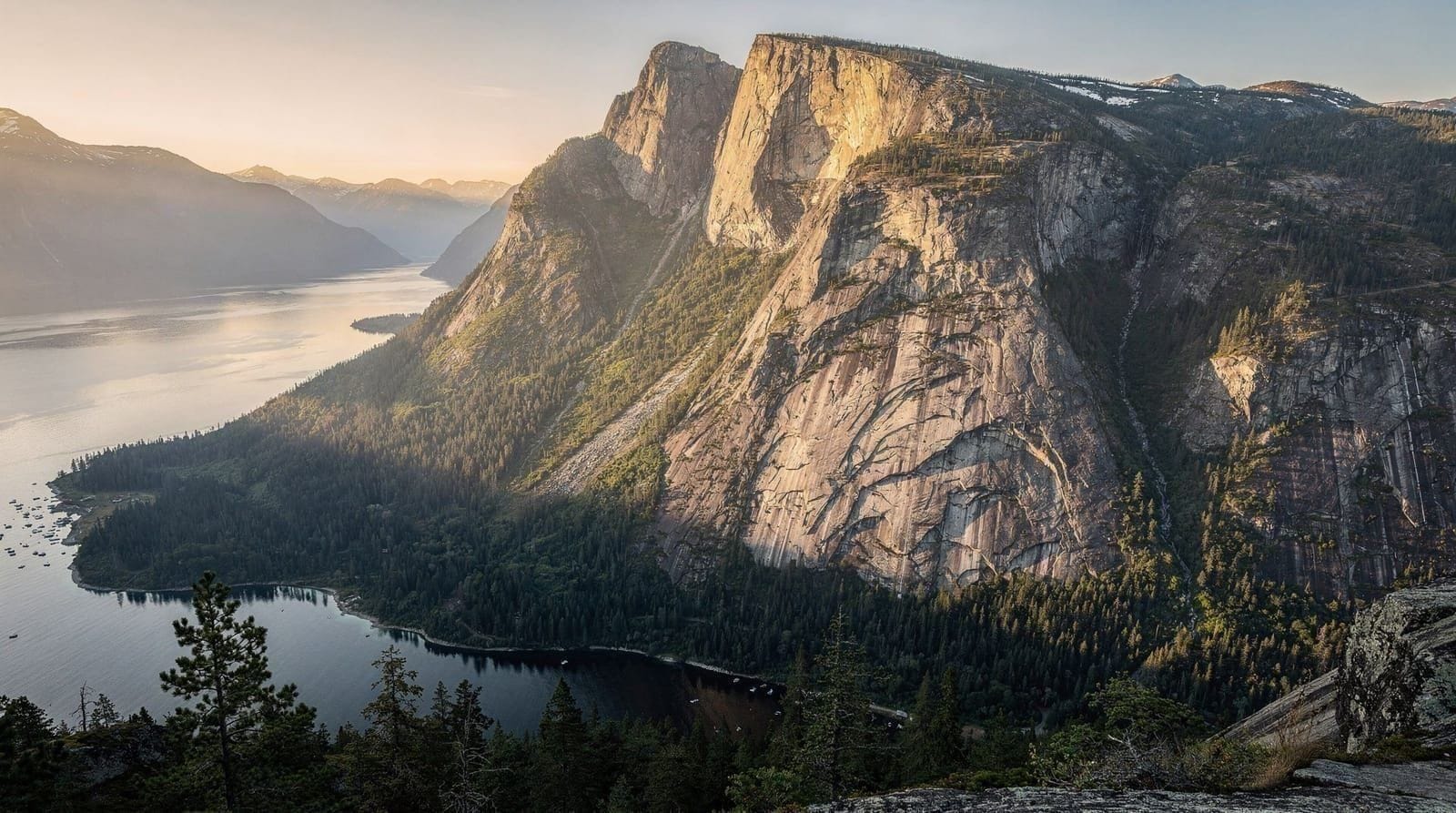
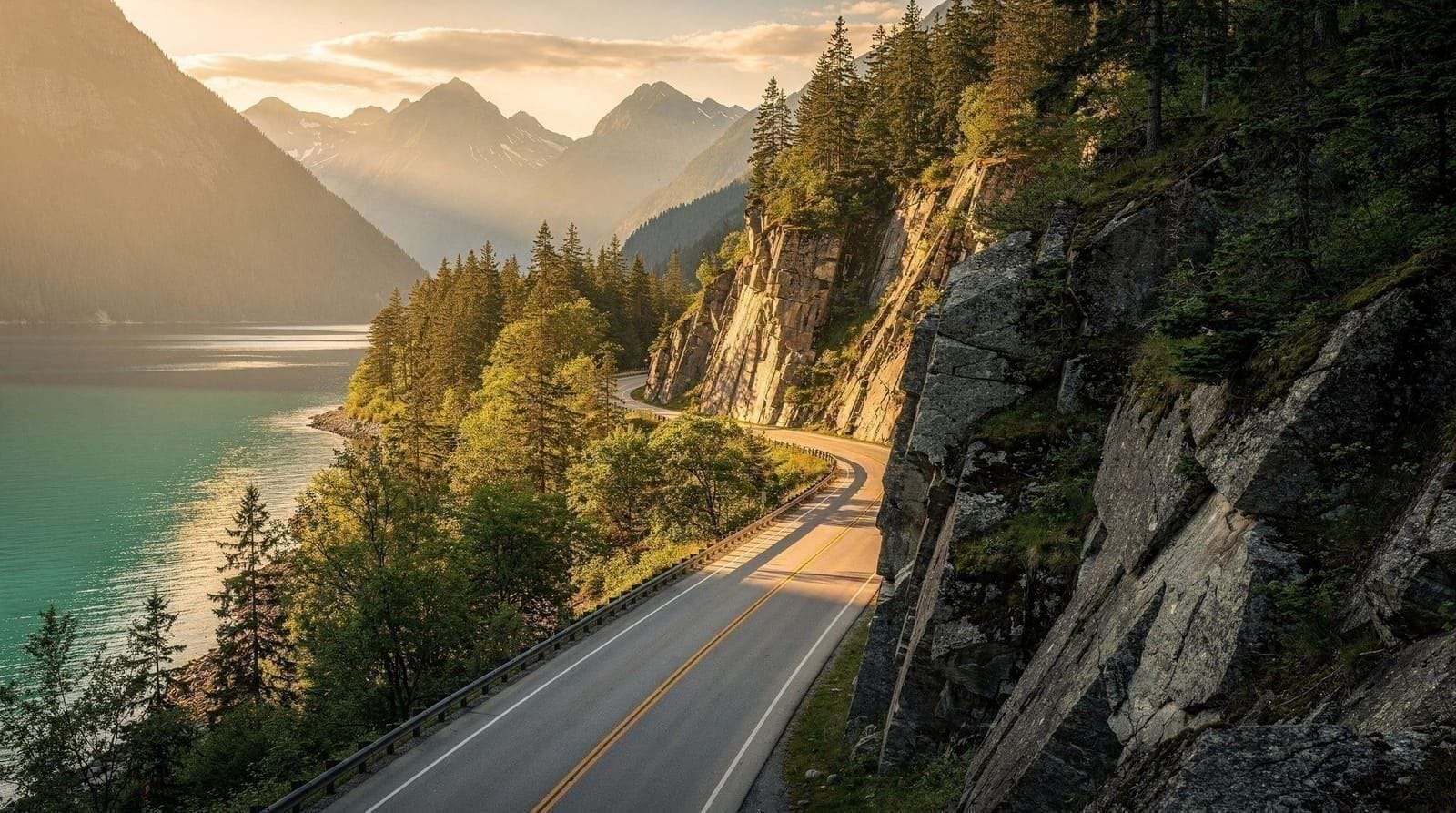
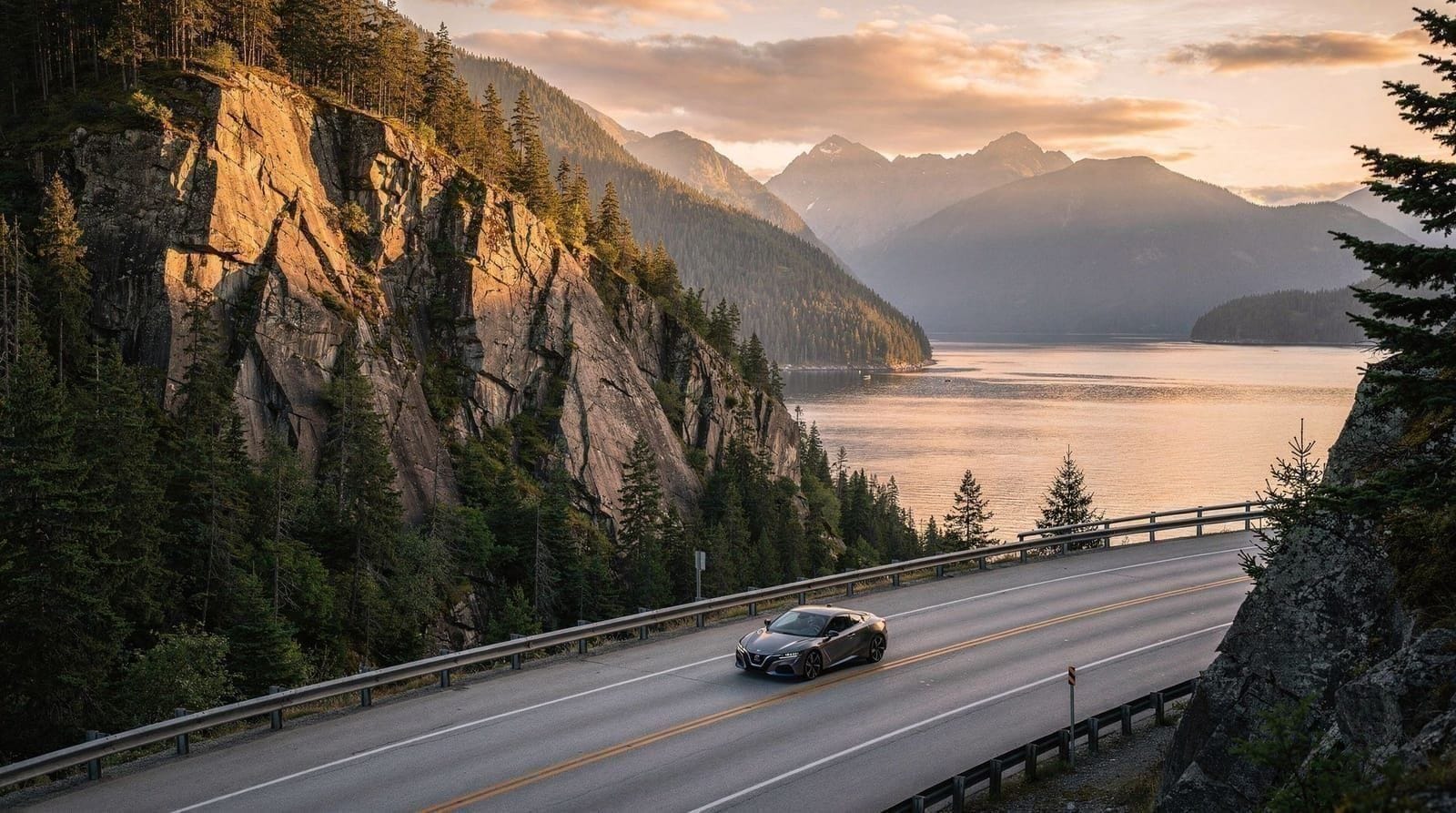
Highway 99 north out of Vancouver gets its nickname honestly — for most of the drive, the road is squeezed between the Coast Mountains on one side and Howe Sound on the other, with almost no stretch where you can’t see both at once. It’s also one of the few scenic drives anywhere that doubles as ordinary infrastructure: locals commute on it, ski buses use it, and the section past Squamish is a genuine climbing and mountain-biking destination in its own right, not just a corridor to somewhere else.
The full drive from downtown Vancouver to Whistler Village takes about 1 hour 45 minutes without stops, and Squamish sits roughly 45 minutes in, making it the natural midpoint for anyone treating this as a day trip rather than a one-way move north.
| Where | Highway 99, downtown Vancouver to Whistler Village |
| Drive time | About 1hr 45min one-way, no stops |
| Cost | Fuel + parking, around CAD 20-40 round trip; gondola tickets extra |
| Getting there | Rental car, or a guided day tour from Vancouver |
| Best time | Late spring to early fall for easiest driving; September is the quiet sweet spot |
What actually justifies stopping
Not every pullout on Highway 99 is worth the brake pumping. This is a working assessment of what pays off and what’s a photo op you can skip if you’re short on time — the honest version, not the version that lists all seventeen viewpoints as equally essential.
Horseshoe Bay and West Vancouver: the quiet warm-up
The highway technically starts once you’re through West Vancouver, and Horseshoe Bay — the BC Ferries terminal for Nanaimo and the Sunshine Coast — is the last proper town feel before the road narrows into mountain driving. It’s a pleasant fifteen-minute wander if you’re early for a ferry, with a small waterfront park and a few fish-and-chip spots, but it’s not a reason to leave extra time on its own. Most people pass through without stopping, and that’s the right call unless you’re catching a sailing.
Porteau Cove: the stop most itineraries skip
About 20 minutes past Horseshoe Bay, Porteau Cove Provincial Park is a genuinely underrated pullout — a boat launch and pebble beach looking straight down Howe Sound, popular with scuba divers because of an artificial reef and a couple of sunken vessels just offshore. It’s free, it has parking and washrooms, and it takes ten minutes to appreciate. Worth the five-minute detour off the highway if the weather’s clear; skip it in fog or rain, since the view is the entire point.
Britannia Beach: an actual attraction, not just a stop
Britannia Beach is a former copper mining town, and the BC Museum of Mining here is a real destination rather than a roadside curiosity — a mine tour goes underground into an original tunnel, and the giant ore-processing mill (visible from the highway) is one of the few surviving structures of its kind in North America. It’s a reasonable 45-to-60-minute detour if you have kids in the car or an interest in industrial history; if neither applies, the mill building itself is visible from the road and photographable without stopping.
Squamish: the corridor’s actual hub
Squamish is where the highway stops being a drive-through and starts being a destination. The town sits at the base of the Stawamus Chief, a granite monolith that draws rock climbers from around the world, and Shannon Falls — the third-highest waterfall in British Columbia — is a five-minute walk from a parking lot right off the highway, glacier-fed and most dramatic in early summer.
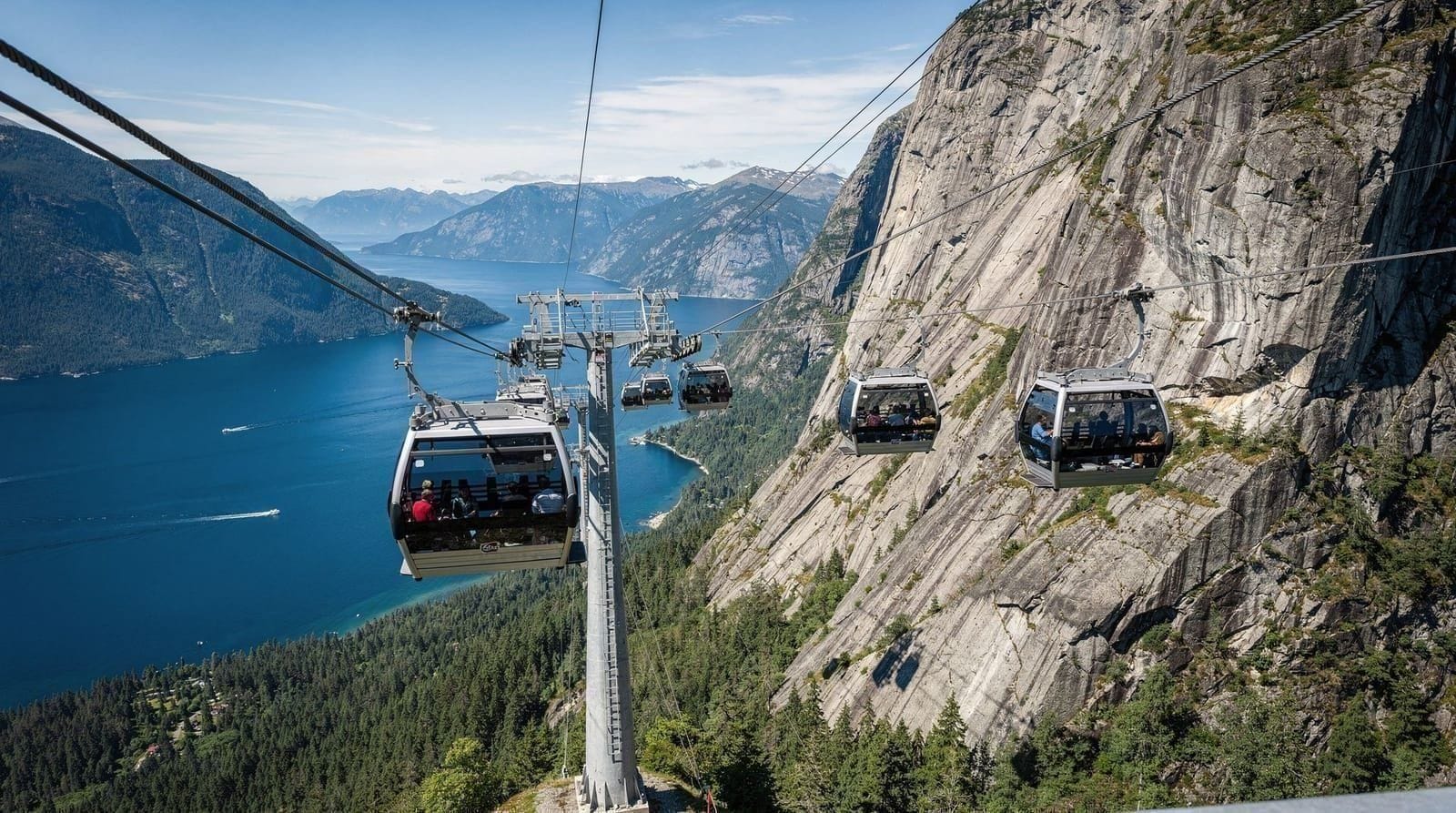
The Sea to Sky Gondola is the reason most visitors actually stop here rather than just glancing at the Chief from the road: it climbs 885 metres from sea level to alpine terrain in about ten minutes, with suspension bridges, viewpoints over Howe Sound, and a restaurant at the top.
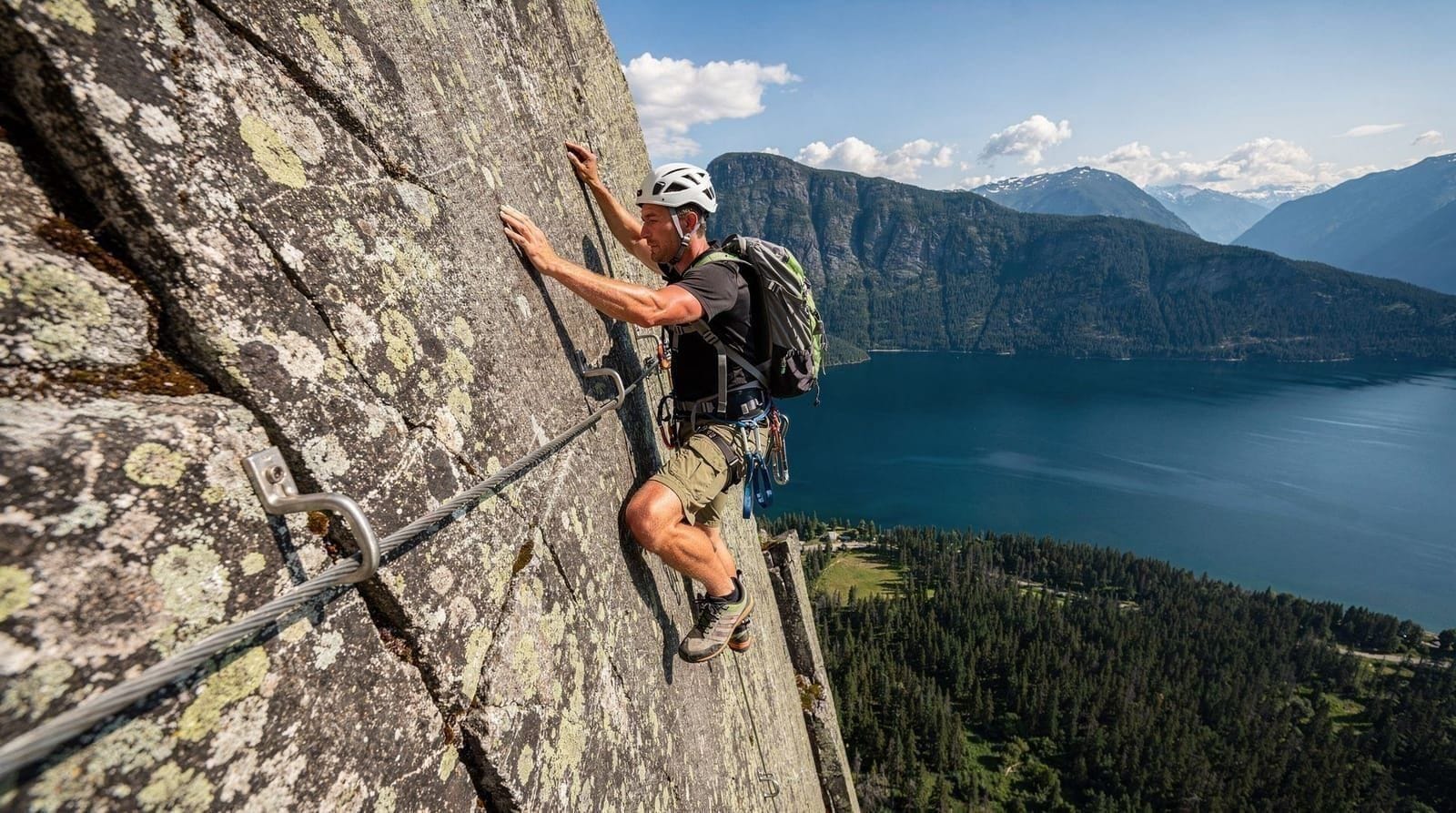
A Sea to Sky Gondola admission ticket covers the ride and access to the summit trail network; buying ahead matters on summer weekends, when the base parking lot fills and lineups build fast. Anyone wanting more than a viewpoint — actual rock or via ferrata climbing on the Chief itself — should look at the dedicated via ferrata Squamish guide before committing, since it’s a different kind of day than the gondola.
Squamish itself has grown into a legitimate town stop, with a walkable downtown, breweries, and a decent lunch selection — worth 30 to 45 minutes even for visitors who aren’t doing the gondola or the Chief. The wider Sea-to-Sky corridor has developed into a genuine adventure hub over the past decade, and rafting on the nearby Elaho and Cheakamus rivers is worth knowing about for visitors who want more than a viewpoint out of the stop — see the Squamish rafting guide for the operators and what a half-day trip involves.
Between Squamish and Whistler: mostly driving, a few worthwhile pauses
The stretch north of Squamish is where the highway earns its reputation for engineering — it was substantially rebuilt ahead of the 2010 Winter Olympics, and it shows: wider lanes, better sightlines, and far fewer of the hairpin turns that used to define this section. Brandywine Falls, about 25 minutes north of Squamish, is a quick five-minute walk from the parking lot to a 70-metre waterfall viewpoint and a reasonable stretch-your-legs stop if you haven’t hit Shannon Falls already. Function Junction, just south of Whistler proper, is a light industrial area with a few good coffee spots but nothing worth a dedicated detour.
Whistler: where the highway ends
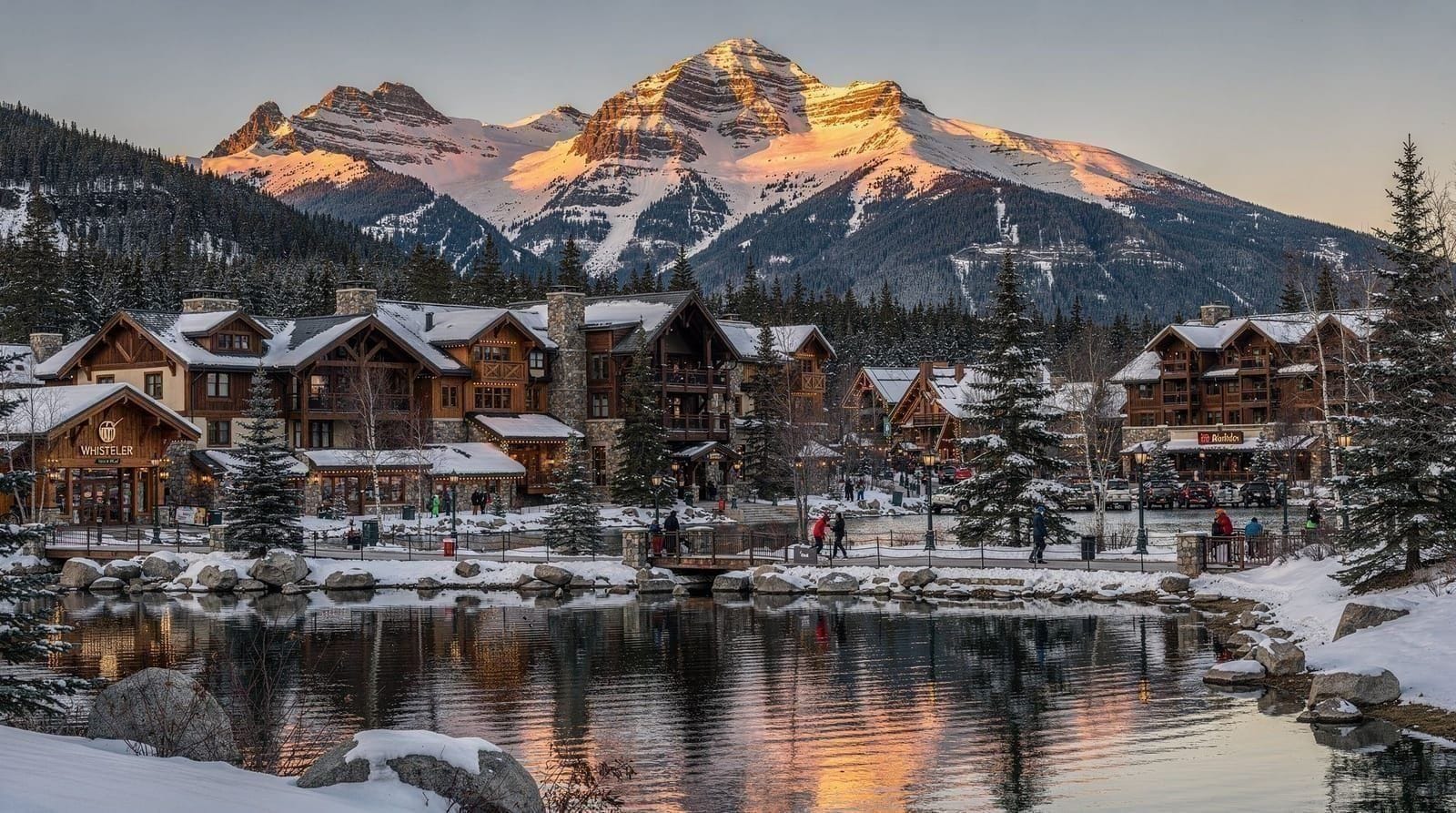
Whistler is the terminus, and depending on the season it’s either a ski town running at full volume or a mountain-biking and hiking base that empties out considerably between May and June before summer crowds arrive. The Whistler in summer guide covers what actually operates outside ski season, since a fair number of visitors are surprised how much of the village shuts down for shoulder-season maintenance in spring and late fall.
Driving it yourself versus a guided day trip
Doing the Sea-to-Sky corridor as a self-drive gives you control over how long you linger at each stop, which matters if photography or hiking is the point. It requires a rental car, comfort with mountain driving (steep grades, occasional weather shifts even in summer), and a plan for parking, which fills at the gondola and at Whistler Village on peak weekends.
The alternative is a guided day trip that handles the driving and usually bundles the Sea to Sky Gondola with Whistler Village time — a guided Sea to Sky Gondola and Whistler day trip covers both stops without the logistics of a rental, which is the better call for visitors without a Canadian or international driver’s license valid for BC roads, or anyone who’d rather not navigate mountain switchbacks on unfamiliar roads. For a rundown of what a full day trip actually covers hour by hour, the Sea-to-Sky 3-day road trip itinerary breaks the corridor into a longer, less rushed version if a single day feels tight.
Practical driving notes
Fuel up before leaving Vancouver or in Squamish — stations thin out north of town, and prices climb the further you get from the city. Snow tires are required by law on this stretch of Highway 99 from October 1 through April 30, and winter driving here is genuinely more demanding than city driving even for experienced drivers; check DriveBC conditions before departing between November and April. In summer, the main hazard is simply traffic on long weekends, when the drive to Whistler can take noticeably longer than the posted 1 hour 45 minutes.
Cell coverage drops out in patches along the corridor, particularly in the stretch through Garibaldi Provincial Park, so download offline maps before leaving Vancouver rather than relying on live navigation throughout.
Best time of year to drive it
Late spring through early fall is the most forgiving window for a first-time drive: dry pavement, long daylight (sunset past 9pm in July), and every stop along the corridor open and operating. Shannon Falls runs strongest in May and June with glacier and snowmelt feeding it; by late August it’s noticeably thinner. September is the quiet sweet spot — school traffic drops off, the gondola and Whistler Village are both still fully open, and weekday drives have almost no congestion.
Winter turns the same road into a different proposition entirely. It’s still driveable and, with proper tires and caution, genuinely beautiful under snow, but it demands respect: sudden weather changes, occasional closures after storms, and a slower overall pace. Visitors uncomfortable with winter mountain driving are better off taking a bus or a guided tour between December and March rather than self-driving, since the payoff (snow-covered peaks, fewer crowds at the gondola) doesn’t outweigh the risk for anyone unfamiliar with the conditions.
Parking and costs to budget for
Parking at the Sea to Sky Gondola base costs extra on top of admission if you haven’t prepaid, and the lot is genuinely undersized for summer weekend demand — arriving before 10am avoids both the fee scramble and the wait. Whistler Village parking is metered and not cheap in peak season; several day-lots on the village’s edge are cheaper than the ones directly in the pedestrian core, at the cost of a ten-minute walk. Britannia Beach’s mining museum and Shannon Falls are both free to park at, which makes them easy additions even on a budget-conscious drive.
Making it a day trip versus a longer stay
A single day covering Squamish and Whistler and getting back to Vancouver for dinner is entirely doable, especially if you commit to the gondola and skip the mining museum and Brandywine Falls. Stretching it to two or three days — overnighting in Whistler, adding rafting on the Elaho or Cheakamus rivers, or spending a full day on the Stawamus Chief — turns the same corridor into a proper regional trip rather than a highway drive with photo stops. Either version works; the honest advice is to pick one goal (the gondola, the Chief, or Whistler Village itself) rather than trying to fit all three into a rushed single day, since the corridor rewards lingering more than it rewards checking boxes.
The stops, ranked by how much time they deserve
Not every pullout earns equal billing, and a first-time driver benefits from knowing where to spend the day’s limited hours before setting out. Squamish and the Sea to Sky Gondola deserve the most time — 2 to 3 hours if the gondola is part of the plan, since the summit trail network and viewpoints reward lingering rather than a quick up-and-down.
Shannon Falls earns a genuine 20 to 30 minutes even though the walk itself is short, since the falls run strongest with a bit of standing time to take them in. Britannia Beach’s mining museum deserves 45 to 60 minutes only if industrial history or kids are part of the trip; otherwise the mill building photographs fine from the road. Porteau Cove and Horseshoe Bay are legitimately five-to-fifteen-minute stops — pleasant, but not worth reshuffling a schedule around.
Combining the drive with the wider Sea-to-Sky corridor
Visitors with more than a single day should treat the Sea-to-Sky corridor as a destination in its own right rather than a route between two cities. Squamish alone can fill a full day for climbers and mountain bikers, and eagle-watching in the nearby Cheakamus and Squamish river valleys draws its own dedicated winter visitors — see the eagle watching Squamish guide for the season and viewing spots.
Whistler itself is worth a multi-day stay for anyone skiing or mountain biking rather than day-tripping, and the Whistler without a car guide is useful for visitors who’d rather base themselves in the village and skip the return drive on the last day.
What a rental car costs versus a guided tour
Renting a car for the day runs roughly CAD 80-150 depending on vehicle class and season, plus fuel and parking at the gondola and in Whistler Village — a reasonable total of CAD 120-220 for a solo driver or split cheaply across a group of three or four.
A guided day tour, by contrast, typically runs CAD 150-250 per person but removes the driving, parking search, and route planning entirely, which is worth the premium for visitors without BC-valid licenses, anyone uneasy on mountain roads, or solo travelers who’d rather split the cost of a shared tour than a rental’s fixed price. Groups of three or more traveling together usually come out ahead with a rental; solo travelers and couples often find the guided option a wash on cost once parking and fuel are counted, with the added benefit of not driving.
Frequently asked questions about the Sea-to-Sky Highway
How long does the drive from Vancouver to Whistler actually take?
About 1 hour 45 minutes without stops. Add 2 to 3 hours if you’re stopping at the Sea to Sky Gondola, and 20 to 60 minutes more for Shannon Falls and Britannia Beach depending on how long you linger.
Do I need a rental car, or is a guided tour better?
Either works. A rental (CAD 80-150 for the day plus fuel and parking) gives you control over pacing and is usually cheaper for groups of three or more. A guided day tour (CAD 150-250 per person) removes the driving and parking-search entirely, which suits solo travelers, anyone without a BC-valid license, or drivers uneasy on mountain roads.
Is the drive safe for someone without mountain-driving experience?
Yes in summer, with normal caution — the highway has been substantially rebuilt with wider lanes and better sightlines. Winter (November through April) is more demanding and requires snow tires by law; visitors uncomfortable with winter mountain driving are better off with a guided tour or bus during those months.
What’s the single best stop if I only have time for one?
The Sea to Sky Gondola in Squamish. It delivers the corridor’s best combination of accessible alpine scenery, suspension bridges, and a restaurant at the summit, and it’s the reason most visitors stop in Squamish at all rather than driving straight through.
Is Shannon Falls worth the stop if I’m also doing the gondola?
Yes — it’s a five-minute walk from a parking lot right off the highway, and it pairs naturally with a gondola stop since both are in Squamish. It runs strongest in May and June and noticeably thinner by late August.