Vancouver Lookout
Vancouver: Entry Ticket for the Vancouver Lookout
- Free cancellation
What is the Vancouver Lookout and what does it cost?
The Vancouver Lookout is a rooftop observation deck atop the Harbour Centre tower in downtown Vancouver, reached by a glass elevator to a 360-degree indoor and outdoor viewing platform about 130 metres up. Admission runs around CAD 17-20, and same-day re-entry is included, so visitors can return for sunset on the same ticket.
The Vancouver Lookout doesn’t get the same attention as Grouse Mountain’s alpine views or Stanley Park’s seawall, mostly because it’s a straightforward rooftop deck rather than a destination in its own right — but that simplicity is exactly what makes it useful for visitors who want a fast, reliable orientation view of the whole city without committing to a half-day North Shore trip.
| Where | Harbour Centre tower, West Hastings Street, downtown |
| Cost | Around CAD 17-20, same-day re-entry included |
| Time needed | 30-60 minutes, longer with two visits (day + sunset) |
| Getting there | Steps from Waterfront SkyTrain/SeaBus station |
| Best time | Final hour before sunset through blue hour |
A bit of history
The Harbour Centre tower opened in 1977, and the Lookout was part of the original design from the start, conceived specifically as a public observation deck rather than added later as an afterthought. The glass elevator climbing the building’s exterior was a genuine novelty for Vancouver at the time and remains a small highlight of the visit today, offering views over the surrounding streets during the ascent itself rather than only once you reach the top. The tower has been renamed and rebranded more than once over the decades as ownership changed, though the Lookout’s core function — a public rooftop viewing deck reached by the exterior elevator — hasn’t changed since opening.
What the ticket actually gets you
The Lookout sits atop the Harbour Centre tower on West Hastings Street, and a glass elevator — itself a small novelty, climbing the outside of the building — reaches the observation level in under a minute. From there, a 360-degree deck combines an enclosed indoor viewing area with an open-air outdoor walkway, both circling the tower at roughly 130 metres above street level. A standard entry ticket covers unlimited time at the top and, importantly, same-day re-entry, so a single ticket lets you visit once during the day and again after dark without paying twice.
Booking and group options
Tickets can be bought online in advance or at the base of the tower, and advance booking mainly helps by locking in current pricing rather than skipping a significant line, since the Lookout rarely sees the kind of queue lengths common at Capilano or Grouse Mountain. Family tickets covering two adults and children typically offer a modest discount over individual pricing, and group rates are available for larger parties, worth asking about directly for school groups, tour groups or larger family gatherings visiting together.
What you can actually see
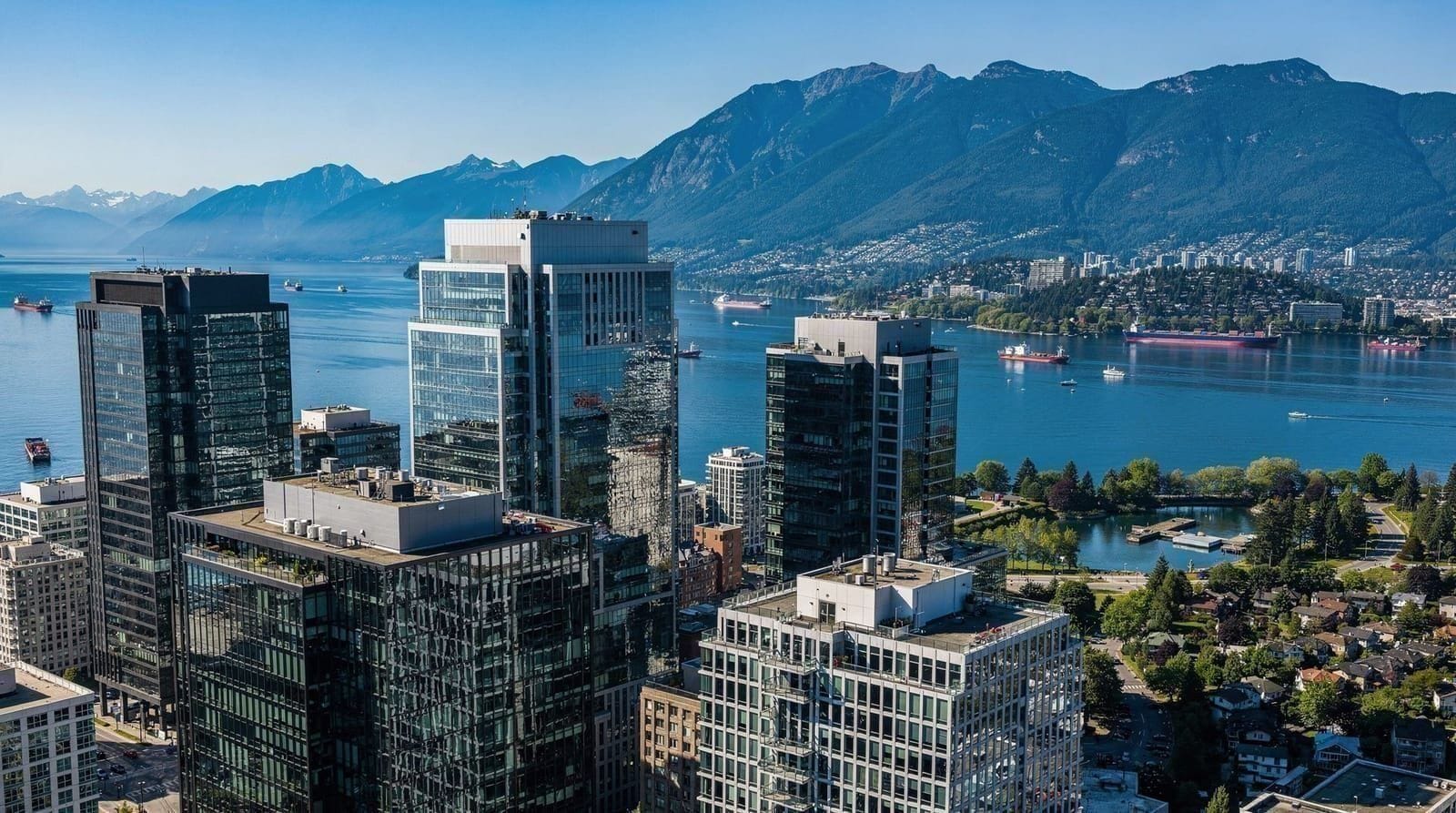
On a clear day, the view genuinely covers the whole city in a way that’s hard to replicate from ground level: downtown’s cluster of glass towers directly below, Stanley Park and Burrard Inlet to the north, the North Shore mountains rising behind Grouse Mountain and Capilano, the working port and Second Narrows, and on the clearest days, Vancouver Island and Mount Baker in Washington State on the horizon. Interpretive panels around the deck point out landmarks, useful for first-time visitors still building a mental map of the city.
How the deck is laid out
The observation level splits into two connected zones: an enclosed indoor section with floor-to-ceiling windows, heated and sheltered from wind and rain, and an open-air outdoor walkway circling the building’s exterior. Most visitors move between both, using the indoor section on a cold or wet day and stepping outside for unobstructed photos when weather allows. The full loop, indoor and outdoor combined, covers the tower’s entire circumference, so no single direction is missed regardless of which side you start from.
Pricing and value
At roughly CAD 17-20, the Lookout is priced well below most of Vancouver’s other paid viewpoints — Grouse Mountain’s Skyride runs three to four times as much, and FlyOver Canada a few blocks away costs more for an 8-minute simulated experience rather than a real, extended view. For visitors weighing whether a downtown viewpoint is worth paying for at all, the Lookout’s low price and same-day re-entry make it a low-risk add-on rather than a major budget line.
That said, free alternatives exist and are worth knowing about: Stanley Park’s Prospect Point delivers a genuinely good, ticket-free view over the Lions Gate Bridge and inlet, and the public viewing terrace atop the Vancouver Convention Centre’s west building offers a free harbor-level vantage without an elevator ride. The Lookout’s advantage over both is elevation and a full 360-degree sweep in one stop, rather than a single-direction view.
Interpretive panels and what you’ll actually learn
Beyond the view itself, the deck’s interpretive panels are worth reading rather than skipping past, particularly for first-time visitors still building a mental map of the city. They point out specific neighborhoods, mountain peaks and landmarks visible from each side of the tower, and cover a bit of the region’s geological and settlement history — useful context for understanding why Vancouver’s downtown occupies the particular peninsula it does, wedged between Burrard Inlet and False Creek. A single slow lap around the full 360-degree deck, reading each panel, takes about 15-20 minutes on its own, before factoring in time spent simply enjoying the view or taking photos.
Best time of day to go
Because re-entry is included, the ideal approach is two visits on one ticket: an early-to-mid afternoon visit for orientation and daytime photography, then a return in the final hour before sunset through blue hour, when the city lights start coming on against a darkening sky — consistently the most photogenic window at the top. Midday visits tend to have the clearest air quality for distant sightlines (mountains, Vancouver Island), while a hazier or overcast afternoon can still deliver a solid sunset if the cloud breaks toward the horizon.
A realistic budget breakdown
For a couple visiting the Lookout as a standalone stop, two adult tickets at roughly CAD 17-20 each run about CAD 34-40 total — genuinely one of the lower-cost paid activities in downtown Vancouver. Adding a coffee or light snack from a nearby café before or after brings a realistic total closer to CAD 50-60 for the outing, still well under the cost of a single Grouse Mountain Ultimate day pass for one person. Families with children should factor in the discounted family rate, which typically reduces the per-person cost further compared to buying tickets individually.
Combining with nearby attractions
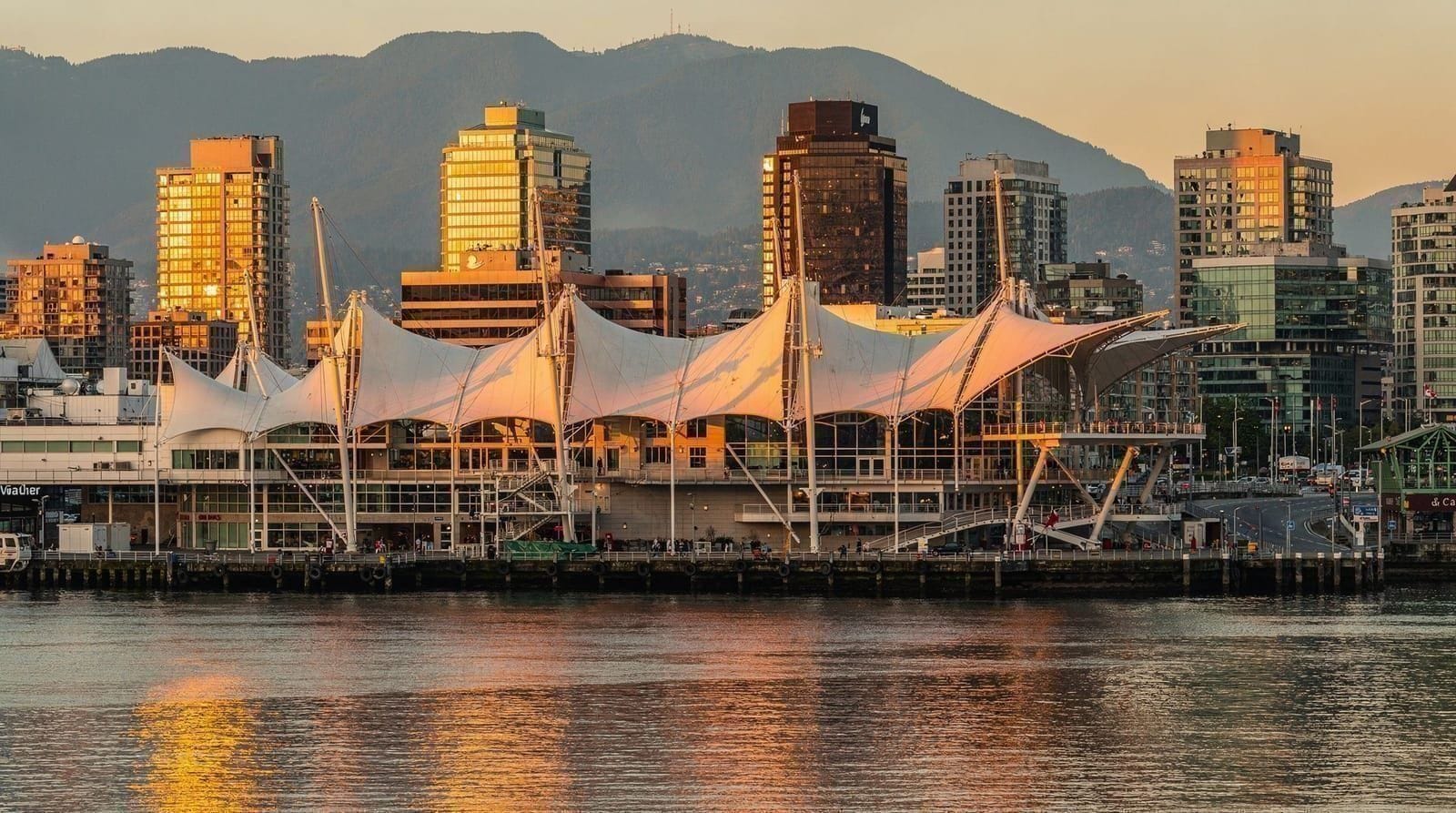
The Lookout sits within a short walk of Gastown, Canada Place and the Waterfront transit hub, making it easy to fold into a downtown walking day rather than requiring a dedicated trip. A combined FlyOver Canada and Vancouver Lookout ticket pairs the two nearby attractions at a lower combined price, useful for visitors who want both a real view and a simulated flight experience in the same afternoon.
For a broader guided overview that includes the Lookout as one stop among several, a Vancouver city highlights and Lookout tour covers more ground with a guide narrating along the way.
Common mistakes visitors make
The most frequent misstep is treating the Lookout as a single-visit ticket and not returning for the included same-day re-entry — the daytime and after-dark views are different enough that skipping the second visit leaves real value unused. A second mistake is visiting only at midday, missing the more photogenic golden-hour and blue-hour windows entirely. Third, some visitors underestimate how quickly weather can change the experience — a hazy midday view can clear into a much better sunset an hour later, so checking conditions before writing off a visit based on an early-afternoon look is worth doing given the ticket’s re-entry policy.
Accessibility and practical notes
The Lookout is one of the more accessible paid attractions in downtown Vancouver — the glass elevator and the observation deck itself, including both the indoor viewing area and the outdoor walkway, are wheelchair accessible without requiring stairs at any point. Restrooms are available at the observation level. The deck is entirely outdoors on its open-air portion, so weather-appropriate clothing matters, particularly given the wind at that height, which is noticeably stronger than street level even on a calm day downtown.
Getting there
The Harbour Centre tower sits directly above the Waterfront SkyTrain station, making the Lookout one of the most transit-accessible attractions in the city — visitors arriving by SkyTrain, SeaBus or bus into the downtown core can reach the entrance within a few minutes’ walk regardless of where else they’re coming from. There’s no dedicated parking at the tower itself; downtown’s paid lots and street parking serve the immediate area for anyone driving.
Comparing the Lookout to other Vancouver viewpoints
Vancouver has several paid and free viewpoints, and it’s worth understanding how the Lookout stacks up. Grouse Mountain’s Skyride delivers a genuine alpine summit experience at roughly three to four times the Lookout’s price, with far more to do once you’re at the top but also a much bigger time commitment. FlyOver Canada, a few blocks away, offers a simulated aerial view rather than a real one, at a somewhat higher price for a much shorter experience.
Free alternatives — Stanley Park’s Prospect Point and the public terrace atop the Vancouver Convention Centre’s west building — deliver good single-direction views without any admission cost, but neither matches the Lookout’s full 360-degree sweep from a genuine elevated vantage point. For visitors who want exactly one paid downtown viewpoint without a North Shore trip, the Lookout remains the most efficient option on a cost-per-view basis.
| Viewpoint | Price | Time commitment | Best for |
|---|---|---|---|
| Vancouver Lookout | Around CAD 17-20 | 30-60 min | Fast 360-degree orientation, same-day re-entry |
| Grouse Mountain Skyride | 3-4x the Lookout | Half day+ | Alpine summit, wildlife, hiking |
| FlyOver Canada | Somewhat higher | 30-45 min | Simulated flight, not a real view |
| Stanley Park’s Prospect Point | Free | Flexible | Single-direction view, no elevation |
| Convention Centre terrace | Free | Flexible | Harbor-level view, no elevator |
Visitors deciding between the Lookout and the Sea to Sky Gondola versus Grouse comparison should note those two are a different category entirely — both require a North Shore or Squamish trip and a half-day commitment, where the Lookout is a 30-60 minute downtown stop.
Photography tips
The outdoor deck’s unobstructed 360-degree access makes it genuinely useful for photographers, and a few practical notes help: the glass panels on the indoor viewing section can create reflections in photos, so shooting from the outdoor walkway generally produces cleaner results. A polarizing filter helps cut haze on longer-distance shots toward Vancouver Island or the Fraser Valley.
Because the deck is high enough to catch real wind, a lens hood and a secure camera strap are worth having, especially on the more exposed sides of the tower. The blue-hour window — roughly 20-30 minutes after sunset, when the sky still holds some color and the city lights are fully on — is consistently rated as the best single window for skyline photography from the deck.
Food nearby
The tower itself doesn’t offer extensive dining at the observation level, but the surrounding downtown blocks — including nearby Gastown and the Seymour and Granville shopping corridors — have a dense concentration of cafés and restaurants within a five-to-ten-minute walk, making it easy to pair a Lookout visit with a meal before or after without needing to plan around limited on-site food options.
What locals think of it
The Lookout occupies an odd place in local perception — most Vancouverites have visited it once, usually with an out-of-town guest, rather than treating it as a place to return to repeatedly the way some locals do with Stanley Park or Grouse Mountain’s annual pass. That’s less a criticism of the attraction than a reflection of its function: it’s a first-visit orientation tool more than an ongoing recreational spot, and locals generally recommend it specifically for that purpose to visiting friends and family rather than as a repeat destination in its own right.
Seasonal considerations
Because the deck is entirely open to the elements on its outdoor section, seasonal weather genuinely changes the visit. Summer (June-August) offers the most reliable clear-sky days and the longest golden-hour window given late sunsets, making it the strongest season for photography specifically.
Winter brings shorter days, meaning the sunset-to-dusk transition happens earlier in the afternoon rather than requiring an evening visit, which can actually work better for visitors on a tight schedule who don’t want to wait until 9pm for sunset the way they would in July. Rain doesn’t close the deck, though heavy rain reduces both comfort and visibility; the indoor viewing section remains usable regardless of weather, just without the outdoor deck’s unobstructed sightlines.
Who it’s best for
First-time visitors wanting a fast city orientation before exploring further on foot, photographers chasing a sunset-to-dusk transition without a North Shore trip, and budget-conscious travelers who want one paid viewpoint without spending on Grouse Mountain’s full day-pass price. Repeat visitors or anyone prioritizing the North Shore’s more dramatic (if pricier) alpine views may reasonably skip it.
Where it fits in a downtown day
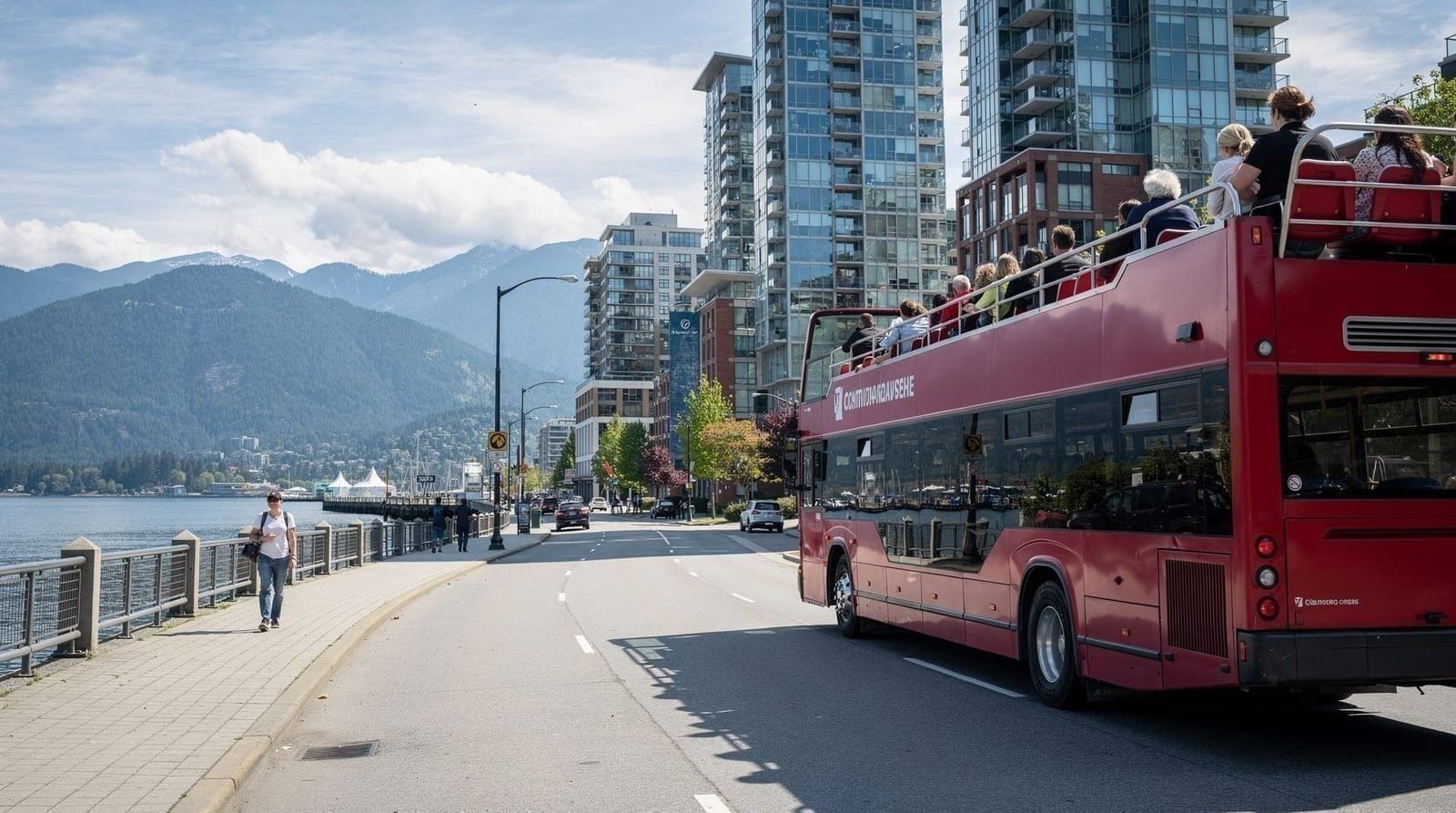
The Lookout works well as a short mid-afternoon stop within a one-day Vancouver sightseeing plan, bookended by Canada Place and a walk into Gastown for dinner. It also appears as a stop on several hop-on hop-off routes, making it easy to include without dedicated transit planning.
Rainy-day value
Because the indoor viewing section stays fully usable regardless of weather, the Lookout holds up better on a wet day than most outdoor viewpoints in the city — the rain guide lists it alongside Granville Island Market and FlyOver Canada as one of the more reliable rainy-day stops downtown. Visibility drops in heavy rain, but the indoor deck’s floor-to-ceiling windows still deliver a usable, if hazier, city view, and the same-day re-entry means a visitor can return later if the weather clears.
Frequently asked questions about the Vancouver Lookout
Is the Vancouver Lookout worth visiting if I’m also doing Grouse Mountain?
Yes, they serve different purposes — the Lookout gives a fast, low-cost downtown orientation view, while Grouse offers a full alpine day with wildlife and activities. Many visitors do both on different days rather than treating them as substitutes.
Can I visit the Lookout twice in one day on the same ticket?
Yes, same-day re-entry is included with admission, which is the ticket’s main advantage over most other paid viewpoints in the city.
How crowded does the Lookout get?
It rarely reaches the queue lengths seen at Grouse Mountain or Capilano, since the elevator moves visitors quickly and the deck itself is spacious enough to handle steady foot traffic without significant bottlenecks.
Can I bring children to the Vancouver Lookout?
Yes, it’s a family-friendly attraction with no age restriction, and the enclosed indoor viewing area gives an option for younger kids or anyone uneasy about the open-air outdoor deck’s height and wind exposure.
Is the Vancouver Lookout accessible by wheelchair?
Yes, the glass elevator and observation deck are wheelchair accessible, making it one of the more accessible paid viewpoints in the city compared to North Shore mountain attractions.
What’s the best time of day for photos?
The hour before sunset through blue hour, when the city lights begin coming on against a darkening sky, consistently produces the most striking shots from the deck.
How windy does it get on the deck?
Noticeably windier than street level, given the elevation — bringing a light jacket or windbreaker even on a warm day is worth it, particularly for the exposed outdoor sections of the walkway.
Can I bring a tripod for photography?
Small tripods are generally permitted, though check current on-site policy, since crowd levels can make larger setups impractical during busy periods. A monopod or simply bracing against the railing works well as an alternative for longer exposures at dusk.
Is there a restaurant at the top?
The tower has historically included dining options near the observation level; confirm current on-site food service when booking, since offerings can change seasonally.
Is the Vancouver Lookout worth it compared to a free viewpoint?
It depends on the priority. Free options like Stanley Park’s Prospect Point deliver a genuinely good single-direction view at no cost, but the Lookout’s full 360-degree sweep from a real elevated vantage point, plus same-day re-entry, is worth the modest admission for most first-time visitors wanting one comprehensive orientation view rather than several partial ones.
Does the Lookout get busy on cruise ship days?
It can see more foot traffic on days when several ships are in port, but the elevator’s fast turnaround and the deck’s overall spaciousness mean it rarely produces the kind of long queues seen at Capilano or Grouse Mountain on the same days.
Top experiences
Bookable activities with verified prices and instant confirmation on GetYourGuide.