Vancouver festivals — the year's events, month by month
Vancouver: City Highlights Tour
What are Vancouver's biggest festivals?
The Vancouver Cherry Blossom Festival (late March-mid April), the Vancouver International Jazz Festival (summer), Vancouver Pride Festival (early August), the Vancouver International Film Festival (late September-October), and the Vancouver Christmas Market (November-December) are the city's most established annual events, alongside Dine Out Vancouver, the restaurant festival running January-February.
Vancouver runs a genuinely full events calendar across all four seasons, though the character of it shifts dramatically depending on the time of year — outdoor summer festivals give way to indoor winter markets, and a single food-focused event in January carries as much local weight as anything the summer calendar offers. This guide walks through the year’s main festivals month by month, with enough practical detail to know which ones are worth building a trip around versus which ones are a pleasant bonus if the dates happen to overlap.
| Where | Citywide, with clusters downtown, Granville Island and the West End |
| Cost | Mostly free or low-cost; a few ticketed festivals |
| Time needed | A day or two built into a longer trip |
| Booking | Book restaurants/tickets as soon as each year’s dates are published |
| Best time | Depends on the event — see the month-by-month table below |
Vancouver’s festival year at a glance
| Month | Signature event | Book ahead? |
|---|---|---|
| January-February | Dine Out Vancouver | Yes, for popular restaurants |
| March-April | Cherry Blossom Festival | No, but check the bloom tracker |
| Summer | Jazz Festival, Pride Festival | Only for ticketed indoor shows |
| July 1 | Canada Day | No, but expect crowds downtown |
| Late Sept-Oct | Vancouver International Film Festival | For gala/premiere tickets only |
| Nov-Dec | Christmas Market, Carol Ships | For Carol Ships dinner seating |
January-February: Dine Out Vancouver
Dine Out Vancouver is the city’s largest annual restaurant festival, running roughly three weeks across late January into February, with participating restaurants citywide offering fixed-price menus that make trying higher-end spots meaningfully more affordable than the rest of the year. It overlaps with the city’s cheapest hotel season, making a Dine Out-focused January trip one of the strongest value propositions on the calendar — full detail on combining the two is in the winter guide. Reservations for popular participating restaurants fill up fast once the program’s list is published, so booking ahead matters more here than for a typical dinner reservation.
The festival typically features several price tiers across its participating restaurants, giving budget-conscious diners a way to try well-regarded kitchens without committing to full-price tasting menus, which is part of why the event has grown into one of the city’s most locally beloved annual traditions rather than a purely tourist-facing promotion.
March-April: cherry blossom season
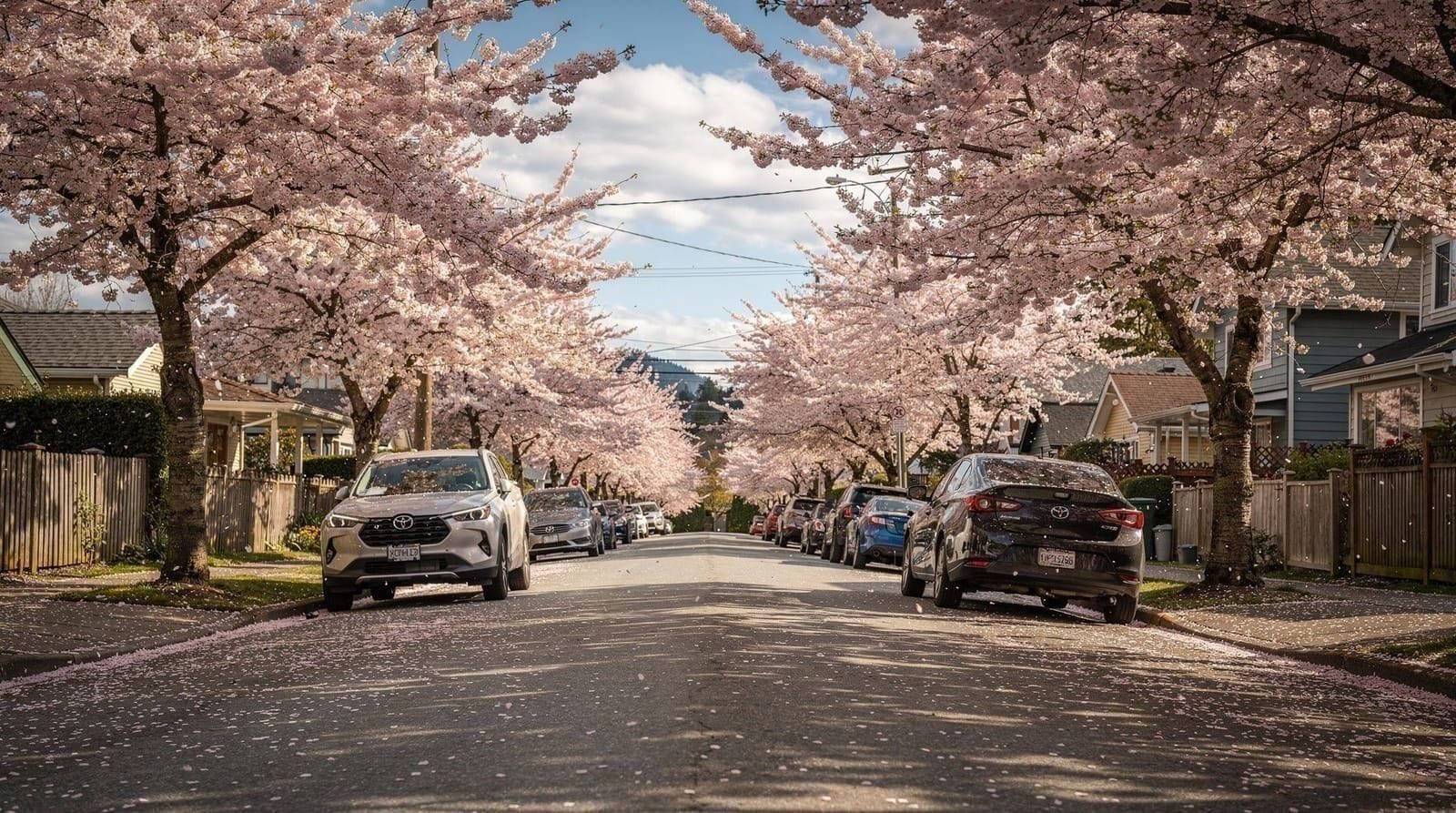
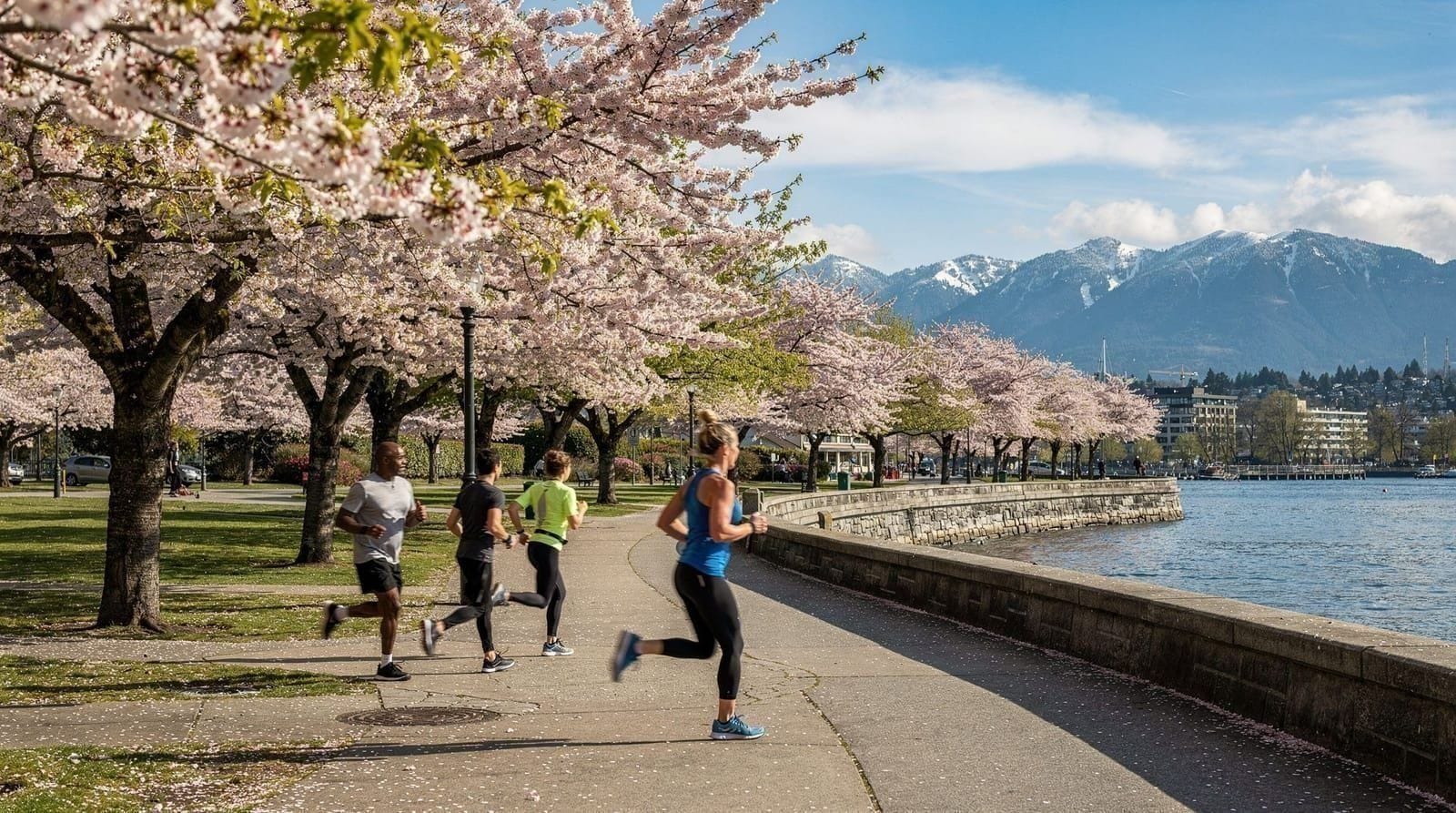
The Vancouver Cherry Blossom Festival runs late March through mid-April, tracking the city’s roughly 43,000 ornamental cherry trees as they bloom in a staggered wave across different neighborhoods and varieties. It’s largely a free, self-guided event built around a live bloom map rather than a ticketed festival, with peak bloom typically falling April 5-15 — the full breakdown, including best neighborhoods and photography tips, is in the dedicated cherry blossom guide. VanDusen Botanical Garden’s Sakura Days Japan Fair, usually held in April, adds a ticketed cultural program alongside the free citywide blossom viewing.
Spring break and family events
BC and broader North American school spring break typically falls in mid-to-late March, and while it isn’t a festival in the traditional sense, it creates a real bump in family-oriented programming at attractions like Science World and Grouse Mountain, along with higher demand at family attractions generally. It’s worth knowing about even though it’s not an event to plan a visit around specifically — more a crowd-and-pricing factor to account for if traveling with kids during that exact window.
Summer: the festival-heaviest stretch of the year
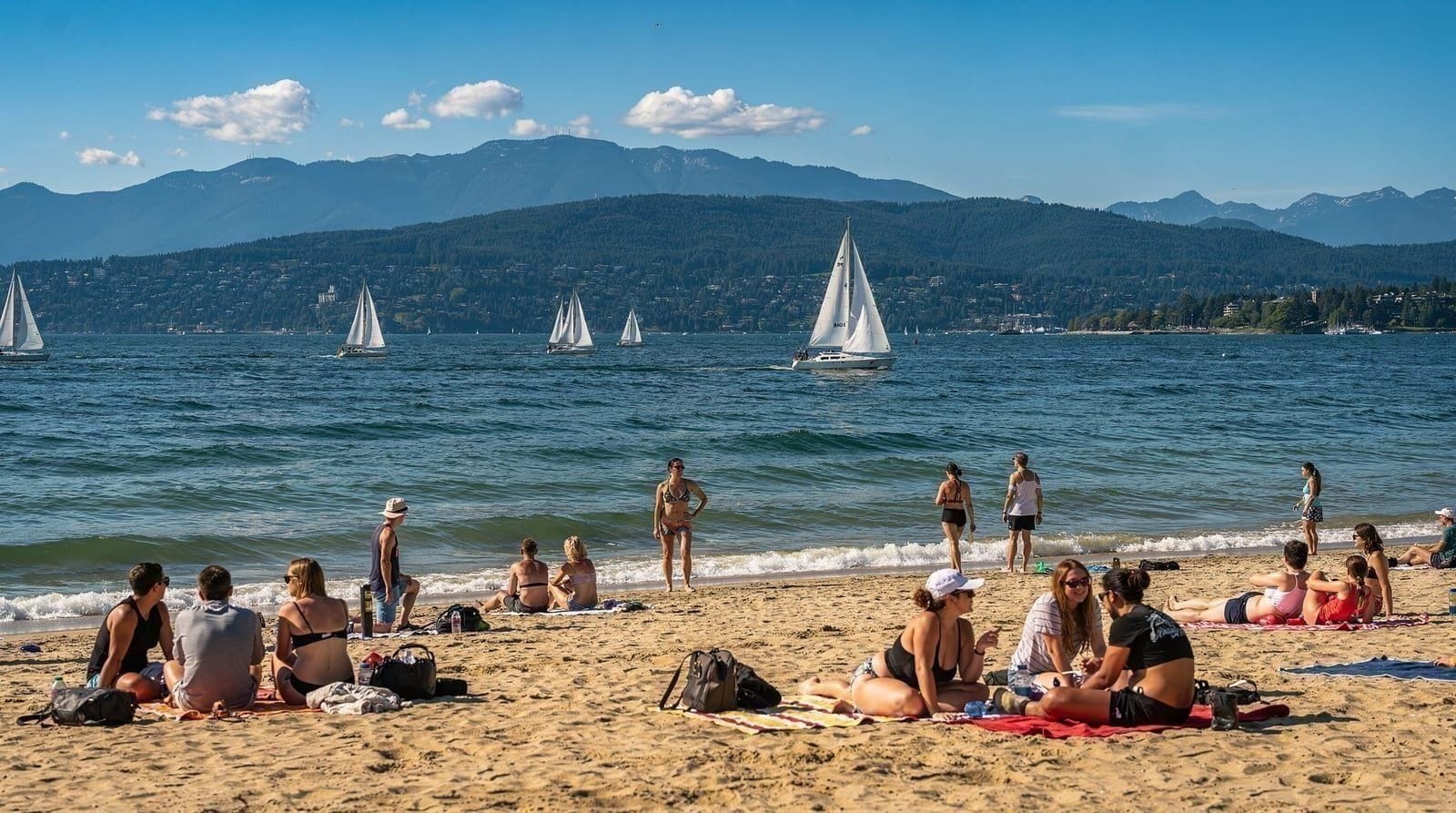
Summer carries the bulk of Vancouver’s outdoor festival calendar. The Vancouver International Jazz Festival runs across several weeks in summer with both ticketed indoor shows and free outdoor stages spread through downtown and Granville Island, drawing a mix of serious jazz fans and casual festival-goers who wander between the free stages.
Vancouver Pride Festival lands in early August, built around its signature parade through the West End and Davie Village along with a full week of related events, and is one of the largest Pride celebrations on Canada’s west coast. Outdoor movie series and neighborhood night markets fill weekday evenings throughout June, July, and August, adding low-key, free or low-cost programming beyond the headline events.
Canada Day and summer long weekends
Canada Day, July 1, brings fireworks, waterfront programming, and a genuine citywide celebration, with Canada Place and the downtown waterfront as the main hub — worth expecting heavier crowds and traffic downtown for the day itself if a trip happens to land on it. It’s also the unofficial start of peak summer tourist season, and hotel prices and attraction crowds noticeably step up around this date each year. For visitors building a summer trip, a Vancouver city highlights tour booked for the days just before or after major event weekends avoids the heaviest crowds while still catching the general summer atmosphere.
September-October: Vancouver International Film Festival
VIFF runs from late September into October, one of the city’s more significant cultural events, with screenings spread across venues concentrated downtown. It coincides with what’s already the strongest shoulder-season month for weather and value — see the fall guide — making a September VIFF trip a reasonable way to combine cultural programming with the year’s best all-around travel conditions.
Individual film tickets are typically available close to showtime, though headline galas and premieres sell out faster. The festival draws a genuine mix of international and Canadian cinema, and its venue clustering around the downtown core means a festival-focused day can easily combine two or three screenings with regular sightseeing between them, rather than requiring a dedicated festival-only itinerary the way some larger film festivals do.
Thanksgiving and fall harvest events
Canadian Thanksgiving falls on the second Monday of October and brings a domestic long-weekend bump in demand for restaurants, day-trip ferries, and family attractions, alongside harvest-themed events at farmers markets and, further afield, the Fraser Valley and Okanagan wine country. It’s a lower-key event than the summer festivals but worth noting for anyone whose October trip happens to land on that specific weekend.
November-December: Christmas Market and holiday season
The Vancouver Christmas Market, running roughly mid-November through late December in a European-style setup with mulled wine and food stalls, is the city’s signature winter event and draws steady crowds through the entire holiday season. The PNE Winter Fair adds a second December draw aimed more at families, and downtown’s holiday light displays — particularly along Robson Street and VanDusen Garden’s Festival of Lights — extend the season’s programming into evening walks despite the early sunset and likely rain.
A Carol Ships dinner cruise, running through December, adds a specifically Vancouver take on holiday programming, with a fleet of decorated boats parading through the harbour most evenings during the season. Full detail on structuring a holiday-season visit is in the winter guide.
Neighborhood-specific event patterns
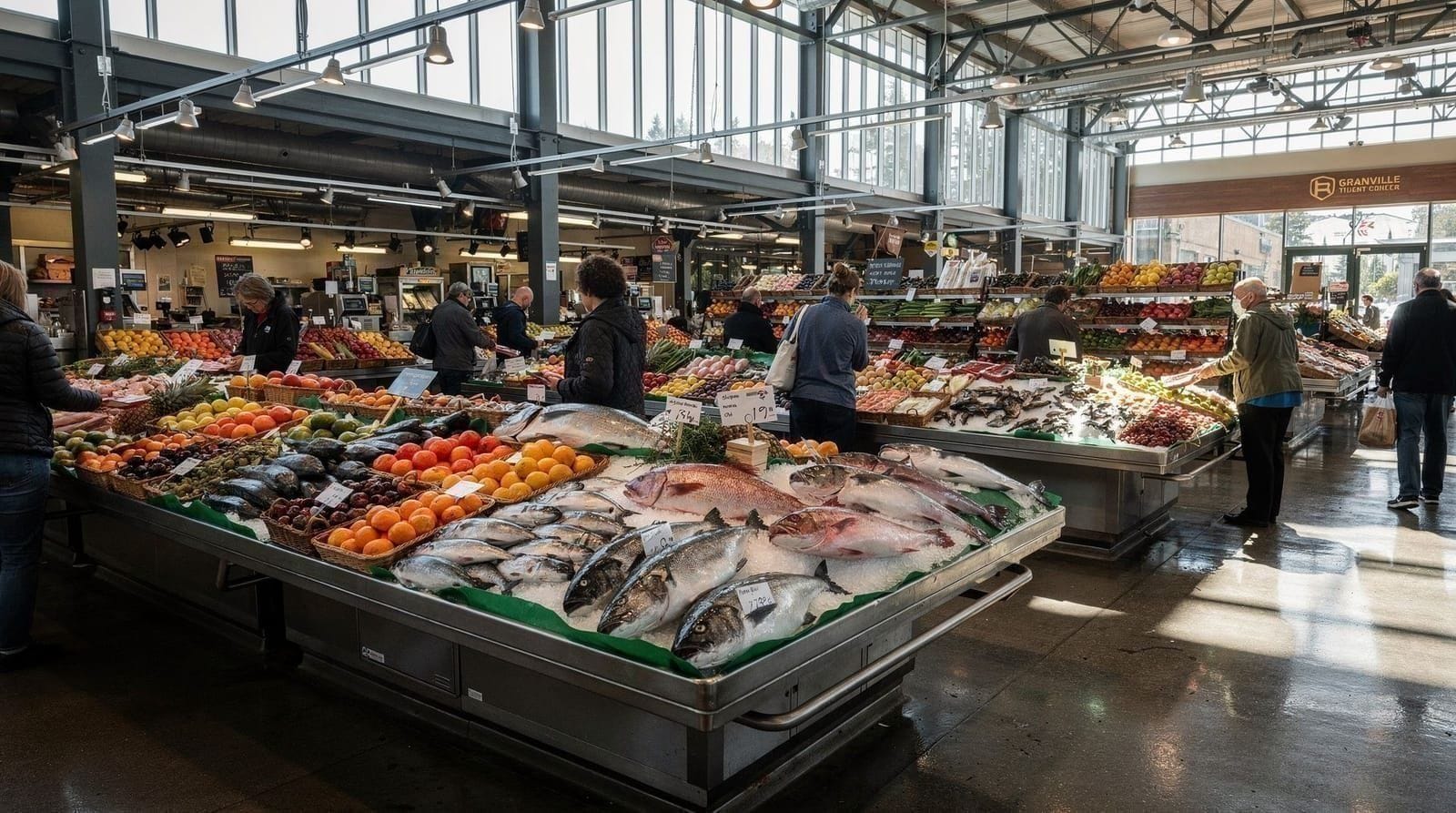
Granville Island and Gastown both run their own smaller seasonal programming beyond the citywide festivals — Granville Island’s market hosts seasonal harvest displays and holiday craft fairs, while Gastown leans into its Christmas lighting and, in summer, extended patio hours tied to the neighborhood’s cocktail bar scene. Neither requires specific advance planning the way the larger citywide festivals do, but they’re worth checking if a trip happens to overlap with a specific weekend event at either location.
How to plan a trip around festivals versus just being aware of them
Some events are worth actively building a trip’s dates around — Dine Out Vancouver for food-focused travelers, cherry blossom season for a specific two-week window, VIFF for film enthusiasts. Others are better treated as a pleasant bonus if the dates happen to align rather than a planning priority — the Jazz Festival’s free outdoor stages, Pride Festival, and the Christmas Market all add real value to a trip that’s already happening in that window, but rarely justify shifting travel dates on their own unless the specific event is a personal priority.
The festivals-aware itinerary approach is the same either way: check the current year’s exact dates for whichever events matter, and build a day or two of flexibility around them rather than a rigid hour-by-hour schedule.
Booking around major events
Hotel prices and availability tighten noticeably around Canada Day, the Christmas Market season, and the Pride Festival weekend specifically, on top of whatever the underlying seasonal pricing already looks like. Restaurant reservations for Dine Out Vancouver’s participating spots and any ticketed festival programming (select Jazz Festival shows, VIFF galas) benefit from booking as soon as each year’s program is published rather than waiting until arrival. For events without ticketing — cherry blossom viewing, most Jazz Festival outdoor stages, the Christmas Market’s general entry — no advance booking is needed, though arriving earlier in the day for popular spots still improves the experience.
Free events versus paid festivals
Most of Vancouver’s biggest draws lean free or low-cost: cherry blossom viewing costs nothing beyond transit, the Jazz Festival’s outdoor stages are free even though indoor ticketed shows exist alongside them, Canada Day fireworks and waterfront programming are free, and general entry to the Christmas Market carries only a modest admission fee compared to similar markets elsewhere.
The genuinely paid events are narrower: Dine Out Vancouver’s fixed-price menus (still a discount versus normal à la carte pricing, but not free), VIFF tickets, and specific ticketed Jazz Festival headline shows. This mix matters for budget-conscious travelers — a Vancouver trip timed around the free end of the festival calendar can add meaningful value without meaningful added cost, which is a genuinely different proposition from festival cities where the major draws are all ticketed.
Comparing Vancouver’s calendar to other festival cities
Vancouver doesn’t have a single mega-event on the scale of a Rio Carnival or an Edinburgh Fringe that dominates a specific window and reshapes the whole city around it. Instead, its calendar is a series of smaller, well-established events spread fairly evenly across the year, each significant locally without overwhelming the city’s normal rhythm. This has a practical upside for visitors: unlike destinations where a major festival means booking a year ahead and expecting the entire city to be swallowed by the event, Vancouver’s festivals add texture to a trip without requiring the same level of advance planning or accepting the same crowding trade-off, VIFF and Dine Out Vancouver’s most popular bookings aside.
A sample festival-timed trip
For travelers with flexible dates and a specific interest in Vancouver’s events calendar, a few combinations work particularly well. A late-March to mid-April trip catches the tail of Dine Out Vancouver’s extended promotional period in some years alongside the start of cherry blossom season, giving both a food and a nature-focused highlight in one window.
An early August trip combines Pride Festival with peak whale watching season and the last of summer’s long daylight, covered in the summer guide. A late-September trip pairs VIFF with the year’s best all-around shoulder-season conditions. None of these require sacrificing the rest of a normal sightseeing itinerary — each festival slots into a day or two of an otherwise standard multi-day trip rather than replacing it.
Common festival-planning mistakes
The most common mistake is assuming a specific festival’s exact dates without checking the current year — most of these events shift by a week or two year to year, and cherry blossom timing in particular can move even more than that depending on weather. The second is under-booking restaurant reservations during Dine Out Vancouver, assuming a fixed-price menu event will have less demand than regular dining, when in practice popular participating restaurants often see their heaviest demand of the year during the festival specifically, since diners are trying spots that are normally out of budget or fully booked.
The third is treating every event on this calendar as worth restructuring a trip around, when in reality only a handful — cherry blossoms, Dine Out Vancouver, and VIFF for film-focused travelers — genuinely justify shifting travel dates, with the rest better treated as a bonus for whenever a trip happens to land.
Checking each event’s current-year dates a few weeks before finalizing travel plans, rather than relying on last year’s calendar, avoids the disappointment of arriving a week too early or too late for whichever event mattered most. This is especially true for cherry blossom timing, which shifts more from year to year than any other event on this calendar, and worth double-checking even for travelers who’ve visited during a previous year’s blossom season and assume the same dates will hold.
Neighborhood events beyond the citywide calendar
Beyond the headline festivals, individual neighborhoods run their own smaller annual events worth knowing about if a trip’s dates happen to align. Chinatown’s Lunar New Year celebrations, typically falling in late January or February depending on the lunar calendar, bring parades and cultural programming to the historic core of the neighborhood. Commercial Drive’s Italian Day, usually held in June, celebrates the street’s Italian-Canadian heritage with a full day of closures and street festival programming.
Richmond’s Night Market, running through summer weekends, is a genuinely distinct experience from the downtown festival scene, drawing heavily on the area’s Asian food culture with dozens of food stalls and vendors in an outdoor night-market format closer to what’s found in parts of Asia than typical North American street fairs. None of these are essential for a first-time visitor, but they’re worth a quick date check for anyone with a specific cultural or culinary interest.
Festival travel costs
Festival timing affects trip cost more through accommodation demand than through the events themselves, given how many of Vancouver’s signature events are free or low-cost to attend. Canada Day, Pride Festival weekend, and the peak Christmas Market weeks all see hotel rates climb above the baseline for their respective seasons, sometimes meaningfully so for last-minute bookings.
Booking accommodation as early as possible for any of these specific windows — ideally a month or more ahead for Canada Day and Pride, given how far in advance serious festival-goers plan — helps avoid the worst of the price spike. Dine Out Vancouver adds cost in a different way, since the festival’s appeal is specifically about spending on food, but even there the fixed-price format keeps costs more predictable than a comparable night out the rest of the year.
The bottom line on Vancouver’s event calendar
Vancouver’s festival calendar has a genuine highlight in nearly every month, but the character shifts enough between seasons that “when are the festivals” isn’t a single answer — it depends on whether the priority is food (January-February), blossoms (April), outdoor music and Pride (summer), film (fall), or holiday markets (winter).
The best time to visit Vancouver guide covers how these events interact with the broader seasonal weather and pricing picture, and most events pair naturally with whichever seasonal guide matches their timing — spring, summer, fall, or winter — for a fuller picture of what else is worth doing during that same window.
A trip planned around even one of these events, rather than a generic date range, tends to leave a stronger, more specific impression than a purely calendar-driven visit — the difference between “we happened to be in Vancouver in September” and “we planned around VIFF and caught the best whale watching of the year at the same time.”
Festival crowds versus everyday Vancouver crowds
It’s worth distinguishing between a festival’s dedicated crowd and Vancouver’s ordinary seasonal crowding, since the two compound rather than substitute for each other. A Pride Festival weekend in early August, for instance, adds its own crowd on top of what’s already peak summer tourist season, meaning hotel prices and attraction lines reflect both factors simultaneously rather than just the festival itself. The same logic applies in reverse for shoulder-season festivals — VIFF in late September lands during an otherwise quiet month, so the festival’s added crowd is genuinely more noticeable locally even though the absolute numbers are smaller than a summer weekend.
Festivals for first-time versus repeat visitors
First-time visitors are usually better served treating festivals as a bonus rather than the trip’s organizing principle — a first Vancouver trip has enough non-negotiable sightseeing (Stanley Park, Granville Island, the North Shore) that building the whole itinerary around a single event risks crowding out the basics. Repeat visitors who’ve already covered the essentials are in a better position to plan a return trip specifically around Dine Out Vancouver, cherry blossom season, or VIFF, since they’re not also trying to fit in Capilano and Grouse Mountain for the first time in the same window.
Top experiences
Bookable activities with verified prices and instant confirmation on GetYourGuide.