Squamish day trip from Vancouver — climbing, waterfalls, and the gondola
Squamish: Sea to Sky Gondola Admission Ticket
- Free cancellation
How far is Squamish from Vancouver and is it worth a day trip?
Squamish is about 45 to 60 minutes from downtown Vancouver by car via the Sea-to-Sky Highway, making it one of the easiest and most flexible day trips in the region. It's worth doing for the combination of Shannon Falls, the Sea to Sky Gondola, and the town's outdoor recreation scene, all reachable within a short, manageable drive.
Squamish has transformed over the past two decades from a logging and industrial town into one of British Columbia’s most active outdoor recreation hubs, and it sits close enough to Vancouver — under an hour by car — that it works as a genuinely flexible day trip, whether the goal is a quiet scenic drive or a full day of climbing, rafting, and hiking.
| Where | ~65km north of Vancouver on Highway 99 |
| Time needed | 45–60 min drive; half to full day on-site |
| Cost | Around CAD 15–200/person depending on activities |
| Getting there | Car (self-drive) or scheduled bus |
| Best time | Late spring–early fall for the full activity range |
Getting there
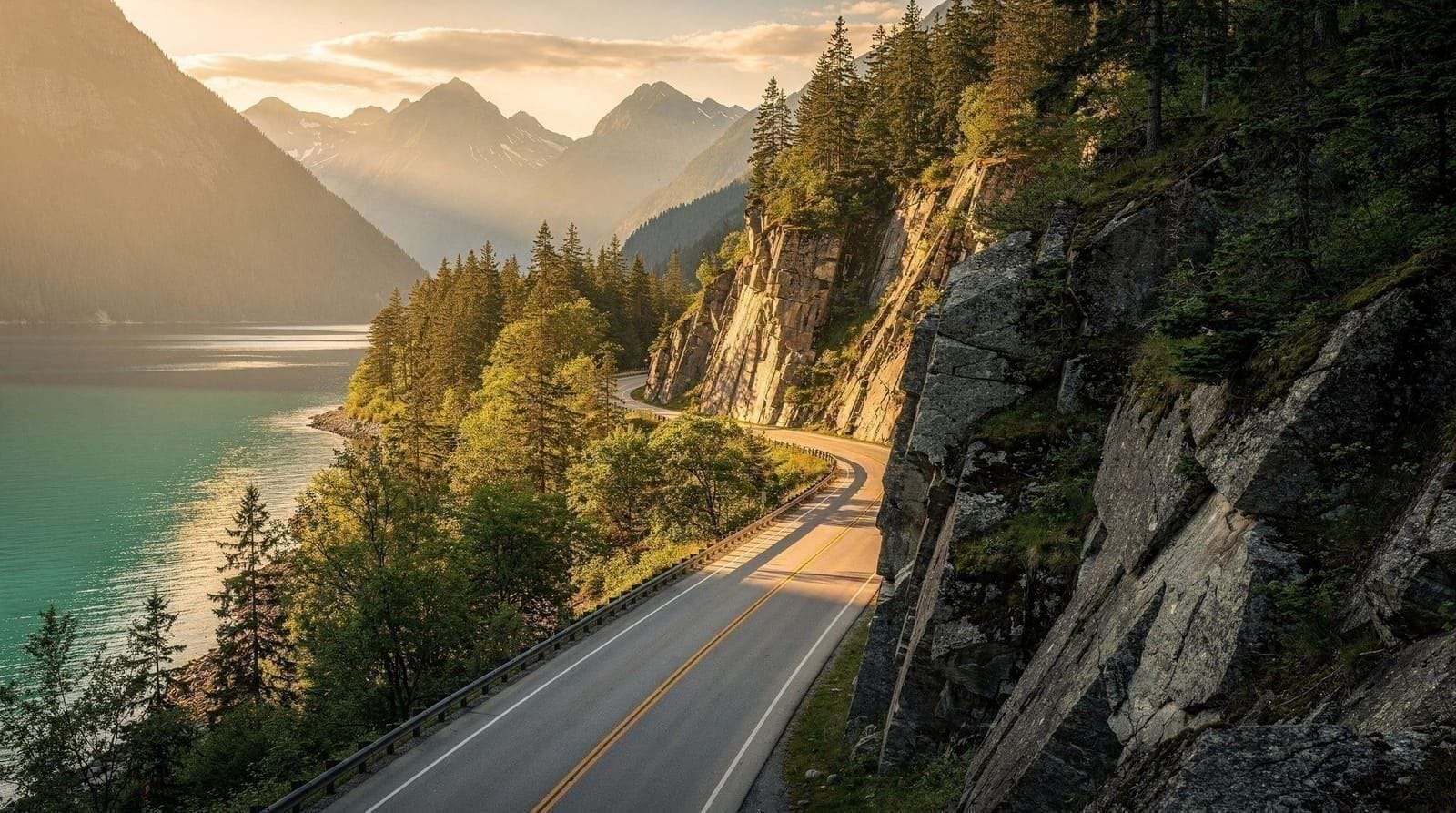
Squamish sits about 65 kilometres north of Vancouver on Highway 99, the Sea-to-Sky Highway, and the drive typically takes 45 minutes to an hour depending on traffic, with the route hugging the Howe Sound coastline for much of its length. It’s a considerably shorter and more flexible commitment than continuing on to Whistler, and one of the few regional day trips where a late, spontaneous departure still leaves plenty of daylight for a full day once you arrive. A scheduled bus service also connects downtown Vancouver to Squamish multiple times daily for travelers without a car.
The Stawamus Chief
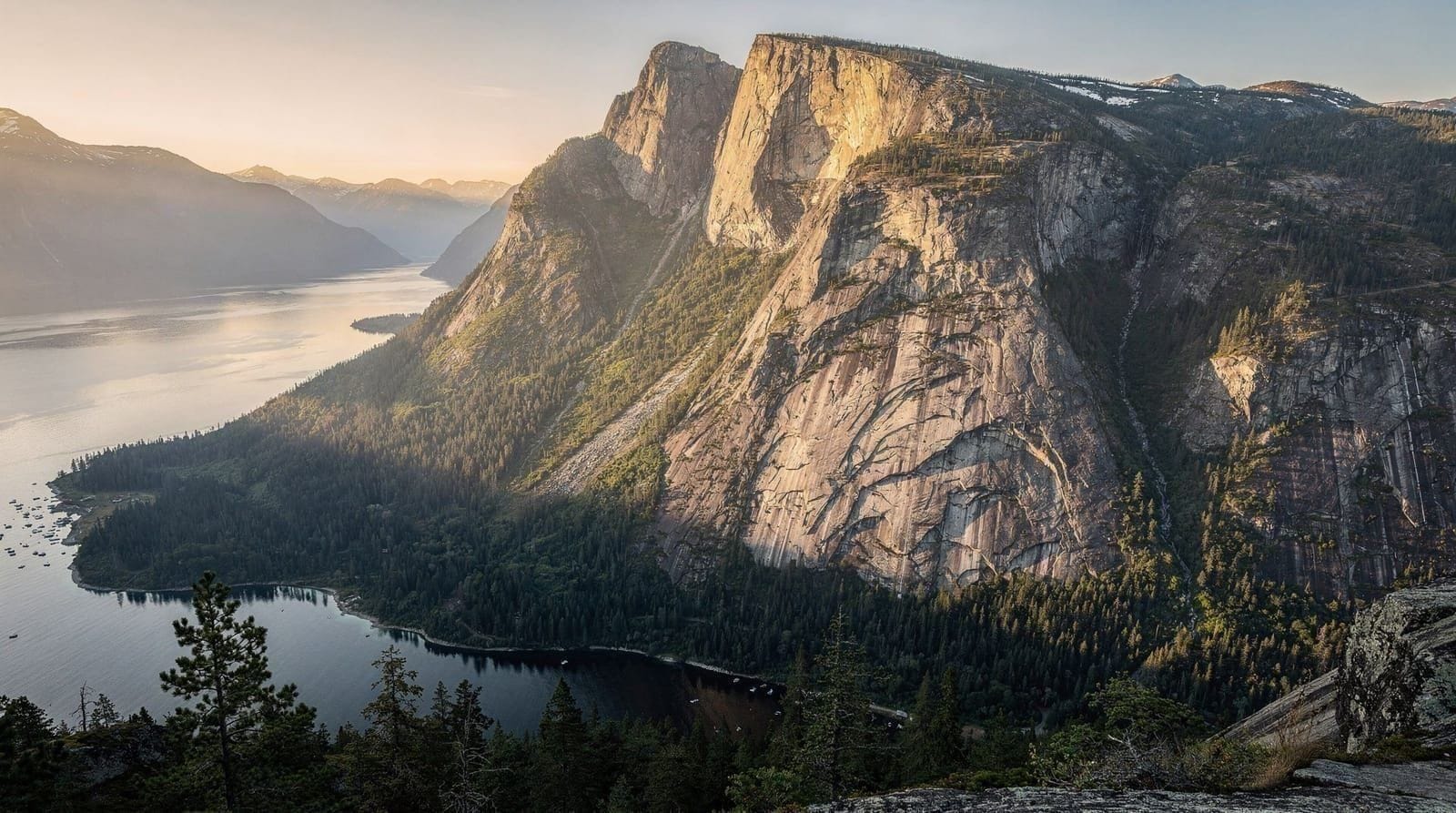
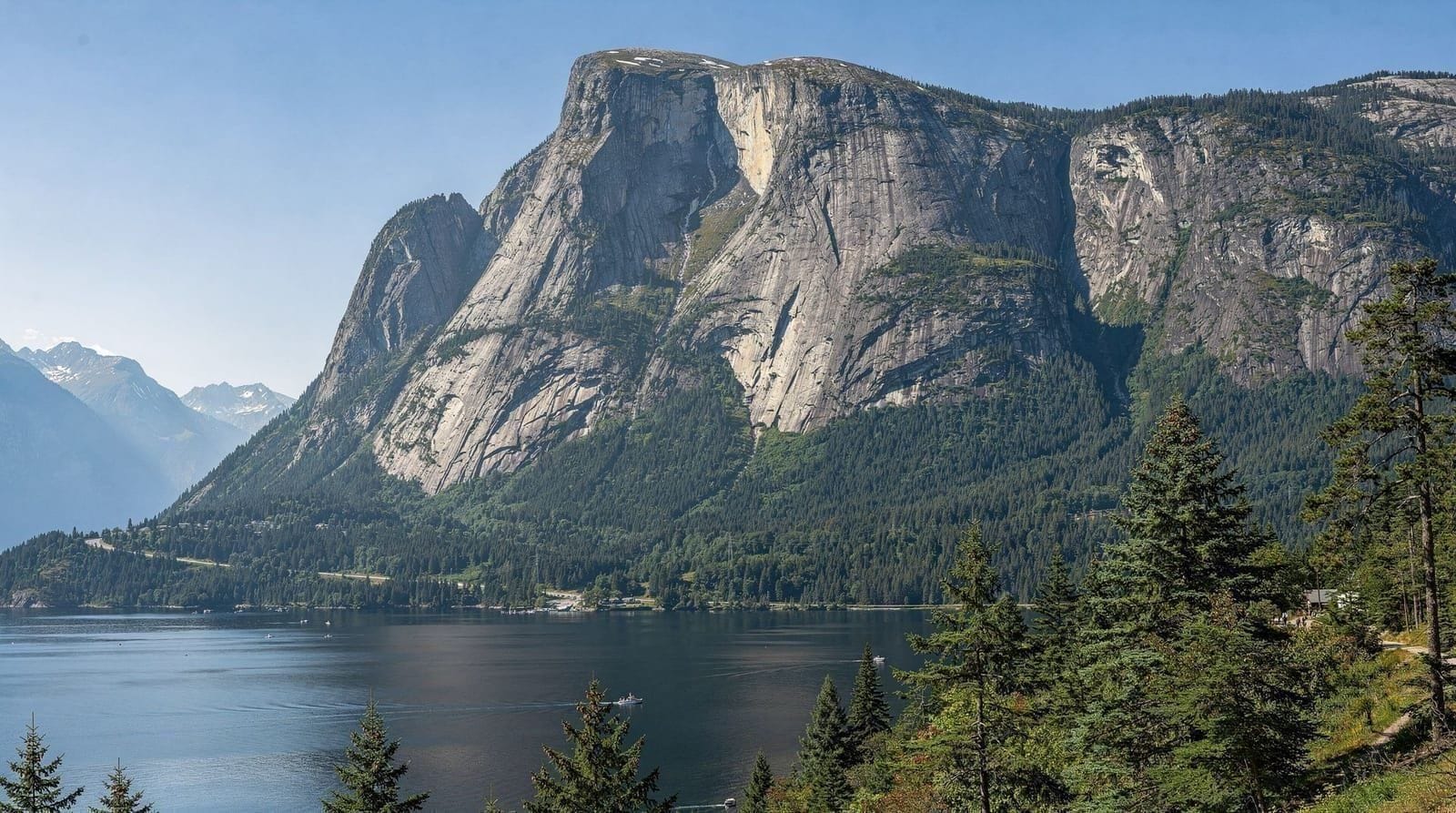
The single most recognizable landmark in Squamish, the Stawamus Chief is a massive granite monolith visible from the highway well before you reach town, and one of the largest granite monoliths in the world. For non-climbers, a short viewpoint trail near the base gives a real sense of scale without any technical difficulty. For fitter travelers with 2 to 4 hours to spare, the hiking trail to any of the Chief’s three summit peaks delivers some of the best views in the entire Sea-to-Sky corridor, a genuinely rewarding alternative to the more passive gondola experience for anyone comfortable with a steep, sustained climb.
Shannon Falls
A few minutes south of downtown Squamish, Shannon Falls is British Columbia’s third-highest waterfall, reached by a flat, five-minute walk from the parking area — one of the easiest high-impact stops on the whole corridor and a natural first or last stop on a Squamish day. It runs fullest during spring snowmelt and noticeably thinner by late summer, so timing expectations should adjust seasonally.
The Sea to Sky Gondola
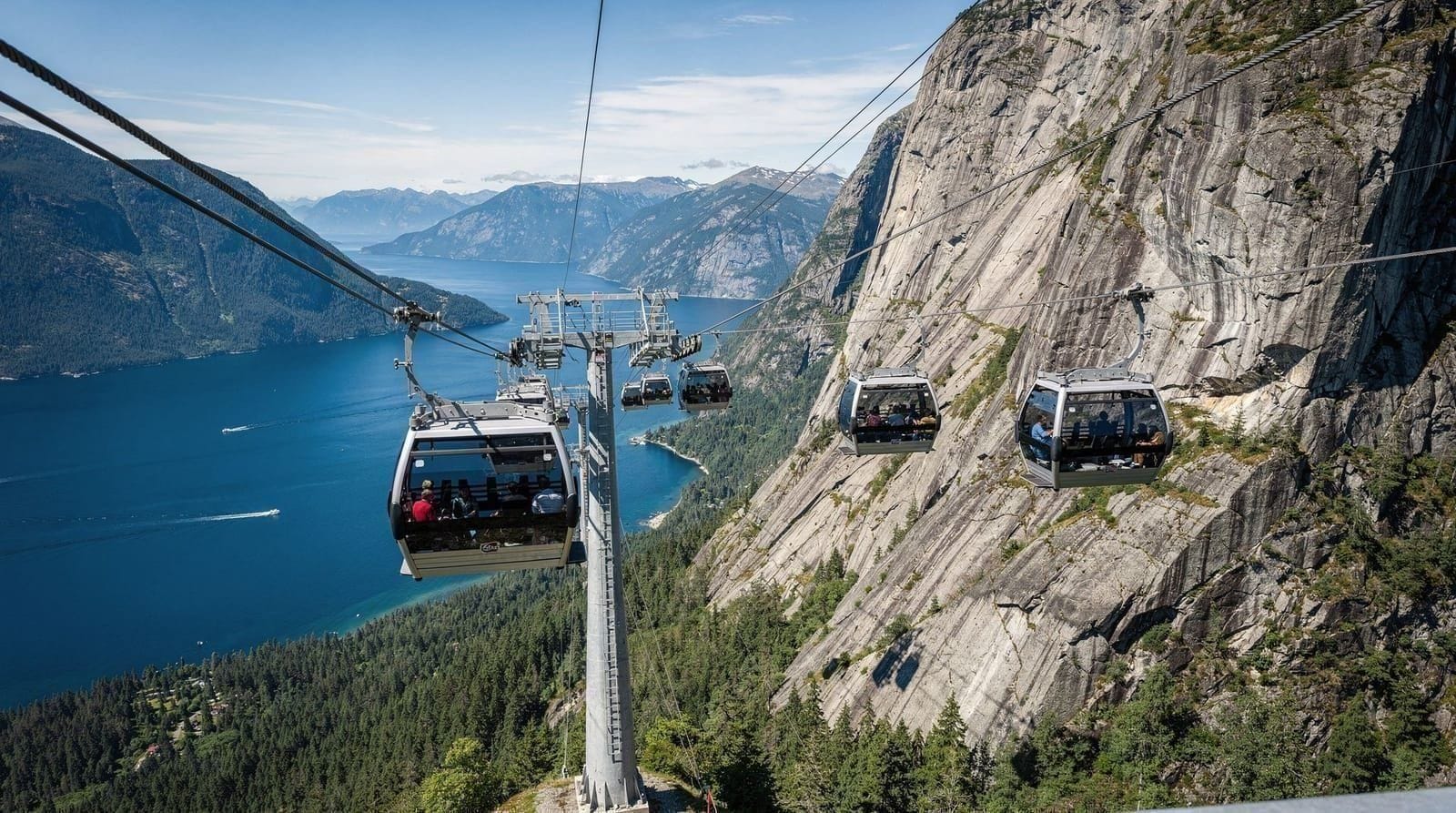
The gondola climbs to 885 metres on Mount Habrich in about 10 minutes, delivering sweeping views over Howe Sound and the surrounding Coast Mountains, with a network of short trails, a suspension bridge, and a restaurant at the summit extending the visit for those who want to linger.
Booking a Sea to Sky Gondola admission ticket ahead of a summer weekend avoids the base-station ticket line that builds through the morning. For travelers who want the full mountain experience without managing transport themselves, a private full-day Sea to Sky Gondola tour covers the whole visit with a dedicated guide.
Rock climbing capital of Canada
Squamish’s granite draws climbers from across North America, and the Stawamus Chief and nearby Smoke Bluffs together offer hundreds of established routes across every difficulty level. Murrin Provincial Park, about 10 minutes south of town, is a more approachable spot for visitors curious about climbing without committing to the Chief’s bigger routes — it combines shorter climbing walls with lake swimming and easy trails, a good option for a lower-key half-day. Complete beginners can also book guided climbing instruction through several local operators based in town.
Whitewater rafting
For a different kind of adventure entirely, the Elaho and Squamish Rivers offer whitewater rafting trips through dramatic canyon scenery north of town. A whitewater rafting trip on the Elaho River runs several hours including transport from a Squamish meeting point, and turns what might otherwise be a scenic sightseeing day into a genuinely active one — worth prioritizing for travelers who want more than viewpoints and short walks out of their Squamish visit.
Downtown Squamish and where to eat
Beyond the natural attractions, downtown Squamish has developed a real dining and coffee culture in recent years, clustered mainly around Cleveland Avenue. It’s a more relaxed, less tourist-priced alternative to eating directly at the gondola base or the more heavily trafficked pullouts along the highway, and worth the short detour off Highway 99 for a lunch stop.
Photography and viewpoints
Beyond the well-known Shannon Falls and gondola summit shots, a few less-crowded spots reward photographers willing to stray slightly from the main stops. The Squamish Estuary, just west of downtown, offers wide, open views of the Chief and Howe Sound with far fewer visitors than the highway pullouts, particularly appealing around sunset when the granite face catches evening light. The Train Wreck Trail, a short walk to a series of decades-old derailed rail cars now covered in graffiti art in the forest near town, has become a well-known, if unconventional, photography stop distinct from the area’s natural scenery.
What it costs
| Item | Approximate cost (CAD) |
|---|---|
| Fuel round trip from Vancouver | $15–20 |
| Sea to Sky Gondola admission, adult | $60–70 |
| Whitewater rafting trip, per person | $130–180 |
| Guided full-day tour, per person | $130–200 |
| Lunch in downtown Squamish | $18–30 per person |
Best time of year
Late spring through early fall is the strongest window for the full range of Squamish activities — climbing conditions, rafting water levels (best in late spring to early summer as snowmelt feeds the rivers), and fully accessible hiking trails. The gondola operates year-round and adds snowshoeing at the summit in winter, but Shannon Falls is less dramatic outside the wetter and snowmelt months, and climbing routes on the Chief become less appealing in wet or icy conditions.
Family travel considerations
Squamish scales well for families who want to mix easy and more ambitious activities across the same day. Shannon Falls and the gondola are both manageable for most kids, and Murrin Provincial Park’s combination of easy trails and lake swimming makes for a relaxed few hours without the intensity of the Chief’s summit trail or the rafting trips, both better suited to older kids and teens with some outdoor experience already.
Alternative day trips in the same corridor
Squamish is one of several worthwhile stops along Highway 99, and travelers who’ve already spent a day here on a previous visit have reasonable alternatives further along the same corridor. A Whistler day trip covers the resort village further north, while the broader Sea-to-Sky day trip guide packages Shannon Falls and the gondola into a lighter, less activity-heavy version of the same general area. For travelers based closer to the North Shore who want a shorter outing without heading up the highway at all, Grouse Mountain offers a comparable gondola-and-viewpoint experience within Vancouver’s city limits.
Comparing to a broader Sea-to-Sky day
Squamish overlaps significantly with the Sea-to-Sky day trip guide, which covers the same corridor with a slightly lighter focus on the town itself and a stronger emphasis on the gondola and Shannon Falls as the core stops. Visitors specifically interested in climbing, rafting, or a fuller exploration of downtown Squamish should treat this guide as the more complete version of that same day; those wanting a shorter, sightseeing-focused visit should lean on the Sea-to-Sky day trip guide instead.
Both are considerably shorter commitments than a full Whistler day trip, and travelers with extra time and energy can simply continue north to Whistler once a Squamish visit wraps up, since the two towns sit less than an hour apart.
From logging town to outdoor recreation hub
Squamish’s transformation is worth understanding as context for what makes the town feel the way it does today. For much of the 20th century, the local economy centred on forestry and a large pulp mill, and the town’s character reflected that industrial base rather than the outdoor-recreation identity it’s known for now.
The shift began accelerating in the 1990s and 2000s as climbers, mountain bikers, and windsurfers discovered the area’s natural assets, and picked up further momentum after the Sea-to-Sky Highway’s major upgrade ahead of the 2010 Winter Olympics made the drive from Vancouver dramatically faster and safer. That history is visible in the town’s mix of older industrial buildings alongside newer outdoor-gear shops, breweries, and cafes catering to the current recreation-focused population and visitor base.
Mountain biking
Alongside climbing, Squamish has developed into one of BC’s significant mountain biking destinations, with an extensive network of trails ranging from beginner-friendly forest routes to advanced technical descents. The Alice Lake and Diamond Head areas host some of the most popular trail networks, and several local shops rent bikes and offer guided introductions for visitors without their own gear. It’s a more specialist activity than the gondola or Shannon Falls, requiring at least some riding experience and appropriate gear, but for mountain bikers specifically, Squamish is a legitimate reason to plan a dedicated day trip around the sport rather than treating it as a side activity.
Britannia Mine Museum
Just south of Squamish proper, Britannia Beach is home to the Britannia Mine Museum, a preserved former copper mine that operated for much of the 20th century and was once among the largest in the British Commonwealth. The museum includes an underground tour by rail car into the mountain, giving a tangible sense of the industrial history that shaped this stretch of the Sea-to-Sky corridor before its current recreation-focused identity took hold. It’s a worthwhile stop for travelers with extra time or an interest in industrial history, and a useful counterpoint to the natural-scenery focus of the rest of a typical Squamish day.
Windsurfing and kiteboarding
Squamish’s location at the head of Howe Sound creates strong, consistent afternoon winds that have made it a well-known windsurfing and kiteboarding destination, particularly through the summer months. The Squamish Spit area is the main launch point, and watching the colourful sails from the waterfront, even without participating, is a distinctive part of a summer visit to the town. Equipment rental and lessons are available locally for visitors wanting to try either sport, though both require at least a partial day dedicated specifically to the activity given the setup and instruction time involved.
Weather and packing for the day
Squamish sits in a slightly different microclimate than either Vancouver or Whistler, generally drier than the coast and cooler than the city once elevation is factored in in the surrounding peaks. Layers remain the sensible default regardless of season, particularly for anyone planning to reach the gondola summit or higher trail sections, where temperatures run consistently several degrees cooler than at highway level. Climbers and hikers should check current trail and route conditions before setting out, since the granite that makes the Chief and Smoke Bluffs so popular can also become genuinely hazardous when wet.
Squamish vs. Whistler for a day trip
Travelers deciding between a Squamish-focused day and pushing on to Whistler should weigh activity type over scenery alone — both offer excellent mountain views, but Squamish leans toward hands-on adventure sports (climbing, rafting, mountain biking) accessible within a shorter drive, while Whistler offers a more polished resort-village experience and, in winter, genuine downhill skiing that Squamish doesn’t provide at the same scale. Visitors who’ve already committed to an active, adventure-focused day are usually well served stopping in Squamish rather than continuing on, since Whistler’s activities don’t meaningfully improve on what Squamish already offers for climbing, rafting, or hiking.
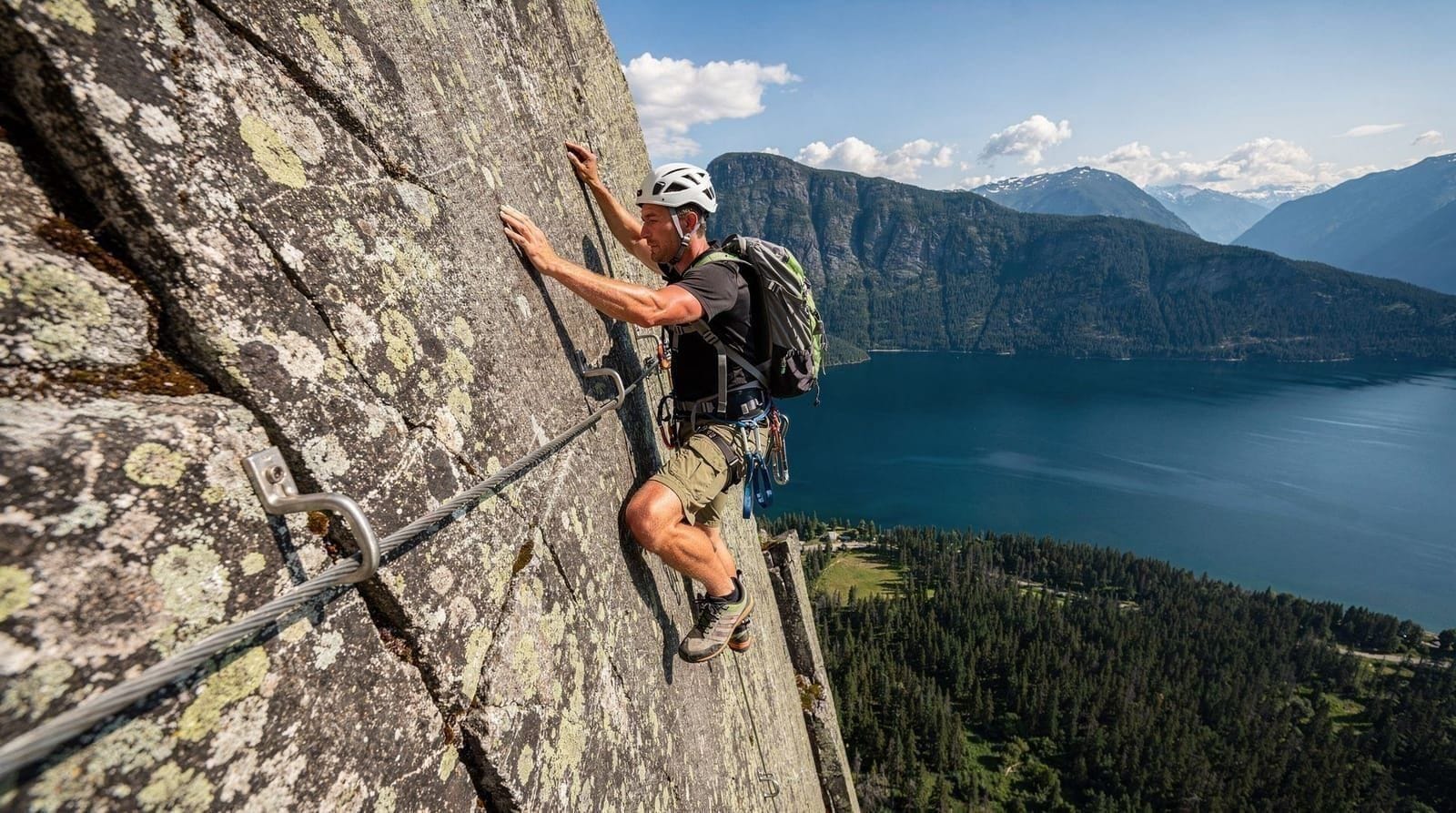
Combining with the via ferrata
For climbers or adventure travelers who want a guided, more accessible introduction to exposed mountain terrain without the technical skills of traditional rock climbing, the Whistler via ferrata — a protected climbing route using fixed cables, rungs, and ladders — offers a structured way to experience genuine mountain exposure with professional guiding and safety equipment. It’s a different kind of activity from the free-climbing routes on the Chief and suits travelers wanting the adrenaline and views without years of climbing experience behind them.
Getting around once you’re there
Downtown Squamish, Shannon Falls, Murrin Provincial Park, and the Sea to Sky Gondola base are spread along a roughly 10-to-15-kilometre stretch of Highway 99, close enough together that a single rental car or the town’s small local transit system can reasonably connect all of them across a day. Cyclists and hikers with a full day to spare sometimes skip the car entirely and connect the closer stops — downtown, the gondola base, and Shannon Falls — on foot or by bike, since the distances, while not trivial, are walkable for fitter travelers with time to spare. For most visitors juggling several stops in a single day, though, a car remains the simpler and faster option.
Extending into an overnight
While Squamish works well as a day trip, travelers with more time might consider an overnight stay to fit in both a serious hike (the Chief’s summit trail, for instance) and a rafting or climbing session without compressing everything into a single rushed day. Squamish has a growing selection of hotels and vacation rentals catering to exactly this kind of extended outdoor-focused stay, at generally lower rates than comparable Whistler accommodation, making it a reasonable base for a slower-paced two- or three-day regional exploration rather than a same-day return to Vancouver.
The honest verdict
Squamish rewards travelers willing to get out of the car and do something rather than just look at the view — climbing, rafting, and serious hiking are all realistic options within an easy drive of Vancouver, something few of the region’s other day trips offer at this level of intensity. For a more passive, sightseeing-only visit, Shannon Falls and the gondola alone still make for a satisfying half-day, but Squamish’s real strength is as a base for active travelers who want more out of their day than a scenic drive and a photo stop.
Frequently asked questions about Squamish day trip from Vancouver — climbing, waterfalls, and the gondola
Do I need a car to visit Squamish from Vancouver?
No — a scheduled bus service connects downtown Vancouver to Squamish multiple times daily, though a car (or the guided tour options) gives more flexibility to reach Shannon Falls, Murrin Provincial Park, and the gondola base independently once there.
Is Squamish worth it if I only have half a day?
Yes — Shannon Falls and the Sea to Sky Gondola alone make a satisfying half-day of sightseeing without needing to add climbing, rafting, or a full downtown lunch stop.
Top experiences
Bookable activities with verified prices and instant confirmation on GetYourGuide.