Whistler day trip from Vancouver — is it worth doing in one day
From Vancouver: Full-Day Whistler Tour
Duration: 10.5 hours
Is Whistler doable as a day trip from Vancouver?
Yes. It's about 2 to 2.5 hours each way along the Sea-to-Sky Highway, so a 10 to 12 hour round trip is realistic between May and October. In winter, shorter daylight, snow tires, and unpredictable highway conditions make a guided tour or an overnight stay the more relaxed choice.
Whistler sits about 120 kilometres north of Vancouver, and the question every visitor without a multi-day mountain trip planned eventually asks is whether that distance is worth covering for a single day. The honest answer is: usually yes in summer, more conditionally in winter — and the version of the day that works best depends heavily on whether you’re driving yourself, joining a tour, or trying to squeeze in an actual ski day.
| Where | Whistler Village, ~120 km north via Highway 99 |
| Cost | Around CAD 100-220 per person depending on method |
| Time needed | 10-12 hours round trip |
| Getting there | Self-drive, shuttle, or guided tour |
| Best time | June-September for the most forgiving day trip |
How far Whistler really is from Vancouver
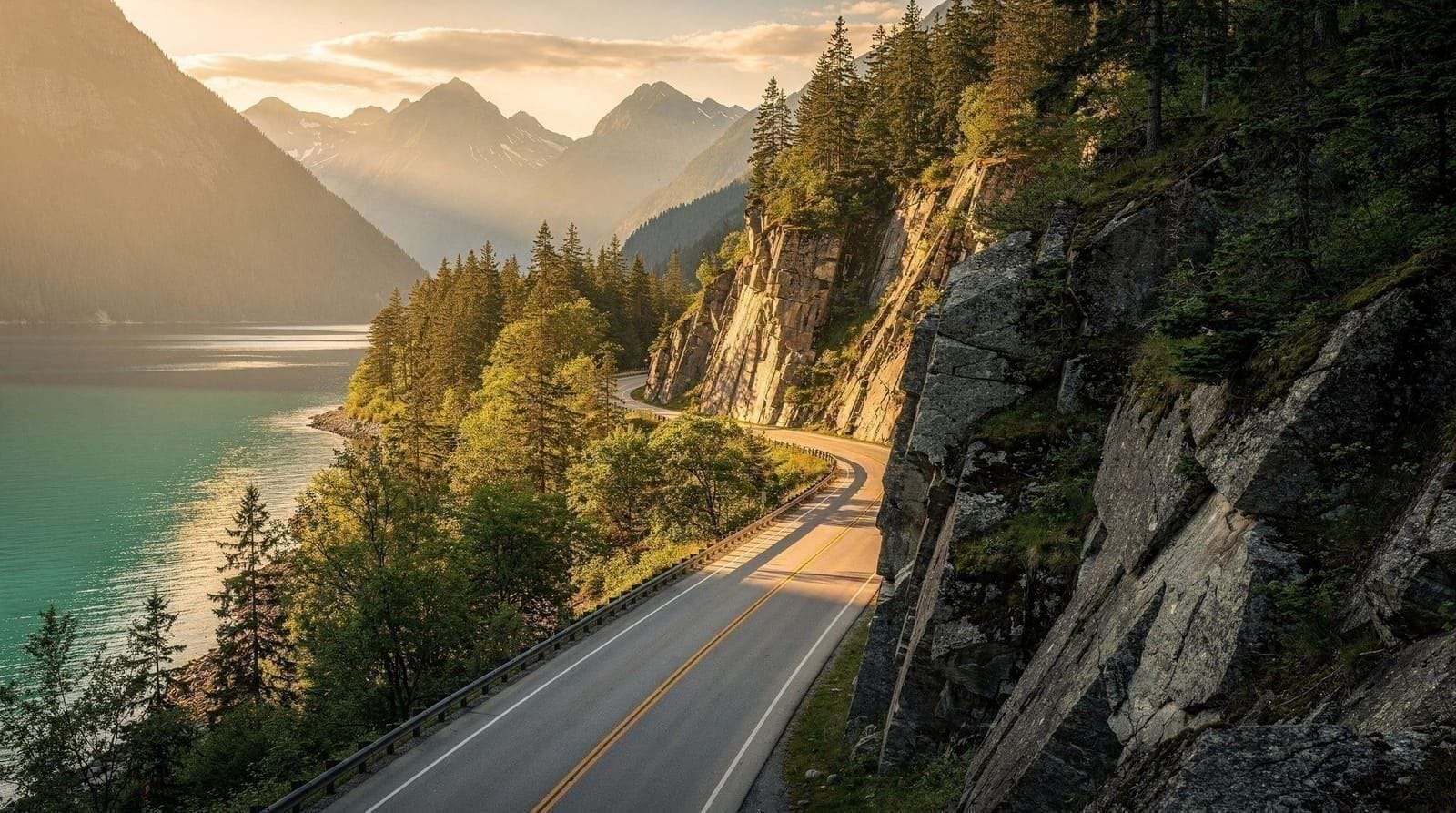
The drive covers roughly 120 kilometres on Highway 99, commonly called the Sea-to-Sky Highway, and takes 2 to 2.5 hours under normal conditions. That’s longer than the straight-line distance suggests because the road climbs steadily from sea level at Horseshoe Bay to around 650 metres at Whistler Village, hugging the Howe Sound coastline before cutting inland through the Cheakamus Canyon. Traffic is the main variable: Friday afternoon northbound and Sunday afternoon southbound both regularly add 30 to 60 minutes, especially during ski season and the July-August peak.
A realistic round trip, door to door, runs 10 to 12 hours if you want more than a token amount of time in the village — 4.5 to 5 hours of driving, plus 5 to 7 hours actually in Whistler. That’s a long day, but it’s a manageable one between late spring and early fall when daylight runs past 9pm and road conditions are predictable.
Driving yourself vs taking a tour
Both approaches work, and the right one depends on what you want out of the day. Driving yourself means total control over timing and stops — you can linger at Shannon Falls or skip it entirely, leave the village whenever you’re ready, and avoid being tied to a group’s pace. It requires a rental car (economy runs roughly CAD 60 to 90/day in summer), comfort with mountain highway driving, and — from October through April — winter tires, which are a legal requirement on this stretch of Highway 99.
A guided tour removes the driving and the parking search (Whistler’s day lots fill by late morning on summer weekends and cost CAD 15 to 25), and it typically includes a stop or two along the corridor as part of the itinerary. A full-day tour from Vancouver to Whistler with hotel pickup handles the whole loop, and travelers who’d rather not deal with mountain-road navigation on unfamiliar roads generally find it worth the premium over self-driving. Booking a full-day Whistler tour from Vancouver also removes the parking-lot gamble entirely, which matters more than it sounds on a July Saturday.
For travelers who want the corridor’s scenery without committing to Whistler Village itself, a Sea to Sky Gondola and Whistler day trip combines both stops in one guided loop, which is a reasonable way to see the two biggest draws on the highway without doing the driving twice.
What a typical day trip itinerary looks like
Most successful one-day itineraries follow a similar shape: an early departure from Vancouver (7:30 to 8:30am beats the worst of any traffic), a short stop in Squamish for Shannon Falls or the Sea to Sky Gondola if time allows, arrival in Whistler by late morning, several hours in and around the village — lunch, the Peak 2 Peak Gondola if it’s within budget, a walk around the lakes or a short hike depending on season — and departure by mid-afternoon to beat the evening traffic crunch back into Vancouver.
Trying to add too many stops is the most common mistake. The corridor has enough worthwhile detours — Shannon Falls, the gondola, Brandywine Falls — that a day trip focused purely on getting to Whistler and back can easily balloon past 12 hours if every stop gets equal time. Picking one corridor stop, rather than three, keeps the day realistic.
What it costs
| Item | Approximate cost (CAD) |
|---|---|
| Rental car (economy, 1 day) | $60–90 |
| Fuel round trip | $25–35 |
| Day parking in Whistler | $15–25 |
| Guided full-day tour, per person | $150–220 |
| Peak 2 Peak Gondola sightseeing ticket, adult | $89–99 |
| Lunch in Whistler Village | $20–40 per person |
| Winter lift ticket, walk-up | $180–220 |
A self-driven day with a shared rental car and a village lunch typically lands in the CAD 100 to 150 range for two people, before any paid attractions. A guided tour covers transport and usually a stop or two, but adds the per-person tour fee on top of whatever you spend once there. For a family of four splitting a rental car, self-driving is almost always the cheaper route once the per-person tour price is multiplied out — the trade-off is that someone has to do the driving on unfamiliar mountain roads, which not every traveler wants to take on, particularly outside summer.
It’s also worth budgeting separately for food. Whistler Village restaurant prices run noticeably higher than downtown Vancouver, reflecting both the resort-town markup and the cost of getting supplies up the highway; a casual lunch for two with drinks commonly reaches CAD 60 to 80 rather than the CAD 40 to 50 a similar meal might cost in the city. Packing snacks and a refillable water bottle is a simple way to trim the day’s total cost without cutting into the actual experience.
Summer day trip vs winter day trip
Summer is the more forgiving season for a day trip. Roads are dry, daylight extends past 9pm through July, and Whistler Village runs a full slate of warm-weather activities — hiking, mountain biking, the Peak 2 Peak Gondola, lakeside beaches at Alta Lake and Lost Lake — that don’t require booking lift tickets or rental gear in advance.
Winter changes the math. Daylight is limited to roughly 8am–4:30pm in December and January, snow tires are mandatory on Highway 99, and the return drive after a full ski day means navigating mountain roads in the dark, often in snow. A single day also isn’t much of a ski day once travel time, rental pickup, and lesson logistics are subtracted — realistically 5 to 6 hours on snow rather than a full 7-to-8-hour resort day. Skiers who want to make the most of Whistler’s terrain are generally better served by at least one overnight in the village; day-trippers who just want to see the mountain, walk the village, and maybe try snowshoeing get more reasonable value out of the shorter window.
Where to stop along the way
The Sea-to-Sky corridor between Vancouver and Whistler is dense with worthwhile stops, and building one into the day is usually a better use of the drive than treating it purely as transit time. Squamish has Shannon Falls (a short, flat 5-minute walk from the parking lot to BC’s third-highest waterfall) and the Stawamus Chief viewpoint, both free and quick.
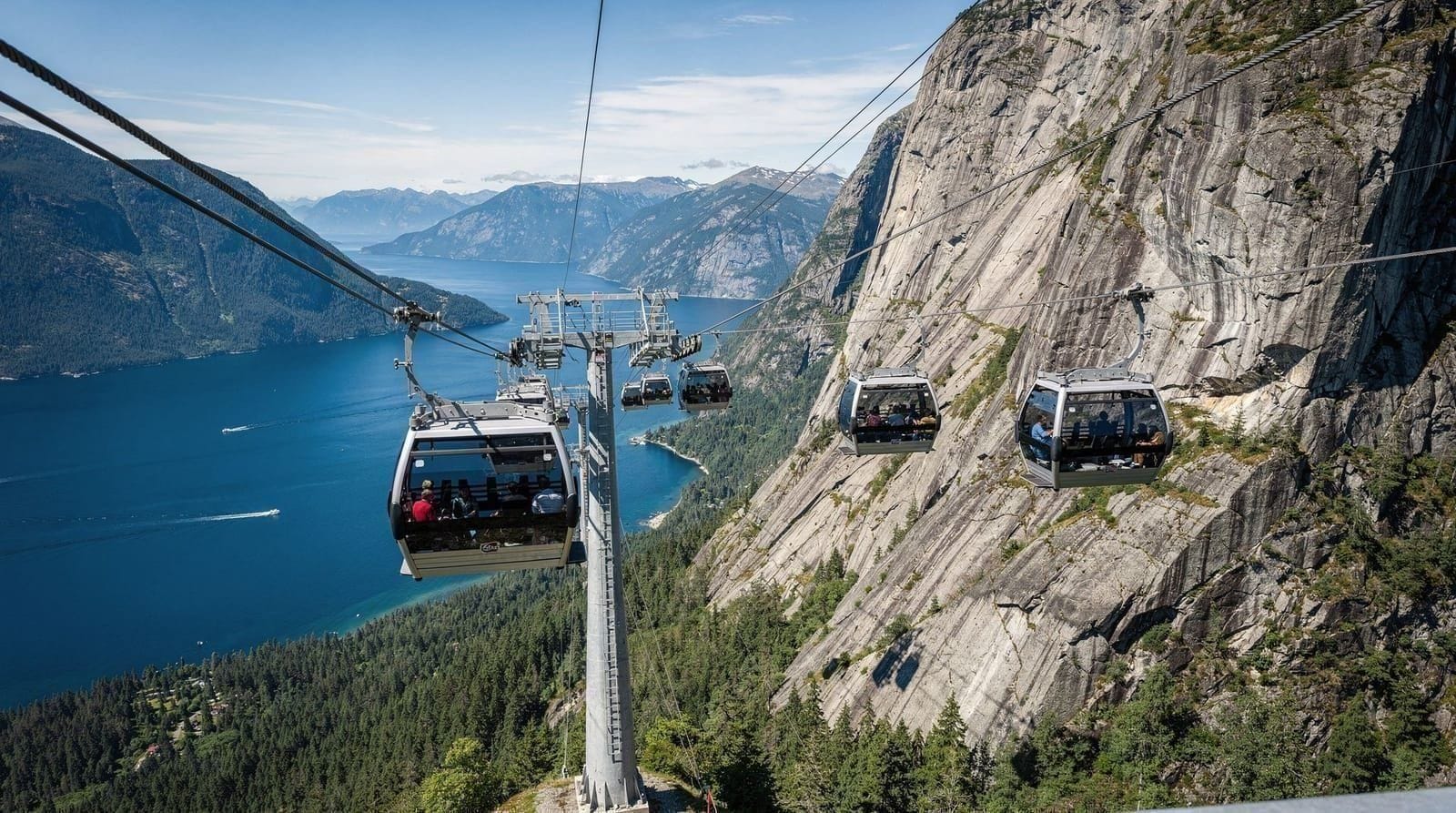
The Sea to Sky Gondola climbs to 885 metres for sweeping Howe Sound views and takes 1.5 to 2.5 hours round trip including the ride up and down — worth booking a Whistler tour with a Shannon Falls and gondola stop if you don’t want to manage timing yourself. Travelers weighing the gondola against a full Whistler day separately should see the dedicated Sea-to-Sky day trip guide and the Squamish day trip guide, which cover both as standalone options.
For a genuinely different angle on the trip, a seaplane day trip to Whistler cuts the one-way travel time to under an hour and adds an aerial view of the coastline and Coast Mountains that the highway simply doesn’t offer — at a meaningfully higher price than driving or bus travel.
Should you stay overnight instead
If your trip includes any serious skiing, a multi-day hike, or you simply want to experience Whistler Village’s evening atmosphere — the après-ski scene, restaurants, and the quieter, less crowded village after day-trippers head home — an overnight changes the trip qualitatively rather than just extending it. The 5-day Vancouver and Whistler itinerary and the broader 3-day Sea-to-Sky road trip both build in enough time to treat Whistler as a destination rather than a stop, and travelers with any flexibility in their schedule should weigh at least one night against the fairly steep round-trip time investment of a single day.
Whistler Village beyond the gondola
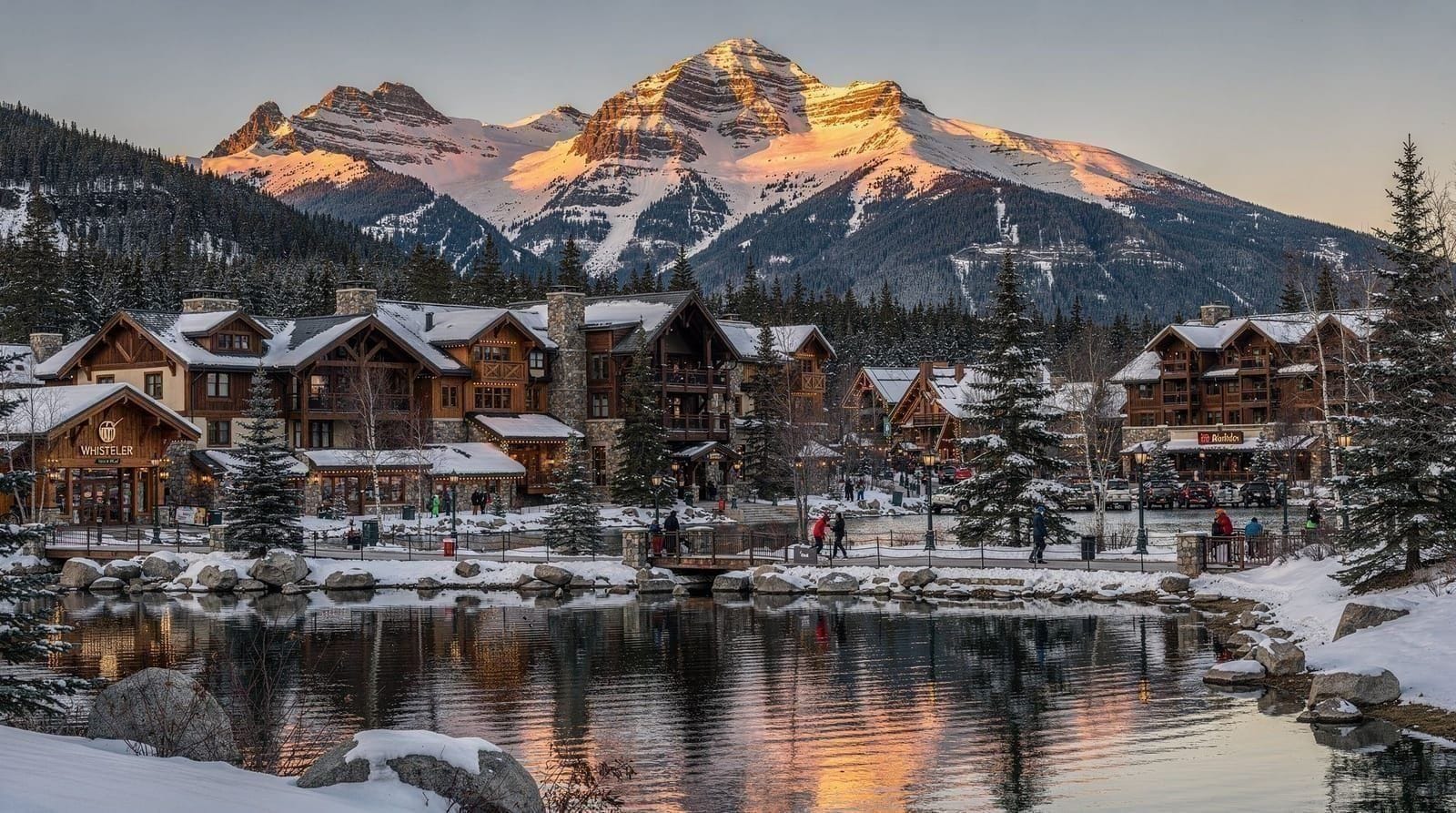
Whistler Village itself is worth treating as more than a parking spot for the Peak 2 Peak Gondola. The pedestrian-only village core is dense with shops, patios, and public art, and it’s genuinely pleasant to walk even without booking a single paid activity — a real advantage for anyone traveling on a tighter budget who still wants the Whistler experience. In summer, the village connects directly to a network of paved paths (the Valley Trail) that loop past Alta Lake and Lost Lake, both of which have swimming beaches that are free to use and considerably less crowded than the village core in July and August.
Mountain biking is Whistler’s other summer signature — the Whistler Bike Park on Whistler Mountain runs lift-served downhill trails from roughly mid-May through early October, but it’s a specialist activity requiring rental gear, a helmet, and at least intermediate riding skill; day-trippers without biking experience are better served by walking or the gondola. Hiking trailheads at Lost Lake and around the base of Blackcomb offer shorter, low-commitment options for anyone who wants to get off pavement without a half-day mountain hike.
Cell service and staying connected on the drive
Highway 99 has reasonably good cell coverage for most of its length, though a few stretches through the Cheakamus Canyon and other mountainous sections have weak or no signal, worth knowing before relying entirely on a phone for navigation or checking traffic conditions mid-drive. Downloading offline maps before departure is a simple precaution, particularly useful in winter when checking DriveBC conditions matters more and a dead zone at the wrong moment is more than a minor inconvenience.
Traveling with kids
Whistler is genuinely family-friendly for a day trip, more so than it might first appear given its ski-resort reputation. The Village Stroll is flat, stroller-friendly, and closed to cars, and Lost Lake’s swimming beach is a reliable way to burn a few hours in summer without spending anything beyond parking.
The Peak 2 Peak Gondola ride itself tends to be a highlight for kids regardless of season — the cable cars are enclosed and the ride is smooth, though the height (the gondola crosses a valley more than 400 metres above the ground at its highest point) is worth mentioning in advance to any child nervous about heights. Winter day trips with young children are harder to justify given the driving conditions and shortened daylight; families visiting in December through February should lean toward a guided tour or an overnight rather than a self-driven day trip.
Rental car considerations specific to this drive
Not every rental agency’s economy car is well suited to mountain driving, and it’s worth confirming winter tires are actually fitted rather than assuming a rental automatically complies with BC’s October-to-April legal requirement — some agencies charge extra or require advance notice for winter-tire vehicles during that window. All-wheel drive isn’t strictly necessary on a well-maintained highway like Highway 99, but it does add a margin of comfort for drivers unfamiliar with mountain conditions, particularly for a winter day trip. Returning a rental with a full tank at a gas station in Squamish rather than searching in Whistler Village, where prices and availability are less convenient, is a small but genuinely useful practical tip.
What to pack and what can go wrong
Mountain weather changes fast enough on this route that packing layers isn’t optional advice — it’s practical necessity. Temperatures in Whistler Village typically run 3 to 5°C cooler than downtown Vancouver even in summer, and conditions at the top of the Peak 2 Peak Gondola can be another 5 to 10°C cooler again, with wind. A light jacket, even on a warm July day, is worth having in the car.
In winter, the main risks are road-related rather than village-related: sudden snowfall on the Cheakamus Canyon section, reduced visibility near Brandywine, and the genuine possibility of highway delays if a storm rolls through while you’re still in Whistler. Checking DriveBC’s conditions page before departure, both directions, is a habit worth building for any winter trip on this route — it’s free, current, and covers exactly this stretch of highway.
Combining a day trip with the Peak 2 Peak Gondola
For visitors whose main Whistler goal is the Peak 2 Peak Gondola specifically rather than the village or a full mountain activity, it’s worth budgeting the visit around gondola timing rather than treating it as an afterthought once in the village. Ticket lines can build at the base on clear summer days, and riding earlier in the day, before the late-morning rush, generally means less waiting and better light for photos from the crossing. The gondola experience itself, including waiting, riding both directions, and a stop at the top for views, typically takes 1.5 to 2 hours, worth factoring into an already tight day-trip schedule.
If you don’t want to drive or book a tour
Shuttle and bus services running the Vancouver–Whistler corridor multiple times daily are a middle option between full self-driving and a guided tour: no driving responsibility, a fixed schedule rather than a group itinerary, and a lower price point than most guided day tours. They don’t include stops along the way, so anyone wanting to see Shannon Falls or the gondola on the same day needs to build that in separately or accept a Whistler-only day. For travelers without a rental car who still want the corridor stops included, the guided tour route remains the more complete option.
What a day trip doesn’t give you time for
Being upfront about the trip’s limits helps set expectations before booking. A single day rarely allows time for a proper Whistler Bike Park session (which itself typically eats a half or full day for anyone renting gear and taking a lesson), a longer alpine hike beyond the shorter lift-accessed trails, or a relaxed dinner in the village once the après-ski or evening dining scene picks up. Visitors specifically drawn to any of these should treat the day trip as a preview rather than the full Whistler experience, and weigh an overnight stay against the value of doing one of these activities properly rather than rushing a version of everything.
Best months for a Whistler day trip
June through September is the most forgiving window: dry roads, long daylight, and the full range of village activities open without needing advance lift-ticket bookings. Late September and early October add fall colour along the highway and thinner crowds, though some seasonal activities start winding down.
December through March is peak ski season — the mountain is at its best, but the day-trip logistics are at their most demanding, with the shortest daylight and the highest chance of highway delays. April and November are the least rewarding months for a one-day visit: the mountain is typically between summer and winter operations, with limited lift service and patchy snow at village elevation, so neither skiing nor full summer activities are reliably available.
How a Whistler day trip compares to other Vancouver day trips
Whistler asks for more time on the road than most of the other common Vancouver day trips — a Victoria day trip or a stop at Butchart Gardens both involve a ferry crossing but a shorter total drive, while a Squamish day trip covers roughly half the distance and can comfortably fit into 5 to 6 hours round trip.
What Whistler offers in exchange is a genuinely different environment — a full alpine resort village rather than a single attraction — and the Peak 2 Peak Gondola experience, which doesn’t have an equivalent elsewhere in the region. Travelers deciding between the two should think about pace: Squamish suits a half-day add-on to another plan, while Whistler is close to a full day commitment on its own, even before factoring in any mountain activities once you arrive.
Group size and splitting costs
For groups of three or four sharing a rental car, self-driving is almost always the cheapest way to do a Whistler day trip, since fuel and parking costs stay fixed regardless of group size while per-person guided tour fees multiply with each traveler added. Solo travelers and couples see a smaller gap between self-driving and joining a tour, since the fixed cost of a rental car is spread across fewer people, making the convenience premium of a guided tour proportionally easier to justify.
Timing your departure and return
Departure time matters more for a Whistler day trip than for most of the region’s other day trips, because the highway has real, predictable congestion windows. Leaving Vancouver before 8am on weekends avoids the worst of the northbound build-up, which typically starts around 9am and continues through late morning during ski season and summer weekends alike.
The return trip is the bigger risk: southbound traffic from Whistler on a Sunday afternoon, particularly during long weekends and the peak of ski season, can add 45 minutes to an hour beyond the normal 2 to 2.5 hour drive. Leaving Whistler by 3pm rather than pushing for one more activity at 4:30pm is a small adjustment that avoids a meaningfully worse drive home. Guided tours generally build this into their return schedule already, which is one more argument in their favour for anyone visiting during a peak period.
The honest verdict
A Whistler day trip from Vancouver works well for travelers on a tight overall schedule who want to see the village, ride a gondola, and experience the Sea-to-Sky corridor’s scenery without committing a full night’s accommodation budget to it. It works less well for serious skiers chasing a full mountain day, and it’s a genuinely long day regardless of season — 10-plus hours door to door is normal, not an outlier. Anyone who can spare an extra night should seriously consider it; anyone who can’t will still get a legitimate, worthwhile day out of the trip if they keep the itinerary realistic and pick one or two stops rather than trying to do everything the corridor offers in a single pass.
Solo travelers and Whistler day trips
Solo travelers face a slightly different cost calculation than couples splitting a rental car — a guided tour or shuttle often works out more economical than driving alone once fuel, parking, and the opportunity cost of navigating unfamiliar mountain roads solo are factored in. A full-day Whistler tour from Vancouver also removes the logistics of solo mountain driving entirely, a genuine advantage for solo travelers less confident with the Sea-to-Sky Highway’s mountain sections.
Combining Whistler with another corridor stop on the return leg
Travelers who skipped a corridor stop on the way up because of morning time pressure sometimes have more flexibility on the return leg, particularly if the afternoon activity in Whistler wrapped up earlier than planned. A short Squamish stop for Shannon Falls on the way back works well for this, since it’s free, quick, and doesn’t require advance booking the way the Sea to Sky Gondola sometimes does during peak season.
Frequently asked questions — Whistler day trip from Vancouver
How long does it take to drive from Vancouver to Whistler?
About 2 to 2.5 hours each way in normal conditions, covering roughly 120 kilometres on Highway 99. Add 20 to 30 minutes if you stop in Squamish, and expect the return trip on a Friday or Sunday evening to run longer due to weekend traffic.Do I need a car to do a Whistler day trip?
No. Guided day tours run from downtown Vancouver hotels with return transport included, and Whistler-bound shuttle services (Epic Rides, YYC Shuttle-style operators) run multiple daily departures from downtown and YVR. A car gives more flexibility for stops, but isn't required.Is a Whistler day trip worth it in winter?
It depends on your priorities. A single winter day gets you roughly 5 to 6 hours of actual skiing or village time once travel and rental logistics are subtracted, which is tight for the cost of a lift ticket. Most repeat visitors who ski seriously stay at least one night; a day trip works better for sightseeing, the village, and a short beginner lesson than for a full mountain day.What's the cheapest way to do a Whistler day trip?
Driving yourself and parking in a day lot is usually cheapest if you're already splitting a rental car with others, since fuel and parking run well under CAD 100 total. The Whistler-bound shuttle services are the next cheapest option at roughly CAD 45 to 70 return per person, undercutting most guided tours.Can I see Whistler and the Sea to Sky Gondola in the same day?
Yes, and it's one of the more efficient itineraries — the gondola is in Squamish, roughly halfway between Vancouver and Whistler, so stopping there on the drive up or back adds only 45 to 90 minutes depending on how long you spend at the top.Is the drive from Vancouver to Whistler scary?
The Sea-to-Sky Highway had a major multi-year upgrade completed in the 2010s and is a well-maintained divided highway for most of its length, with guardrails and passing lanes on the steeper sections. It's not a dangerous drive in good weather, but winter conditions (snow, black ice, sudden fog near Brandywine) call for real caution and snow tires, which are legally required on this route from October 1 to April 30.Is Whistler expensive as a day trip?
The trip itself is moderate — fuel, parking, and a meal can come in under CAD 100 for a couple — but specific activities add up fast. A single Peak 2 Peak Gondola sightseeing ticket runs roughly CAD 89 to 99 per adult in summer, and a day lift ticket in ski season is commonly CAD 180 to 220 walk-up.
Top experiences
Bookable activities with verified prices and instant confirmation on GetYourGuide.