Vancouver on a budget — realistic costs and how to cut them
Vancouver: Hop-on Hop-off Tour by Double-Decker Bus
How much does it cost to visit Vancouver on a budget?
A genuinely tight budget trip can run CAD 80-120 per person per day using hostels, transit, and mostly free attractions, while a comfortable mid-range budget trip runs CAD 150-250 per day. The biggest single lever for cutting cost is accommodation, followed by limiting paid attractions to two or three highlights rather than everything on offer.
Vancouver has a reputation as an expensive city, and in several categories — hotels, car rental, sit-down dining — that reputation is fair. What’s less well known is how much of the city’s best experiences are genuinely free or low-cost, from the Seawall and beaches to entire neighborhoods built around walking rather than paid entry. A realistic Vancouver budget trip comes down to being deliberate about the handful of paid attractions that are actually worth it and defaulting to free alternatives everywhere else.
| Travel style | Daily budget (CAD, per person) | Accommodation | Attractions |
|---|---|---|---|
| Tight budget | Around 80-120 | Hostel dorm | Free/near-free only |
| Mid-range | Around 150-250 | Standard hotel | One or two paid highlights/day |
| Luxury | 400+ | Premium hotel | Private tours, fine dining |
Realistic daily budgets
A tight budget trip — hostel accommodation, transit, mostly free attractions, and self-catered or cheap meals — can run CAD 80-120 per person per day, and it’s worth noting this figure holds up reasonably well even during peak summer months, since accommodation is the main line item that swings seasonally and hostel pricing moves less dramatically than hotel rates do.
A comfortable mid-range trip, with a standard hotel, a couple of sit-down meals, and one or two paid attractions per day, typically lands in the CAD 150-250 range that’s the honest benchmark for a normal Vancouver visit. Luxury travel with premium hotels, private tours, and fine dining can run well beyond CAD 400 a day without much effort. These figures exclude flights and assume domestic transport is already covered by transit or the occasional day-trip tour rather than a rental car for the full stay.
Cutting the biggest cost: accommodation
Accommodation is the single largest lever for controlling overall trip cost, and the where to stay guide covers this in more depth, but the budget-specific version is straightforward: hostels in downtown and Gastown offer the cheapest formal accommodation in the city, while neighborhoods like Kitsilano, Commercial Drive, and Mount Pleasant typically run 15-25% below downtown hotel rates for comparable quality, at the cost of a slightly longer commute to the core attractions.
Free things to do
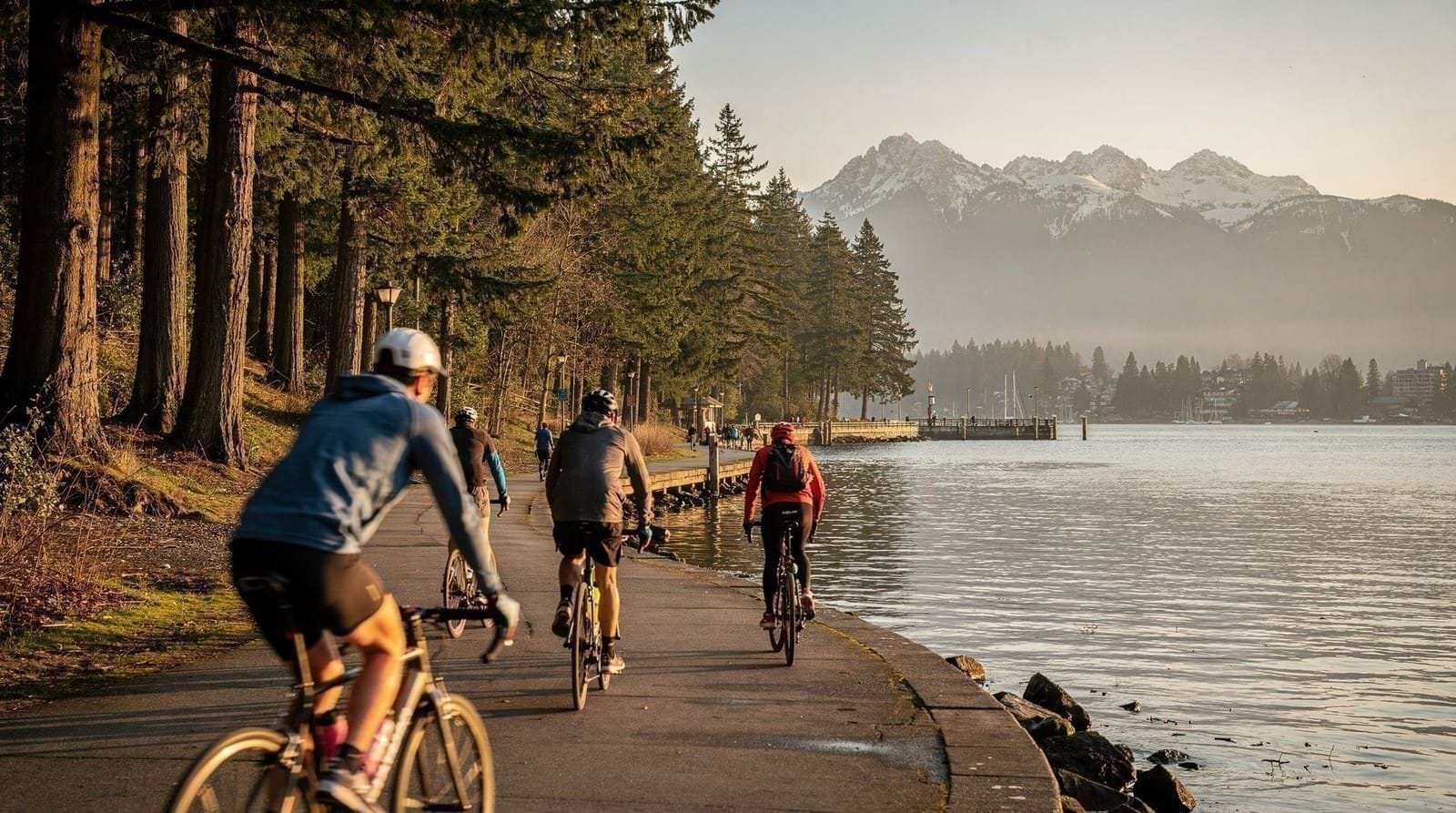
The Stanley Park Seawall — a 9km loop around the park — costs nothing and is genuinely one of the city’s best experiences regardless of budget. English Bay and Kitsilano beaches are free, as is most neighborhood walking through Gastown, Chinatown, and Yaletown, where the appeal is architecture and atmosphere rather than paid entry.
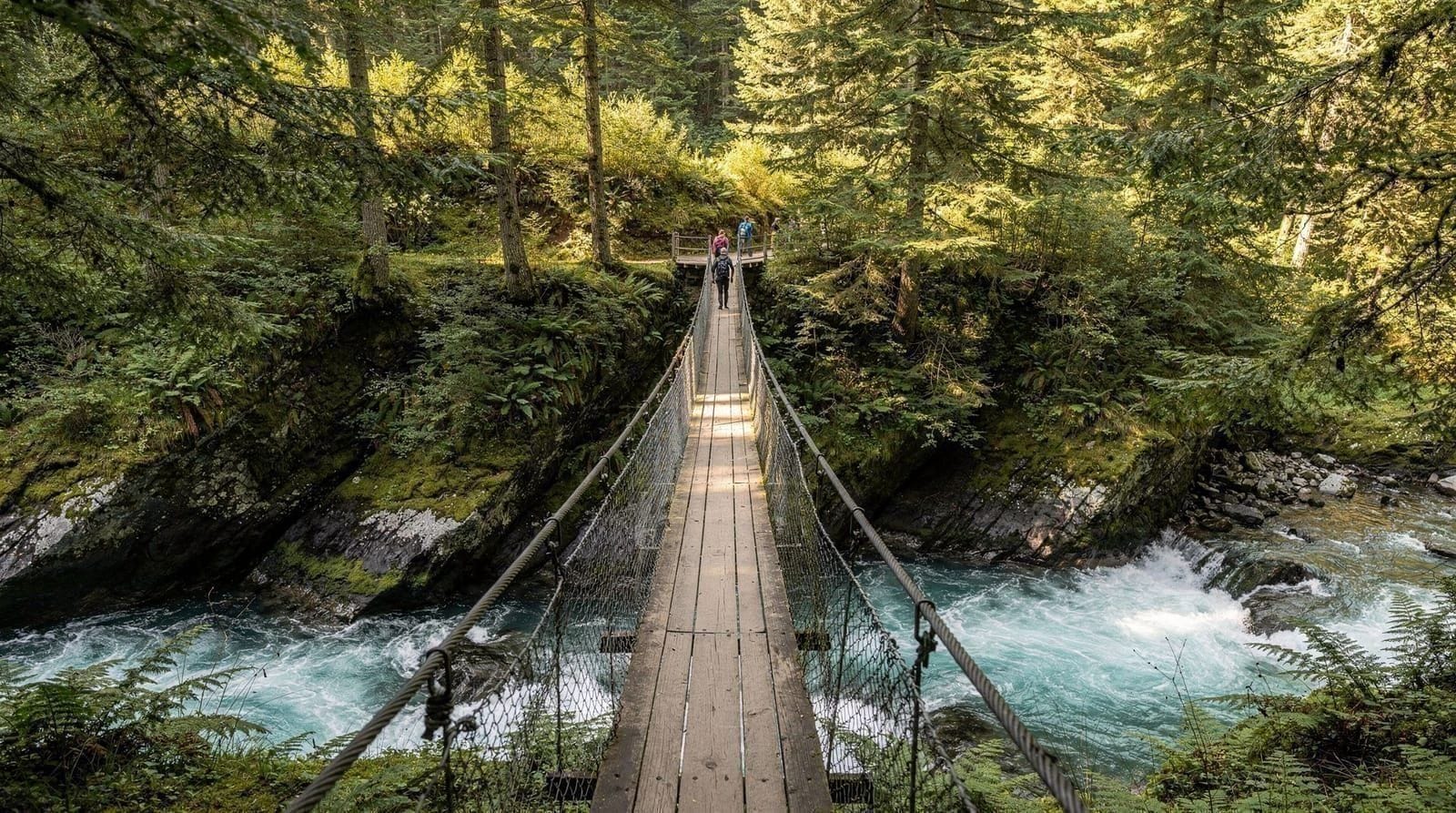
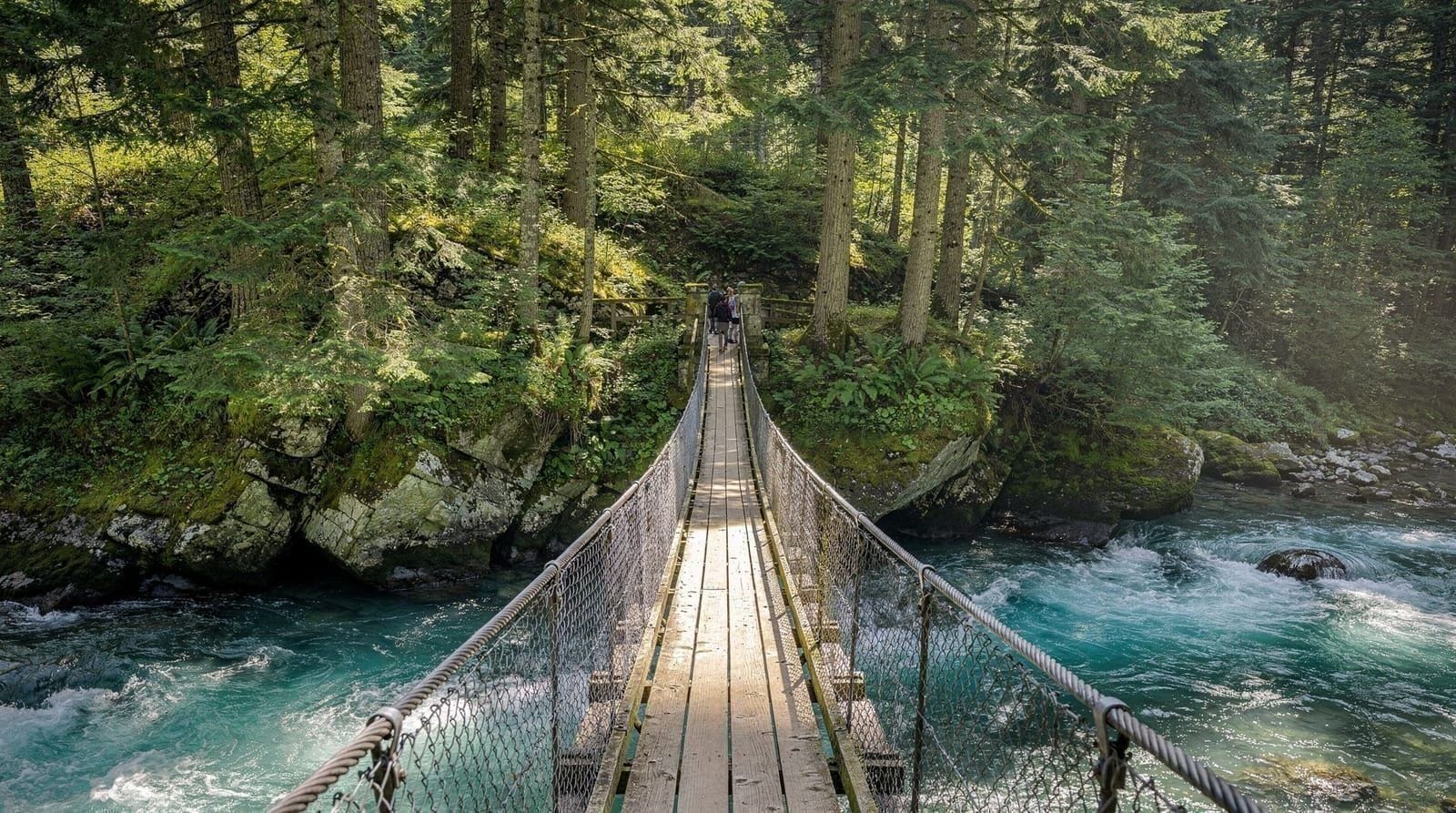
Lynn Canyon Park offers a free suspension bridge and rainforest trails as a genuine, if smaller-scale, alternative to the paid Capilano Suspension Bridge — the Capilano versus Lynn Canyon comparison breaks down exactly what’s different between the two. Granville Island Market itself costs nothing to browse, even though individual food items and shops inside charge normally.
Beyond these, Queen Elizabeth Park’s elevated gardens and viewpoints are free (unlike VanDusen Garden nearby, which charges admission), and the Vancouver Art Gallery and several smaller galleries run free or by-donation admission on specific evenings each month, worth checking current schedules if visiting on a tight budget with an interest in art.
Transit over car rental
Compass Card transit fares (CAD 2.85-5.40 depending on zones) undercut car rental and parking costs by a wide margin for any trip centered on the city itself — the full breakdown is in the getting around Vancouver guide. A hop-on hop-off bus tour is a reasonable middle-ground option for budget travelers who want guided orientation without the cost of a private tour or the hassle of piecing together multiple bus routes independently.
Choosing paid attractions wisely
Not every paid attraction delivers equal value, and budget travelers do best picking two or three genuine highlights rather than trying to see everything. Whale watching and a Whistler day trip are widely considered worth their cost, since neither is realistically replicable independently. A Grouse Mountain admission ticket delivers a genuinely different experience from the free North Shore alternatives, given its gondola ride and grizzly bear viewing, making it a reasonable one-time splurge even on a tight budget. Capilano Suspension Bridge is impressive but has a free alternative in Lynn Canyon for travelers prioritizing cost over spectacle.
A useful rule of thumb across all of Vancouver’s paid attractions is to ask whether the experience is genuinely unique to that specific venue or whether a comparable version exists for free nearby — whale watching and Whistler pass this test clearly, while several of the city’s ticketed viewpoints and combination tours are closer to a convenience upgrade on something achievable independently.
Food on a budget
Chinatown and Richmond offer some of the best value dining in the region, particularly dim sum and other Asian cuisine, often at a fraction of downtown restaurant prices for comparable quality.
A Granville Island market tour with tastings is a reasonable way to sample the market’s food scene efficiently rather than piecing together individual stops, while grocery stores and food courts remain the cheapest options for travelers willing to self-cater part of their meals. Dine Out Vancouver, running January-February, offers fixed-price menus at restaurants that would otherwise be well outside a budget traveler’s normal range.
Seasonal timing for budget travel
Prices swing meaningfully by season, and the is Vancouver expensive guide covers this in detail, but the short version for budget travelers is that January-March delivers the year’s lowest accommodation rates, while September offers a strong middle ground of good weather and meaningfully lower prices than July-August peak season. Avoiding summer entirely, if dates are flexible, is the single most effective seasonal lever for cutting overall trip cost.
Day trips on a budget
Day trips outside the city add cost quickly if not planned carefully. BC Ferries to Victoria runs CAD 16-20 per adult passenger each way, reasonable for a self-planned day trip if a car isn’t needed on the island side. Whistler shuttle buses undercut guided tours in price for travelers who don’t need the sightseeing stops a tour includes, and self-driving with a shared rental car among a group can be the cheapest per-person option for regional day trips if several travelers are splitting the cost.
Common budget mistakes
The most common mistake is under-budgeting for food specifically, since Vancouver’s sit-down restaurant prices run higher than many visitors expect from a mid-sized North American city — building in grocery store or food court meals for at least some days helps keep the average down without sacrificing every nice meal. The second is renting a car for the entire trip rather than just the day trips that need one, adding unnecessary parking costs to days spent entirely within the transit-served city core — a mistake that can easily add CAD 40-60 a day in parking alone for a car that spends most of its time sitting idle.
A related version of this mistake is booking accommodation outside the transit network specifically to save on the room rate, only to spend the savings back on taxis or rideshares getting into the city each day. The third is skipping genuinely worthwhile paid attractions entirely in the name of budget, when picking two or three highlights and going free everywhere else usually delivers a better trip than cutting everything paid indiscriminately.
A sample budget day
A realistic tight-budget day might start with a hostel breakfast or a coffee-shop pastry (CAD 5-10), a full morning walking the free Seawall and Stanley Park trails, a Chinatown lunch (CAD 12-18 for a genuinely filling meal), an afternoon at Granville Island Market browsing without buying beyond a snack (CAD 5-10), and an evening either self-catered from a grocery run or a modest Chinatown or Richmond dinner (CAD 15-20). Transit for the day, assuming a couple of zone crossings, runs CAD 6-10 on a Compass Card. Total for the day, excluding accommodation, lands comfortably under CAD 60 per person — accommodation is what pushes the daily total up to the CAD 80-120 range cited above, which is exactly why it’s the lever worth focusing on first.
Hostels and budget accommodation in detail
Vancouver’s hostel scene is concentrated in downtown and Gastown, with several well-established properties offering both dorm beds and private rooms at a fraction of standard hotel pricing. Dorm beds typically run CAD 30-50 a night depending on season and specific property, while private hostel rooms split the difference between dorm pricing and a full budget hotel. Beyond cost, hostels offer a genuine social advantage for solo budget travelers, often running organized activities or common kitchen space that further reduces food costs for guests willing to self-cater breakfast or the occasional dinner.
Traveling as a group or family on a budget
Group and family travel changes the budget math in a useful way — a shared Airbnb-style rental in Kitsilano or Commercial Drive can undercut the combined cost of multiple hostel beds or hotel rooms once split across three or four travelers, while also adding kitchen access that meaningfully reduces food spending across a multi-day stay. Car rentals for day trips follow similar group-splitting logic: a single rental shared among four travelers for a Whistler or Squamish day often beats the per-person cost of individual guided tour tickets, provided at least one traveler is comfortable with BC’s highway driving.
Discount cards and passes
Beyond the standard Compass Card, TransLink’s day passes make sense for visitors planning several trips in a single day rather than paying per-zone each time. Some attractions offer combination tickets that bundle two or more paid sites at a discount versus buying separately — worth checking before booking Capilano, Grouse Mountain, or FlyOver Canada individually if visiting more than one on the same trip. Student and senior discounts are widely available at museums and paid attractions with valid ID, worth checking for eligible travelers even outside Canada, since many venues accept international student cards.
Splurge versus skip, attraction by attraction
Some paid experiences are worth prioritizing even on a tight budget: whale watching, given the difficulty of replicating it independently, and a Whistler day trip, given the scale of what’s on offer. Others are more skippable if money is tight: guided city bus tours duplicate what’s achievable independently with a Compass Card and a bit of planning, and some of the more elaborate combination attraction tickets add convenience rather than genuinely new experiences beyond what’s covered separately. The Capilano versus Lynn Canyon comparison is the clearest single example of this trade-off in the city — a genuinely comparable free alternative exists for one of the most heavily marketed paid attractions.
How Vancouver compares to other cities on cost
Vancouver sits in a similar cost bracket to other major North American west coast cities — noticeably more expensive than most of Canada’s smaller cities, but generally comparable to or slightly below Seattle or San Francisco for equivalent hotel and dining quality. Visitors coming from cities with a weaker home currency against the Canadian dollar should budget roughly 30% more than domestic sticker prices might suggest when comparing directly to USD, per current exchange rates, while European visitors converting from EUR should expect a similar, if slightly smaller, gap.
Budget-friendly day trips worth the money
Not every day trip needs to be cut for a tight budget. A self-planned BC Ferries crossing to Victoria — CAD 16-20 per adult passenger each way as a walk-on, without a vehicle — delivers a genuinely different city experience for a modest cost, especially if paired with free wandering around the Inner Harbour rather than a paid Butchart Gardens add-on. A Whistler shuttle bus ticket, rather than a full guided tour, gets independent budget travelers to the village for a fraction of the tour price, with the trade-off being no built-in sightseeing stops along the way — a reasonable compromise for travelers comfortable planning their own time once there.
Free and low-cost neighborhoods worth a full day
Some neighborhoods reward a full day of free wandering better than others. Commercial Drive offers a genuinely local, low-cost day of independent cafes, vintage shops, and people-watching with essentially no admission-based attractions to budget around. Gastown and Chinatown similarly reward slow, unstructured walking more than a checklist of paid stops, and the Granville Island market hall itself costs nothing to enter and browse for hours, even if individual purchases add up if not watched carefully.
Tracking spending during the trip
Budget travelers benefit from a simple daily spending check-in rather than waiting until the end of a multi-day trip to see how costs have tracked against a target — Vancouver’s mix of genuinely free activities and easy-to-miss small costs (transit taps, snacks, incidental shopping at Granville Island) means daily totals can drift upward without a clear single culprit. A simple running total, checked each evening against the CAD 80-250 daily benchmarks covered earlier, catches drift early enough to adjust the remaining days rather than discovering an overspend only after returning home.
Travelers using a dedicated budget calculator tool can plug in their specific itinerary — nights, planned attractions, meal style — for a more precise estimate than the general ranges in this guide alone provide, which is particularly useful when deciding between two accommodation or activity options ahead of booking. Ultimately, a genuinely successful budget trip to Vancouver comes down to the same principle that applies to any destination: spend deliberately on the handful of experiences that matter most, and default to free or low-cost options for everything else, rather than either overspending indiscriminately or cutting corners on the things that would have made the trip memorable.
Free hiking as a budget alternative
Beyond the Seawall, budget travelers with a car or willing to take transit can reach genuinely free hiking that rivals paid North Shore attractions. Lighthouse Park in West Vancouver offers old-growth forest and coastline views at no cost, and the Pacific Spirit Park trails near UBC give a quieter, less crowded forest walk than Stanley Park’s Seawall on a busy day. Both are reachable by bus without a rental car, making them a genuinely free alternative to a paid North Shore outing for hikers on a tight budget.
Budget accommodation beyond hostels
Beyond traditional hostels, budget travelers should also check university residence halls, which some Vancouver campuses rent out to visitors during summer break at rates competitive with hostel dorms but with more privacy. Extended-stay and aparthotel options in Kitsilano or Commercial Drive, while not always the absolute cheapest per night, can undercut a standard hotel meaningfully for stays of five nights or more once kitchen access reduces food costs into the calculation.
The bottom line
A realistic Vancouver budget trip isn’t about avoiding all spending — it’s about being deliberate: cheap or free accommodation and transit as the daily baseline, two or three carefully chosen paid highlights rather than an unlimited attraction list, and food choices that lean toward Chinatown, Richmond, and markets over downtown sit-down restaurants for most meals.
The budget calculator tool can help model a specific trip’s costs against these benchmarks, and the 3-day plan and is Vancouver expensive guides both build on the same cost logic covered here for travelers planning a full itinerary around a specific budget target. None of this requires sacrificing the experiences that make Vancouver worth visiting in the first place — it just means making sure the money that does get spent goes toward the two or three things that actually mattered enough to plan the trip around.
Frequently asked questions — Vancouver on a budget
What is a realistic daily budget for Vancouver?
Budget travelers using hostels and free attractions can realistically manage CAD 80-120 per person per day including food and transit. Mid-range travelers booking standard hotels and a couple of paid attractions typically spend CAD 150-250 per day. Luxury travel with premium hotels and private tours can run well above CAD 400 per day. These figures exclude flights.What are the best free things to do in Vancouver?
The Stanley Park Seawall, English Bay and Kitsilano beaches, Granville Island Market browsing (though individual food items cost money), Lynn Canyon Park's suspension bridge and trails, and most neighborhood walking in Gastown, Chinatown, and Yaletown are all free. VanDusen Garden and museums charge admission, but the city's outdoor and neighborhood-based attractions are largely cost-free.Is public transit cheaper than renting a car in Vancouver?
Yes, significantly, for city-based sightseeing — a Compass Card day pass or individual zone fares run a few dollars per trip, compared to CAD 50-100+ per day for a rental car once parking (CAD 3-6 per hour downtown) is added. A car only becomes cost-competitive for day trips beyond the transit network, like Whistler or Squamish, and even then a shared rental among a group can undercut a guided tour.How can I save money on food in Vancouver?
Chinatown and Richmond offer some of the city's best value dining, particularly for dim sum and Asian cuisine generally. Granville Island Market's food stalls offer quality meals below restaurant prices. Grocery stores and food courts provide the cheapest options for travelers self-catering even part of their meals, and Dine Out Vancouver (January-February) offers fixed-price menus at otherwise expensive restaurants.Which paid attractions are worth the money and which can I skip?
Whale watching and a Whistler day trip are widely considered worth the cost given the difficulty of replicating either independently. Capilano Suspension Bridge is genuinely impressive but has a free, less dramatic alternative in Lynn Canyon Park for budget travelers willing to trade some spectacle for a free equivalent experience — covered in the Capilano versus Lynn Canyon comparison.Is free hiking a good budget alternative to paid North Shore attractions?
Yes. Lighthouse Park in West Vancouver and the Pacific Spirit Park trails near UBC both offer genuine forest and coastline hiking at no cost, reachable by bus without a rental car, making them a solid free substitute for a paid North Shore outing on a tight budget.
Top experiences
Bookable activities with verified prices and instant confirmation on GetYourGuide.