First time in Vancouver — what to know before you go
Vancouver: City Highlights Tour
What should I know before visiting Vancouver for the first time?
Vancouver's downtown core is compact and walkable, TransLink's Compass Card covers transit well, rain is a real factor most of the year outside summer, and eTA or a visa is required for most visitors depending on nationality. A 3-4 day city visit covers the highlights, with Whistler and Victoria as the strongest regional add-ons.
Vancouver rewards a bit of orientation before arrival more than some cities do, mostly because so much of its appeal sits just outside the downtown core — Stanley Park, the North Shore mountains, and a genuinely accessible region beyond the city itself. This guide covers the practical basics a first-time visitor needs: layout, entry requirements, transit, what to prioritize, and the mistakes that trip up newcomers most often.
| Where to stay | Downtown Vancouver or the West End |
| Time needed | 3-4 days for the city core; 5+ with a regional day trip |
| Getting around | TransLink Compass Card — SkyTrain, SeaBus, bus |
| Best time | June–September for reliably dry weather |
| Entry | eTA for most visa-exempt travelers; passport only for US citizens |
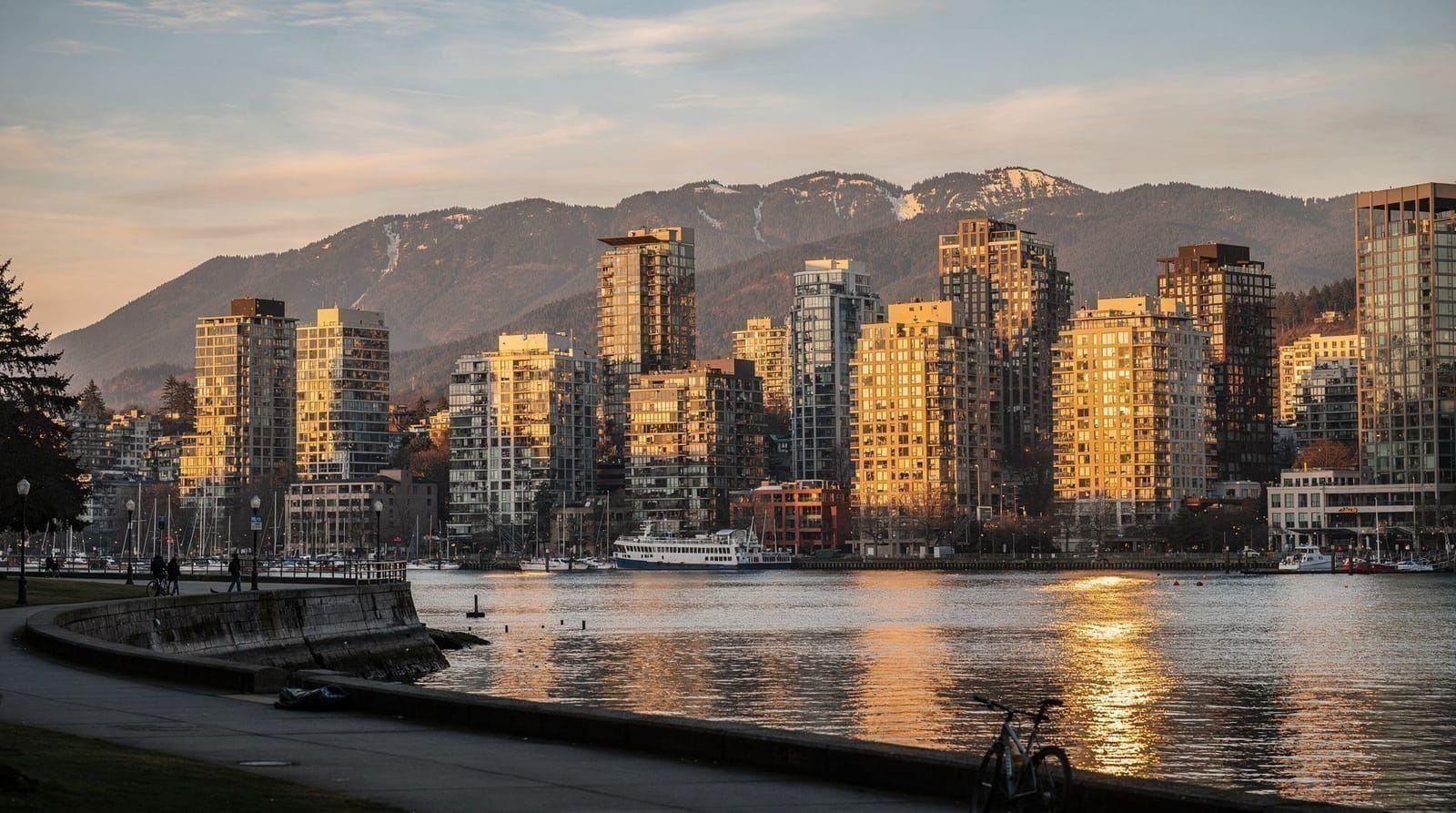
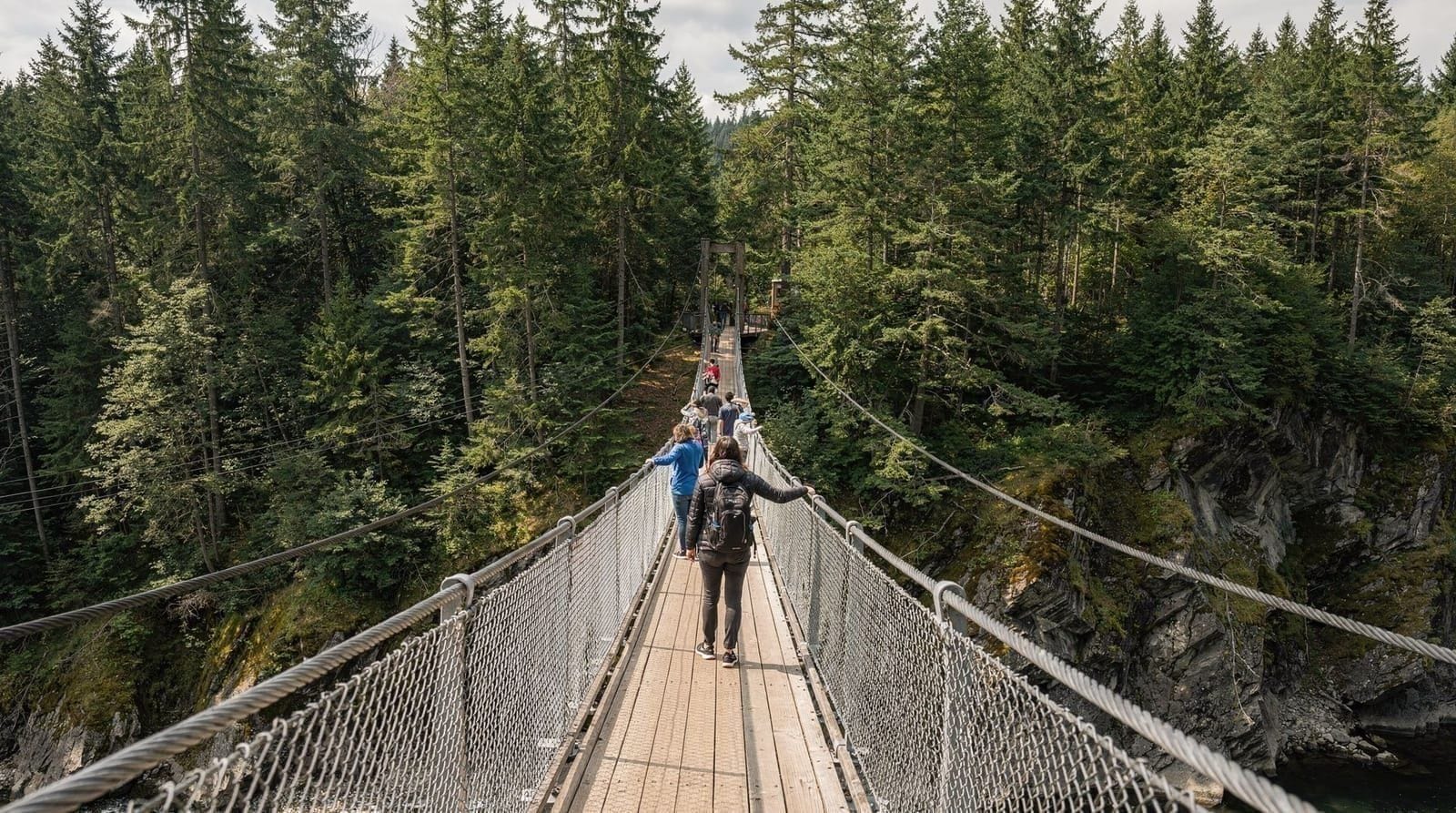
Downtown Vancouver sits on a peninsula bordered by Burrard Inlet to the north, False Creek to the south, and Stanley Park at its western tip — a genuinely compact layout that makes walking a realistic way to cover most of the core. The North Shore mountains, visible from nearly everywhere downtown, sit across the inlet and house Capilano Suspension Bridge and Grouse Mountain, reached via the SeaBus ferry. Beyond the city, Whistler sits about two hours north via the Sea-to-Sky Highway, and Victoria sits across the Georgia Strait on Vancouver Island, reached by BC Ferries or seaplane.
Entry requirements
Most visa-exempt travelers arriving by air need an eTA (Electronic Travel Authorization), a quick online application rather than a full visa, though enforcement has tightened in recent years so it’s worth applying well before travel rather than assuming last-minute approval. UK citizens typically qualify for the faster eTA route, while EU citizens more often need a full visitor visa requiring several weeks of processing time — check current requirements for your specific nationality well ahead of booking flights. US citizens need only a valid passport, no visa or eTA required. The canada-eta-checker tool helps confirm which category applies to a specific nationality.
Getting from the airport
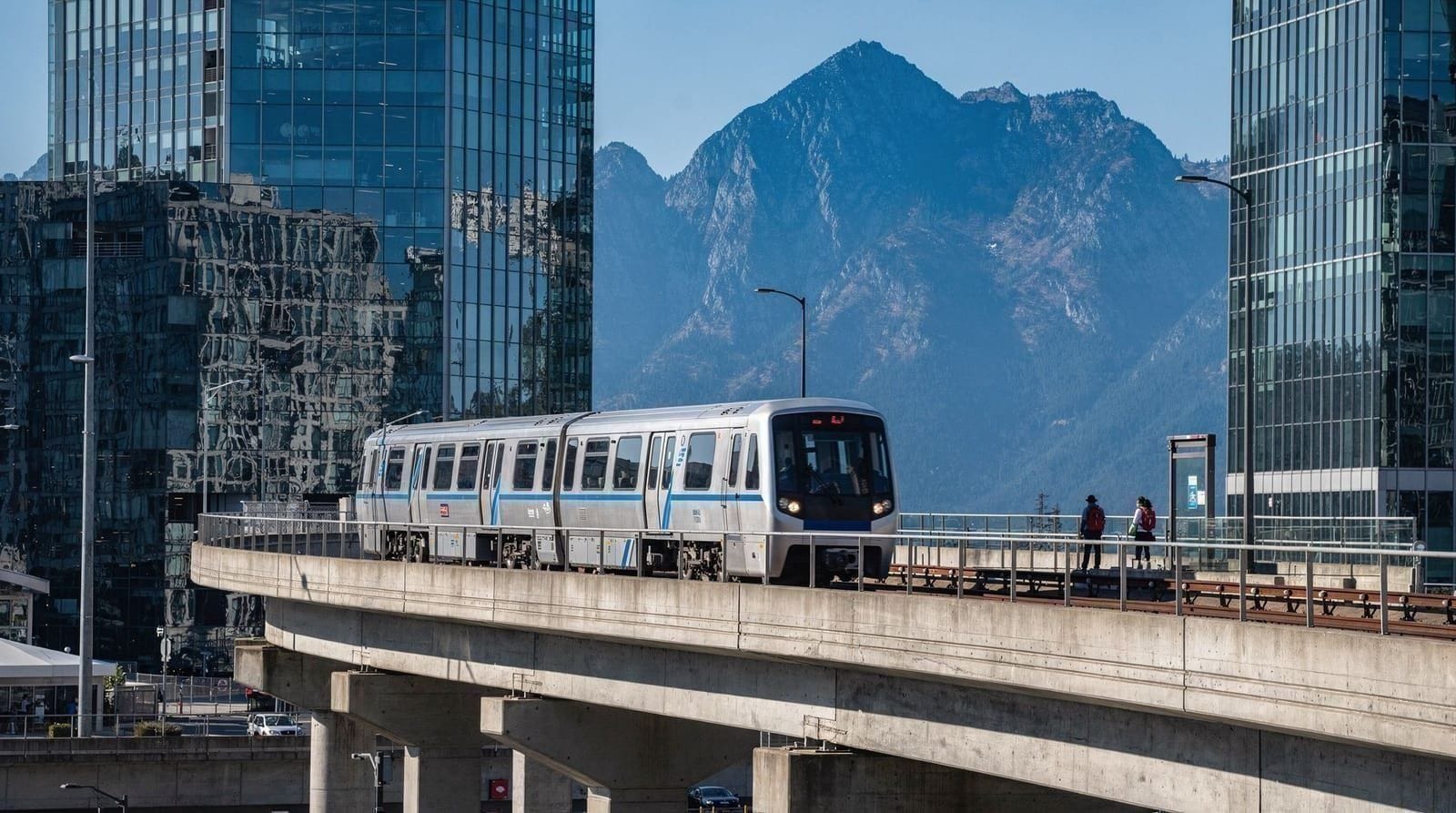
The Canada Line SkyTrain connects YVR Airport to downtown in about 23-25 minutes for roughly CAD 10 total, the fastest and most predictable option especially during rush hour. Taxis and rideshares run CAD 35-55 and take 30-40 minutes depending on traffic. The full breakdown, including hotel shuttle options, is in the getting around Vancouver guide.
What to prioritize on a first visit
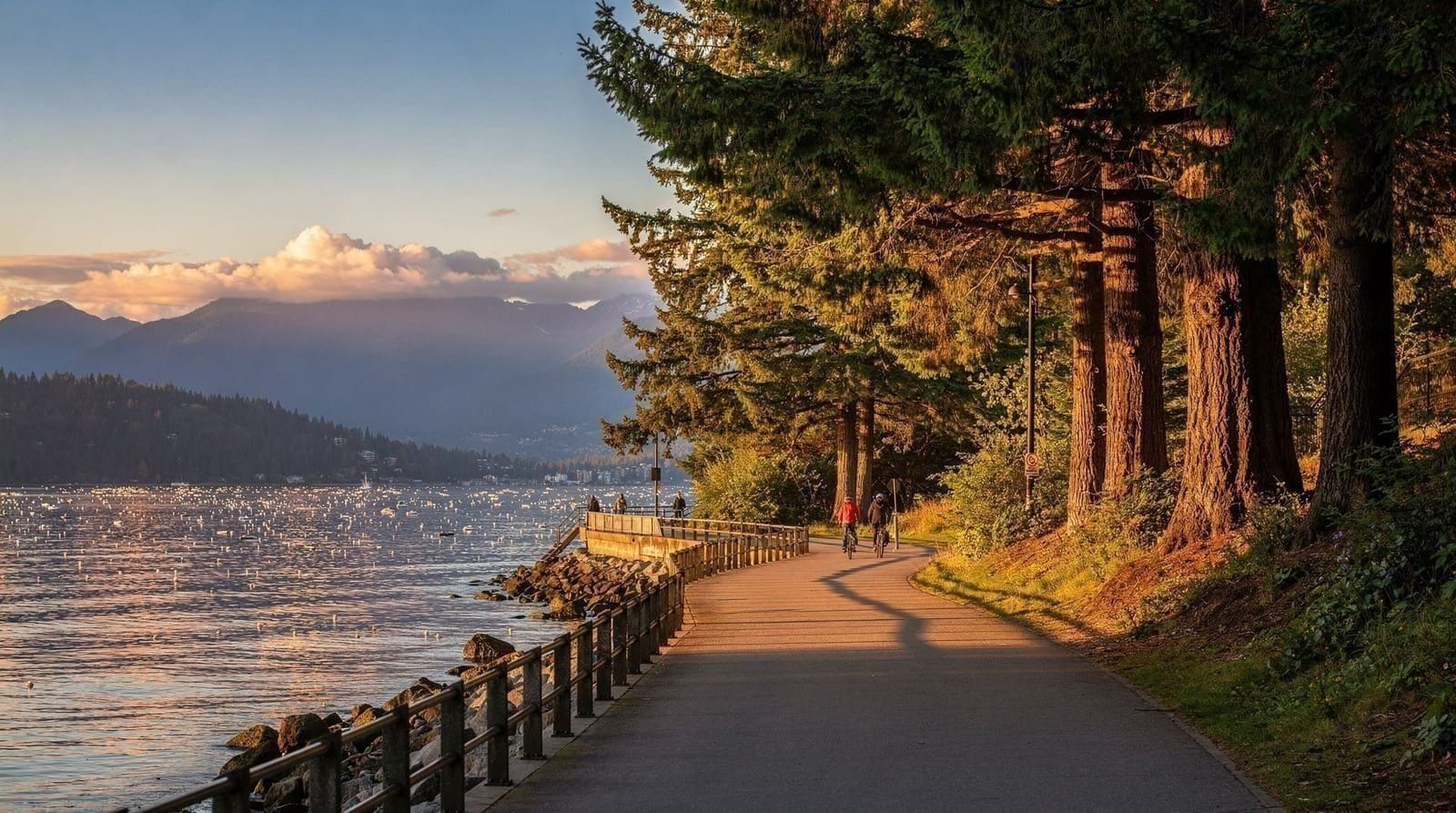
Stanley Park is the single highest-priority stop for most first-time visitors — the Seawall, beaches, and Aquarium cover a genuinely full day on their own. Granville Island Market and a walk through Gastown round out the essential city core.
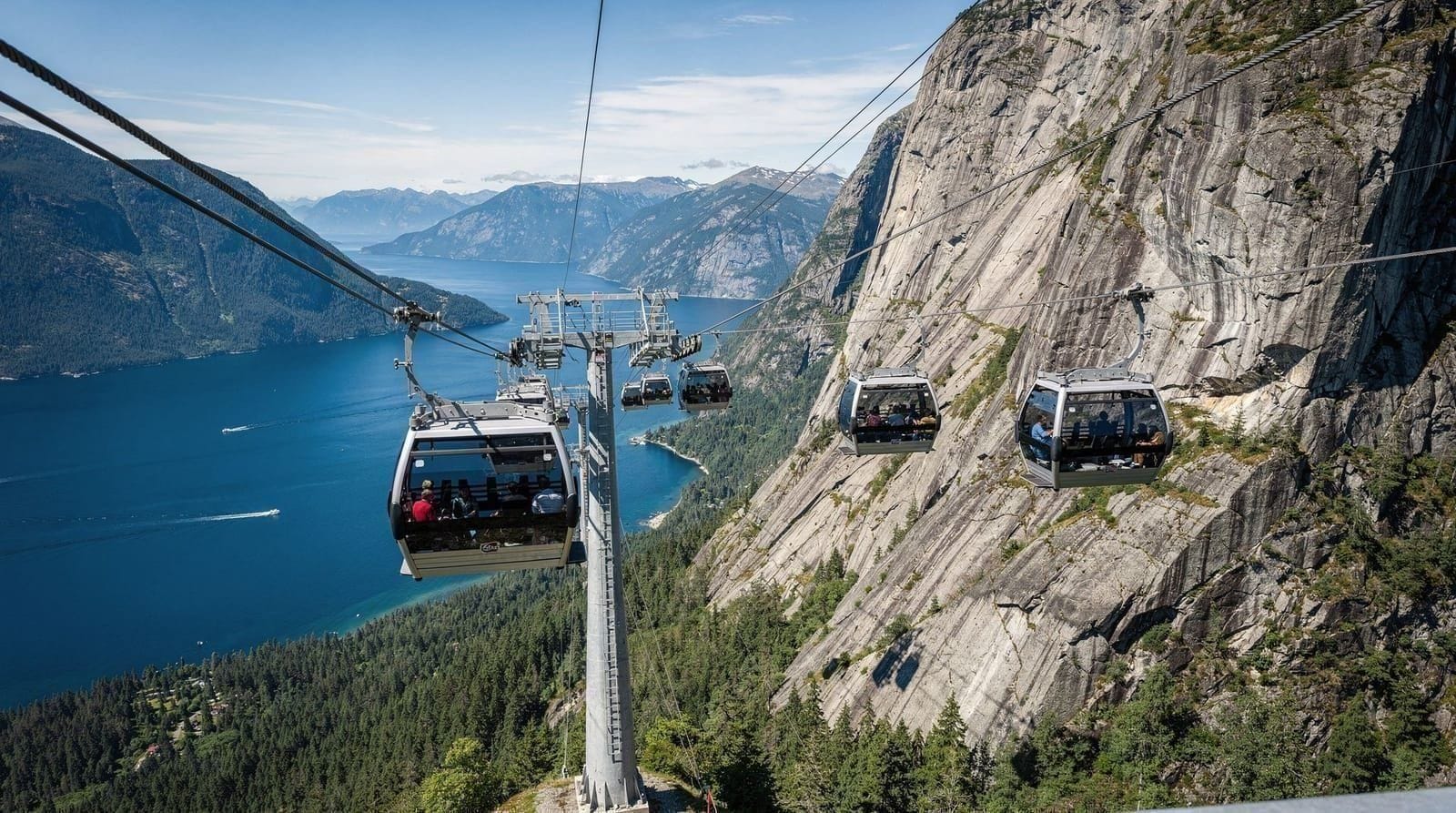
A North Shore day combining Capilano Suspension Bridge and Grouse Mountain adds mountain scenery within easy reach of downtown. A Vancouver city highlights tour is a reasonable way to cover the core sights efficiently on a first day, giving orientation before diving into specific neighborhoods independently for the rest of the trip.
Weather expectations
Rain is a real factor outside the June-September window, and first-time visitors underestimate this more than any other single planning detail — the rain guide covers how locals actually plan around it. Summer is reliably dry and warm; the rest of the year should be planned with a proper rain shell and flexible, partly indoor itinerary days built in as the default rather than the exception.
Transit basics
TransLink’s Compass Card covers SkyTrain, SeaBus, and buses under zone-based fares (CAD 2.85-5.40) with a 90-minute transfer window. It’s the default way to get around for anyone not renting a car specifically for a Whistler or Squamish day trip — the getting around Vancouver guide covers the full system in detail, and it’s worth reading before arrival rather than figuring it out on the fly at a SkyTrain station with luggage.
Where to stay
Downtown Vancouver or the West End suit most first-time visitors, both putting Stanley Park and downtown attractions within an easy walk and offering the best transit connections in the city. The where to stay guide covers other neighborhoods worth considering depending on specific priorities like dining, budget, or beach access.
How many days to plan
Three to four days covers the city’s core well; five days allows a Whistler or Victoria day trip alongside it. The itinerary length guide and the 3-day plan both walk through exactly how to structure a first visit day by day, and the 3-day itinerary is a solid template to start from.
Money and budget expectations
Vancouver runs expensive by Canadian standards, particularly for accommodation and dining out, though transit and many outdoor attractions stay genuinely reasonable — the is Vancouver expensive and budget guides cover exact numbers. Prices are in Canadian dollars (CAD), and credit cards are widely accepted, so carrying significant cash isn’t necessary for most of a trip.
Common first-timer mistakes
The most common mistake is underestimating rain risk outside summer and packing accordingly for a drier climate than Vancouver actually has most of the year. The second is renting a car for the entire trip when transit covers the city core perfectly well, adding unnecessary parking costs for days spent mostly on foot or on SkyTrain.
The third is trying to fit a Whistler and a Victoria day trip into a 3-day visit, not accounting for how much of a full day each genuinely requires given travel time — the itinerary length guide covers this trade-off directly. A fourth, smaller mistake is skipping the North Shore entirely in favor of only downtown sightseeing, missing out on the mountain scenery that’s one of the region’s most distinctive features compared to other major cities.
Building a first itinerary
A reasonable first-visit structure: one day downtown and Stanley Park, one day Granville Island and Gastown/Chinatown, one day North Shore (Capilano and Grouse), and — if time allows — one day for Whistler or Victoria. The neighborhoods guide helps decide which areas deserve extra time based on personal interests, and the 3-day plan lays out this exact structure with specific timing and logistics for each day.
Language and culture
English is the dominant language throughout Vancouver, spoken by the vast majority of the population, and all tourist-facing infrastructure — signage, menus, transit information — runs in English by default. French, while officially recognized nationally, is rarely spoken locally, so travelers expecting bilingual signage the way it might appear in Montreal or Ottawa will find Vancouver functions almost entirely in English, with some additional Chinese-language signage concentrated in Chinatown and Richmond specifically. Culturally, Vancouver is a genuinely diverse, laid-back city, and visitors from more formal cultures often find the local social style notably casual, even in professional settings.
Health, safety, and practical concerns
Vancouver is safe for tourists in the areas most visitors spend their time — downtown, Stanley Park, Granville Island — with the one specific area worth knowing about being the Downtown Eastside, adjacent to Gastown and Chinatown, which has visible homelessness and drug use issues. Travel health insurance is strongly recommended, since Canadian healthcare isn’t free for foreign visitors and costs can be substantial without coverage. Wildlife encounters are rare in the city proper but a real consideration for anyone hiking in the backcountry around Garibaldi or the Coast Mountains, where carrying bear spray and understanding basic wildlife safety matters more than it does for standard city sightseeing.
Phone and connectivity
Most major international carriers offer roaming plans that work in Canada, though rates vary widely by home carrier, and it’s worth checking before arrival rather than discovering a surprise bill afterward. Local SIM cards and eSIMs are readily available at the airport and downtown, generally offering better value than roaming for stays longer than a few days. Free WiFi is widely available in cafes, hotels, and many public spaces, including most SkyTrain stations, which covers basic connectivity needs for travelers without a local SIM.
Jet lag and the first day
Vancouver sits in the Pacific time zone, meaning visitors arriving from Europe or Asia face a substantial time change that’s worth planning the first day or two around rather than fighting outright. A lighter first-day itinerary — a Stanley Park walk, a Granville Island visit, nothing requiring an early alarm or a packed schedule — helps ease into the time change better than an ambitious first-day plan that assumes full energy from arrival. Travelers arriving from similar West Coast time zones (US Pacific, for instance) face minimal adjustment and can plan a fuller first day without the same concern.
What to pack
Beyond the rain gear already emphasized, comfortable walking shoes matter more than almost anything else given how much of a Vancouver visit involves walking the Seawall, exploring neighborhoods on foot, and covering ground at North Shore attractions. Layers work better than a single heavy jacket, since temperatures shift meaningfully through a single day even in summer. A reusable water bottle is worth bringing, since Vancouver’s tap water is safe to drink and many attractions and parks have refill stations, avoiding the need to buy bottled water throughout the trip.
Tipping and everyday etiquette
Tipping culture mirrors the US closely — 15-20% at sit-down restaurants and for taxi or rideshare rides is standard, and most payment terminals prompt for a tip even at quick-service counters. Beyond tipping, Vancouver’s everyday etiquette is generally relaxed: queuing politely, standing on the right on escalators, and general friendliness toward strangers are all broadly expected, similar to norms across most of English-speaking Canada.
Understanding the region beyond the city
First-time visitors sometimes plan a Vancouver trip as if the city were an isolated destination, missing the fact that some of the region’s strongest experiences — whale watching, ski access, cherry blossoms in specific neighborhoods — sit either just outside the city or require a short trip to unlock fully.
Understanding the region’s rough geography early helps set realistic expectations: Whistler for mountains and skiing, Victoria and Vancouver Island for a different coastal city experience and Butchart Gardens, and the Sea-to-Sky corridor connecting the two with its own worthwhile stops like Squamish. None of these are required for a satisfying first visit focused purely on the city, but knowing they exist helps a first-timer decide deliberately whether to include them rather than discovering them too late to fit into an already-booked itinerary.
Booking tours versus going independent
A genuinely useful first-timer question is which activities benefit from a guided tour versus independent exploration. Whale watching, Whistler day trips, and Victoria/Butchart Gardens excursions all benefit meaningfully from a guided option, since they involve logistics (boat departures, ferry timing, mountain driving) that are harder to manage independently on a first visit without local knowledge.
Downtown sightseeing, Stanley Park, and neighborhood walking are all easily done independently with a Compass Card and a bit of planning, and a guided tour for these specifically adds convenience more than genuinely new access. A useful middle ground for a first day is a single orientation tour — city highlights or hop-on hop-off — that provides a general lay of the land before switching to independent exploration for the remainder of the trip.
Weather-proofing a first itinerary
Because rain is a real factor outside summer, first-time visitors benefit from building at least one flexible day into any itinerary regardless of season — a day that can pivot between an outdoor plan (Stanley Park, a hike) and an indoor one (FlyOver Canada, Granville Island Market, a museum) depending on the actual forecast rather than a plan made weeks in advance. This single piece of flexibility does more to protect a first Vancouver trip from disappointment than almost any other planning decision, since it removes the risk of a rigid schedule being derailed entirely by a single wet day.
Questions to answer before booking flights
A few decisions are worth settling before locking in flights and accommodation, since they shape the rest of the trip’s planning. How many days are realistic given work or school constraints, and does that length support any regional day trips beyond the city itself? Which season fits both the calendar constraints and the trip’s priorities — cherry blossoms, whale watching, skiing, or simply guaranteed good weather?
Does the traveler’s nationality require a visitor visa with several weeks of lead time, or does the faster eTA process apply? Answering these up front, using the best time to visit and itinerary length guides as reference, prevents the common trap of booking flights first and only discovering afterward that the dates don’t support the trip’s actual goals.
After the first visit
Many visitors treat a first Vancouver trip as an initial scouting visit, returning later for a longer, more region-focused trip once they know which parts of the city and surrounding area appealed most. It’s a reasonable approach given how much the region offers beyond a single city visit — a first trip focused tightly on downtown, Stanley Park, and one North Shore day leaves Whistler, Vancouver Island, and the Okanagan genuinely fresh for a return visit rather than feeling like a missed opportunity on the first one.
Cell coverage and maps offline
Vancouver’s downtown core and most tourist areas have reliable cell coverage, but the North Shore mountains, Sea-to-Sky corridor, and Vancouver Island’s more remote stretches can drop to patchy or no signal, particularly once off the main highways. Downloading offline maps for the wider region before a Whistler or Vancouver Island day trip is a small precaution that avoids real inconvenience if a planned route loses signal partway through.
Currency and card payments
Canada runs almost entirely on card and contactless payment now, including tap-to-pay for transit fares directly at faregates without needing a physical Compass Card. Carrying some cash is still worth doing for the rare small vendor or market stall that’s card-only-averse, but it’s no longer a necessity the way it was a decade ago, and most visitors get through an entire trip on cards alone. The currency converter tool is useful for quick CAD-to-home-currency conversions while shopping or budgeting on the go.
Comparing Vancouver to other first-time North American city visits
Visitors weighing Vancouver against other West Coast first-time destinations often find it more compact and walkable than Los Angeles or Seattle, with a downtown core genuinely built for pedestrians rather than requiring a car for basic sightseeing. It shares Seattle’s rain risk and mountain backdrop but adds a more immediately accessible ski and hiking region within the Sea-to-Sky corridor, plus the distinct advantage of an international ferry connection to Vancouver Island that few comparable cities offer. Visitors coming from a more car-dependent home city should expect and welcome the shift toward transit and walking as part of what makes a Vancouver visit work well.
First-day logistics after landing
Most travelers land at YVR feeling some combination of jet lag and travel fatigue, and building the first few hours around a light, low-effort plan — check into accommodation, a short Stanley Park or Seawall walk, an early dinner — tends to work better than an ambitious first-day itinerary planned around maximum sightseeing. Saving the higher-effort days, like a full North Shore outing or a Whistler day trip, for day two or three once the travel fatigue has cleared gives the whole trip a better rhythm than front-loading the most demanding day first.
The bottom line
Vancouver is a genuinely easy city for a first-time visitor to navigate once the basics are understood: compact, walkable downtown; reliable transit; real rain risk outside summer; and a region beyond the city that rewards at least one day-trip extension if time allows. Getting the entry requirements sorted early, packing for the actual weather rather than an idealized version of it, and picking a realistic trip length based on how much of the region matters to see are the three details that make the biggest difference between a smooth first visit and a frustrating one.
Frequently asked questions — First time in Vancouver
How many days do I need for a first visit to Vancouver?
Three to four days covers the city's core well — downtown, Stanley Park, Granville Island, and a North Shore day at Capilano and Grouse Mountain. Five days or more allows a Whistler or Victoria day trip alongside the city itself without feeling rushed.Do I need a visa to visit Vancouver?
Most visa-exempt travelers arriving by air need an eTA (Electronic Travel Authorization), a quick online application rather than a full visa. Some nationalities require a full visitor visa with several weeks of processing time instead, and US citizens need only a valid passport. Check current requirements for your specific nationality well before booking flights.Is Vancouver expensive for first-time visitors?
Vancouver runs expensive by Canadian standards, particularly for accommodation and dining out, though transit and many outdoor attractions stay genuinely reasonable. Budgeting mid-range at roughly CAD 150-250 per person per day, excluding premium hotels, is a realistic starting point — see the is Vancouver expensive guide for exact figures.Do I need a car in Vancouver?
No, not for the city itself — TransLink's SkyTrain, SeaBus, and bus network, combined with walking, covers downtown, Stanley Park, Granville Island, and most neighborhoods well. A car becomes useful only for day trips to Whistler, Squamish, or the Fraser Valley, and even those are well served by guided tours.What's the biggest mistake first-time visitors make in Vancouver?
Underestimating rain risk outside the June-September window and packing for a drier climate than Vancouver actually has most of the year. Close behind is trying to cram a Whistler day trip and a Victoria day trip into a single 3-day visit without accounting for how much travel time each genuinely requires.Where should first-time visitors stay in Vancouver?
Downtown Vancouver or the West End suit most first-time visitors best, putting Stanley Park and the main downtown attractions within an easy walk and offering the best transit connections in the city. Both are covered in more depth in the where to stay guide, which breaks down other neighborhoods for specific priorities like budget or beach access.What's the best time of year for a first visit to Vancouver?
Summer (June through September) offers the most reliably dry, warm weather and the fullest range of outdoor activities. Spring brings cherry blossoms in specific neighborhoods, and fall offers whale watching and fewer crowds, but both carry more rain risk — the best time to visit guide covers the full seasonal trade-offs.
Top experiences
Bookable activities with verified prices and instant confirmation on GetYourGuide.