First Nations experiences in Vancouver — bookable, hands-on ways to connect with local culture
The Dark Secrets of Stanley Park Tour
Duration: 2 hours
What are the best First Nations experiences to book in Vancouver?
Guided Stanley Park walks and canoe tours run by Indigenous-owned operators like Talaysay Tours are the most established hands-on options, led directly by Squamish and other local guides rather than delivered through a museum display. Combining one of these with the Museum of Anthropology gives both the lived, first-person perspective and the broader historical and artistic depth.
Museums and galleries cover the historical and artistic depth of Northwest Coast Indigenous culture well, but they inherently deliver that information through curated displays and interpretive text rather than a living, first-person perspective. This guide focuses specifically on the bookable, hands-on experiences in Vancouver — guided walks, canoe tours, and cultural workshops — led directly by Indigenous guides and operators, as a complement to the museum-focused side of the city’s Indigenous cultural offerings.
This distinction — between learning about a culture through artifacts and learning about it through direct, ongoing relationship with the people who hold that culture today — is worth keeping in mind throughout a Vancouver visit, and it shapes every recommendation in this guide.
| Where | Stanley Park, Burrard Inlet/Indian Arm, plus Whistler for the Cultural Centre |
| Cost | Roughly CAD 60–90 for a walk; CAD 150+ for a canoe experience |
| Time needed | 2–3 hours for most guided walks or canoe trips |
| Best time | Spring through fall for most outdoor formats |
| Booking | A few days ahead recommended; smaller groups sell out |
Why guided experiences add something museums can’t
A guided walk or canoe tour led by an Indigenous guide offers something structurally different from even the best museum exhibit: real-time storytelling, plant knowledge, and cultural context delivered by someone speaking from their own Nation’s living tradition rather than through a fixed interpretive panel.
Questions can be asked and answered in the moment, and the format tends to emphasize continuity — how traditional knowledge and practices persist today — rather than the more historical framing museums often default to. Neither format replaces the other; the Museum of Anthropology guide and the broader Indigenous culture in Vancouver overview cover the museum side in depth, while this guide focuses on the experiential side.
Talaysay Tours and Stanley Park walks
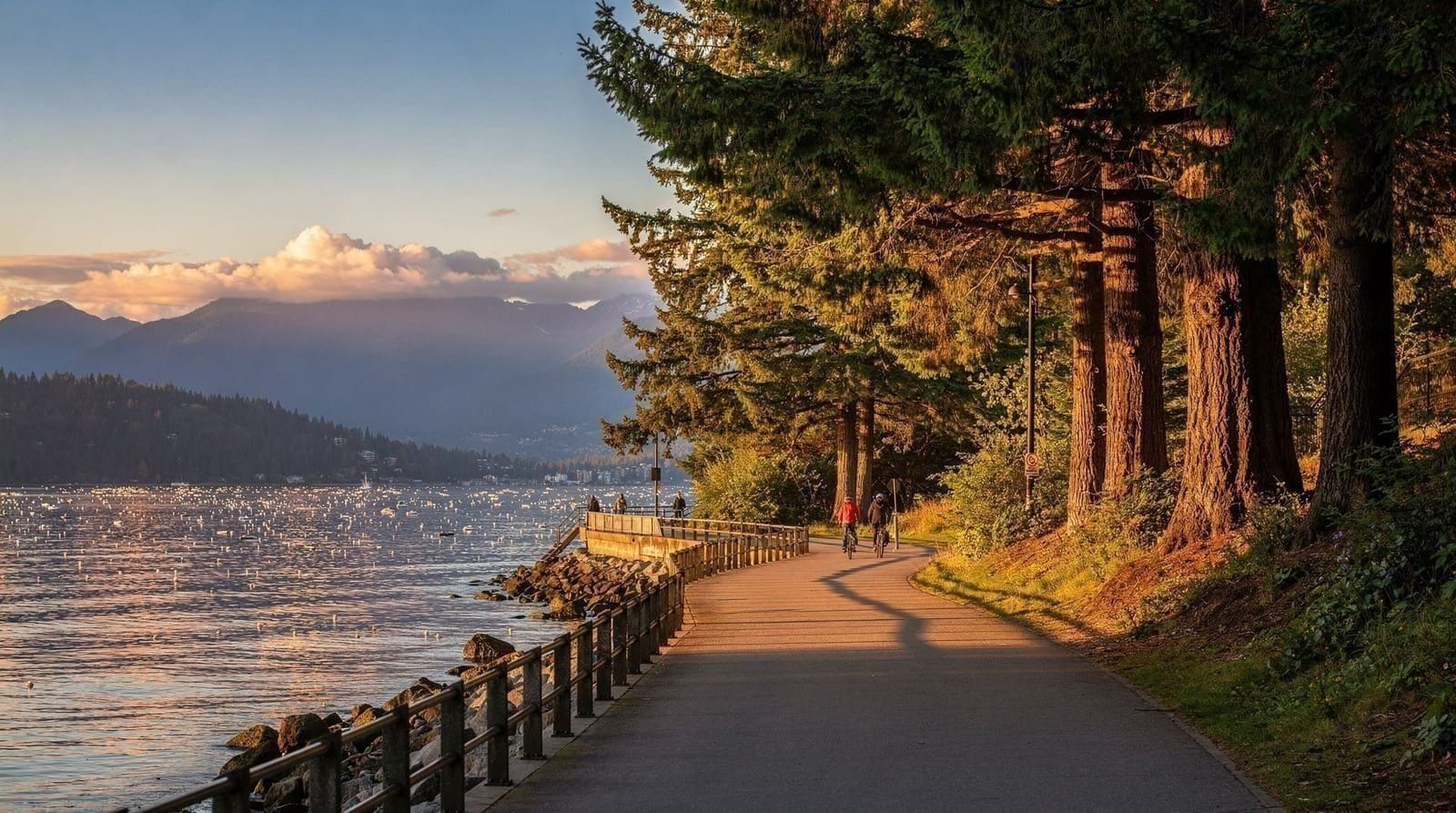
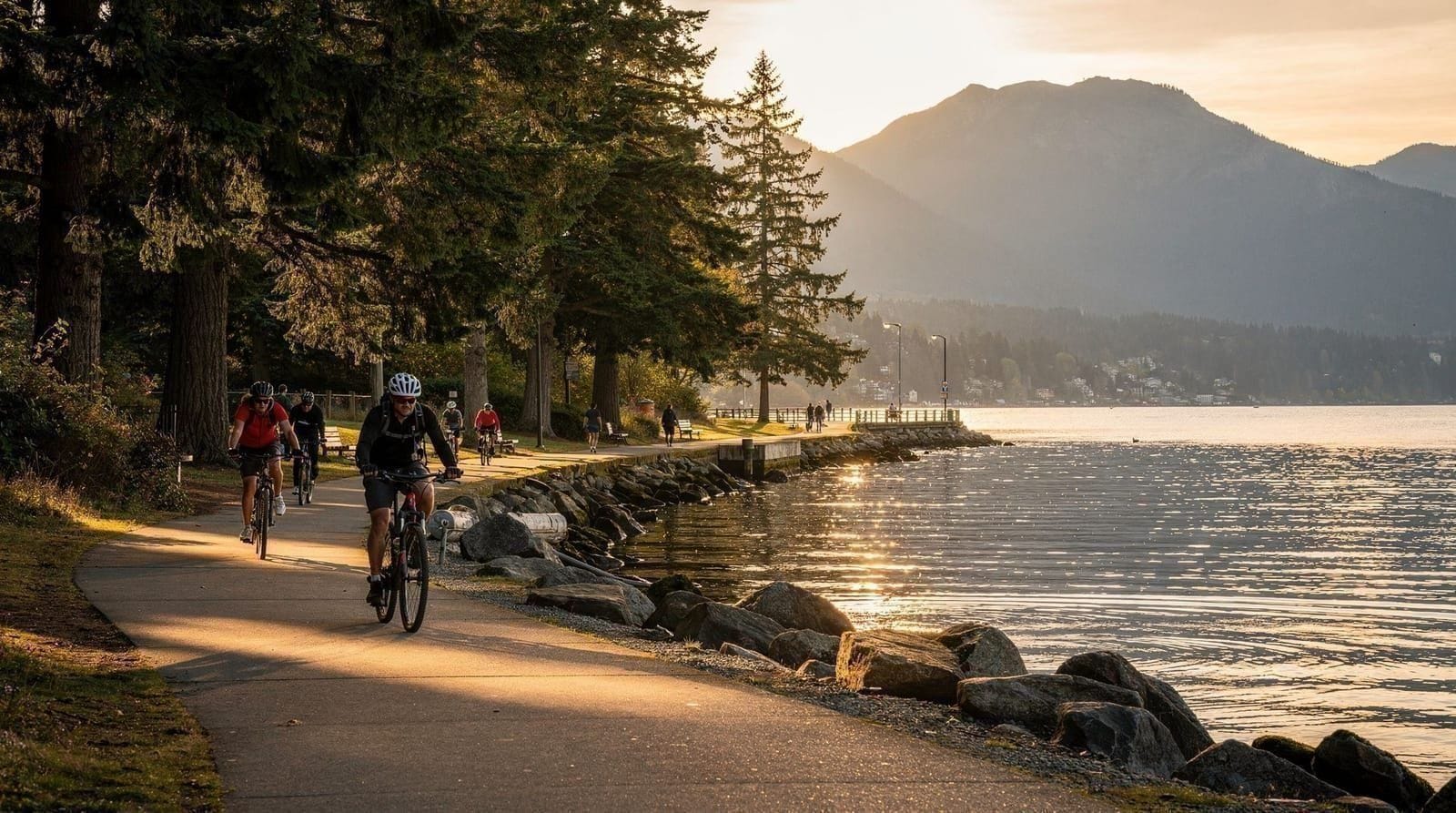
Talaysay Tours is among the most established Indigenous-owned tour operators in the region, running guided walks through Stanley Park led by Squamish and other local Nations’ guides, covering plant knowledge, traditional land use, and storytelling connected to specific sites within the park.
These walks typically run a few hours and stay at a walking pace accessible to most fitness levels, making them a practical addition to a broader Stanley Park visit rather than requiring a dedicated separate trip. Guides draw on both inherited family knowledge and formal training, and the tours are explicitly framed as being led by community members speaking about their own culture rather than a general nature-interpretation service with added cultural commentary.
Canoe experiences
Beyond walking tours, some Indigenous-owned operators run guided canoe experiences on the waters around Vancouver, connecting a traditional mode of transport and its accompanying protocols and stories to the same landscape covered by land-based walks. These tend to run as a smaller-group, more immersive format than a standard sightseeing boat tour, often including some hands-on paddling instruction alongside the cultural and historical content. Availability and specific operators shift over time, so checking current offerings directly through Talaysay Tours or similar Indigenous-owned operators closer to your travel dates is worth doing rather than assuming a fixed year-round schedule.
Combining a walk with Stanley Park’s totem poles
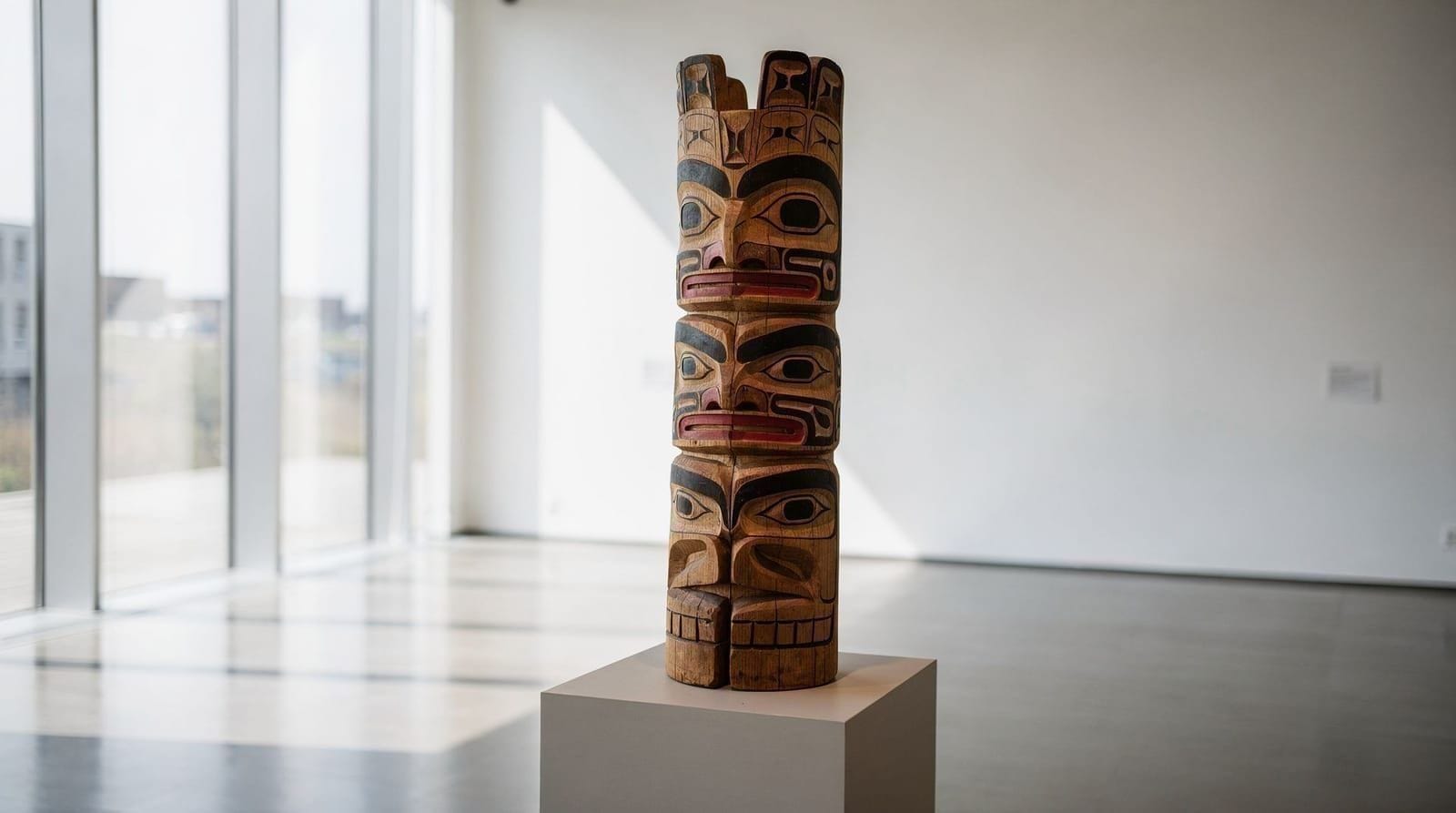
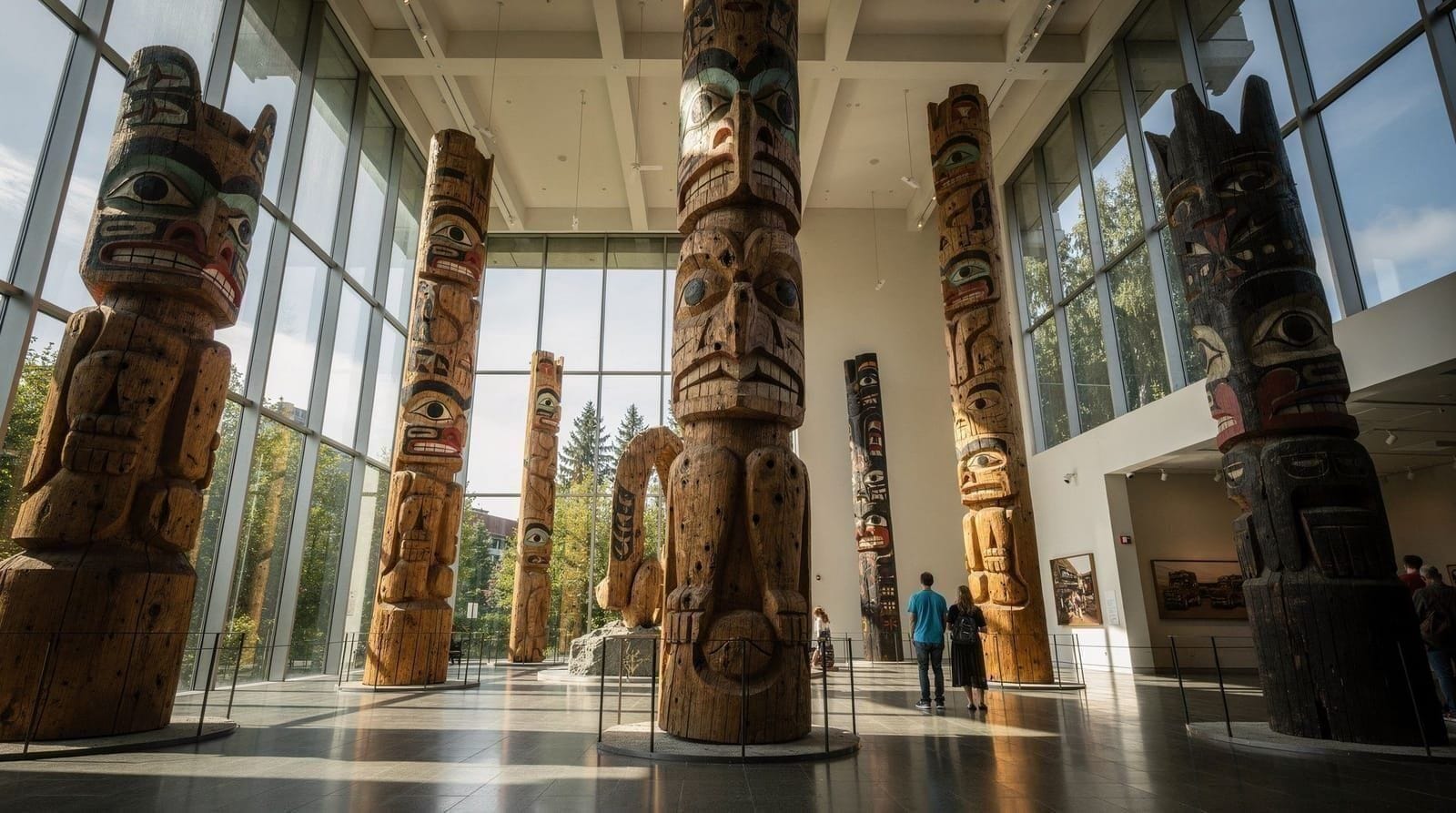
Because Stanley Park is already home to the well-known totem pole display near Brockton Point, a guided Indigenous-led walk through the park naturally incorporates that stop with considerably more context than a self-guided visit would offer — most visitors reading the totem poles’ interpretive signage on their own get a fraction of the context a guide can provide about the poles’ origins, the artists who carved them, and how they relate to the broader carving traditions represented.
A guided Stanley Park tour covering the park’s broader history is a useful complement for visitors who want the park’s full historical range covered, though it’s worth confirming in advance whether a specific tour is Indigenous-led if that’s a priority, since not every Stanley Park tour on the market carries that distinction.
Cultural centres beyond Vancouver proper
For travelers extending their trip toward Whistler, the Squamish Lil’wat Cultural Centre in Whistler Village offers a different, complementary kind of experience — a dedicated cultural centre built as a partnership between the two neighbouring Nations, with guided tours led by cultural ambassadors from both communities. It’s a worthwhile addition for visitors doing a Whistler day trip or a longer Sea-to-Sky stay who want an Indigenous-led experience specifically within that part of the region, distinct from anything based in Vancouver itself.
Combining with the Museum of Anthropology
For a genuinely complete day, pairing a guided experience with a Museum of Anthropology tour gives both the historical and artistic depth of a major collection and the living, first-person perspective of a guided walk or canoe trip — the two formats complement each other more than either substitutes for the other. Visitors with only a single day to dedicate to Indigenous cultural experiences should prioritize based on personal interest: MOA for depth and scale, a guided walk or canoe tour for a more personal, conversational format.
Choosing operators thoughtfully
Not every tour marketed with Indigenous or First Nations themes in Vancouver is actually Indigenous-owned or led, and it’s worth doing a small amount of research — checking who owns and operates a specific tour company — before booking if working directly with an Indigenous-owned business matters to you. Indigenous tourism associations and directories, along with the operators’ own “about” pages, are generally reliable ways to confirm ownership and guide backgrounds, a worthwhile few minutes of research given how much the format’s value depends on that authenticity.
Reviews and how to evaluate a specific tour
Because the quality and depth of guided Indigenous experiences can vary meaningfully between operators, checking recent reviews specifically for mentions of the guide’s own connection to the Nation or culture being represented is a more useful filter than overall star ratings alone. Reviews that describe a guide sharing personal family stories, specific language, or direct community connection generally indicate a more substantive experience than those focused purely on generic nature-walk commentary with Indigenous framing added on top. This kind of specific review-reading takes a few extra minutes but meaningfully improves the odds of booking an experience that delivers the depth described throughout this guide.
What it costs
Guided walking experiences with Indigenous-owned operators generally run from roughly CAD 60 to 90 per person for a shorter walk, up to CAD 150 or more for longer canoe-based experiences with additional equipment and instruction involved. This sits above the cost of a standard city walking tour, reflecting smaller group sizes and the specialized, personal nature of the guiding rather than a mass-market tour format.
Traditional food and salmon-based experiences
Some guided experiences incorporate traditional food knowledge and, occasionally, tastings alongside the walking or canoe component, connecting Coast Salish food traditions — salmon in particular, given its central role in the culture and economy of Pacific Northwest Nations — to the broader cultural and historical content covered on a tour. These food-focused elements vary considerably by operator and aren’t a guaranteed feature of every guided walk, so travelers specifically interested in this angle should ask directly when booking rather than assuming it’s included.
Art demonstrations and carving
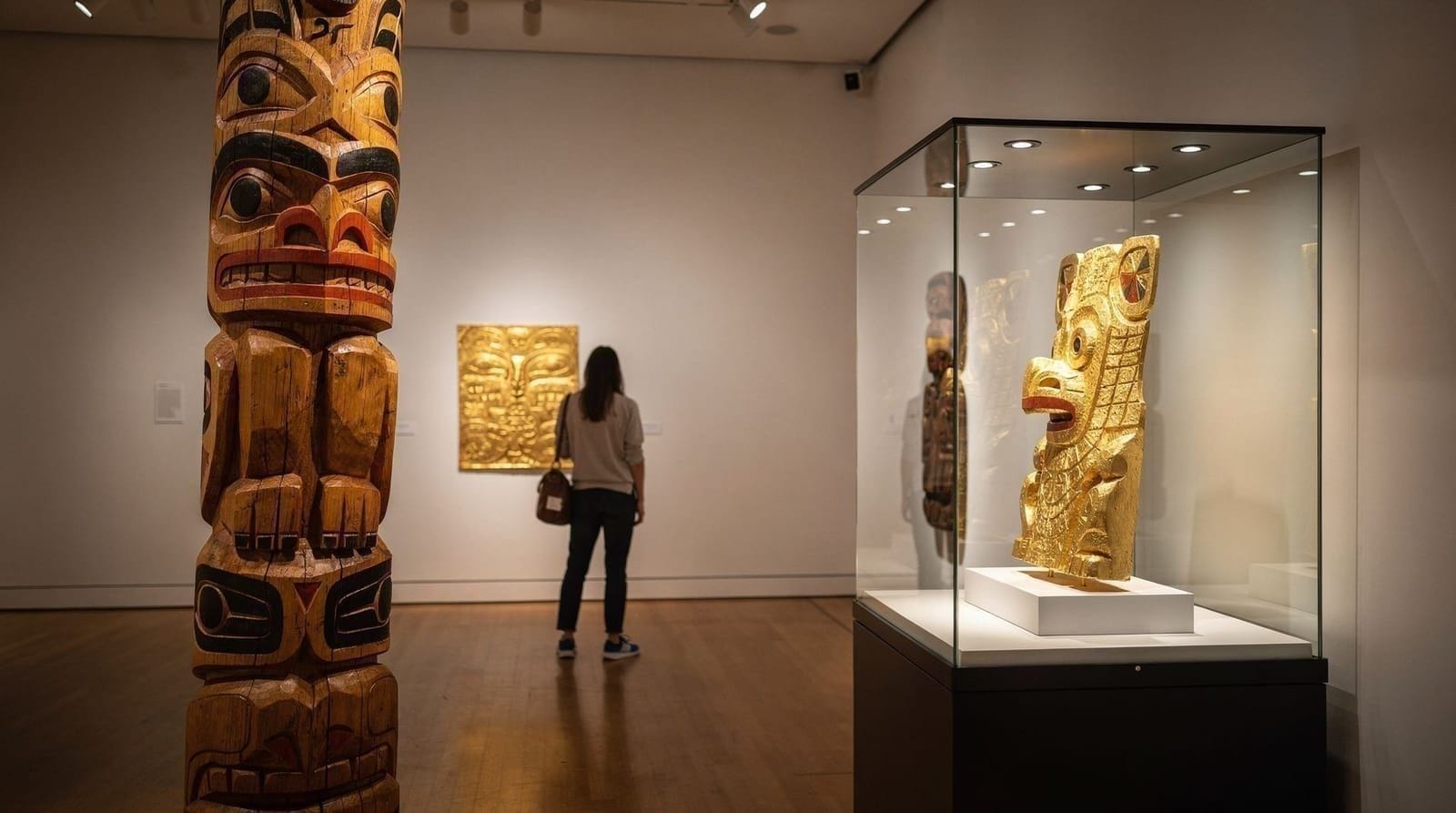
A smaller number of experiences include a live art or carving demonstration component, giving visitors a chance to watch a working artist rather than only seeing finished pieces in a gallery or museum setting. These are less common and more specialized than the standard walking-tour format, often tied to specific events, festivals, or seasonal programming rather than being available as a standing, bookable option year-round. Checking directly with galleries like the Bill Reid Gallery or the Museum of Anthropology for any scheduled artist demonstrations during your travel dates is worth doing if this specifically interests you.
Powwows and public gatherings
Beyond the commercial tour format, public powwows and cultural gatherings occasionally take place in and around Vancouver, open to respectful public attendance, and offer a genuinely different kind of experience than a paid guided tour — community celebration and ceremony rather than an interpretive walk designed for visitors. These aren’t run as tourism products and don’t follow a predictable annual schedule the way a museum’s hours do, so awareness of local event listings and Indigenous community calendars during your travel dates is the most reliable way to know if one coincides with your visit.
Family-friendly considerations
Guided Stanley Park walks and canoe experiences generally suit families well, particularly the walking format, which tends to hold children’s attention better than a self-guided museum visit thanks to its storytelling and interactive structure. Canoe-based experiences require more caution and are generally better suited to older children and teens comfortable in a boat for an extended period, and it’s worth checking a specific operator’s minimum age policy before booking a family group.
Seasonal timing
Most guided walking and canoe experiences run on a seasonal schedule tied to Stanley Park’s own weather patterns, generally most available from spring through fall, with reduced or paused offerings through the wettest winter months when outdoor walking tours become less appealing to book and less pleasant to run. Travelers visiting in winter specifically interested in this kind of experience should check current availability directly with operators rather than assuming a year-round schedule matching the museum-based alternatives, which remain open regardless of season.
The Squamish Lil’wat Cultural Centre in more depth
The cultural centre in Whistler Village deserves a closer look for travelers planning a Sea-to-Sky extension to their trip. Built specifically as a partnership between the Squamish and Lil’wat Nations, whose traditional territories meet in the Whistler area, the centre includes guided tours led by cultural ambassadors, a gift shop featuring authentic work from both Nations’ artists, and rotating exhibitions distinct from what MOA or the Bill Reid Gallery offer in Vancouver proper. It’s smaller in scale than MOA but offers a more focused, two-Nation depth that a broader regional survey museum can’t match, and it pairs naturally with a Whistler day trip or longer Sea-to-Sky stay.
Booking through a broader private tour
For travelers who’d rather have a single flexible guide cover Indigenous history alongside broader Vancouver sightseeing, a private historical and heritage tour can sometimes be customized to prioritize Indigenous history and sites specifically, worth requesting directly when booking rather than assuming a standard fixed itinerary. This won’t replicate the specifically Indigenous-led perspective of an operator like Talaysay Tours, but it offers more scheduling flexibility for travelers with a tighter or more unusual itinerary.
Language and place names on a guided tour
One of the more distinctive elements many guided experiences incorporate is Coast Salish language — guides sharing traditional place names for specific sites within Stanley Park or along the waterfront, alongside their English equivalents, and explaining what those names mean or reference. This is a detail easy to miss on a self-guided visit but consistently mentioned by visitors as one of the more memorable aspects of a guided walk, since it reframes familiar tourist landmarks through a much older naming and meaning system than the English names most visitors already know.
How these experiences fit into a longer Vancouver stay
For visitors building a multi-day Vancouver itinerary, spacing a guided Indigenous experience across different days from a museum visit — rather than trying to combine both into a single rushed day — generally produces a better outcome for both. A guided walk benefits from unhurried attention to storytelling and questions, while a museum visit rewards a slower pace through the Great Hall and galleries; compressing both into one day tends to shortchange one or the other. Travelers with at least two or three days in Vancouver have the easiest time giving each format its own proper slot.
What to bring and practical logistics
Guided outdoor experiences in Stanley Park require the same basic preparation as any Vancouver outdoor activity — layered clothing given the city’s changeable weather, comfortable walking shoes, and rain protection outside the reliably dry summer months. Canoe-based experiences typically provide all necessary equipment, including life jackets and paddles, but checking with the specific operator about what’s included versus what to bring yourself avoids any last-minute surprises on the day. Most walking tours meet at a designated Stanley Park entrance rather than requiring transportation arrangements, making them straightforward to combine with a broader park visit on the same day.
Supporting Indigenous-owned tourism directly
Booking directly with Indigenous-owned operators, where clearly identified as such, is one of the more concrete ways visitors can ensure their tourism spending reaches the communities being represented, rather than flowing to an unrelated tour company using Indigenous themes as marketing without any actual community ownership or benefit. This distinction matters more in the tourism sector than some visitors realize, given how commonly Indigenous imagery and branding appear in tourism marketing without any direct connection to Indigenous ownership or profit-sharing — a pattern worth being aware of and actively working against through deliberate booking choices.
Takaya Tours and the Indian Arm canoe route
Beyond Stanley Park, Takaya Tours, owned and operated by the Tsleil-Waututh Nation, runs guided canoe experiences on Burrard Inlet and Indian Arm from a launch point in North Vancouver, connecting a traditional Coast Salish canoe route directly to the same waters covered on land by the Indian Arm kayak guide and Deep Cove kayak guide. The experience typically pairs traditional storytelling and territorial history with active paddling instruction, giving visitors a genuinely different vantage point on the region’s geography than any land-based tour offers — the inlet itself was, and remains, a central part of Tsleil-Waututh life and travel rather than simply scenery.
How this guide connects to the rest of Vancouver’s Indigenous cultural offerings
This guide sits alongside two others worth reading together for a complete picture: the Indigenous culture in Vancouver guide, which covers museums, public art, and general orientation to the region’s Host Nations, and the Museum of Anthropology guide, which covers the single largest collection of Northwest Coast Indigenous art in the region in depth. Together, the three guides split the same broad subject into its museum, overview, and hands-on experiential components, letting a visitor plan a genuinely rounded itinerary rather than defaulting to whichever single option is easiest to find.
Respectful participation
Guided Indigenous experiences generally welcome genuine curiosity and questions as part of the format, but a few points of etiquette are worth knowing going in: ask before photographing a guide directly, follow any specific instructions about what can and can’t be recorded during storytelling or ceremonial elements, and treat the experience as a cultural exchange rather than a purely transactional sightseeing stop. Guides are generally direct about what they’re comfortable sharing and what stays within community knowledge, and respecting those boundaries without pushing for more is part of what makes the format work well for both visitors and hosts.
Combining a guided experience with a longer itinerary
Visitors building a broader multi-day trip can see how a Stanley Park walk or canoe tour fits alongside the rest of a Vancouver stay in the 3-day Vancouver plan or the more general first-time Vancouver guide, both of which treat Indigenous cultural experiences as a standard, worthwhile component of a first visit rather than a niche add-on. Slotting a guided walk into a morning before an afternoon at Stanley Park’s seawall or a visit to Granville Island works well logistically, since most walks run two to three hours and leave the rest of the day free.
The honest verdict
Vancouver’s Indigenous-led guided experiences are a genuinely worthwhile complement to the city’s museum offerings, and for visitors who only have time for one Indigenous cultural activity during their trip, a guided walk or canoe tour delivers a different, more personal kind of understanding than a self-guided museum visit alone. The format asks a little more research to book well — confirming genuine Indigenous ownership, checking current availability — but the payoff, hearing history and culture explained directly by someone speaking from their own community’s perspective, is difficult to replicate through any exhibit, however well-curated.
Frequently asked questions — First Nations experiences in Vancouver
What is the difference between a First Nations experience and a museum visit in Vancouver?
A First Nations experience — a guided Stanley Park walk, a canoe tour, or a visit to an Indigenous-owned cultural centre — is led directly by a guide speaking from their own Nation's living tradition, with real-time storytelling and the chance to ask questions. A museum visit like the Museum of Anthropology or the Bill Reid Gallery presents the historical and artistic depth of a curated collection. The two formats complement rather than replace each other.Are Talaysay Tours actually Indigenous-owned?
Yes — Talaysay Tours is one of the most established Indigenous-owned tour operators in the Vancouver region, running guided walks and canoe experiences led by Squamish and other local Nations' guides. It's worth confirming ownership directly with any operator marketing itself using Indigenous themes, since not every tour branded this way is actually Indigenous-owned.How much do Indigenous-led tours in Vancouver cost?
Guided walking experiences generally run from roughly CAD 60 to 90 per person for a shorter tour, up to CAD 150 or more for longer canoe-based experiences that include equipment and hands-on instruction. This sits above the cost of a standard city walking tour, reflecting smaller group sizes and the specialized, personal nature of the guiding.Do I need to book a First Nations experience in advance?
Yes, generally — guided walks and canoe experiences run in smaller groups than standard sightseeing tours and can sell out, particularly in the busier summer months. Booking a few days ahead, and further ahead for a specific date or time slot, is the safer approach rather than assuming same-day availability.Can children join a guided Indigenous walking tour?
Yes, guided Stanley Park walks generally suit families well and tend to hold children's attention better than a self-guided museum visit thanks to their storytelling and interactive format. Canoe-based experiences require more caution and generally suit older children and teens better, and it's worth checking a specific operator's minimum age policy before booking.Is the Squamish Lil'wat Cultural Centre worth a detour from Vancouver?
It's a strong addition specifically for travelers already extending their trip toward Whistler, rather than a standalone reason to make the drive from Vancouver. Built as a partnership between the Squamish and Lil'wat Nations, it offers guided tours led by cultural ambassadors from both communities and pairs naturally with a Whistler day trip or a longer Sea-to-Sky stay.What should I know before booking an Indigenous-led tour?
Confirm the operator is genuinely Indigenous-owned rather than using Indigenous imagery or themes without direct community ownership, check recent reviews for mentions of the guide's own connection to the Nation or culture represented, and dress for Vancouver's changeable weather with layers and rain protection outside the summer months.
Top experiences
Bookable activities with verified prices and instant confirmation on GetYourGuide.