How many days do you need in Vancouver?
Vancouver: City Highlights Tour
How many days should I spend in Vancouver?
3-4 days covers the city itself well, including Stanley Park, downtown neighborhoods, and one North Shore outing. Adding a Whistler or Victoria day trip pushes that to 5 days, and a full regional trip covering both plus more of Vancouver Island comfortably needs 7-10 days.
The right length for a Vancouver trip depends less on the city itself, which is compact enough to cover its highlights in a few focused days, and more on how much of the surrounding region — Whistler, Victoria, the Sea-to-Sky corridor, Vancouver Island — gets folded into the same visit. A trip built purely around downtown and Stanley Park needs far less time than one that treats the region as a single connected itinerary.
| 1-2 days | City core only — cruise or stopover pace |
| 3-4 days | The sweet spot for a city-only trip |
| 5 days | City plus one regional day trip (Whistler or Victoria) |
| 7-10 days | City, Whistler, and Vancouver Island as separate legs |
Trip length compared, side by side
| Length | Covers | Best for | Skip if |
|---|---|---|---|
| 1-2 days | Downtown, Stanley Park loop, one headline sight | Cruise stopovers, short layovers | Any regional day trip is planned |
| 3-4 days | Downtown, Stanley Park, Granville Island/Gastown, one North Shore outing | First-time visitors with no day trip | Whistler or Victoria matter to you |
| 5 days | The above plus one full regional day trip | Travelers with one clear regional priority | You want to fit in both Whistler and Victoria |
| 7-10 days | City, a Whistler stay, a Vancouver Island leg | Multi-region trips treating each as its own chapter | Time or budget is genuinely tight |
1-2 days: the essentials only
A single day in Vancouver is tight but workable for cruise passengers or a short stopover, typically covering downtown, a Stanley Park loop, and one or two headline sights before running out of time — the 1-day itinerary and the Alaska cruise stopover itinerary both work from this tight-time framework. Two days allows a genuinely comfortable pace through the same core sights plus a bit of neighborhood time in Gastown or Granville Island, and is the realistic minimum for a first-time visitor who wants more than a rushed highlight reel — the 2-day itinerary lays this out in detail.
3-4 days: the sweet spot for a city-only trip
Three to four days is the strongest length for a trip focused on the city itself without a major regional day trip attached.
This covers downtown and Stanley Park thoroughly, adds a full day for Granville Island, Gastown, and Chinatown, and leaves room for one North Shore outing to Capilano Suspension Bridge and Grouse Mountain — the dedicated 3-day plan walks through exactly this structure day by day, and the 3-day itinerary and 4-day itinerary both build from the same base with the fourth day used for either a deeper dive into a favorite neighborhood or a first regional day trip.
5 days: adding one regional day trip
Five days is where a single major day trip — Whistler or Victoria — fits comfortably alongside a full city visit without either feeling rushed. A full-day Whistler tour or a Victoria and Butchart Gardens day both take a full 10-12 hour day given the two-hour-plus travel time each direction, which is why trying to squeeze one into a 3-day city trip usually means cutting city time short rather than genuinely adding to it.
The Vancouver-Whistler 5-day itinerary and Vancouver-Victoria 5-day itinerary both build around this exact balance of city time plus one regional extension.
7+ days: the full regional trip
A week or more allows genuinely combining multiple regions rather than choosing just one — city time, a Whistler stay (rather than just a day trip), and a Vancouver Island extension covering Victoria and potentially Tofino. The Vancouver Island 7-day itinerary covers this longer regional structure, and it’s the right length for travelers who want to experience the mountains, the city, and the island as three distinct chapters of one trip rather than compressing everything into rushed day trips from a single Vancouver base. Ten days or more opens up the Okanagan wine region as a further addition, though that requires either a long drive or a short flight given the distance involved.
At this length, it’s worth planning the trip as a loop or a series of distinct bases — several nights in Vancouver, several in Whistler, several on Vancouver Island — rather than a single Vancouver hotel with a string of long day trips radiating out from it, since the driving and ferry time saved by actually relocating usually outweighs the hassle of packing and unpacking more than once.
Matching trip length to travel style
Cruise passengers and short stopovers should stick to the 1-2 day framework and accept that only the city’s core highlights are realistically achievable — trying to squeeze in a Whistler day trip on an 8-hour port stop isn’t practical given the travel time alone. First-time visitors with no regional day trip planned do best at 3-4 days, long enough to avoid feeling rushed without excess unstructured time. Visitors planning exactly one major regional extension should budget 5 days minimum.
Travelers wanting the full mountains-city-island experience should look at 7-10 days rather than trying to compress it into less time and sacrificing depth at each stop. Solo travelers and couples with genuinely flexible schedules have the most freedom to adjust trip length based on how the trip is actually unfolding, extending a day here or cutting one there in a way that’s harder for families locked into school-holiday windows or groups coordinating multiple people’s availability.
What changes with a shorter trip
Shorter trips force real trade-offs rather than just a faster pace. A 2-day visit typically means choosing between a North Shore outing (Capilano and Grouse) and a Granville Island/Gastown day rather than doing both, since the travel time and visit length for each eats most of a full day on its own. It also usually rules out any regional day trip entirely, since Whistler and Victoria both need most of a day round-trip before accounting for time at the destination itself.
What changes with a longer trip
Extra days beyond the 3-4 day core don’t need to be spent rushing to see more — they can go toward a slower pace at existing highlights, a second neighborhood deep-dive, or genuinely resting between more active days, which matters more for this specific destination than some others given how demanding some of the region’s outdoor activities (hiking, ziplining, multi-hour whale watching tours) can be physically. Longer trips also make self-driving day trips more worthwhile relative to guided tours, since the fixed cost of a rental car amortizes better across more travel days.
Seasonal factors affecting trip length
Winter trips built around Whistler skiing genuinely benefit from more time than a summer city-only trip, since skiing itself typically needs 2-3 full days to feel worthwhile once travel and equipment logistics are factored in, on top of whatever city time is planned separately — the winter guide covers this trade-off in detail. Summer trips can move faster given the season’s long daylight, effectively extending each day’s usable sightseeing time compared to winter’s short daylight hours.
Building your own structure
Once a rough trip length is chosen, the first-time visitor guide and the 3-day plan both provide a day-by-day template that can be extended or trimmed to fit whatever total number of days ends up being available — a 5-day trip is, in practice, the 3-day plan’s structure with a Whistler or Victoria day inserted, and a 7-day trip extends further with either a Whistler stay or a Vancouver Island leg attached. Matching the destination’s own natural rhythm — city core, one North Shore day, one regional extension per additional 2-3 days — tends to produce a better trip than an arbitrary number of days chosen without reference to what actually fits comfortably within it.
Extending a business trip or conference visit
Vancouver hosts a steady flow of business travelers and conference attendees, many of whom have a fixed core stay dictated by work commitments and are deciding whether to extend for leisure time on either end. Even a single extra day tacked onto a business trip is enough for a solid Stanley Park and downtown walk, and two extra days opens up a North Shore outing or a Granville Island and Gastown day without needing to touch the working portion of the trip at all. Business travelers with a free weekend embedded in a longer work trip should seriously consider a Whistler or Victoria day trip specifically, since both are genuinely worth the extra effort and wouldn’t otherwise fit into a short leisure add-on.
Families and trip length
Families generally benefit from slightly longer stays than the solo or couple benchmarks above, since travel with kids tends to move at a slower pace and needs more built-in downtime between activities. A family aiming for the equivalent of the “3-4 day core” experience should budget closer to 5 days to accommodate rest afternoons, weather-dependent schedule changes, and the reality that family groups often move through attractions like Science World or the Aquarium more slowly than solo travelers would. The where to stay guide covers neighborhood choices that further ease family logistics regardless of total trip length.
How Vancouver’s ideal length compares to similar cities
Compared to a similarly sized North American city with a single dense downtown core, Vancouver’s ideal visit length runs slightly longer than the bare minimum such a city might need, mainly because of how much value the surrounding region adds once even a single day trip enters the picture. A visitor treating Vancouver purely as “one more city stop” on a broader trip might default to 2-3 days, which is enough to see the highlights but leaves the region’s strongest assets — Whistler, Victoria, whale watching — entirely untouched. Visitors willing to treat Vancouver as a genuine regional base rather than just a city stop consistently report the strongest overall trip satisfaction from the 5-7 day range.
A simple decision framework
For travelers still unsure how many days to book, a short set of questions helps narrow it down quickly. Is this a cruise stopover or business trip add-on with a hard time limit? Default to 1-2 days and the tightest itinerary. Is the goal purely city sightseeing with no regional day trip planned? Default to 3-4 days. Does the trip include one specific regional priority — Whistler skiing, Victoria and Butchart Gardens, or whale watching requiring a Vancouver Island base? Default to 5 days. Is the goal a genuine multi-region trip treating the mountains, city, and island as equally important? Default to 7-10 days and build a dedicated itinerary for each region rather than day-tripping everything from one base.
Common trip-length mistakes
The most common mistake is under-booking days for a trip that includes both a Whistler day trip and a Victoria day trip, not realizing each genuinely needs close to a full day given the two-hour-plus travel time in each direction — cramming both into a 3-day trip usually means barely any real time in the city itself.
The second is over-booking a purely city-focused trip beyond 4-5 days without a regional extension planned, which can leave travelers running out of new things to do by the final day or two, having already covered the city’s realistic highlight list. The third is failing to account for jet lag recovery time on the front end of a long-haul trip, which effectively shortens the first one to two days’ usable itinerary time for travelers arriving from far-flung time zones.
How activity type affects the length calculation
Not every priority adds the same amount of time to an itinerary. Whale watching, whether based from Vancouver or Victoria, is a single 3-5 hour tour that fits inside an existing city day without necessarily needing its own dedicated day, provided it’s scheduled early enough to leave the afternoon free for something else.
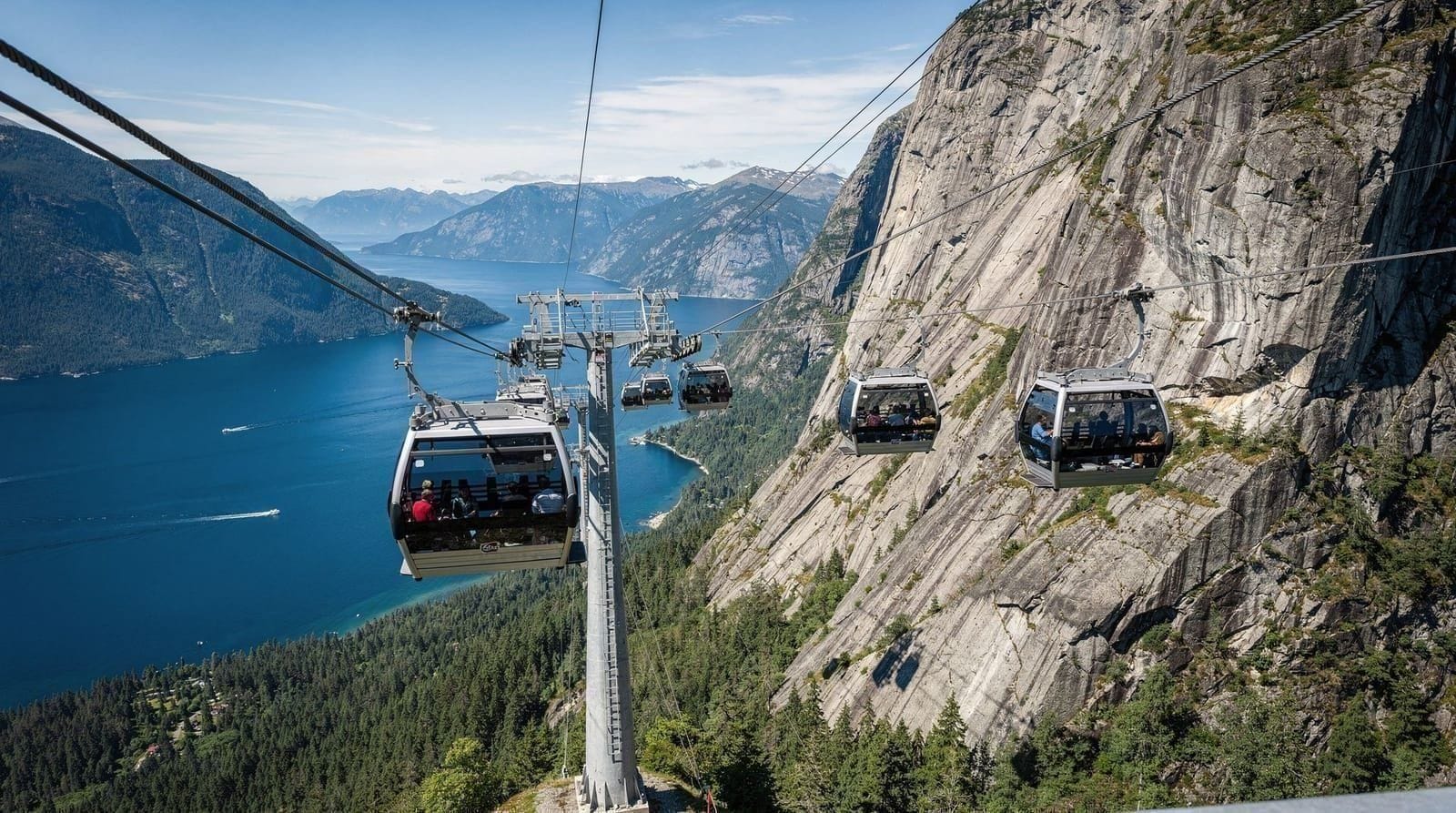
A Whistler day trip, by contrast, effectively consumes an entire day given the travel time in each direction, and skiing specifically needs multiple consecutive days to justify the cost and effort of equipment rental and lift tickets. Hiking day trips to Squamish or the Sea to Sky Gondola sit somewhere in between — a half-day commitment that can be paired with a lighter morning or evening activity on the same day without feeling rushed.
Understanding which of a trip’s priorities are “add without much extra time” versus “need their own dedicated day” is one of the more useful mental shortcuts for estimating total trip length accurately before booking flights and accommodation.
How ski or outdoor priorities change the calculation
Travelers with a specific outdoor priority should budget differently than the general framework above suggests. Skiing at Whistler genuinely needs 2-3 consecutive days to justify the cost of lift tickets and rental logistics, which is different math than a single sightseeing day trip.
Hiking-focused visitors weighing Joffre Lakes or a Squamish rock-climbing day should treat each as its own half-to-full day rather than folding it into an already-packed city itinerary, and travelers chasing whale watching season specifically should check timing against the rest of the trip’s dates before locking in a total length, since the best whale-watching months don’t always line up with the best weather for everything else.
Multi-city trips including Vancouver
Travelers combining Vancouver with other Canadian or Pacific Northwest cities — Seattle, Calgary, Banff — need to factor travel time between destinations into their overall length calculation separately from the Vancouver-specific guidance above. A Vancouver-Seattle combination, connected by a roughly 3-hour drive or short flight, works well as two 3-4 day city blocks within a single 7-8 day trip. A Vancouver-Banff combination involves a longer drive or flight and works better as two more distinct legs of a 10+ day trip rather than an easy add-on to a shorter visit. In both cases, the Vancouver-specific length guidance above still applies to whichever portion of the overall trip is spent in the city and its immediate region.
A rule of thumb
If forced to pick a single default answer without more context: 4 days for a city-only first visit, 5 days if a Whistler or Victoria day trip matters, and 7+ days for anyone wanting to treat the wider region — mountains, city, and island — as a single connected trip rather than three separate visits. Travelers genuinely torn between two lengths should lean toward the longer option when in doubt, since an extra unstructured day is easy to fill with a slower pace or a repeat visit to a favorite spot, while a trip that’s booked too short rarely allows for adding a missed region back in without significant extra cost or a return visit entirely.
Ultimately, the length that works best is the one built around a clear, honest list of priorities rather than a round number picked in advance — a traveler who knows exactly why they’re choosing 4 days over 7, or 7 over 4, tends to plan a noticeably better trip than one who simply defaults to whatever number of vacation days happens to be available. The is Vancouver expensive and budget guides can help translate whichever length is chosen into a realistic overall cost estimate for the trip.
It’s worth remembering that a shorter, well-paced trip usually beats a longer, rushed one for overall satisfaction — padding an itinerary with extra days purely because they’re available, without a specific plan for what fills them, tends to produce diminishing returns compared to a tighter trip that matches its length to a genuinely clear set of priorities from the start.
Top experiences
Bookable activities with verified prices and instant confirmation on GetYourGuide.